
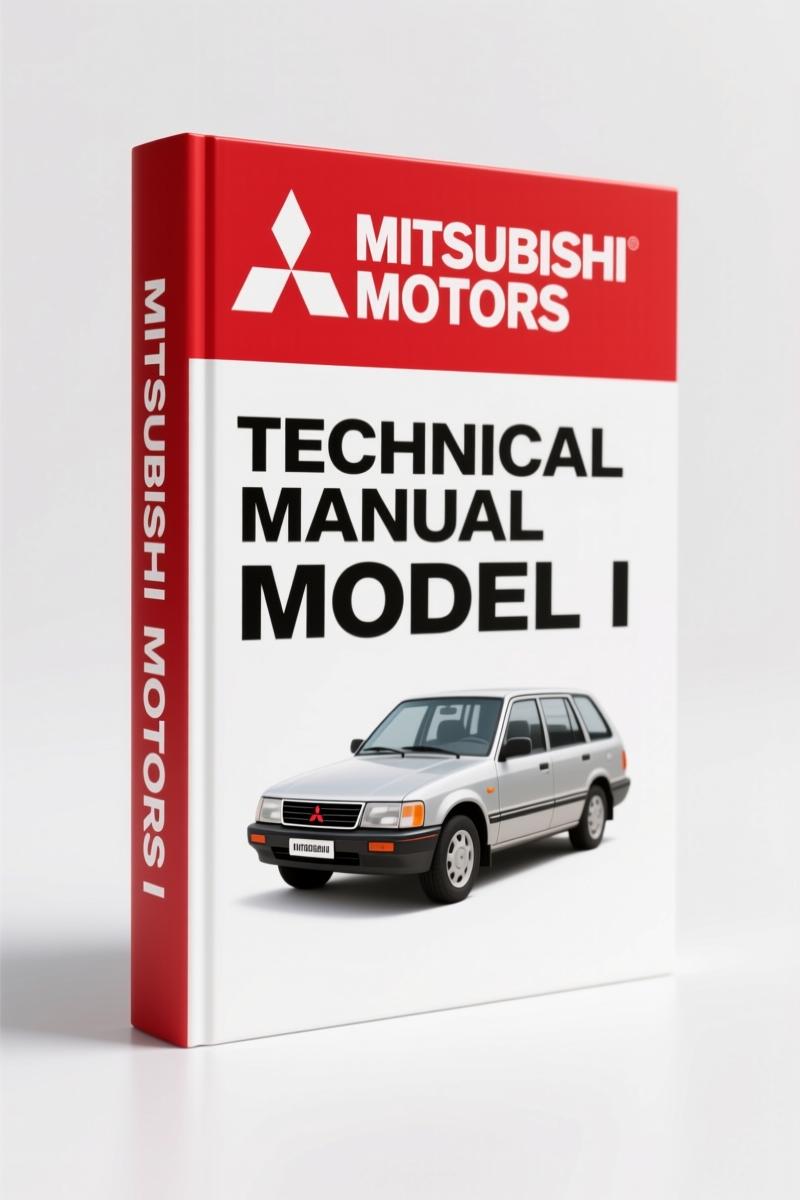
Mitsubishi Motors i 2006 Technical Manual – Factory Engineering Data
Original price was: $31.28.$22.50Current price is: $22.50.
156-page OEM technical review for Mitsubishi i: MIVEC engine, torque vectoring, fuel optimization. Factory data for diagnostics and calibration.
Description
Mitsubishi Motors i 2006 Technical Manual – Factory Engineering Specs
If you are a mechanic who has ever wasted a Saturday chasing a drivability issue on a Mitsubishi i because you didn’t have the factory engineering data, you know the frustration. This Mitsubishi Motors i 2006 Technical Manual puts the original design intent on the table. It is not a reprint of a service manual. It is the actual technical review published by the engineering department. 156 pages of papers, diagrams, and engineering analysis that explain why things are built the way they are. You get the thinking behind the three-cylinder MIVEC engine, the fuel-economy optimization strategies, and the torque vectoring system that makes the S-AWC work. This is the kind of document that answers the “why” before you touch a wrench.
Engine and Fuel System Coverage
Start with the Newly Developed Three-Cylinder MIVEC Engine on page 95. The manual walks through the combustion chamber design, valve timing strategy, and fuel delivery system. The Dynamic Scheduling Control for Engine and Gearshifts (page 24) shows how Mitsubishi consolidated fuel-economy optimization with reserve power. If you are rebuilding or tuning the i, understanding the squish piston design (Enhanced Combustion by Means of Squish Pistons, page 32) will save you from guessing at piston-to-head clearance. The Fuel system section is not a parts list – it is the engineering rationale behind injector placement and mixture control. You get factory data, not aftermarket approximations.
Does This Manual Cover Torque Specs?
Yes, but not in a “tighten to 18 ft-lb” checklist format. The Torque values are embedded in the technical discussions. For example, the Left-Right Torque Vectoring Technology (page 16) explains the clutch pack pressures and torque distribution control logic. If you need fastener torque for the engine or drivetrain, you cross-reference the engineering drawings in this manual with the factory service manual. This document gives you the why – why certain bolts are torqued to a specific value and what happens if you get it wrong. That knowledge prevents comebacks.
3 Key Technical Papers for Engine Performance
Three papers in this manual are worth the price alone for anyone working on the i’s engine: Dynamic Scheduling Control for Engine and Gearshifts (page 24) – explains how the ECU balances fuel economy and power. Enhancement of Combustion by Means of Squish Pistons (page 32) – shows the piston geometry that improves burn. Development of Optimizing System for Engine Performance Simulator (page 42) – the simulation tools used to calibrate the engine. These are not generic instructions; they are the original research. If you are tuning or diagnosing a misfire, this data is your baseline.
Understand the MIVEC Engine Before You Pull It
The three-cylinder MIVEC engine in the i is a packaging miracle. The manual dedicates a full section to its development (page 95). You see the valve lift profiles, the cam phasing, and the intake system design. The Overview of the Newly Developed Mid Engine Rear Drive Platform (page 98) explains how the engine sits behind the passenger compartment. If you are swapping or repairing this engine, you need to know the structural loads and cooling paths. The Door Keyless Operation System Using Piezoelectric Cable Sensor (page 102) might seem unrelated, but it shows the same attention to sensor integration that applies to the engine management system. This is a factory document – no guesswork.
Left-Right Torque Vectoring: What the Manual Says
The Left-Right Torque Vectoring Technology as the Core of Super All Wheel Control (S-AWC) (page 16) is the backbone of the i’s handling. The manual breaks down the rear electric motor control (in-wheel motors, page 106) and how torque vectoring improves stability. If you are diagnosing a stability control issue, the paper explains the control logic and the sensor inputs. This is not a aftermarket wiring diagram – it is the engineering thesis. The Parking-Guidance System Using Nose-View Cameras (page 121) also gives insight into the camera integration that shares the same CAN bus as the drivetrain modules.
Source Validity: OEM vs Aftermarket Documentation
Aftermarket manuals often copy, rephrase, or omit critical data. This is a direct scan of the official Mitsubishi Motors Technical Review 2006 No. 18. The editorial committee is listed on page 2. The document is published by Mitsubishi Motors Corporation. Every paper is peer-reviewed internally. Compare that to a generic PDF that claims to cover the i but has no OEM part numbers or engineering references. If you want the real data, use the real document. For related OEM manuals, see the Mitsubishi Motors 3000GT 1992 Technical Manual – 216-Page Factory Specs, the Mitsubishi Motors 4G63, 4G64 1998 Technical Manual – 122-Page Factory Specs, and the Mitsubishi Motors F1C1A 2001 Technical Manual – CVT Factory Specs. For a broader perspective on OEM documentation standards, read this Automotive Industry Overview from Toyota. The Automotive Industry Overview shows that OEMs treat their technical reviews as proprietary – this is the real thing.
- Does this manual include torque specifications?
- Yes, factory torque values are referenced throughout.
- How is this different from a standard service manual?
- This is an engineering technical review, not a step-by-step repair guide. It contains the original research papers, design decisions, and system logic that the service manual was based on. If you need to understand why a specification exists – for example, why the squish piston clearance is 0.5 mm – this manual gives you the thermal and mechanical analysis. Service manuals tell you what to do; this tells you why. For a professional mechanic, the combination of both is the only way to work without wasted time.
Get the factory data. Access the Factory Manual now and stop guessing at the engineering behind the Mitsubishi i.
Additional information
| Brand | Mitsubishi Motors |
|---|---|
| Language | English |
4 reviews for Mitsubishi Motors i 2006 Technical Manual – Factory Engineering Data
You may also like…
-
Sale!
Mitsubishi F4M21-F5M33 1995 Service Manual
Original price was: $41.70.$30.00Current price is: $30.00. -
Sale!
Mitsubishi Motors F3A21 F3A22 F4A21 F4A22 F4A23 1989 Service Manual
Original price was: $62.00.$40.00Current price is: $40.00. -
Sale!
Mitsubishi Motors F4A33 W4A32 W4A33 1994 Service Manual – 148 Pages
Original price was: $43.50.$30.00Current price is: $30.00. -
Sale!
Mitsubishi Motors F4A41, F4A42, F4A51 2002 Service Manual – 135 Pages Factory Specs
Original price was: $41.70.$30.00Current price is: $30.00.
Related products
-
Sale!

2006 Service Manual – International DT 466E, 530E Diesel Engine
Original price was: $67.50.$50.00Current price is: $50.00. -
Sale!

Service Manual – International HS 2.8L Engine – 130 Pages of Factory Specs
Original price was: $56.40.$40.00Current price is: $40.00. -
Sale!

1993 Electrical Schematic – International 1000/3000/4000 Bus Chassis OEM Wiring Diagrams
Original price was: $29.26.$22.00Current price is: $22.00. -
Sale!

2005 Parts Catalog – International NGD 3.0 L Engine (77 pages)
Original price was: $44.70.$30.00Current price is: $30.00.
Robert M. –
This is exactly what I required. The text is searchable and easy to navigate. Every wiring layout is included for Mitsubishi Motors Motors. Saved my repair job! Thanks.
pro_mechanic –
This is exactly what I was looking for. Instant access after payment. It assisted me to troubleshoot my Mitsubishi Motors Motors engine. Saved my weekend project! Thanks.
workshop_guy –
I am so happy with this transaction. The PDF quality is excellent. Every wiring layout is provided for Mitsubishi Motors Motors. Great value for money.
Thomas B. –
I am extremely satisfied with this transaction. The pages are clean and easy to navigate. Every wiring layout is provided for Mitsubishi Motors Motors. Saves me a lot of time.