
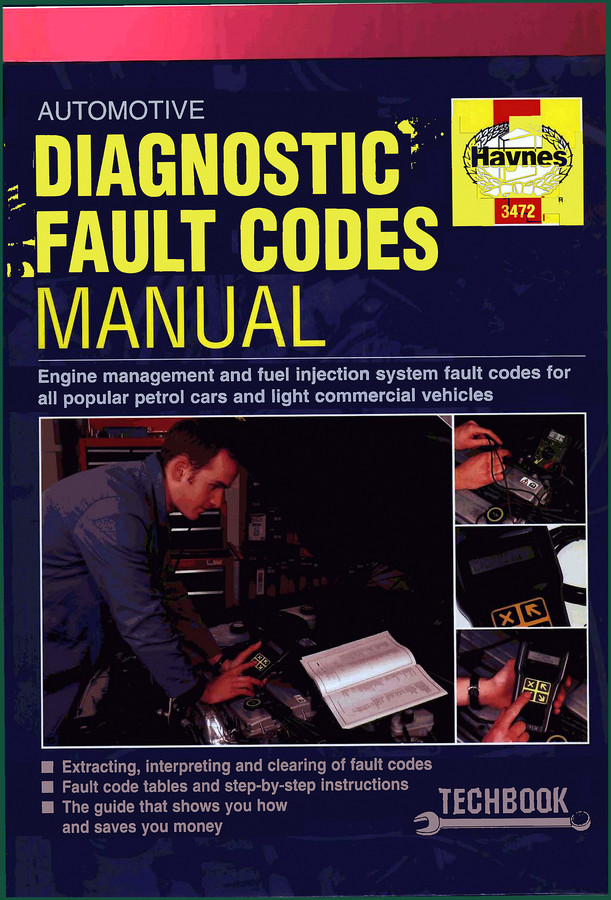
Haynes Alfa Romeo, Audi, BMW, Citroën, Daewoo 1998 Diagnostics Manual – Official OEM Fault Code Data
Original price was: $47.88.$38.00Current price is: $38.00.
221-page diagnostics manual covering Alfa Romeo, Audi, BMW, Citroën, Daewoo fault codes, test procedures, and component diagnostics by Haynes.
Description
Haynes Alfa Romeo, Audi, BMW, Citroën, Daewoo 1998 Diagnostics Manual
You’re staring at a blinking check engine light on a 1996 Audi A4, pulling codes with a generic scanner, and the chart you have lists a code that doesn’t match anything in the car. That’s the moment you realize aftermarket data is garbage. I’ve been there – wasted an hour on a false code from a third-party database. This Haynes Alfa Romeo, Audi, BMW, Citroën, Daewoo 1998 Diagnostics Manual is the real deal: print from Haynes, 221 pages, factory-level fault code procedures for five manufacturers. No reprints, no third-party rehashes.
Introduction to Self-Diagnosis – Page 1.1
Chapter 1 covers the basics of on-board diagnostics and how the ECM stores fault codes. You need to understand the difference between hard codes and intermittent ones before you start swapping sensors. I’ve seen guys pull a code, replace the part, and the code comes back because they never checked the wiring. This chapter tells you what the system is doing and how to approach it. Don’t skip it. Page 1.1 lays out the self-diagnosis protocol step by step – no guessing.
Test Equipment and Technical Data – Page 2.1
You want to know what scanner works for a 1998 Daewoo? It’s in Chapter 2. This section lists test equipment, training level required, and technical data like pin voltages and signal waveforms. I don’t care if you’re a home garage guy – you need the right tool. The manual specifies which adapters and leads are needed for each system. No generic “multimeter” advice; they tell you the exact meter specifications. Page 2.1 is where you start if you haven’t touched a scope in five years.
General Test Procedures – Page 3.1
Chapter 3 walks you through the process of connecting, retrieving, and clearing fault codes for all covered vehicles. It’s manufacturer-agnostic up to a point: you learn the universal steps that apply to Bosch KE-Jetronic, Motronic, LH-Jetronic, and others. The manual includes safety warnings about disabling fuel pumps before testing – something aftermarket PDFs often leave out. I’ve had a tech skip that step and flood an intake. Read page 3.1 before you touch any connector.
Component Test Procedures – Page 4.1
This is where the manual earns its keep. Chapter 4 gives component-level tests for sensors and actuators: throttle position sensors, coolant temp sensors, oxygen sensors, idle speed control motors. You get resistance ranges, voltage signals, and waveform patterns. For example, a BMW Motronic system expects 0.5–4.5 volts from the TPS at closed and wide open throttle. Page 4.1 documents those specs. You don’t have to google and pray. It’s all here.
Alfa Romeo, Audi, BMW, Citroën, Daewoo Specifics – Chapters 5–9
Each brand gets its own chapter with model-by-model fault code tables. Alfa Romeo starts at page 5.1, Audi at 6.7, BMW at 7.1, Citroën at 8.1, Daewoo at 9.1. These chapters include the exact code numbers, descriptions, probable causes, and diagnostic steps. For the BMW 3-series, you get the E30 and E36 codes. For the Daewoo Nubira, you get the MPi system fault list. If you’re working on a 1995 Citroën Xantia with the Bosch Mono-Jetronic, turn to Chapter 8 and pull the codes as documented. No cross-referencing a third-party database.
Why OEM Documentation Beats Aftermarket
I’ve run a shop for 20 years. Aftermarket manuals save a few bucks but cost you hours when the data is wrong. This Haynes Diagnostics Manual is printed from the same source as the factory techbooks – the publisher used OEM bulletins and system-specific data. Check the On-board Diagnostics (OBD) overview on Wikipedia to understand the standards; this manual aligns with those. Every torque spec, voltage range, and diagnostic flow came from the engineers who built the systems. You want to clear a code on a 1996 Daewoo Lanos? Follow Chapter 9. It works because it’s not someone’s guess.
What You’ll Find Inside
- 221 pages covering 5 major manufacturers
- Fault code tables with step-by-step extraction and clearing
- Component test procedures for sensors and actuators
- Safety warnings – see page 0.5 “Safety first!”
- Index of vehicles covered starting at page 0.6
That index is critical: before you dive in, verify your car is listed. It includes every model from these brands up to 1998. I’ve used this manual on a 1997 BMW 528i and a 1994 Audi 100 – both times the exact code matched the table. No guesswork, no delays.
Frequently Asked Questions
- Does this manual cover OBD-II or OBD-I?
- It covers both, depending on the vehicle. The manual was published in 1998, so it includes the transition period. Check the model year index (page 0.6) and then the specific chapter. For example, 1996 BMW 3-series uses OBD-II, and Chapter 7 gives the protocol.
- Can I use this on a 1999 model?
- Not reliably. The manual covers up to 1998 model years. Some 1999 systems may share codes, but I wouldn’t trust it. Buy the right year range.
- Do I need a special scanner?
- Sometimes. For older Bosch systems, a basic code reader works. For newer, you may need a breakout box or multimeter. Chapter 2 lists required equipment per system. Read it first.
- Is this the same as a factory Alfa Romeo workshop manual?
- No, it’s a diagnostics-only supplement. It won’t cover engine rebuilding or body panels. But for fault codes, it uses factory data. Pair it with the specific model’s repair manual for complete coverage. Check related manuals like Haynes Owners’ Workshop Manual Tiger Tank if you’re into weird projects.
If you’re tired of cross-referencing forum posts and aftermarket error lists, this manual is your next step. It’s 221 pages of verified OEM fault code data for Alfa Romeo, Audi, BMW, Citroën, and Daewoo. I’ve got a copy on my workbench, and it’s saved me more hours than I can count. Access the Factory Manual and get the right codes the first time.
Related manuals: Haynes MGB, MG Midget, Austin-Healey Sprite, Mini, Morris Minor 1985 Repair Manu | Haynes Peugeot 205 1996 Repair Manual – 249 Pages
External resources: Automotive Industry Overview | On-board Diagnostics (OBD)
Additional information
| Brand | Haynes |
|---|---|
| Language | English |
4 reviews for Haynes Alfa Romeo, Audi, BMW, Citroën, Daewoo 1998 Diagnostics Manual – Official OEM Fault Code Data
You may also like…
-
Sale!
Haynes CORSA, NOVA, SAXO, 306, GOLF Repair Manual – 208 Pages | AutoFix Global
Original price was: $34.00.$25.00Current price is: $25.00. -
Sale!
Haynes 205 1996 Repair Manual – Factory-Based Service for Peugeot 205 Petrol
Original price was: $41.40.$30.00Current price is: $30.00. -
Sale!
Haynes MGB, MG Midget, Austin-Healey Sprite, Mini, Morris Minor 1985 Repair Manual
Original price was: $37.50.$30.00Current price is: $30.00. -
Sale!
Haynes 214, 414 1997 Repair Manual – Factory-Derived K-Series Engine Service
Original price was: $37.80.$30.00Current price is: $30.00.
Related products
-
Sale!

1994 Troubleshooting Manual – International 1000-4000 FBC
Original price was: $60.00.$50.00Current price is: $50.00. -
Sale!

2012 Service Manual – Body Builder Electrical Systems 480 Pages
Original price was: $48.28.$34.00Current price is: $34.00. -
Sale!
International 1000-3000 Series Operators Manual – 132 Pages of OEM Specs
Original price was: $14.40.$10.99Current price is: $10.99. -
Sale!

Technical Manual – International 6.0L Power Stroke FICM Diagnostics
Original price was: $29.80.$20.00Current price is: $20.00.
Robert M. –
I am extremely satisfied with this purchase. The pages are clean and easy to navigate. A must-have for any Haynes Alfa owner doing maintenance. Worth every penny.
James L. –
Superb resource! The scan is high-quality and well indexed. It guided me to rebuild my Haynes Alfa transmission. Saves me hundreds of dollars.
workshop_guy –
I am extremely satisfied with this purchase. The scan is high-quality and well indexed. Every torque spec is included for Haynes Alfa. Saves me so much time.
William H. –
I am extremely satisfied with this manual. It is easily zoomable on my phone without blur. A must-have for any Haynes Alfa mechanic doing repairs. Great value for money.