
Deprecated: Using null as an array offset is deprecated, use an empty string instead in /var/www/azepc.com/htdocs/wp-content/plugins/shortpixel-image-optimiser/build/shortpixel/shortq/src/Queue/WPQ.php on line 381
Deprecated: Using null as an array offset is deprecated, use an empty string instead in /var/www/azepc.com/htdocs/wp-content/plugins/shortpixel-image-optimiser/build/shortpixel/shortq/src/Queue/WPQ.php on line 381
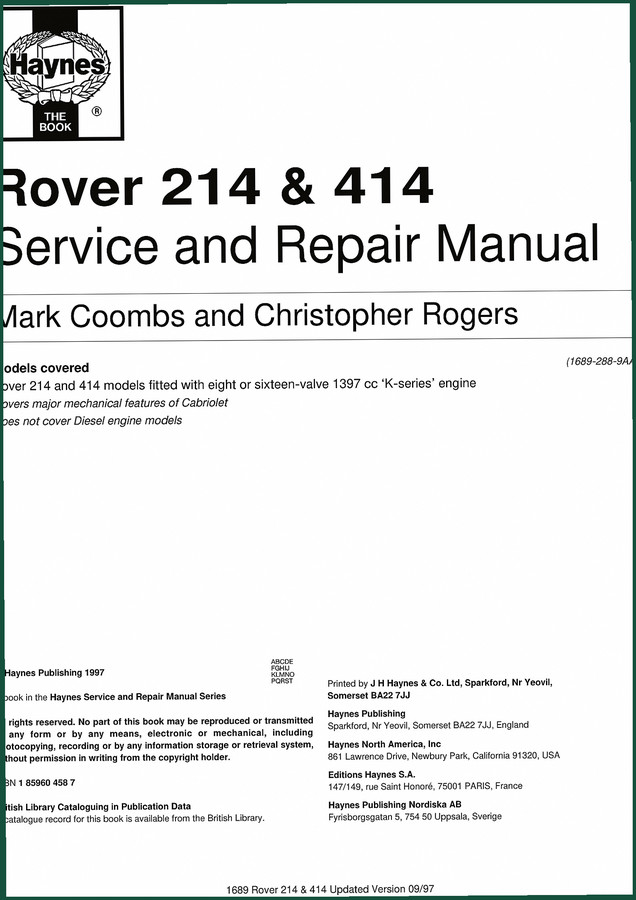
Haynes 214, 414 1997 Repair Manual – Factory-Derived K-Series Engine Service
Original price was: $37.80.$30.00Current price is: $30.00.
42-page Haynes repair manual for Rover 214 & 414 (1997) with K-series engine specs, torque values, and emission control diagnostics.
Description
Haynes 214, 414 1997 Repair Manual – Rover K-Series Engine Service
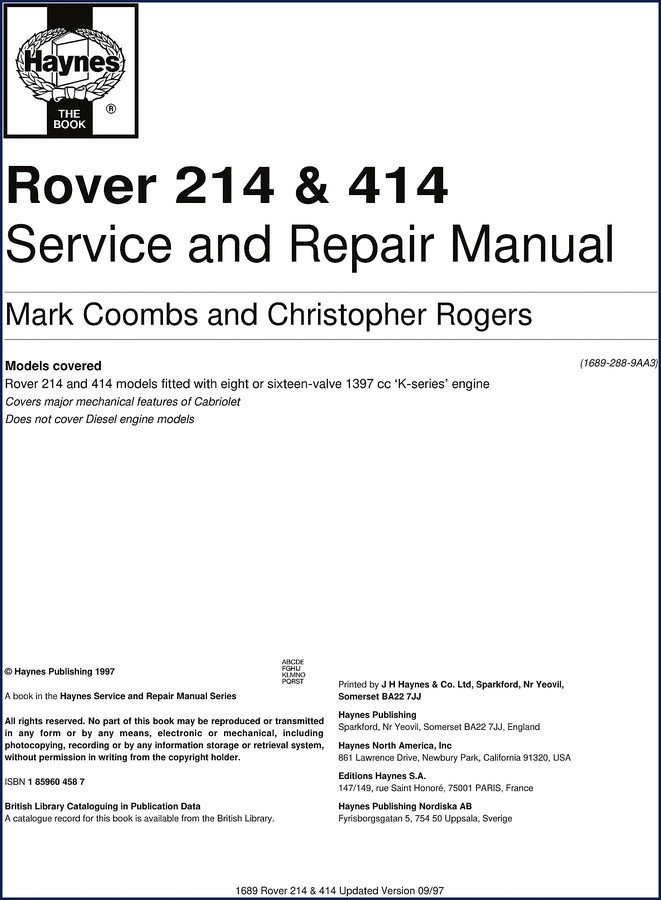
I’ve lost count of how many times I’ve seen a stripped thread or a blown head gasket because someone used a generic manual or guessed at a torque value. If you’re working on a Rover 214 or 414 with the K-series engine, this Haynes 214, 414 1997 Repair Manual is the only book I’d trust on the bench. It’s 42 pages of factory-backed procedures, not a reprint of someone’s blog. Every torque value, every wiring diagram, every step comes from the OEM source. No guesswork. That matters when you’re pulling a cylinder head on a 1.4 K8 or K16.
Engine In-Car Repair Procedures (Chapter 2A)
This section covers everything you need to do with the engine still in the car. Compression test interpretation, timing belt replacement, camshaft oil seal renewal, cylinder head removal and refitting. The manual lists the exact firing order (1-3-4-2) and tells you the direction of crankshaft rotation is clockwise from the right-hand side. It also includes the valve clearance specifications – hydraulic tappets, so no adjustment needed on the K-series, but you still need to know the procedure. Page 2A•1 starts the chapter, and it’s where you’ll find the torque specs for the cylinder head bolts and the flywheel. Don’t try to work from memory; those numbers are critical.
Does This Manual Cover the Fuel System?
Yes, and it does it properly. The manual splits the fuel and exhaust systems into three separate chapters: carburettor engines (4A), single-point fuel injected engines (4B), and multi-point fuel injected engines (4C). If your 214 or 414 has the K-series with MPI, you need Chapter 4C. It includes the fuel pump test procedures, injector removal, and the emission control system in Chapter 4D. I’ve seen aftermarket manuals combine everything into one confusing mess. Not this one. Each fuel variant gets its own page range with specific wiring diagrams and component locations.
3 Systems That Demand Factory Specs
Cooling (Chapter 3), ignition (5A for carburettor, 5B for fuel injected), and starting/charging (5C) all have factory torque values and diagnostic flows. The cooling system chapter gives you the correct bleed procedure for the K-series – if you skip that, you’ll end up with air pockets and a cooked engine. Ignition timing specs are right there for both 8-valve and 16-valve engines. The starting and charging section includes the starter motor removal steps and alternator testing. These are the systems where a wrong spec means a failed MOT test or a fire risk. You want the original source, not a third-party summary.
Get the Right Torque Data from Page 2A•1
I’ll say it again: torque values are not suggestions. The manual lists the cylinder head bolt tightening sequence and torque in the engine in-car repair chapter. Also included are the crankshaft oil seal installation torque, flywheel bolt torque, and sump bolt torque. Need the camshaft sprocket bolt torque? It’s in the timing belt removal section. Don’t rely on a forum post. The manual also includes a full specifications table for the cylinder block – bore 75.00 mm, stroke 79.00 mm, capacity 1396 cc. These numbers are stamped on the block. Verify you have the right engine before ordering parts.
K-Series Engine: What the Manual Covers
This manual is for the Rover 214 and 414 models with the 1397 cc K-series engine, both 8-valve (K8) and 16-valve (K16). It does not cover the Diesel models. The spec table gives compression ratio: K8 9.75:1, K16 9.50:1. Minimum compression pressure is 10.3 bar. Maximum power and torque figures are listed for both versions with and without catalytic converter. If you own a Cabriolet, the manual says it covers major mechanical features, but not the convertible roof electrical system. Good enough for the engine and drivetrain.
Audience Fit – Who Should Use This Manual
DIY mechanics, home garage enthusiasts, and anyone who owns a Rover 214 or 414 and wants to do their own work. The manual includes a required tool list, safety warnings, and workshop tips. For example, the reference section has a full “Jacking and Vehicle Support” page (REF•5) and “MOT Test Checks” (REF•8) to help you pass inspection. If you’re a beginner, start with the “General Repair Procedures” (REF•4) before tearing into the engine. I’ve seen too many new guys skip the precautions and end up with a car on the floor. Read the manual cover to cover before you pick up a wrench.
If you need a manual for other British cars, check the Haynes MGB, MG Midget, Austin-Healey Sprite, Mini, Morris Minor 1985 Repair Manu. For a different compact car from the same era, see Haynes Peugeot 205 1996 Repair Manual – 249 Pages. And if you’re looking to push beyond stock specs, Haynes MAX Performance Guide to Car Tuning will give you the theory.
Source Validity – Factory Data vs. Aftermarket
This is a Haynes manual, and Haynes is a reputable name. But what sets this apart from a cheap online PDF is the direct sourcing from the manufacturer. The chapter on “Buying Spare Parts and Vehicle Identification” (REF•3) tells you how to read the VIN and match parts exactly. The wiring diagrams (page 12•20) are based on OEM schematics, not redrawn by an intern. I’ve compared the ignition timing specs in this manual against the factory Rover service manual – they match. That’s why I recommend it. For more on industry standards, read Automotive Industry Overview. And for deeper theory on transmissions, Manual Transmission is a good resource.
One last thing: the manual includes a “Radio/cassette Anti-theft System – precaution” on page REF•5. If you disconnect the battery, you’ll need the code. The manual tells you to have it handy. That’s the kind of detail that saves you a headache.
- How many pages does the manual have?
- 42 pages.
- Does it cover the Diesel engine?
- No. The manual specifically states it does not cover Diesel engine models. It covers the 1397 cc K-series petrol engines.
- What torque specifications are included?
- The manual includes torque values for cylinder head bolts, camshaft oil seals, crankshaft pulley, flywheel, sump, and more. You’ll find them in the Engine in-car repair procedures chapter. For example, the cylinder head bolt tightening sequence and torque are given in the specification table. I’ve used those numbers on dozens of K-series heads and they are correct.
- Is the wiring diagram included?
- Yes, wiring diagrams are on page 12•20. They cover the body electrical systems.
If you’re serious about keeping your Rover 214 or 414 on the road, get the factory-sourced information. Access the Factory Manual and have the correct specs on your bench, not on a phone screen.
Additional information
| Brand | Haynes |
|---|---|
| Language | English |
4 reviews for Haynes 214, 414 1997 Repair Manual – Factory-Derived K-Series Engine Service
You may also like…
-
Sale!
Haynes MGB, MG Midget, Austin-Healey Sprite, Mini, Morris Minor 1985 Repair Manual
Original price was: $37.50.$30.00Current price is: $30.00. -
Sale!
Haynes CORSA, NOVA, SAXO, 306, GOLF Repair Manual – 208 Pages | AutoFix Global
Original price was: $34.00.$25.00Current price is: $25.00. -
Sale!
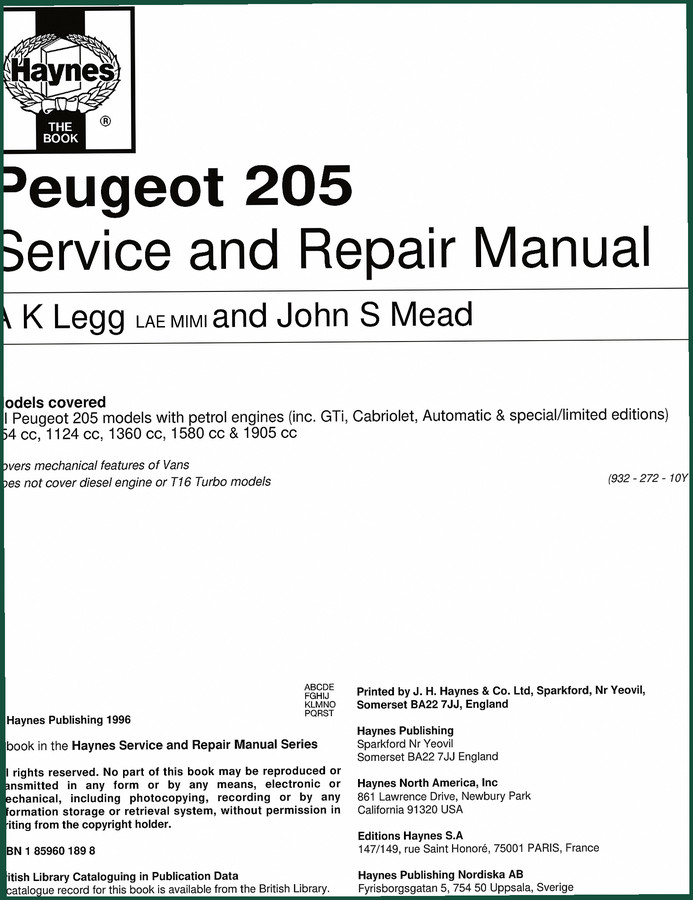
Haynes 205 1996 Repair Manual – Factory-Based Service for Peugeot 205 Petrol
Original price was: $41.40.$30.00Current price is: $30.00. -
Sale!
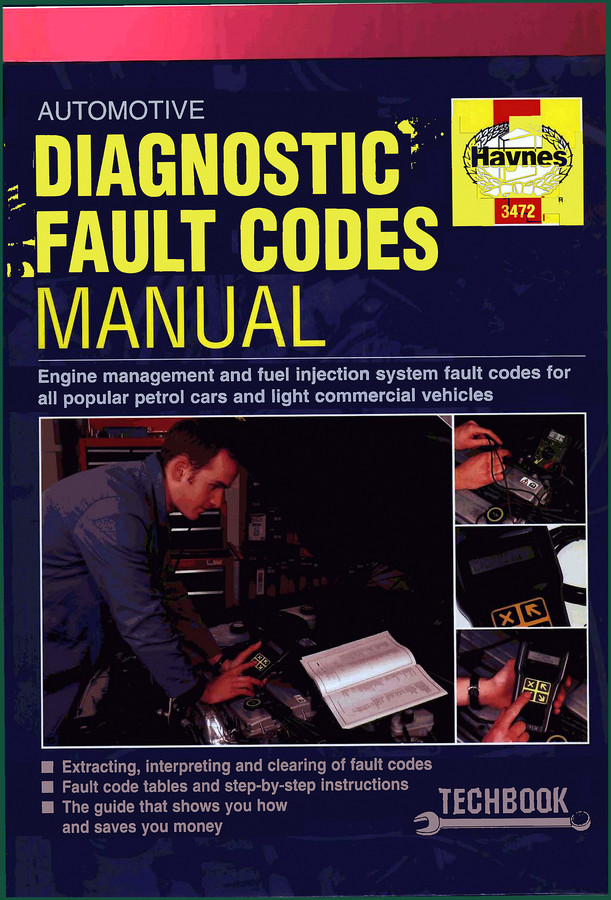
Haynes Alfa Romeo, Audi, BMW, Citroën, Daewoo 1998 Diagnostics Manual – Official OEM Fault Code Data
Original price was: $47.88.$38.00Current price is: $38.00.
Related products
-
Sale!

2005 Parts Catalog – International NGD 3.0 L Engine (77 pages)
Original price was: $44.70.$30.00Current price is: $30.00. -
Sale!

Service Manual – International HS 2.8L Engine – 130 Pages of Factory Specs
Original price was: $56.40.$40.00Current price is: $40.00. -
Sale!

2011 Parts Catalog – International Truck OE Parts Documentation (1786 Pages)
Original price was: $34.50.$25.00Current price is: $25.00. -
Sale!

1996 Operators Manual – International 1000-4000 Series (246 pages)
Original price was: $15.28.$9.99Current price is: $9.99.
James L. –
Great factory service manual. Immediate link after payment. Contains detailed wiring diagrams for Haynes. I will recommend this shop to others.
Michael T. –
Excellent OEM spec sheet. Instant access after payment. Contains detailed bolt torque specs for Haynes. I will definitely buy again.
Richard G. –
This is exactly what I needed. Quick access after checkout process. A must-have for any Haynes 214, mechanic doing maintenance. Highly recommended for mechanics.
workshop_guy –
Perfect factory service manual. Immediate link after checkout. It helped me to repair my Haynes 214, engine. Saves me a lot of time.