

U.S. Department Of Energy Trucks, Heavy-Duty Vehicles 2013 Technical Manual
Original price was: $40.80.$30.00Current price is: $30.00.
Factory-origin technical manual covering truck weight baselines, materials, and propulsion targets for heavy-duty vehicles. 59 pages, 2013.
Description
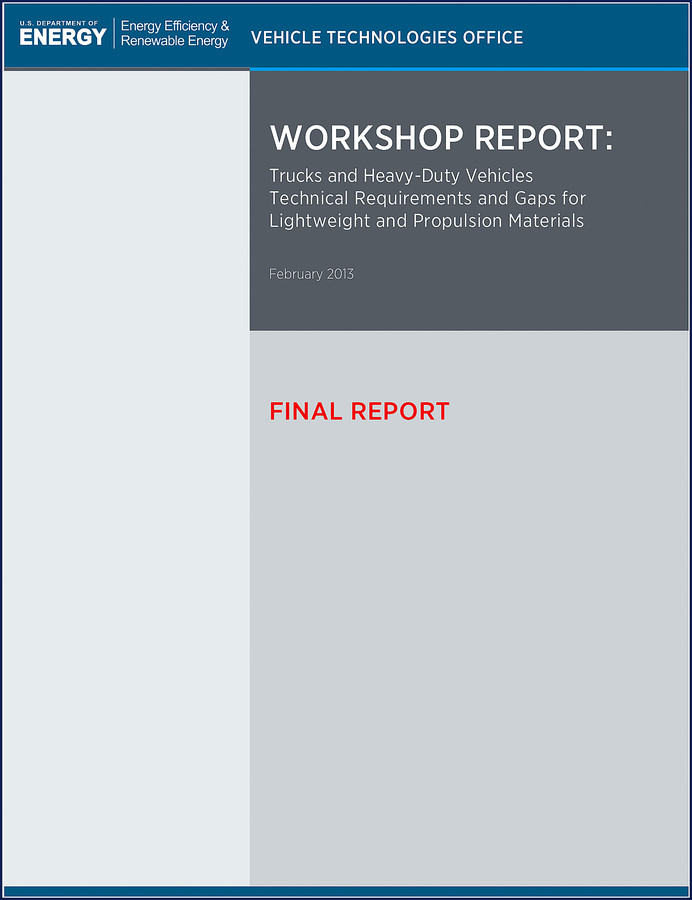
You are rebuilding a Class 8 semi or doing a material upgrade on a heavy-duty fleet truck. You need to know why the factory chose a specific aluminum alloy for the cab or what the DOE target for magnesium content is in a 2013 frame. Every aftermarket manual I have seen skips this level of detail and hands you a generic chart instead. That is not how you spec a repair or a retrofit. The U.S. Department Of Energy Trucks, Heavy-Duty Vehicles 2013 Technical Manual gives you the raw workshop data from the OEM-level workshop that set the targets for lightweight materials and propulsion systems. 59 pages, straight from the Vehicle Technologies Office. No summaries written by some content writer.
Baselines of Truck Weights and Trends
Chapter 1 of this report lays out the actual weight distributions for light-duty trucks (Classes 1-3) and heavy-duty trucks (Classes 7 and 8), plus Class 8 semi trailers. If you are swapping a body panel or reinforcing a chassis, you need to know the baseline weight the engineers used when they designed the structure. Page 26 (the data is in the executive summary section) contains the key metrics for heavy-duty vehicle chassis. That weight figure determines suspension loads, braking capacity, and fuel-economy targets. Skip that baseline and you are guessing.
Vehicle Systems and Material Requirements
Section 2 breaks down exactly what the DOE expects from body and cab structures, chassis components, and powertrains. It covers body-on-frame architecture for both light-duty and heavy-duty trucks, including technology gaps that still limit lightweighting. The chapter titled Body and Cab Structures lists specific targets for aluminum and high-strength steel content. If you are welding a cab repair on a 2013 heavy-duty truck, you want to know which materials the factory assumed would be used. This manual tells you.
Powertrain: Engines and Transmission Gaps
Section 2.3 covers engine advanced combustion and propulsion system key metrics. It is not a step-by-step rebuild guide—it is the engineering rationale behind the 2013 targets for heavy-duty propulsion systems. For example, the manual discusses technology gaps in steel and cast iron for engine blocks and transmission housings. If you are planning a performance build or a part substitution on a heavy-duty powertrain, you need the gap analysis to avoid picking a material that fails under the loading conditions the OEM assumed. For more on conventional gearboxes, see the Manual Transmission overview from a trusted source.
What This 2013 Technical Manual Covers for Heavy-Duty Vehicles
The entire third chapter is titled The Impact of Materials on Vehicle Efficiency. It goes deep into carbon fiber composites, magnesium, aluminum, glass-fiber reinforced polymers, and advanced high-strength steels. Each subsection includes key metrics, targets, and technology gaps. You get the DOE’s own data on why certain materials are not yet widely adopted—corrosion, joining difficulties, cost constraints. That is the kind of spec-level insight you need when deciding whether to use a carbon-fiber driveshaft or stick with steel. If electric drivetrains are in your future, the Electric Vehicles Guide can give you supplementary context, but this DOE manual gives you the 2013 baseline for those components.
3 Reasons the OEM Source Matters
First, this is a U.S. Department of Energy document, not a third-party reprint. The data came directly from the Lightweight and Propulsion Materials Workshop held in Dearborn in 2011, with OEMs, tier-one suppliers, and materials suppliers in the room. Second, the report includes an appendix with the list of meeting participants—actual engineers from the companies that build these trucks. Third, the document was released as a final report in February 2013, so every metric and gap reflects what the industry considered state-of-the-art at that time. If you rely on a forum post or a generic manual, you lose that traceability.
Who Benefits from This Technical Manual
Anyone touching a heavy-duty truck from a 2013-era design or newer. Fleet maintenance supervisors who need to justify material substitutions to management. Engineers doing reverse-engineering on cab structures. DIY mechanics who want to understand why a certain bolt pattern is used on a Class 8 chassis—the loading assumptions come from the data in this report. Even if you never lift a torque wrench, knowing the technology gaps for magnesium or carbon fiber helps diagnose cracking or corrosion in the field. This manual gives you the engineer’s perspective, not a parts salesman’s pitch.
Related Manuals You Might Need
These OEM documents pair well with this DOE report:
- Drogobych Crane KTA-16/25/28 2004 Installation Manual – Section: Общие Указания
- MODULOS DISPONIBLES PARA EL MULTIEQUIPO CJ EURO
- Minsk MMVZ-3.11212 Technical Manual
Frequently Asked Questions
- Does this manual apply to light-duty trucks?
- Yes. Section 1 covers Classes 1 through 3 light-duty trucks, and Section 2 includes light-duty truck body targets. The weight trends and material metrics apply across both categories.
- Are torque specifications included?
- No. This is a workshop report, not a repair manual. You will not find fastener torque tables. You will find the load assumptions that determine why certain fasteners are speced.
- What year models does the data cover?
- The report was published in 2013 and reflects industry input from 2011. The baselines and targets are for trucks built roughly in the 2011-2015 timeframe. If you are working on a 2018 model, use it as a reference for material evolution, not a substitute for the OEM service manual for that specific year.
- Can I use this manual to modify a heavy-duty chassis?
- Absolutely, but only if you understand the limits. The technology gaps section (e.g., for high-strength steel welding) tells you exactly what the industry still struggles with. If you plan to weld on a frame that originally used advanced high-strength steel, the gap analysis is your warning to verify the heat-affected zone tolerance. That knowledge alone can prevent a cracked frame later.
Access the Factory Manual and get the actual U.S. Department of Energy workshop data that heavy-duty OE engineers used. Stop sourcing material specs from forum posts or aftermarket summaries. This is the real thing—59 pages of validated targets, metrics, and technology gaps. Order your copy directly from AutoRepairManuals.
Additional information
| Brand | U.S. Department Of Energy |
|---|---|
| Language | English |
2 reviews for U.S. Department Of Energy Trucks, Heavy-Duty Vehicles 2013 Technical Manual
You may also like…
-
Sale!
Acura NSX 1991 Service Manual – 1420 Pages OEM
Original price was: $102.05.$65.00Current price is: $65.00. -
Sale!
2004 Acura TSX Wiring Diagram – 73-Page Factory Electrical Schematics
Original price was: $15.88.$9.99Current price is: $9.99. -
Sale!

CDS 705C, 706C, 708C 1981 Parts Catalog – OEM Forklift Specs
Original price was: $61.60.$40.00Current price is: $40.00. -
Sale!

Acura Integra 1998 Service Manual – 1891 Pages Factory OEM Documentation
Original price was: $31.75.$25.00Current price is: $25.00.
Related products
-
Sale!

1992 Electrical Schematic – International 1000/3000/4000/2554 OEM Wiring Diagrams (132 Pages)
Original price was: $26.40.$20.00Current price is: $20.00. -
Sale!

Technical Manual – International 6.0L Power Stroke FICM Diagnostics
Original price was: $29.80.$20.00Current price is: $20.00. -
Sale!
1993 Electrical Schematic – International 1000/3000/4000 Bus Chassis OEM Wiring Diagrams
Original price was: $29.26.$22.00Current price is: $22.00. -
Sale!

International 1000-3000 Series Operators Manual – 132 Pages of OEM Specs
Original price was: $14.40.$10.99Current price is: $10.99.
workshop_guy –
Five stars! Instant access after checkout. Every spec sheet is provided for U.S. Department Of Energy Department. Saves me so much money.
William H. –
I am so happy with this transaction. The text is searchable and well indexed. Contains precise wiring diagrams for U.S. Department Of Energy. Worth every penny.