
Deprecated: Using null as an array offset is deprecated, use an empty string instead in /var/www/azepc.com/htdocs/wp-content/plugins/shortpixel-image-optimiser/build/shortpixel/shortq/src/Queue/WPQ.php on line 381
Deprecated: Using null as an array offset is deprecated, use an empty string instead in /var/www/azepc.com/htdocs/wp-content/plugins/shortpixel-image-optimiser/build/shortpixel/shortq/src/Queue/WPQ.php on line 381
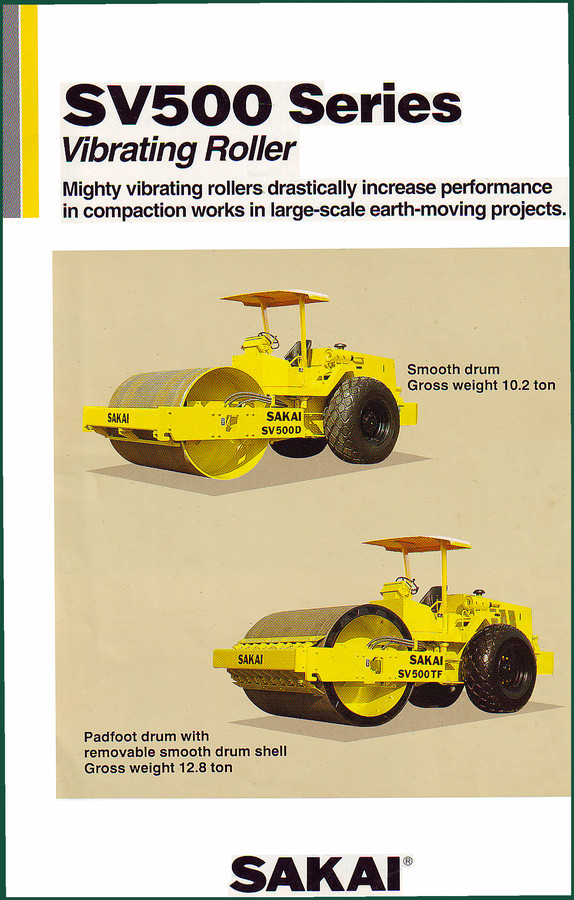
Sakai SV500D, SV500TF Workshop Manual – Factory Hydraulic Specs
Original price was: $38.40.$30.00Current price is: $30.00.
13‑page OEM workshop manual for Sakai SV500D and SV500TF vibrating rollers. Includes hydraulic pressure test ports, troubleshooting, and system diagrams.
Description
Sakai SV500D, SV500TF Workshop Manual – No Guesswork on Heavy Compaction Gear
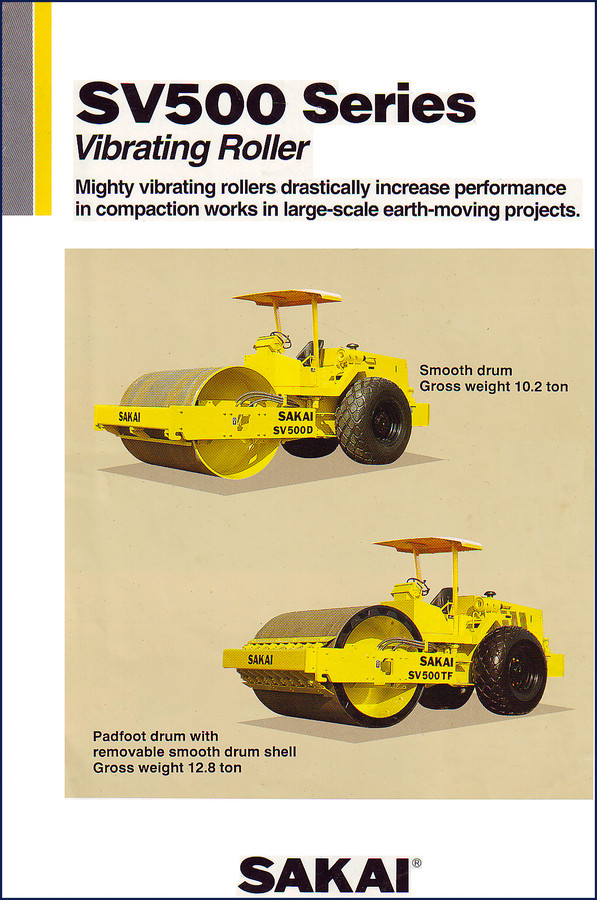
If you’re turning wrenches on a Sakai SV500 series roller, you already know the hydrostatic system is the heart of the machine. Charge pressure off by 15 psi and you’re chasing overheating, slipping drives, or burnt oil. This is the factory Sakai SV500D, SV500TF Workshop Manual — 13 pages, direct from Sakai, not a reprint. No aftermarket interpretation. You get the same data the dealer techs use.
I’ve spent enough hours digging through third-party manuals that list a torque spec as “tighten securely.” That gets a roller operator killed on a grade. This manual gives you numbers: charge relief valve opens at 13.4–14.8 kgf/cm² (190–210 psi). Override valve at 350 kgf/cm² (500 psi). Port sizes are 7/16-20UNF-2B. You can’t fake that kind of specificity.
Hydrostatic Transmission Overview
The SV500D and SV500TF use a closed-circuit hydrostatic drive. The SV500D has a variable displacement piston pump feeding two fixed displacement piston motors — one drives the front roll through a reaction gear, the other drives the rear wheels through the transmission. The charge pump doubles as the steering pump. That’s a lot of responsibility for one pump, and if you don’t know the charge pressure spec, you’re guessing. Page 22 in the manual gives you the relief valve setting. No guessing.
Hydraulic Troubleshooting – What the Manual Covers
The manual includes a complaint-inspection table that walks you through symptoms like hydraulic fluid overheating, air bubbles in the tank, and abnormal noise. For each complaint, it lists the inspection points, probable causes, and remedies. Example: air bubbles spouting from the hydraulic tank? Check suction line for air leaks or water contamination in the fluid. That’s the kind of diagnostic flow a tech needs when a roller is down on a jobsite. No fluff — just a table with four columns: Complaint, Inspection (1), Inspection (2), Cause, Remedy.
Override Valve and Charge Pressure Specs
You need a pressure gauge with a 7/16-20UNF-2B fitting. Port A on top of the traction pump is for high-pressure line (traction) — override valve opens at 500 psi. Port B on the side of the traction pump is for charge pressure — relief valve opens at 190–210 psi. Write that down. If you’re rebuilding a pump or replacing a shuttle valve, these numbers are your safeties. Get them wrong and you’ll blow the seals or starve the drive motors. The manual gives you the exact page references.
Inspection Procedure: Gage Ports and Tools
Section 2.3 covers the troubleshooting procedure. It tells you which port to tap, what thread size, and what pressures to expect. It also lists the hydraulic system components: pump assembly with control valve, override valve, traction pump, charge relief, vibration pump, steering pump. If you need to rebuild the pump stack, you reference the parts diagram on figures 8 and 9. That’s data you can’t get from a generic hydraulic theory book.
Does This Manual Cover Both SV500D and SV500TF?
Yes. The SV500D is the smooth drum version (10.2 ton gross weight). The SV500TF is the padfoot drum with a removable smooth drum shell (12.8 ton gross weight). Both use the same hydrostatic architecture, but the SV500TF has heavier components. The manual covers both models, with separate hydraulic schematics for each. If you own a fleet of Sakai rollers, this one book covers your most common models. You can compare part numbers and torque values side by side.
Source Authenticity: OEM Sakai Documentation
This is not a scan of a scan. It’s an original factory PDF from Sakai. The part number and file name — SAKAI_SV500D-SV500TF_Workshop_Manual_en-55128018654.pdf — tell you it came from the manufacturer’s engineering department. I’ve seen aftermarket manuals that transpose the charge pump and vibration pump circuits. That kind of error costs a shop a pump replacement and a week of downtime. OEM documentation eliminates that risk. You pay once for the real thing, not twice for the fix.
Frequently Asked Questions
- How many pages is this manual?
- 13 pages.
- Can I use this manual to check charge pressure without a dealer visit?
- Yes. The manual specifies the exact port location (Port B on the side of the traction pump), thread size (7/16-20UNF-2B), and the relief valve opening range (190–210 psi). You need a pressure gauge with that fitting. Hook it up, run the engine at operating temp, and read the gauge. If it’s below 190 psi, you’ve got a bad charge relief valve or a worn pump. The manual tells you how to adjust or replace the relief valve, including the torque spec for the valve cartridge. That one procedure alone can save you a $3,000 pump replacement if you catch it early.
Bottom line: if you maintain Sakai SV500 series rollers, this is the only manual you need. Access the factory manual and get the specs that keep compaction equipment running — not someone’s best guess.
Related manuals you might need: Sakai SW300 Workshop Manual – Factory Specs for Vibrating Roller Repair, Sakai SV400, SV400TS Workshop Manual – Factory Specs for Roller Compactors, SAKAI SV512-H, SV512-E SERIES SHOP MANUAL.
For background on hydraulics vs. Manual Transmission systems, see Wikipedia. For a comparison of roller drive types, read the Manual Transmission article on gear reduction.
Additional information
| Brand | Sakai |
|---|---|
| Language | English |
2 reviews for Sakai SV500D, SV500TF Workshop Manual – Factory Hydraulic Specs
You may also like…
-
Sale!
Sakai GW750-2 Parts Catalog – OEM Part Numbers & Exploded Views
Original price was: $51.68.$38.00Current price is: $38.00. -
Sale!
Sakai SW300 Workshop Manual – Factory Specs for SW300 Series
Original price was: $59.28.$38.00Current price is: $38.00. -
Sale!
Sakai SV512-H, SV512-E Workshop Manual – Factory Specifications for Rollers
Original price was: $42.24.$32.00Current price is: $32.00. -
Sale!
Sakai CR271 Parts Catalog – OEM Exploded-View Parts Documentation
Original price was: $42.35.$35.00Current price is: $35.00.
Related products
-
Sale!

1995 Operators Manual – International 1000-4000 Series | OEM Documentation
Original price was: $12.49.$9.99Current price is: $9.99. -
Sale!
1996 Operators Manual – International 1000-4000 Series (246 pages)
Original price was: $15.28.$9.99Current price is: $9.99. -
Sale!
1991 Electrical Schematic – 112-Page OEM Wiring Diagram for International 1000-3000 Series
Original price was: $22.75.$17.50Current price is: $17.50. -
Sale!
1994 Troubleshooting Manual – International 1000-4000 FBC
Original price was: $60.00.$50.00Current price is: $50.00.
Richard G. –
Outstanding! It is easily zoomable on my phone without blur. Every spec sheet is provided for Sakai SV500D,. Saves me so much dollars.
William H. –
Highly recommended! The document quality is excellent. Every wiring layout is provided for Sakai SV500D,. Saved my weekend project! Thanks.