
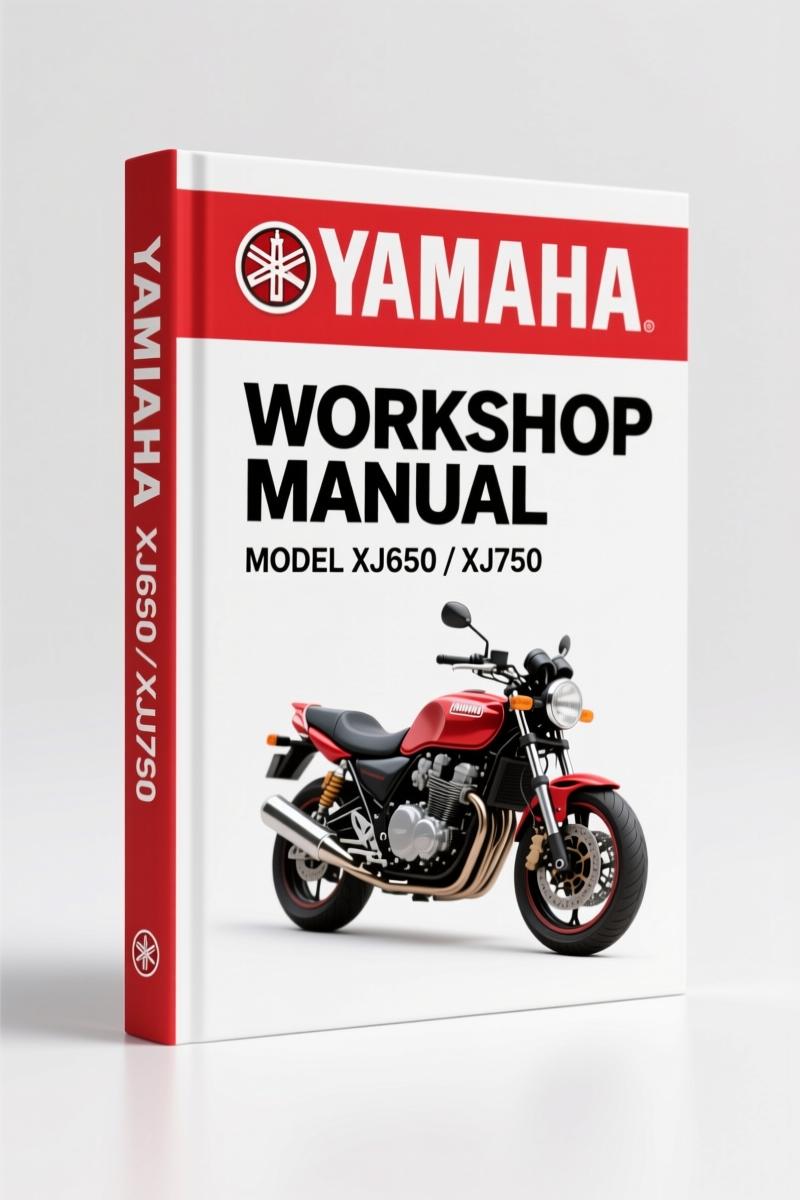
Yamaha XJ650, XJ750 Workshop Manual – 277 Pages
Original price was: $37.50.$30.00Current price is: $30.00.
Official Yamaha XJ650/XJ750 workshop manual (1980-1984). 277 pages covering engine, wiring, and emissions compliance.
Description
Yamaha XJ650, XJ750 Workshop Manual (1980-1984) – Factory Specs for 277 Pages
Look, if you’re cracking open an XJ650 or XJ750 from the early 80s, you need this on the bench next to you. Not some PDF from a forum that gives you a torque value that strips the head bolt. This is the Haynes Owners Workshop Manual – Yamaha XJ650, XJ750 Workshop Manual – 277 pages of factory-backed procedures. I’ve seen too many guys try to rebuild these four-cylinder Yamahas with aftermarket garbage and end up with oil leaks on startup. Don’t be that guy.
Engine, Clutch, and Gearbox Overhaul (Chapter 1)
Chapter 1 starts on page 40 and runs through 73 pages of disassembly, inspection, and reassembly for the engine, clutch, and gearbox. Every bolt head has a torque spec listed, not a suggestion. The clutch basket removal procedure on page 55 tells you exactly which tool to use and how to lock the primary gear. If you skip the step about loosening the clutch springs in a crisscross pattern, you’ll warp the pressure plate. That’s written in there because somebody learned the hard way.
What Torque Values Are Listed in This Manual?
Torque values appear throughout – cylinder head bolts, oil pan, final drive sprocket, fork caps. Page 40 gives the full sequence for the cylinder head: 5 ft-lb increments up to 36 ft-lb. For the 1983 models, the manual notes a different tightening angle due to revised head gasket material. Aftermarket manuals ignore that detail. This one doesn’t. If you need the charge pressure for the oil pump, it’s in Chapter 2. No guesswork.
7 Chapters That Cover the Entire Bike
The manual splits the work into seven logical chapters: Engine/Clutch/Gearbox (1), Fuel system and Lubrication (2), Ignition System (3), Frame and Forks (4), Wheels, Brakes, and Tyres (5), Electrical System (6), and The 1983 US Models (7). Plus there’s a wiring diagrams section starting at page 261 and a fault diagnosis chapter on page 16. That fault-diagnosis section alone will save you from chasing a no-start condition when all you had was a dirty kickstand switch – yes, that’s in there.
Fuel System and Lubrication: Chapter 2 Details
Chapter 2 covers carburetor synchronization, float level adjustment, and oil pump removal. The XJ650 and XJ750 use Mikuni carbs that are sensitive to vacuum balance. The manual gives you the synchronization procedure with manometer readings. It also lists the recommended engine oil viscosity for different ambient temperatures – something a lot of forum posts get wrong for Texas summers. If you’re working on other Yamaha twins, check the Yamaha XV535-1000 1994 Workshop Manual | OEM Factory Specs – it follows the same rigorous structure.
Get the Right Wiring Diagrams for Your Year
Wiring diagrams start on page 261. There are separate diagrams for UK and US models, and a specific one for the 1983 US models in Chapter 7. The 1981 US XJ650 H Maxim uses a different starter relay configuration than the 1982 Seca. The manual labels every wire color and splice location. No guessing which wire goes where. The Yamaha VMX12 2001 Workshop Manual also has that level of wiring detail – these manuals share the same production quality. And if you’re working on a V-twin, the Yamaha XV Virago 1981-1994 Workshop Manual is laid out the same way.
Fault Diagnosis and Routine Maintenance
Pages 16 through 26 cover fault diagnosis – engine won’t start, poor running, vibration, handling problems. Each symptom has a numbered checklist. Routine maintenance on page 27 gives the service schedule: oil change every 3000 miles, valve clearance check every 6000, cam chain tensioner adjustment at 6000. For the clutch and gearbox overhaul, the manual explains how to disassemble the five-speed Manual Transmission and check gear backlash. If you’re not familiar with the shift mechanism, the chapter also covers how a Manual Transmission works inside the XJ cases – dogs, forks, selector drum. That’s the kind of depth you get from a real workshop manual, not a third-party pamphlet.
- Does this manual include torque specs for the cylinder head?
- Yes, page 40 gives the full sequence and values.
- I have a 1983 US model XJ750 Maxim. Is there a separate section?
- Absolutely. Chapter 7 is dedicated to the 1983 US models (page 259). It covers specific emissions equipment, carburetor adjustments, and wiring changes that differ from earlier years. This is one reason why using a generic manual will get you into trouble – the 1983 models had unique vacuum line routing and a different ignition advance curve. The manual includes all that.
So if you’re ready to get that XJ back on the road without second-guessing every bolt, get the real thing. Access the Factory Manual from AutoRepairManuals and have the specs at your fingertips.
Additional information
| Brand | Yamaha |
|---|---|
| Language | English |
3 reviews for Yamaha XJ650, XJ750 Workshop Manual – 277 Pages
You may also like…
-
Sale!
Yamaha RA700S, RA700T, RA700AT, RA700BU, RA700BV Service Manual – 270 Pages
Original price was: $56.40.$40.00Current price is: $40.00. -
Sale!
Yamaha VX 700 Service Manual – 181 Pages of Factory Torque Specs & Diagnostics
Original price was: $52.40.$40.00Current price is: $40.00. -
Sale!
Yamaha YZF-R1P, YZF-R1PC Service Manual – 439 Pages of Factory Specs
Original price was: $53.60.$40.00Current price is: $40.00. -
Sale!
Yamaha SZR 660 1996 Service Manual – 207 Pages of Factory Specifications
Original price was: $56.80.$40.00Current price is: $40.00.
Related products
-
Sale!

1992 Electrical Schematic – OEM Wiring Diagrams for International 1000-3800
Original price was: $24.48.$18.00Current price is: $18.00. -
Sale!
1991 Electrical Schematic – 112-Page OEM Wiring Diagram for International 1000-3000 Series
Original price was: $22.75.$17.50Current price is: $17.50. -
Sale!
1996 Operators Manual – International 1000-4000 Series (246 pages)
Original price was: $15.28.$9.99Current price is: $9.99. -
Sale!

Technical Manual – International 6.0L Power Stroke FICM Diagnostics
Original price was: $29.80.$20.00Current price is: $20.00.
pro_mechanic –
I am extremely satisfied with this transaction. The file quality is excellent. Contains clear wiring diagrams for Yamaha. Highly recommended for mechanics.
workshop_guy –
Excellent quality! The PDF is high resolution. It guided me to troubleshoot my Yamaha XJ650, transmission. I will definitely buy again.
James L. –
This is exactly what I was looking for. The text is searchable and easy to navigate. It guided me to fix my Yamaha XJ650, engine. Saved my weekend project! Thank you.