
Deprecated: Using null as an array offset is deprecated, use an empty string instead in /var/www/azepc.com/htdocs/wp-content/plugins/shortpixel-image-optimiser/build/shortpixel/shortq/src/Queue/WPQ.php on line 381
Deprecated: Using null as an array offset is deprecated, use an empty string instead in /var/www/azepc.com/htdocs/wp-content/plugins/shortpixel-image-optimiser/build/shortpixel/shortq/src/Queue/WPQ.php on line 381
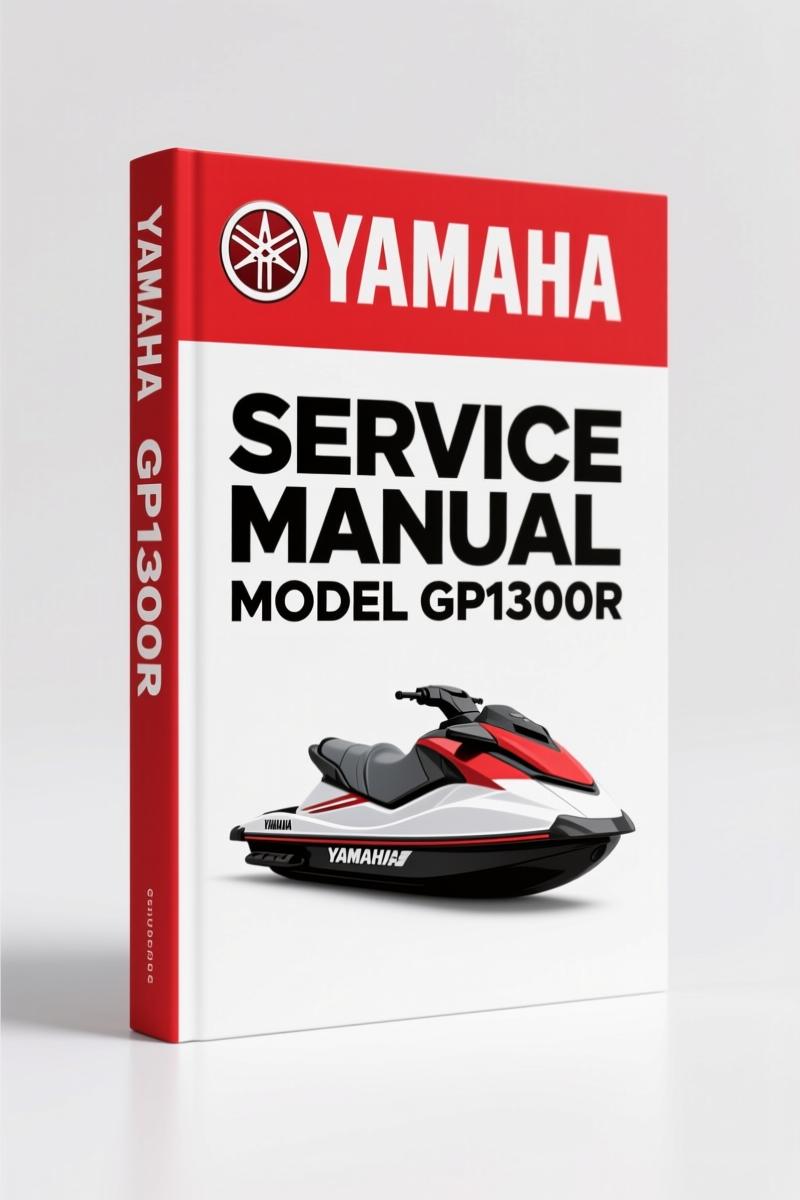
Yamaha GP1300R Service Manual – 279 Pages of Factory Specs
Original price was: $38.75.$25.00Current price is: $25.00.
279-page factory service manual for Yamaha GP1300R: torque values, fuel system procedures, wiring diagrams, and trouble analysis.
Description
Yamaha GP1300R Service Manual
If you’re trying to fix a GP1300R without the factory book, you’re wasting time and risking a blown engine. I’ve seen guys crack a cylinder head because they guessed the torque sequence. That’s an $800 mistake. This OEM Yamaha GP1300R Service Manual runs 279 pages of factory procedure – not some aftermarket rewrite that leaves out the crucial steps. Let me walk you through what’s in it and why it belongs on your bench.
Yamaha GP1300R Service Manual – Factory Procedure for Every System
Started with the title page and a safety notice that Yamaha printed in 2003. This is the real deal – official watercraft service literature, not a photocopy. The manual opens with a how-to-use section that tells you exactly how the steps are laid out: condition → arrow → action. Bearings pitting? Replace. That kind of direct language saves head-scratching. Chapter 1 covers identification numbers, safety while working, and the special tools list. If you don’t have a compression gauge or a YPVS tester, you’ll know before you start.
How the Manual Is Structured – 9 Chapters of Real Work
It’s not a novel. Nine chapters, each one dedicated to a system: General Information, Specifications, Periodic Inspection, Fuel System, Power Unit, Jet Pump Unit, Electrical System, Hull and Hood, and Trouble Analysis. Each chapter has exploded diagrams at the start – numbered parts so you can see what you’re pulling apart before you touch a wrench. Page after page of step-by-step disassembly and assembly, with cross-references kept minimal so you don’t flip back and forth all day.
Fuel System – Chapter 4 Breakdown
Fuel is the lifeblood of a two-stroke watercraft, and this manual doesn’t shortcut it. Chapter 4 covers the oil tank, fuel tank and pump module, intake duct and silencer, fuel injection system, and oil pump. You get the factory fuel pressure specs, the injector removal procedure, and the routing for every hose. Aftermarket manuals often skip the exact fuel pump module removal steps – this one walks you through it with photos. If you’ve ever had a fuel system leak that you couldn’t trace, you’ll appreciate the cable and hose routing diagrams in Chapter 2.
Tightening Torques – Why You Need the Factory Numbers
Chapter 2 lists tightening torques for everything from cylinder head bolts to jet pump fasteners. These aren’t generic values – they’re Yamaha’s engineering specs. Use a torque wrench, not feel. I’ve pulled stripped threads caused by guys using a Chilton book that said “tighten snug”. Snug is not a spec. This manual gives you ft-lb values for each fastener, and the maintenance interval chart tells you when to check them. Don’t skip that page.
YPVS and Electrical Diagnostics: Factory Tester Procedures
YPVS – Yamaha Power Valve System – is covered in Chapter 5 under Power Unit and again in Chapter 7 Electrical. Chapter 7 includes ECM and slant detection switch analysis, ignition system checks, starter motor tests, and charging system voltage readings. There’s a full wiring diagram at the end. The YPVS servomotor inspection procedure lists the resistance values you need to measure with a multimeter. No guessing – you check, you compare to the spec, you replace if out of range. That’s how you avoid a $400 computer replacement because of a bad ground.
Who Needs This 279-Page Manual?
Beginners can use it if they’re patient and own a torque wrench. The manual assumes you know basic mechanical concepts – like how to use a multimeter or read a micrometer – but it doesn’t assume you’re a master mechanic. DIYers who want to rebuild a crankshaft or replace a reed valve will find the crankcase and piston procedures in Chapter 5. Shop owners who want to keep a tech from damaging a customer’s watercraft should have this on the shelf. If you’re serious about keeping a GP1300R on the water, this is the paperwork you need.
OEM Authenticity – Not a Third-Party Copy
This is a factory-issued Yamaha service manual, printed in the USA by Yamaha Motor Corporation. The notice on page 2 explicitly warns against unauthorized reprinting. Every spec is sourced from Yamaha’s engineering department, not from a generic database. Aftermarket manuals sometimes list the wrong spark plug gap or omit the oil pump bleed procedure. This one doesn’t. That’s why experienced techs pay for the real thing – because a $300 mistake on a $5,000 watercraft isn’t worth a $20 saved on a manual.
Related Manuals
- Yamaha GP1300R Supplementary Service Manual
- Yamaha XT350 1985 Service Manual – Factory Specs & Torque Data
- Yamaha YZF600RJ 1996 Service Manual – Factory Specs & Repairs
For a broader understanding of watercraft drivetrain fundamentals, the Manual Transmission principles apply to the jet pump drive shaft. And if you’re working on a Yamaha outboard or similar, the Manual Transmission basics help separate engine rotation from pump engagement – but that’s a different manual.
- Does this manual include wiring diagrams?
- Yes, there’s a full wiring diagram at the end.
- I’m a beginner; will I be able to follow this?
- If you’re comfortable with basic hand tools and can read a torque spec, yes. But be honest about your experience. The manual expects you to know how to use a multimeter and a compression tester. Beginners should double-check every step and never guess a torque value. The safety warnings are there for a reason – follow them. This manual is written for mechanics, but a careful DIYer with mechanical aptitude can handle most jobs. If you’ve never pulled a carburetor off a lawnmower, start on something simpler first. That said, the step-by-step format with exploded diagrams makes it as beginner-friendly as a factory manual gets. Just don’t skip the periodic inspection intervals – those keep you from breaking down at the ramp.
Access the factory manual and get the correct procedures on your screen. Open it, find your system, and work through it. No guesswork, no aftermarket tricks – just Yamaha’s original engineering.
Additional information
| Brand | Yamaha |
|---|---|
| Language | English |
4 reviews for Yamaha GP1300R Service Manual – 279 Pages of Factory Specs
You may also like…
-
Sale!
Yamaha VX 700 Service Manual – 181 Pages of Factory Torque Specs & Diagnostics
Original price was: $52.40.$40.00Current price is: $40.00. -
Sale!
Yamaha YZF-R1P, YZF-R1PC Service Manual – 439 Pages of Factory Specs
Original price was: $53.60.$40.00Current price is: $40.00. -
Sale!
Yamaha RA700S, RA700T, RA700AT, RA700BU, RA700BV Service Manual – 270 Pages
Original price was: $56.40.$40.00Current price is: $40.00. -
Sale!
Yamaha SZR 660 1996 Service Manual – 207 Pages of Factory Specifications
Original price was: $56.80.$40.00Current price is: $40.00.
Related products
-
Sale!
Acura NSX 1991 Service Manual – 1420 Pages OEM
Original price was: $102.05.$65.00Current price is: $65.00. -
Sale!

1994 Troubleshooting Manual – International 1000-4000 FBC
Original price was: $60.00.$50.00Current price is: $50.00. -
Sale!
1993 Electrical Schematic – International 1000/3000/4000 Bus Chassis OEM Wiring Diagrams
Original price was: $29.26.$22.00Current price is: $22.00. -
Sale!
2004 Acura TSX Wiring Diagram – 73-Page Factory Electrical Schematics
Original price was: $15.88.$9.99Current price is: $9.99.
workshop_guy –
I am so happy with this manual. The pages are clean and easy to navigate. A must-have for any Yamaha GP1300R owner doing repairs. Saved my repair job! Thanks.
Richard G. –
Five stars! The file quality is excellent. Every torque spec is included for Yamaha GP1300R. I will recommend this shop to others.
pro_mechanic –
Superb resource! Immediate link after checkout process. A must-have for any Yamaha GP1300R owner doing repairs. Saved my weekend project! Thank you.
William H. –
Excellent quality! The PDF is high resolution. Every torque spec is included for Yamaha GP1300R. Saved my repair job! Thank you.