
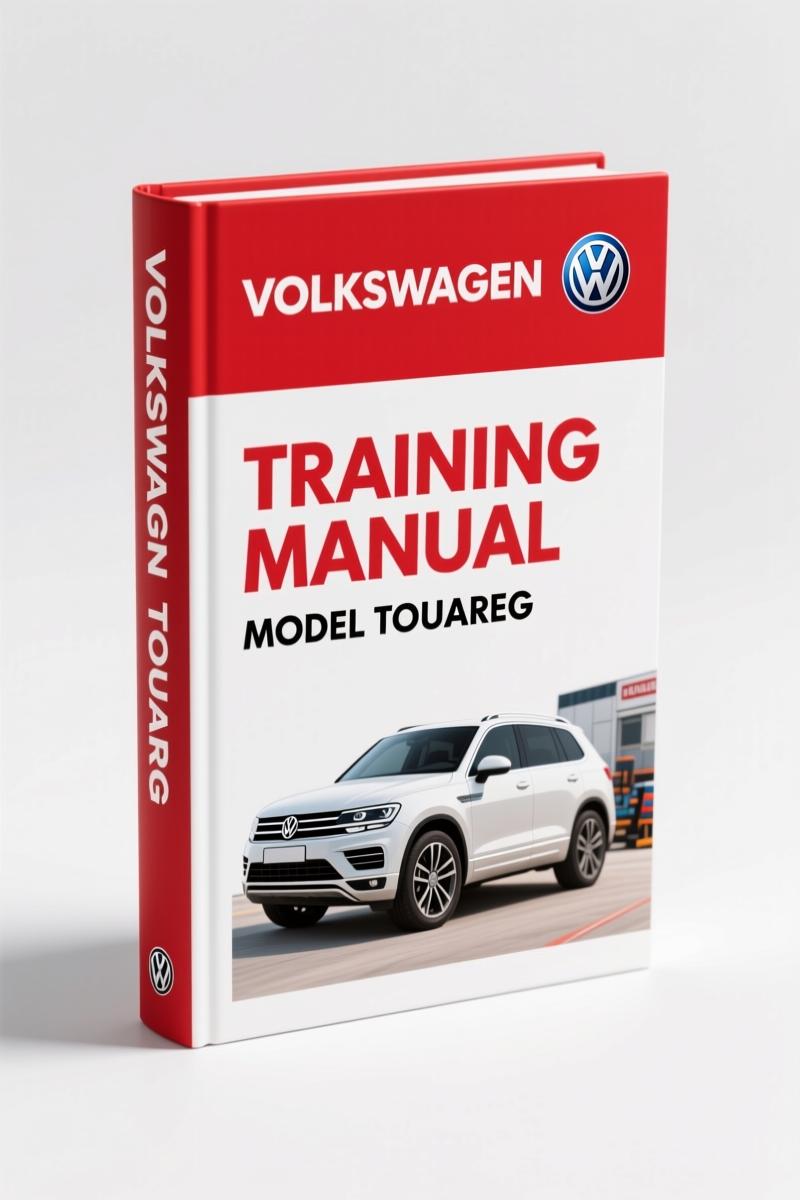
Volkswagen Passat, Touareg, Phaeton Training Manual – 56 Pages
Original price was: $39.60.$30.00Current price is: $30.00.
OEM training manual covering TPMS design and function for Volkswagen Passat, Touareg, and Phaeton. 56 pages of factory-level diagnostics.
Description
Volkswagen Passat, Touareg, Phaeton Training Manual: TPMS Design and Function
You’re staring at a tire pressure warning light on a Volkswagen Passat, Touareg, or Phaeton. Grab a generic aftermarket guide and you’ll waste hours chasing the wrong fault codes. This Training Manual comes straight from Volkswagen’s service training program. It’s 56 pages of design theory, system logic, and the exact procedures the factory techs use. I’ve been turning wrenches for 28 years, and I can tell you—when the TPMS light comes on, you need to understand how the system thinks, not just where the sensor lives.
TPM Tyre Pressure Monitor Display: Software-Based Monitoring
Starting on page 8, the manual breaks down the TPMD system. Volkswagen uses a purely software solution that relies on wheel speed sensors to detect pressure loss. If you’re working on a North American model, pay attention to the note at the bottom of page 3—this system is not used in NAR vehicles. That alone saves you from chasing a ghost on a Passat built for our market. The manual explains the logic behind false alerts and how to distinguish a real pressure drop from a wheel speed mismatch.
TPM with Position Recognition: Touareg and Phaeton Systems
Page 22 picks up the TPM with position recognition used in the Touareg and Phaeton. Each wheel has its own sensor, and the car knows which corner is low. The manual lays out the radio-frequency communication, sensor IDs, and the learning procedure after a tire rotation. I’ve seen guys swap tires and forget to relearn the positions—that gets you a solid hour of diagnostic time down the drain. This chapter keeps you from making that rookie mistake.
TPM without Position Recognition: What the Passat Uses
The Passat gets the simpler system—TPM without position recognition, covered on page 34. You get a low-pressure warning, but the car won’t tell you which tire. That means you need a systematic approach to find the leak. The manual teaches you to use the service menu on the instrument cluster to read individual sensor pressures. No guesswork, just a known sequence of button pushes. Handy when a customer drops off a car with the message “Tire Pressure Monitor” lit up and you need to give them a quote in five minutes.
Service Section: Handling Sensor Replacement and Reset
Page 51 is where the real shop action happens. The service chapter covers sensor battery life expectations, proper torque for the valve stem nut (I’ve seen stripped threads from over-enthusiastic techs), and the reset procedure after a pressure change. Volkswagen specifies a specific sequence using the brake pedal and the hazard light switch to wake up a new sensor. Skip a step and the system won’t accept the new ID. The manual includes a warning about using only factory-spec rubber grommets—aftermarket ones can leak and send you back to square one.
Test Yourself: Check Your Knowledge
The last page, 52, has a self-assessment quiz. It’s not fluff—it tests your understanding of system limitations and diagnostic logic. If you can answer those questions without flipping back, you’re ready to work on any of these three models. I make my junior techs run through this before they touch a Passat TPMS job. Saves me from having to redo their work.
Why OEM Training Materials Beat Aftermarket PDFs
I’ve seen third-party manuals list the wrong sensor frequency or skip the special tool requirements for the Touareg’s receiver location. Volkswagen’s own training documents are the only source that matches the factory wiring diagrams and control module software versions. This isn’t a repair manual—it’s the background knowledge you need to use a repair manual correctly. For actual torque specs and fastener values, you’ll want the official workshop manual for your specific model year, like the Volkswagen Golf Passat Touran 2003-2006 Workshop Manual or the Volkswagen Passat 1996 Official Factory Repair Manual. If you need an index reference, check the Volkswagen Passat 1995 Repair Manual – Section: Index/Glossary. For broader industry context on TPMS technology, see Automotive Industry Overview. And if you’re working on a manual transmission vehicle, the principles in Manual Transmission still apply to the drivetrain side.
- Does this manual include torque specs for the wheel sensors?
- No. It only covers system design and function.
- Why would a DIYer need a training manual instead of a repair manual?
- A repair manual tells you where to bolt things and what torque to use. A training manual explains why the system behaves the way it does. For TPMS, understanding the logic behind the warning light saves you from replacing sensors unnecessarily. For example, the TPMD system on non-NAR cars can trip a false alert from a mismatched spare tire. If you don’t know that, you’ll swap a perfectly good sensor and still have the light on. This manual gives you that insight in 56 pages. Pair it with a factory repair manual for the actual replacement steps.
If you work on Volkswagens, this Training Manual belongs in your digital toolbox. It’s the shortest path to understanding how the TPMS thinks, whether you’re on a Passat, Touareg, or Phaeton. Access the Factory Manual now and stop guessing at warning lights.
Additional information
| Brand | Volkswagen |
|---|---|
| Language | English |
2 reviews for Volkswagen Passat, Touareg, Phaeton Training Manual – 56 Pages
You may also like…
-
Sale!

Volkswagen Phaeton Training Manual – Auxiliary Heater System (52 pages)
Original price was: $55.80.$45.00Current price is: $45.00. -
Sale!

Volkswagen Passat 1995 Repair Manual – Factory Wiring & Engine Specs
Original price was: $57.20.$40.00Current price is: $40.00. -
Sale!

Volkswagen Serie C 2003 Service Manual – OEM Factory Specs
Original price was: $53.60.$40.00Current price is: $40.00. -
Sale!

Volkswagen Golf Jetta GTI Service Manual – 4954 Pages Official Specs
Original price was: $95.55.$65.00Current price is: $65.00.
Related products
-
Sale!

2005 Parts Catalog – International NGD 3.0 L Engine (77 pages)
Original price was: $44.70.$30.00Current price is: $30.00. -
Sale!

Service Manual – International HS 2.8L Engine – 130 Pages of Factory Specs
Original price was: $56.40.$40.00Current price is: $40.00. -
Sale!
2004 Acura TSX Wiring Diagram – 73-Page Factory Electrical Schematics
Original price was: $15.88.$9.99Current price is: $9.99. -
Sale!

Acura Integra 1998 Service Manual – 1891 Pages Factory OEM Documentation
Original price was: $31.75.$25.00Current price is: $25.00.
Thomas B. –
Superb resource! The text is searchable and easy to navigate. Contains precise wiring diagrams for Volkswagen. Highly recommended for mechanics.
James L. –
Perfect factory service manual. The pages are clean and easy to navigate. Contains detailed bolt torque specs for Volkswagen. Saves me a lot of money.