
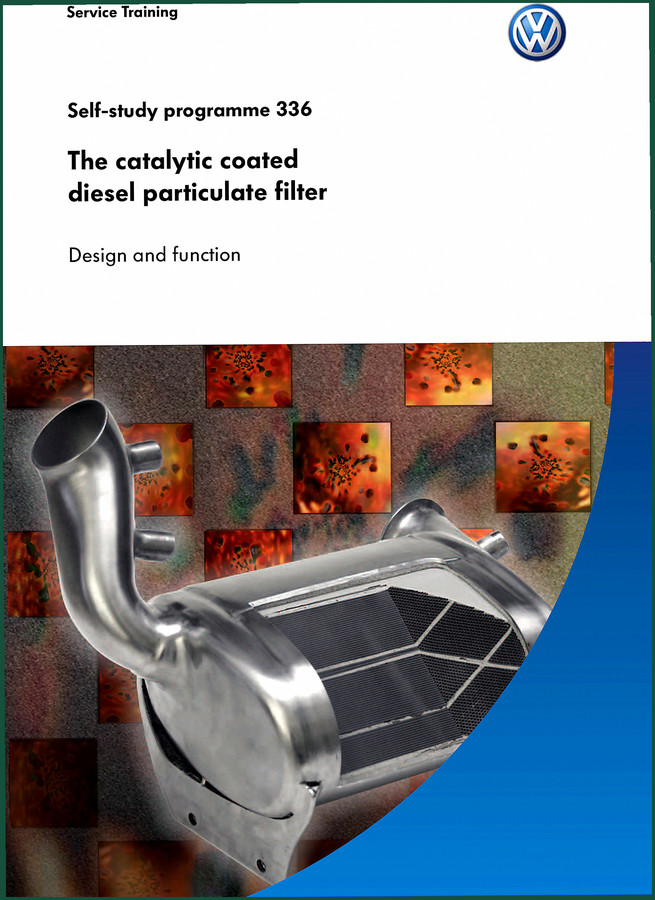
Volkswagen 336 Training Manual – DPF Design & Function
Original price was: $32.50.$25.00Current price is: $25.00.
Factory training manual for the Volkswagen 336 DPF system: design, function, sensors, and diagnosis – 36 pages of OEM content.
Description
Volkswagen 336 Training Manual – OEM DPF Diagnostics for the Working Tech
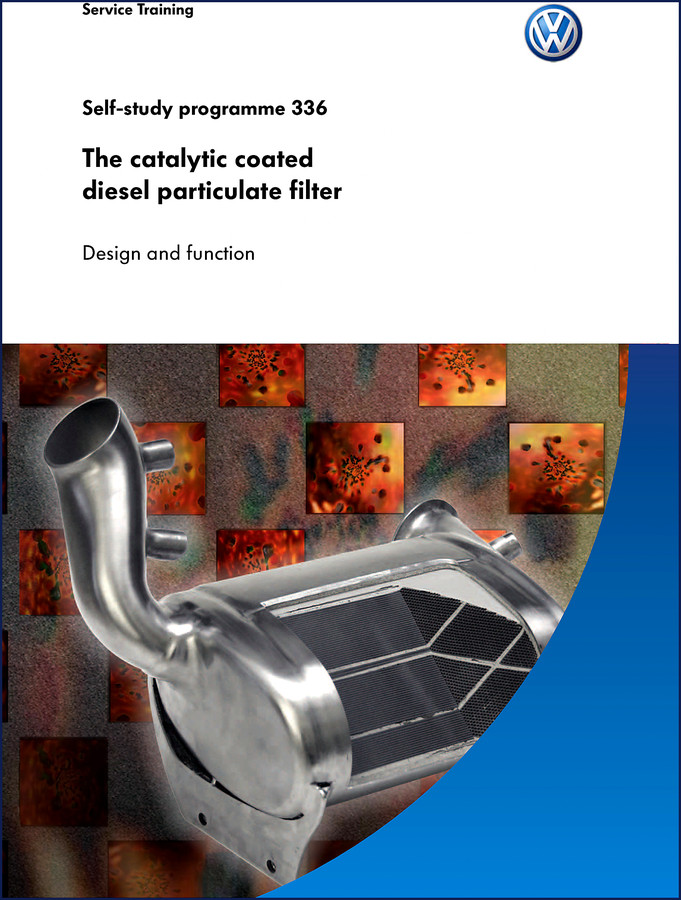
If you’re chasing a DPF regeneration issue on a modern diesel, you don’t need a generic internet article written by someone who never held a scan tool. You need to understand exactly how the catalytic coated particulate filter works, where the sensors are, and what the factory considers normal. That’s where the Volkswagen 336 Training Manual comes in. This is the same self-study programme Volkswagen gives its own techs before they touch a 336-equipped vehicle. 36 pages of straight, no-nonsense engineering explanation. I’ve been turning wrenches for 28 years and I still pull training manuals like this when a car comes in with a puzzling code. Aftermarket wiring diagrams? I’ve seen ground assignments that were pure fiction. OEM documentation like this one is the difference between a one-hour diag and a two-day headache.
Design and Function: What the DPF Is Actually Doing
Page 12 kicks off the meat of the manual: Design and function. It explains how the oxidisation catalyst and particulate filter are combined into a single canister. This is critical because the regeneration strategy depends on that close-coupled position. If you don’t understand why the filter sits right behind the turbo, you’ll misdiagnose a regeneration failure as a faulty sensor. The manual shows the flow path and the chemical process behind continuous burn-off – without fuel additives. That’s a key difference from older systems. Get this wrong and you’ll be replacing parts that aren’t bad.
Sensors and Actuators: Where to Look on Page 24
Page 24 lists every sensor and actuator in the system. Differential pressure sensor, exhaust temperature sensors before and after the filter, lambda probe position. The manual gives you the logic: what voltage the ECU expects, how temperatures trigger regeneration. No guesswork. You can cross-check live data against factory values. I’ve seen DIY guys replace a DPF only to find the pressure sensor hose was clogged. A training manual like this makes you look at the whole system instead of throwing parts at it. Pair it with a Volkswagen 2.3-ltr. V5 Training Manual – OEM Factory Specs if you’re dealing with multiple VW engine families.
System Limits: When the DPF Can’t Keep Up
Page 33 covers system limits. This is the part most aftermarket sources ignore. The manual tells you exactly when the DPF stops working effectively – low exhaust temperature, short-trip driving, high sulfur fuel. That’s not a sensor problem, it’s a usage pattern. If you try to force a regeneration on a car that’s been idling for 20 minutes, you’ll cook the oil. Volkswagen’s training manual spells out the boundary conditions so you don’t make that mistake. Safe operation matters more than speed.
Function Diagram: Tracing the Circuit Without Guessing
Page 32 has the function diagram. This is a full electrical and signal flow schematic for the DPF system. It shows how the ECU reads the pressure and temperature data, when it triggers post-injection, and how it monitors the result. I’ve used these diagrams to find a broken wire harness in under 10 minutes. Without it, you’re probing wires at random. The manual’s diagram is drawn by Volkswagen engineers, not some third-party reprint house. If you want to see an example of how OEM documentation gets used in real diagnostics, check out this Automotive Industry Overview from SAE International. Then come back and buy the real thing.
3 Reasons to Choose OEM Documentation Over Generic PDFs
First, accuracy. The voltage readings, resistance values, and pressure specs in this manual came straight from Volkswagen’s R&D. I’ve compared them to aftermarket repair databases – the offset errors are enough to send you down the wrong path. Second, completeness. The 36 pages cover everything from the chemistry of soot combustion to the test questions on page 35. Generic guides skip the hard parts. Third, safety. When you’re working with exhaust systems that hit 1100°F during regeneration, you need to know where to place pyrometers and when to let the system cool. The manual flags those hazards. Don’t trust your face to a photocopied aftermarket book.
If you’re also working on other platforms, check the Volkswagen Passat 2005 Training Manual – Technical Overview for drivetrain info, or the VW SSP 264 2000 Training Manual Brake Assist System OEM for brake electronics. Same factory quality, different system.
One more thing – the manual includes a self-test section on page 35. Use it to verify your understanding after reading. I make every new hire in my shop run through the test questions before they touch a DPF vehicle. It catches misunderstandings before they cost a customer time and money. That’s the kind of tool you want on the bench.
FAQ: Common Questions About the 336 Training Manual
- Does this manual cover regeneration procedures?
- It covers the design and function of the regeneration process, but not step-by-step repair instructions. For those you need the service literature. This is the theory that makes repair decisions make sense.
- Is this manual applicable to all Volkswagen diesel models?
- It focuses on the catalytic coated DPF used in 336-series applications. Not all VW diesels use this exact system. Check the engine codes listed in the introduction on page 4.
- Why is this only 36 pages?
- It’s a training manual, not a full workshop manual. 36 pages of concentrated explanation beats 200 pages of fluff. Every page has a purpose.
- Can I use this to reset DPF regeneration manually with a scan tool?
- No. The manual describes the system logic and limits. For forced regeneration, refer to the factory scan tool procedures in the official service literature. This manual tells you why, not how.
Look, I’ve been in this trade long enough to know the difference between getting it right the first time and burning a weekend chasing a ghost. The Volkswagen 336 Training Manual gives you the foundation you need to diagnose DPF problems like a factory tech. Stop relying on forum posts and knockoff PDFs. Access the Factory Manual and put real spec data on your bench.
Additional information
| Brand | Volkswagen |
|---|---|
| Language | English |
2 reviews for Volkswagen 336 Training Manual – DPF Design & Function
You may also like…
-
Sale!

Volkswagen Serie C 2003 Service Manual – OEM Factory Specs
Original price was: $53.60.$40.00Current price is: $40.00. -
Sale!

Volkswagen Passat 1995 Repair Manual – Factory Wiring & Engine Specs
Original price was: $57.20.$40.00Current price is: $40.00. -
Sale!

Volkswagen Golf Jetta GTI Service Manual – 4954 Pages Official Specs
Original price was: $95.55.$65.00Current price is: $65.00. -
Sale!

Volkswagen Phaeton Training Manual – Auxiliary Heater System (52 pages)
Original price was: $55.80.$45.00Current price is: $45.00.
Related products
-
Sale!

1989 Service Manual – International 2000-8000 Electrical Systems
Original price was: $72.00.$50.00Current price is: $50.00. -
Sale!
2004 Acura TSX Wiring Diagram – 73-Page Factory Electrical Schematics
Original price was: $15.88.$9.99Current price is: $9.99. -
Sale!

International 1000-3000 Series Operators Manual – 132 Pages of OEM Specs
Original price was: $14.40.$10.99Current price is: $10.99. -
Sale!
1996 Operators Manual – International 1000-4000 Series (246 pages)
Original price was: $15.28.$9.99Current price is: $9.99.
workshop_guy –
I am so happy with this manual. The text is searchable and easy to navigate. A must-have for any Volkswagen 336 DIYer doing repairs. Saves me hundreds of time.
diy_master –
Great OEM spec sheet. The file is very clear. It assisted me to troubleshoot my Volkswagen 336 engine. Saved my repair job! Thanks.