
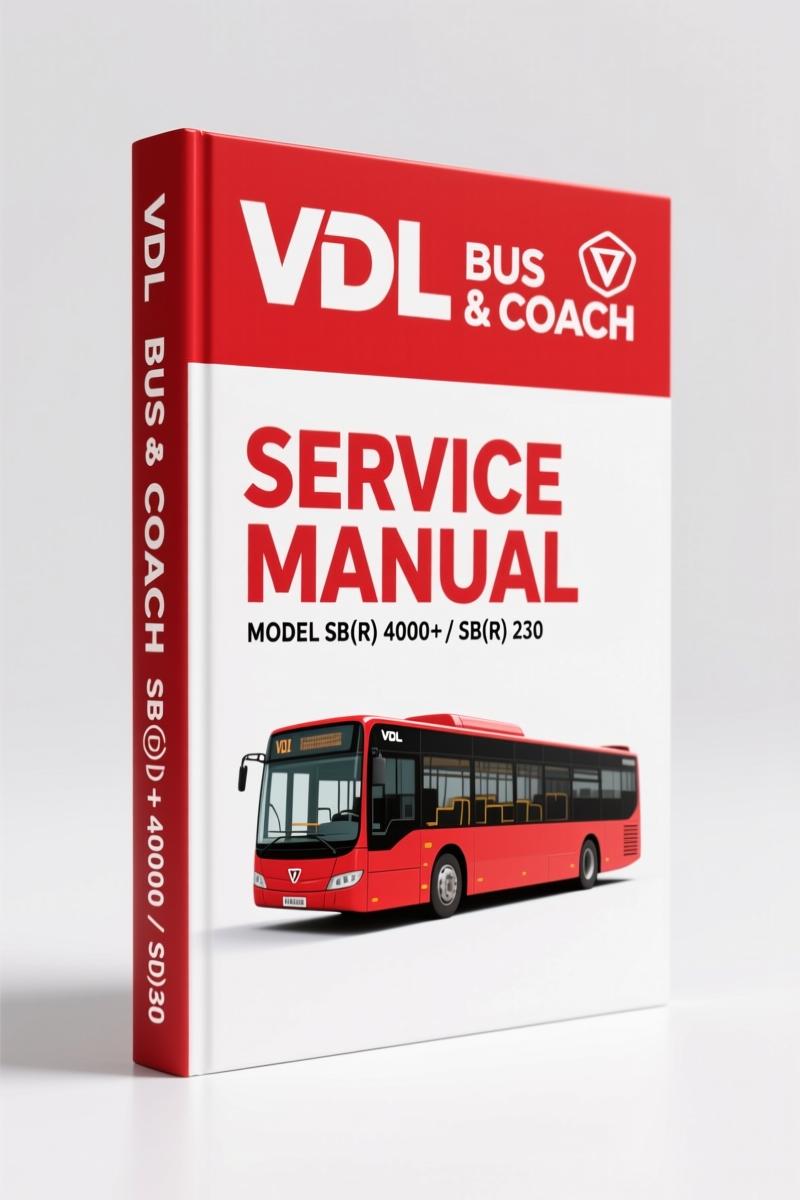
VDL BUS & Coach SB(R) 4000+ SB(R) 230 Service Manual — 40 Pages
Original price was: $29.80.$20.00Current price is: $20.00.
OEM 40-page service manual for VDL SB(R) 4000+/230 hydraulic fan drive. PR & MX engine variants. Factory specs, electrical/hydraulic inspection.
Description
VDL BUS & Coach SB(R) 4000+, SB(R) 230 Service Manual
If you’re wrenching on a VDL BUS & Coach SB(R) 4000+ or SB(R) 230, you need factory data, not a reprint from some third-party that skipped half the steps. I’ve seen aftermarket manuals slap a torque spec on a page that came from a different engine family—that’s how you snap bolts and send a bus to the bay for three days. This Service Manual from VDL is the real deal: 40 pages of OEM schematics, measurements, and safety notes written for the mechanic who’s been around hydraulic systems long enough to know when something doesn’t feel right. The manual covers both the PR-engine and MX-engine hydraulic fan drives, and it assumes you already know which end of a wrench to turn. That’s fine—I’d rather have a manual that respects your experience than one that talks down to you.
One thing you’ll notice right off: this isn’t a generic bus manual. It’s chassis-specific for the SB(R) 4000+ and SB(R) 230. Every diagram, every tolerance—they match what VDL put on the line. You get the hydraulic schematic diagram, layout of the fan drive’s hydraulic system, and a full set of specs on page 5. That page alone saves you the headache of guessing which pressure relief valve setting is correct for your engine variant.
Hydraulic Fan Drive PR-Engine: System Layout and Operation
The PR-engine section opens with a hydraulic schematic diagram and a clear explanation of how the fan drive operates. Page 1-2 walks you through the oil flow from the pump to the motor, pointing out where the thermostat valve and proportional valve sit. If you’ve ever swapped a fan drive only to find the temperature sensor was miswired, you’ll appreciate the detail here. The layout drawing on page 1-3 labels every port and hose connection. VDL doesn’t leave you to figure out which line is pressure and which is return.
Specifications on Page 5: What Torque Values Are Listed?
Page 5 holds the specifications for the PR-engine system—pressures, flow rates, and fluid capacities. You won’t find a table of torque values for every bolt in the bus; this manual focuses on the hydraulic fan drive. But for the critical fasteners on the fan motor mount and the pump flange, the tightening data is given. The MX-engine section has its own specification table on its own page 4. Both are in metric units, but you can convert them. I always keep a conversion chart in my toolbox. Need the charge pressure for the PR variant? Page 5. For the MX engine? Page 4 in that section. No flipping through 200 pages of unrelated content.
7 Systems Covered in the 40-Page Manual
Don’t let the page count fool you. This manual is dense—seven major subsystems within the fan drive are covered individually: temperature sensor, electronic unit, proportional valve, thermostat valve, axial piston pump (MX only), ED valve (MX only), and the fan-to-engine speed ratio. Each component gets its own inspection procedure and, where applicable, a functional test. For example, the electronic unit section (page 1-7 for PR, page 1-6 for MX) shows you how to check signal voltages without a breakout box. That’s the kind of detail you pay for when you buy OEM versus some cheap PDF that says “check the sensor.”
Electrical System Inspection: Follow the Factory Procedure
Page 1-12 in the PR section and page 1-12 in the MX section both cover electrical system inspection. VDL assumes you have a multimeter and know how to use it. The procedure steps you through continuity checks on the harness, resistance measurements across the proportional valve coil, and verification of the PWM signal from the electronic unit. If the fan isn’t ramping up when the engine gets hot, the manual gives you a flowchart that eliminates guesswork. No “try this part first” nonsense—you test, you diagnose, you replace only what’s broken.
Proportional Valve and Thermostat Valve: Adjustment Steps
The proportional valve section (page 1-9 for PR) includes the factory adjustment procedure for the current limit screw. I’ve seen guys screw that in all the way trying to get more cooling, and then wonder why the fan overspeeds and blows a hose. The manual tells you the exact number of turns from fully seated. The thermostat valve (page 1-11) is simpler—it’s a temperature-controlled bypass. But the manual lists the opening temperature range and the test method. Use a thermometer and a heat gun; don’t go by feel.
Related Manuals for the VDL Bus Line
If you’re working on multiple VDL chassis, you’ll want the VDL BUS & Coach SB 3000, SBR 3015, SB 2750 Operators Manual – 109 pp for daily driver tasks or the VDL BUS & Coach EST46/EST146 Diagnostics Manual – Pitcat Screens if you need deeper electrical diagnostics with PC-based tools. For the Citea electric bus platform, grab the VDL BUS & Coach Citea CLF PR-ND Technical Manual – 68 pp—it covers the hybrid fan drive system differently. This SB(R) manual, though, is your go-to for the diesel-powered 4000+ and 230 models. For background on how the hydraulic system interacts with the power source, you might read up on Internal Combustion Engine or the basics of Manual Transmission (though the fan drive doesn’t touch the gearbox directly).
- Does this manual cover the MX-engine variant?
- Yes. The manual is split into two sections—PR-engine and MX-engine—each with its own hydraulic schematic and component procedures.
- What kind of diagnostic information is included for the electronic unit?
- The electronic unit chapter (page 1-7 for PR, 1-6 for MX) covers signal voltage checks, PWM frequency measurement, and fault-code interpretation. It does not include full ECU flash instructions, but it does explain how to verify that the unit is sending the correct command to the proportional valve. If the unit fails any electrical test, the manual tells you to replace it—no repair procedure given. The book assumes the electronic module is a sealed assembly. You’ll also find wiring diagrams for the five-pin connector with pinouts and expected voltage ranges at key-on and engine running. This is the same data VDL gives to its dealer network. If you’re troubleshooting an intermittent fan lockup, start with the temperature sensor signal at the ECU input—page 1-6 shows you exactly which pin to probe.
- Is the manual suitable for a beginner mechanic?
- Not really. VDL states the mechanic must have experience and appropriate training. Beginners will struggle without a mentor to interpret the hydraulic schematics.
- Are safety regulations mentioned?
- Yes, the introduction states safety regulations must be strictly observed. The manual also warns about high-pressure oil and hot surfaces during inspection.
If you need to keep a 40-foot bus on the road and you’re tired of aftermarket manuals that skip the hydraulic schematic or give you the wrong proportional valve setting, this is the document that gets the fan spinning at the right RPM. Every page was printed from VDL’s own files—no reprints, no copy-paste, no generic diagrams. Access the Factory Manual and get back to turning wrenches with the right numbers in front of you.
Additional information
| Brand | VDL BUS & Coach |
|---|---|
| Language | English |
2 reviews for VDL BUS & Coach SB(R) 4000+ SB(R) 230 Service Manual — 40 Pages
You may also like…
-
Sale!

CDS 705C, 706C, 708C 1981 Parts Catalog – OEM Forklift Specs
Original price was: $61.60.$40.00Current price is: $40.00. -
Sale!
VDL BUS & Coach Citea CLF PR – ND Technical Manual 68 Pages
Original price was: $33.08.$22.50Current price is: $22.50. -
Sale!

VDL BUS & Coach SB 3000 SBR 3015 SB 2750 Operators Manual – OEM Specs
Original price was: $13.99.$9.99Current price is: $9.99. -
Sale!
VDL BUS & Coach EST46, EST146 Diagnostics Manual – 17 Pages
Original price was: $32.40.$22.50Current price is: $22.50.
Related products
-
Sale!

1993 Electrical Schematic – International 1000/3000/4000 Bus Chassis OEM Wiring Diagrams
Original price was: $29.26.$22.00Current price is: $22.00. -
Sale!
1994 Troubleshooting Manual – International 1000-4000 FBC
Original price was: $60.00.$50.00Current price is: $50.00. -
Sale!

1989 Service Manual – International 2000-8000 Electrical Systems
Original price was: $72.00.$50.00Current price is: $50.00. -
Sale!
1991 Electrical Schematic – 112-Page OEM Wiring Diagram for International 1000-3000 Series
Original price was: $22.75.$17.50Current price is: $17.50.
pro_mechanic –
I am extremely satisfied with this manual. Quick access after checkout process. It guided me to troubleshoot my VDL BUS & Coach BUS engine. I will recommend this shop to others.
Thomas B. –
This is exactly what I needed. The PDF quality is excellent. Every spec sheet is included for VDL BUS & Coach BUS. Saves me hundreds of dollars.