
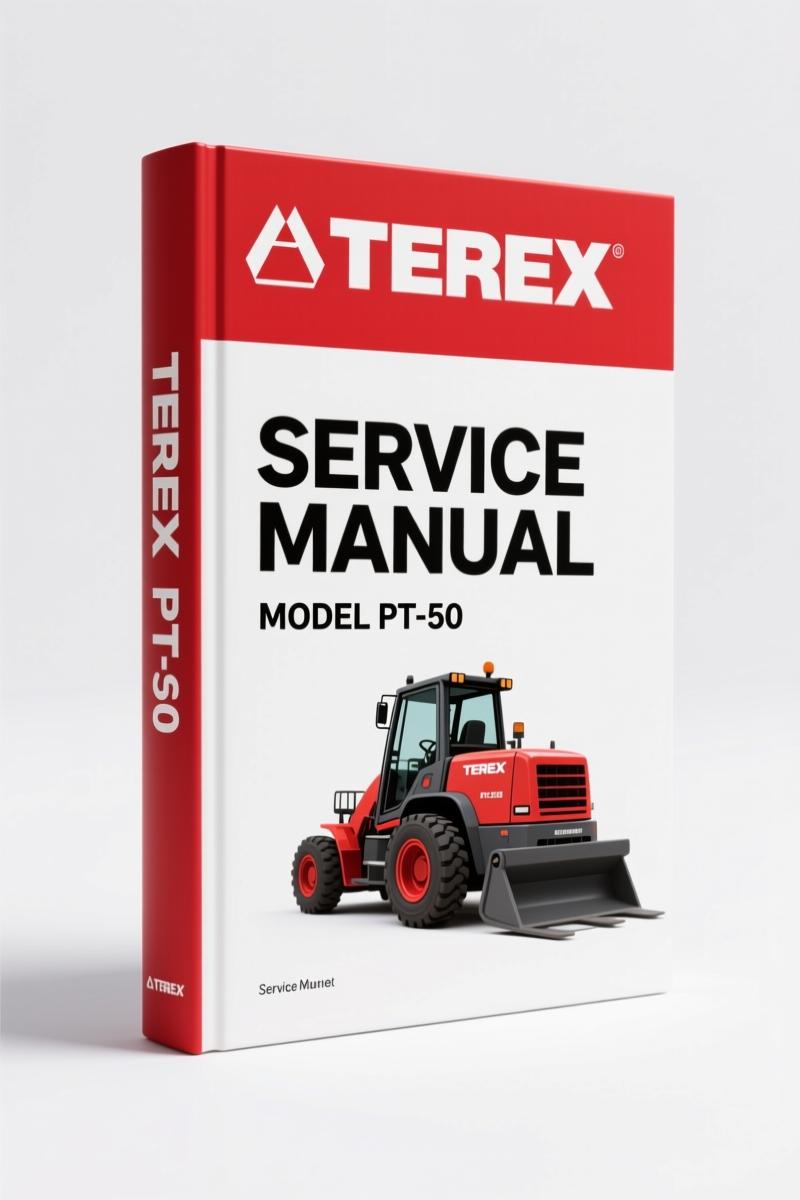
Terex PT-50, PT-60 2010 Service Manual – Factory Specs for Rubber Track Loaders
Original price was: $44.47.$31.99Current price is: $31.99.
Factory-certified 2010 service manual for Terex PT-50 and PT-60 rubber track loaders – 85 pages of torque values, diagrams, and procedures.
Description
Terex PT-50, PT-60 2010 Service Manual
I see this all the time: a guy gets a used PT-50 or PT-60, finds a .pdf from some third-party site, and starts wrenching. Then the drive loop won’t hold pressure, or the auxiliary circuit leaks, and he’s staring at a schematic that doesn’t match the machine. That’s why you come to Terex PT-50, PT-60 2010 Service Manual from AutoRepairManuals – an OEM factory print, 85 pages, no aftermarket reinterpretation. Every bolt torque, every pressure spec, every wire color came straight from Terex’s engineering floor in 2010. You want to fix a rubber track loader without chasing ghosts? Start here.
7 Systems Covered: From Drive Loop to Auxiliary Circuit
Section 3 of the manual breaks down the hydraulic systems the way a technician needs them: Filtering and Cooling System, Auxiliary Circuit System, Drive Loop System, and Electrical Attachment Outlet. Each comes with flow diagrams that show exactly where the fluid goes and what pressure it should see. If you’re chasing a low-power issue on a PT-60, you’ll start at the drive loop diagram (page 3-3) and work backward to the pump. No guessing – just follow the arrows and check the test points listed in the Testing Pressure chapter (page 14). That chapter alone will save you from replacing parts that aren’t bad.
Torque Specs and Fluid Capacities: Why the Factory Values Matter
You wouldn’t torque a cylinder head by feel, so why guess on a loader’s hydraulic fittings? The Technical Specifications chapter (page 2-1 for PT-50, page 2-2 for PT-60) lists everything from engine oil capacity to drive motor torque values. I’ve seen aftermarket manuals round down to 45 ft-lbs because it’s convenient. Terex doesn’t round. If they say 48 ft-lbs on the wheel-mount bolts, you use 48. That 3 ft-lb difference is the line between a bolt that holds and one that backs out under load. Stick to the factory numbers.
Product Safety Chapter: Not Just Bureaucratic Bloat
Section 1 covers Basic Precautions, Personal Protective Equipment, and Hot Fluids and Parts warnings. A lot of guys skip this section because they think they’ve heard it all. Then they crack a hydraulic line at operating temperature and get a face full of 180-degree oil. This manual also includes a corrosion inhibitor warning and battery handling procedures specific to these machines. If you’re working alone in a home garage, read the section on pressurized items – page 1-2 explains the risk of air in the hydraulic system. It’s not fluff; it’s the difference between walking away and limping away.
Does the Manual Cover the Fuel System?
It doesn’t. The Terex PT-50 and PT-60 share a common diesel engine platform, but this service manual focuses on the loader-specific systems: undercarriage, hydrostatic and auxiliary pump, loader and transmission controls, radiator and oil cooler, and operator enclosure disassembly. If you need fuel injection timing or injector replacement specs, you’ll want the engine manufacturer’s manual separately. What you do get here is the complete chassis teardown (Section 6), including light bar removal and ignition switch replacement procedures that are step-by-step, one step per line, with tool callouts.
The Manual’s 85 Pages: What’s Missing and Why That’s Fine
Eighty-five pages isn’t a thick book. But every page carries technical density. The Operator Enclosure Disassembly chapter (Section 5) covers the lap bar gas assist spring removal and installation – two pages, five steps each, with a required tool list. The Undercarriage chapter is split into two PDF bookmarks (part 1 and part 2) because the disassembly sequence is that detailed. If you need wiring diagrams for the electrical attachment outlet, they’re in Section 3. If you need troubleshooting logic for the hydrostatic drive, Section 15 walks you through it by symptom. The manual is lean, but it’s complete for the job it was designed for.
OEM vs Aftermarket: The Real Difference
I’ve tested aftermarket manuals that claimed to cover the PT-50. One of them used generic hydraulic schematics with a note that said “typical system shown – your machine may vary.” That’s useless when you’re trying to trace a leak in the auxiliary circuit. This manual was printed by Terex in 2010 (part number 2030-634) and distributed to dealers. The bookmarks match the printed TOC exactly. If you want the master parts breakdown, pair this service manual with the TEREX PT-50 Master Part Manual for part numbers, or the Terex PT-50 PT-60 2009 Service Manual – OEM Factory Specs if you need an earlier revision. For parts catalog die-hards, the Terex PT-50 2010 Parts Catalog – OEM Factory Manual gives you exploded views with callouts. All OEM, all from the same source.
One more thing: if you’re working on the transmission or any gear-drive component, the term “manual transmission” gets thrown around loosely. This service manual doesn’t cover that – it’s specifically for the rubber track loader. But for background on how those work, you can read up on the basics at Manual Transmission or Manual Transmission on Wikipedia.
- Can I use this manual for the PT-60?
- Yes, the PT-60 is covered in full alongside the PT-50.
- What pressure specs does the manual include for the drive loop?
- The System Diagrams chapter (Section 3) shows the drive loop flow path, and the Testing Pressure chapter (page 14) lists the actual test pressures for charge, drive, and auxiliary circuits. You’ll find values like charge pressure specification for the hydrostatic pump and case drain flow rates. The manual also includes the testing procedure: install a 5000 psi gauge at the pressure test port, run the engine at high idle, and compare the reading to the table on page 14. If you’re rebuilding the drive loop, you need that table – generic values will leave you either under-pressured and slow, or over-pressured and blowing seals.
You’ve read the specs, seen the TOC, and know the difference between OEM and aftermarket. If you’re serious about fixing your PT-50 or PT-60 right the first time, pull the trigger. Access the Factory Manual now and keep that 85-page document on your bench, not on some cloud drive you’ll forget about mid-job.
Additional information
| Brand | Terex |
|---|---|
| Language | English |
4 reviews for Terex PT-50, PT-60 2010 Service Manual – Factory Specs for Rubber Track Loaders
You may also like…
-
Sale!
Terex PT-70 2010 Parts Catalog – 34 Pages OEM Part Numbers
Original price was: $30,480.00.$24,000.00Current price is: $24,000.00. -
Sale!
Terex AC200-1 Training Manual – Boom Dismantling & Assembly OEM Procedures
Original price was: $93.75.$75.00Current price is: $75.00. -
Sale!
Terex TA40 G7 2006 Parts Catalog – OEM Parts Documentation
Original price was: $32,400.00.$24,000.00Current price is: $24,000.00. -
Sale!
Terex AC200-1 Training Manual – Brake System Factory Specs
Original price was: $91.50.$75.00Current price is: $75.00.
Related products
-
Sale!

1991 Electrical Schematic – 112-Page OEM Wiring Diagram for International 1000-3000 Series
Original price was: $22.75.$17.50Current price is: $17.50. -
Sale!

Acura Integra 1998 Service Manual – 1891 Pages Factory OEM Documentation
Original price was: $31.75.$25.00Current price is: $25.00. -
Sale!

Technical Manual – International 6.0L Power Stroke FICM Diagnostics
Original price was: $29.80.$20.00Current price is: $20.00. -
Sale!

2011 Parts Catalog – International Truck OE Parts Documentation (1786 Pages)
Original price was: $34.50.$25.00Current price is: $25.00.
Robert M. –
I am extremely satisfied with this manual. The PDF is high resolution. Contains precise schematics for Terex. Worth every penny.
gearhead88 –
Excellent OEM spec sheet. Instant access after checkout. Every wiring layout is included for Terex PT50,. Worth every penny.
William H. –
I am very pleased with this transaction. The document quality is excellent. It guided me to fix my Terex PT50, engine. Great value for money.
Charles W. –
Excellent workshop guide. The text is searchable and easy to navigate. It assisted me to repair my Terex PT50, electrical system. I will recommend this shop to others.