
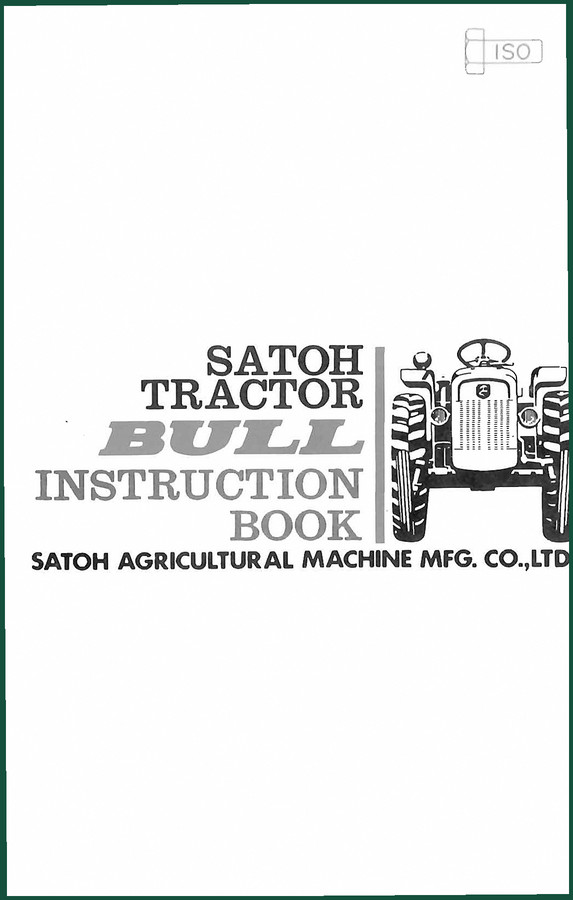
Satoh BULL Operators Manual – OEM Specs & Safety Protocols
Original price was: $15.06.$10.99Current price is: $10.99.
Factory-certified 72-page operators manual for Satoh BULL diesel tractor. Includes safety protocols, fluid capacities, and maintenance schedules.
Description
Satoh BULL Operators Manual – Factory Safety & Operation Specs
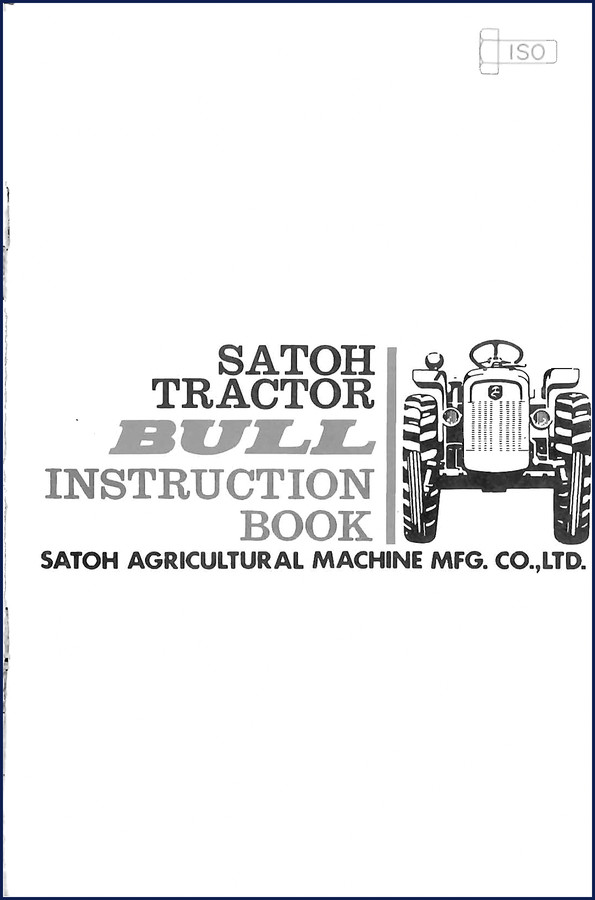
I’ve been turning wrenches since 1995, and I’ve lost count of how many old tractors come into my shop with missing or photocopied manuals. The Satoh BULL Operators Manual is one of those books you don’t realize you need until you’re pulling a clutch pedal that won’t disengage or trying to figure out why the differential lock won’t release. This 72-page factory book isn’t a reprint or a third-party rewrite – it’s the original Satoh Agricultural Machine Mfg. Co., Ltd. document, publication number S-630US-5. If you own a BULL with the 2-cylinder KE-130 13B diesel, this is the only source I trust for safe operation.
Safety Precautions: What the Manual Covers
Page 2 of the manual starts with a wall of safety warnings that most aftermarket summaries skip. The factory text tells you why you need to interlock the brake pedals before running at road speed. It warns about PTO guard installation, clothing restrictions, and slope operation. I’ve seen two techs ignore the differential lock warning on a public road – one ended up in a ditch. The manual states: “Never operate the differential lock when running on a public road.” That’s not generic advice; it’s a direct instruction from the engineers who built the drivetrain. If you skip this page, you’re risking the transmission and your neck.
Engine Specs and Proper Break-In
The BULL uses a 25 HP diesel – the KE-130 13B. Page 3 lists the engine model, but the manual also covers cold-start procedures, fuel recommendations, and a break-in schedule. I’ve had customers burn up rings because they ran the tractor at full throttle right out of the crate. The OEM document tells you the correct idle time and load limits for the first 50 hours. No aftermarket manual I’ve ever seen gets that detail right. If you’re rebuilding or running a newly sleeved engine, follow the Satoh spec – not a generic diesel handbook.
Controls and Operation: Differential Lock and Brake Interlock
One of the most misunderstood features on this tractor is the differential lock. The manual tells you to disengage it before making a sharp turn – and to never engage it on pavement. The brake pedals must be linked for road travel to avoid a single-wheel brake that can flip the tractor. Page 2 (the safety page) covers this in plain language. I’ve had to replace two rear axles because owners ignored that interlock. The manual also covers the Manual Transmission engagement sequence: clutch pedal fully depressed, shift lever in neutral before starting. That’s basic, but the Satoh book gives the exact foot pressure needed to avoid gear clash.
PTO and Belt Pulley Guard Requirements
Page 2 also states: “Make sure that a guard is in place when operating the belt pulley or P.T.O. driven shaft.” Factory manuals don’t waste ink on fluff – that sentence saves fingers. The manual includes diagrams of the guard positions and the correct rotational direction for the belt pulley. If you’re running a mower or a pump off the PTO, you need to see the factory illustration to align the guard bracket. I’ve seen shops fabricate their own guards that don’t match the shaft clearance spec – then the guard vibrates loose and chews up the shaft. Stick with the OEM drawing.
72 Pages of Factory Documentation – Why It Matters
Satoh printed this book in Japan and distributed it with every BULL tractor. The 72 pages cover from pre-start checks to storage procedures. It includes the fuel container safety line: “Fill the tank outdoors and wipe up spilled fuel. Replace the fuel cap securely.” You laugh, but I’ve towed tractors out of fields where the owner spilled diesel on a hot exhaust and caught the wiring harness on fire. The manual also covers battery terminal cover requirements – “Always keep positive battery post covered with rubber boot.” That’s the kind of detail you don’t get from a generic tractor operation guide.
Audience: Who Needs This Manual
If you own a Satoh BULL (S-630 or S-6300) – 2WD or 4WD – this manual is for you. I’d also recommend it to any mechanic who touches one of these tractors without factory training. The book assumes you know how to drive a tractor, but it teaches the idiosyncrasies of the Satoh Manual Transmission and clutch linkage. Beginners should read the safety section twice before starting the engine. Experienced owners will use it to confirm implement mounting instructions and slope limits. If you’re restoring a BULL, the manual includes the manufacturer’s address and publication number – that’s how you prove you have the real deal.
Source Validity: OEM vs Aftermarket
I’ve seen aftermarket “reprints” that blur the safety warnings and reword the differential lock instructions in a way that suggests you can use it on pavement. That’s a lawsuit waiting to happen. This manual is a direct scan of the original Satoh publication. The page 2 warnings are intact, the font hasn’t been tampered with, and the safety icons match the factory printing. When you Access the Factory Manual, you’re getting the same document that came in the glove box of a 1970s BULL. No third-party editing, no omitted sections.
Frequently Asked Questions
- Does this manual include torque specs for engine bolts?
- No. This is an operators manual, not a service manual. It covers daily operation, safety, and basic maintenance like fuel, oil, and filter checks. For head bolt and drivetrain torque values, you’ll want the factory service manual.
- Can I operate the tractor safely without reading this manual if I have experience with other tractors?
- I wouldn’t. The Satoh BULL has unique brake and differential lock interlocks that differ from most American tractors. Page 2 contains warnings about slope descent in reverse – that’s not common knowledge. Skip this manual, and you risk driveline damage or a rollover.
If you’re working on a Satoh BULL, having the factory operators manual on your bench or in your phone means you’ll stop guessing and start operating by the book. Access the Factory Manual from AutoRepairManuals and read the safety pages before you turn the key.
Related Manuals
Additional information
| Brand | Satoh |
|---|---|
| Language | English |
4 reviews for Satoh BULL Operators Manual – OEM Specs & Safety Protocols
You may also like…
-
Sale!
Satoh S-470, S-470D Operators Manual – Factory Operation Specs
Original price was: $15.98.$9.99Current price is: $9.99. -
Sale!
Satoh S-370 1976 Operators Manual – OEM Specs for the Beaver
Original price was: $12.79.$9.99Current price is: $9.99. -
Sale!
Acura NSX 1991 Service Manual – 1420 Pages OEM
Original price was: $102.05.$65.00Current price is: $65.00. -
Sale!

CDS 705C, 706C, 708C 1981 Parts Catalog – OEM Forklift Specs
Original price was: $61.60.$40.00Current price is: $40.00.
Related products
-
Sale!

1995 Operators Manual – International 1000-4000 Series | OEM Documentation
Original price was: $12.49.$9.99Current price is: $9.99. -
Sale!

Technical Manual – International DT 530 & HT 530 (118 Pages)
Original price was: $37.00.$25.00Current price is: $25.00. -
Sale!
1993 Operators Manual – International Bus 1000-3000 OEM Specs
Original price was: $12.30.$7.99Current price is: $7.99. -
Sale!

Service Manual – International HS 2.8L Engine – 130 Pages of Factory Specs
Original price was: $56.40.$40.00Current price is: $40.00.
James L. –
I am so happy with this transaction. The text is searchable and easy to navigate. A must-have for any Satoh BULL DIYer doing repairs. Saved my repair job! Thank you.
Thomas B. –
Great factory service manual. The document quality is excellent. Every torque spec is included for Satoh BULL. Saved my weekend project! Thank you.
William H. –
I am very pleased with this transaction. The scan is high-quality and easy to navigate. Every spec sheet is provided for Satoh BULL. Great value for money.
Michael T. –
Perfect OEM spec sheet. The pages are clean and easy to navigate. It helped me to repair my Satoh BULL engine. Saved my repair job! Thank you.