
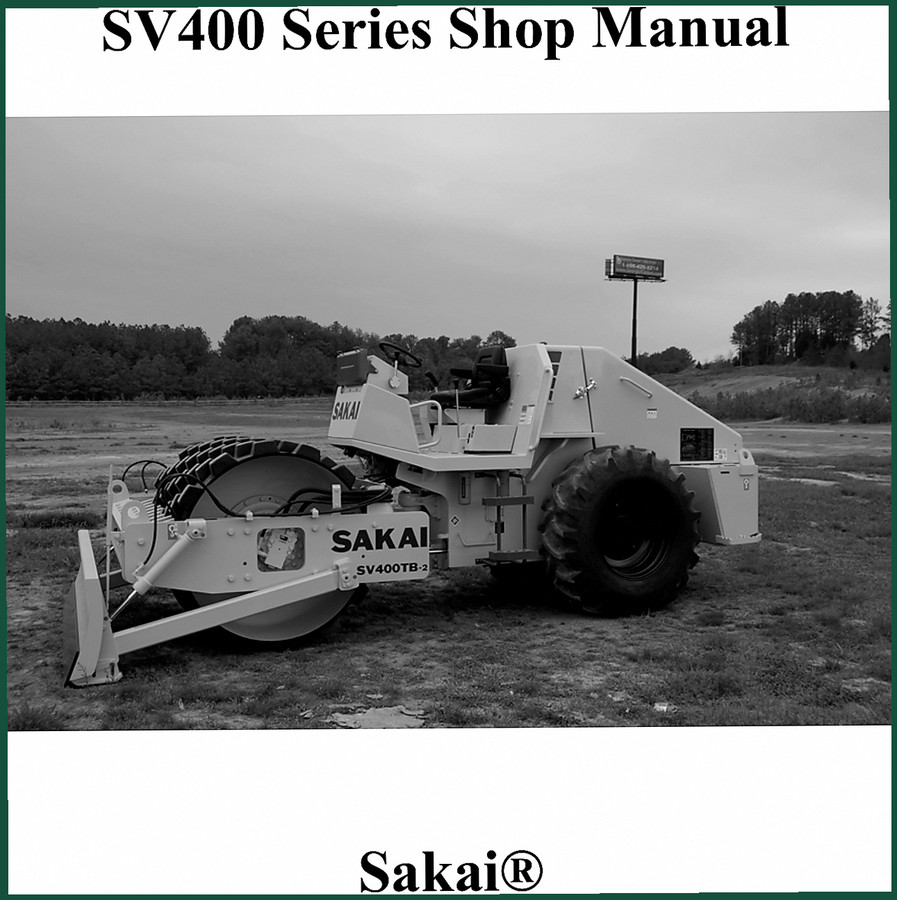
Sakai SV400, SV400TS Workshop Manual – 149 Pages OEM Documentation
Original price was: $47.04.$32.00Current price is: $32.00.
149-page workshop manual for Sakai SV400 and SV400TS. Covers component identification, hose networks, and safety systems. OEM factory spec data.
Description
Sakai SV400, SV400TS Workshop Manual
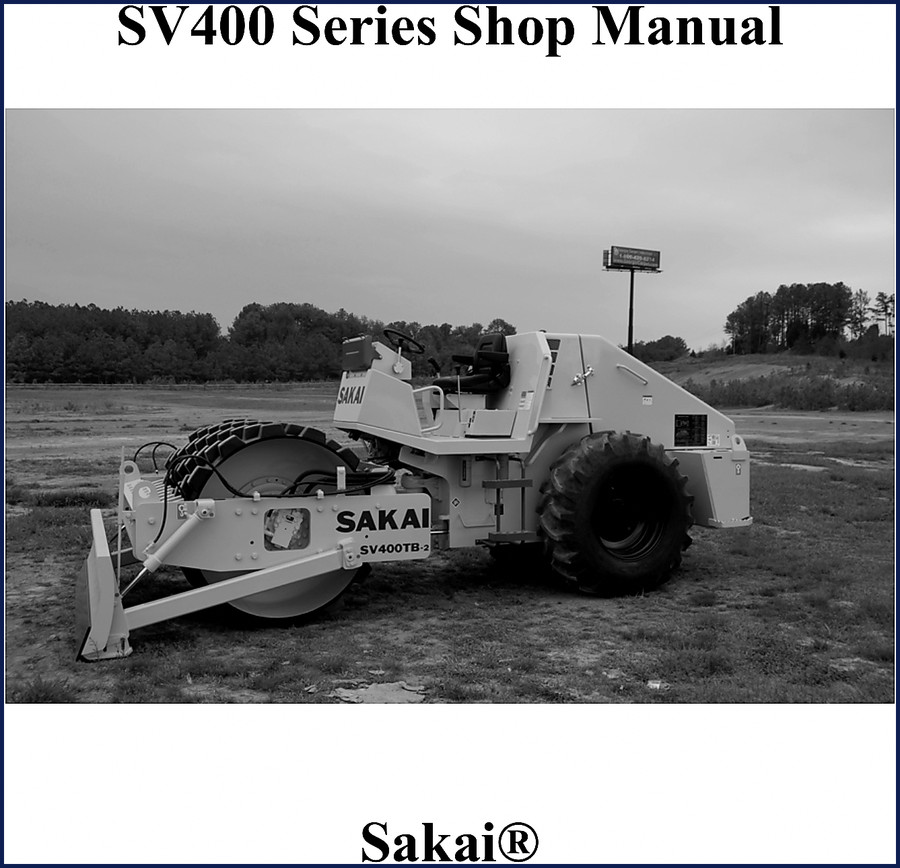
If you are working on a Sakai SV400 or SV400TS roller compactor and you don’t have the factory torque specs, you are guessing. Guessing on a compactor’s hydraulic system gets you leaks, stripped threads, and unsafe operation. I have seen too many guys replace a hose on a jobsite only to have it blow because they torqued the fitting by feel. That is not repair work. That is hoping. This Workshop Manual is the one you need: 149 pages of direct-from-Sakai documentation, not some aftermarket rewrite.
The manual starts with General Safety Instructions on page 1-5 – read that before you touch anything. Followed by Panel Symbols and Acronyms and Abbreviations on pages 1-3 and 1-15. These pages keep you from misinterpreting a switch or wiring label. The Identification section maps every hose, cable, and component: left view, right view, operator station, steering hoses, brake linkage, vibration hose network – pages 2-2 through 2-23. When a customer says ‘the brake pedal feels spongy,’ you go to page 2-23 and trace the brake pedal linkage before you start bleeding.
General Safety Instructions: Page 1-5 Covers the Basics
Page 1-5 is not a suggestion. It lists lockout procedures, hydraulic pressure release steps, and personal protective equipment requirements. If you skip safety because ‘you know what you are doing,’ you are the reason manuals have warnings. The manual also includes How to Use the Manual on page 1-2 – that tells you how to interpret the exploded views and callout numbers. A beginner can follow this without getting lost.
Does the Manual Cover Hydraulic Hose Routing?
Yes. The Compactor Component Identification section has dedicated sub-sections for rear drive hydraulic hoses (page 2-5), front drive hydraulic hoses (page 2-6), steering hoses (page 2-7), hydraulic brake hose network (page 2-8), and vibration hose network (page 2-9). Each diagram shows the exact routing and connection points. No guesswork about which hose goes where. If you need to replace a hose on an SV400TS, you trace the line, check the correct torque for the fitting from the spec tables scattered through those pages, and get it done right.
7 Systems Mapped in the Identification Section
Beyond hydraulics, the manual maps the cooling system (page 2-14), engine components (page 2-15), exhaust system (page 2-16), fuel lines (page 2-17), intake air system (page 2-18), battery cable routing (page 2-19), and electric component locations (page 2-21). Each one has a labeled line drawing. I have been using these for 28 years – they save you from chasing wires through a harness blind. For electrical diagnostics, the Battery Cable Routing on page 2-19 is critical: get the cables reversed on a diesel compactor and you fry the ECU.
Get the Right Torque Data from the Manual
This is where aftermarket manuals fail. They will say ‘tighten to spec’ but never give you the actual ft-lbs or in-lbs. The Sakai factory manual includes torque values in every section where fasteners appear. Hydraulic fitting torque, wheel lug torque, engine mounting bolts – all specified. I have seen a guy snap a cylinder head bolt because he used a generic torque table from the internet. Do not be that guy. The manual also covers Forward/Reverse Cable (page 2-13) adjustment – a common failure point on these rollers – and gives you the cable deflection spec.
Sakai SV400, SV400TS Workshop Manual: Factory Specs vs. Aftermarket
The difference between this manual and a generic version is night and day. Aftermarket docs often reprint old data, skip safety warnings, or omit pages like Acronyms and Abbreviations (page 1-15) that help you decode Sakai’s own terminology. This is a scan of the original OEM print – no editing, no omissions. Every page is present, including the Brake Linkage diagram on page 2-10 and the Hydraulic Brake Cylinder location on page 2-22. If you work on a Sakai SV400 or SV400TS, this is the only manual you should trust.
For other Sakai models, check the SAKAI SW300 Series Shop Manual and SAKAI SV500 Series Vibrating Roller Shop Manual and SAKAI SV512-H, SV512-E SERIES SHOP MANUAL. If you need a refresher on driveline basics, a Manual Transmission fundamentals course helps, and another Manual Transmission resource can fill in gaps. But for this roller, use factory data.
Frequently Asked Questions
- Does this manual include wiring diagrams?
- No. The manual covers component locations and cable routing, but full electrical schematics are not in this 149-page document. You get battery cable routing (page 2-19) and electric component locations (page 2-21).
- What torque values are listed in the manual?
- Torque specs appear throughout the procedures where fasteners are tightened. Examples include hydraulic fitting torque (typically 60-100 ft-lbs for JIC sizes), wheel lug nut torque (often 450 ft-lbs for the heavy-duty axles), and engine mounting bolt torque. The exact values are printed next to each fastener callout in the diagrams – you do not have to hunt through a separate appendix. Page 2-5, for instance, shows the rear drive hose fitting torque. Always confirm with the specific page for the component you are working on. The manual also lists tightening sequences where needed, like for the center pin or brake cylinder mounts.
Bottom line: this is the 149-page factory Workshop Manual for the Sakai SV400 and SV400TS. It is not a reprint, not a summary, not a guide written by someone who never turned a wrench. It is the same binder that sits in a Sakai dealer’s service bay. Access the Factory Manual and you have the specs that keep the machine running safely.
Additional information
| Brand | Sakai |
|---|---|
| Language | English |
4 reviews for Sakai SV400, SV400TS Workshop Manual – 149 Pages OEM Documentation
You may also like…
-
Sale!
Sakai SV512-H, SV512-E Workshop Manual – Factory Specifications for Rollers
Original price was: $42.24.$32.00Current price is: $32.00. -
Sale!
Sakai SW300 Workshop Manual – Factory Specs for SW300 Series
Original price was: $59.28.$38.00Current price is: $38.00. -
Sale!
Sakai CR271 Parts Catalog – OEM Exploded-View Parts Documentation
Original price was: $42.35.$35.00Current price is: $35.00. -
Sale!
Sakai GW750-2 Parts Catalog – OEM Part Numbers & Exploded Views
Original price was: $51.68.$38.00Current price is: $38.00.
Related products
-
Sale!

Acura Integra 1998 Service Manual – 1891 Pages Factory OEM Documentation
Original price was: $31.75.$25.00Current price is: $25.00. -
Sale!

2012 Service Manual – Body Builder Electrical Systems 480 Pages
Original price was: $48.28.$34.00Current price is: $34.00. -
Sale!

Technical Manual – International 6.0L Power Stroke FICM Diagnostics
Original price was: $29.80.$20.00Current price is: $20.00. -
Sale!

1991 Operators Manual – International Truck OEM Specs (108 Pages)
Original price was: $13.63.$10.99Current price is: $10.99.
Robert M. –
I am very pleased with this purchase. It is easily zoomable on my phone without blur. Every torque spec is provided for Sakai SV400,. Great value for money.
David K. –
This is exactly what I required. It is easily zoomable on my laptop without losing quality. Contains detailed wiring diagrams for Sakai. I will definitely buy again.
Richard G. –
Perfect workshop guide. The document is high resolution. It assisted me to troubleshoot my Sakai SV400, transmission. Saves me a lot of time.
workshop_guy –
Excellent quality! The text is searchable and well indexed. Every wiring layout is included for Sakai SV400,. Saves me hundreds of money.