
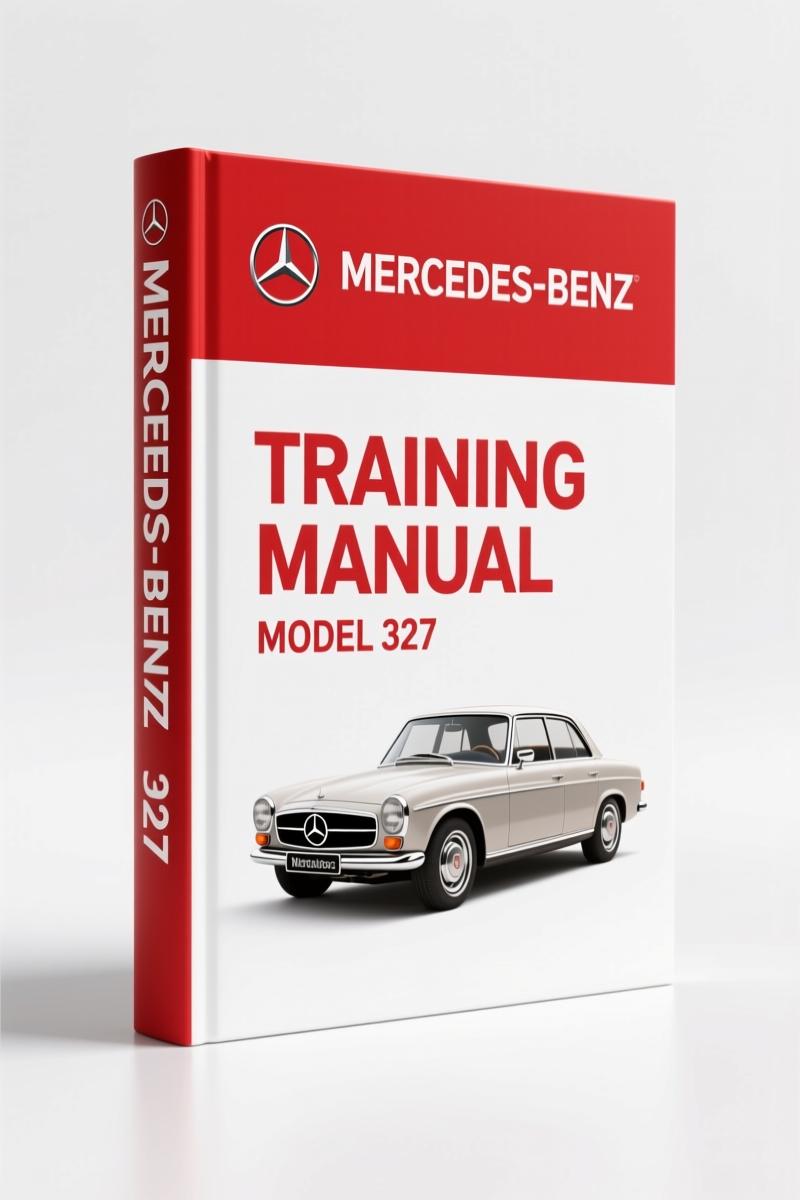
Mercedes-benz 327 2004 Training Manual – ABS System Diagnostics
Original price was: $52.13.$37.50Current price is: $37.50.
Factory ABS training manual for Mercedes-benz 327 (2004). 17 pages of hydraulic and electronic system diagnostics for certified mechanics.
Description
If you’re working on a Mercedes-benz 327 and the ABS light is on, you don’t need guesswork – you need to understand how the system works. I’ve been turning wrenches in San Antonio for 28 years, and I’ve seen more brake jobs go wrong because someone skipped the theory. This 2004 Mercedes-benz 327 Training Manual – only 17 pages – is not a service manual, but it is the exact training material Mercedes-Benz used to teach their own techs about the ABS system. That’s what you need before you start replacing parts.
Purpose of ABS: Why This Training Matters
Page 4 spells it out: automatic, electronic regulation of brake pressure to prevent wheels from locking up. Driver keeps steering control. Without that knowledge, you’ll misdiagnose a simple pulsation as a failed pump. The manual goes into why ABS exists and how it changes braking dynamics. If you’ve ever replaced a wheel speed sensor and still had a code, you probably missed the control logic.
Driving with ABS: What the Self-Test Tells You
Page 5 describes the self-test at 5 mph – that pedal pulsation you feel? It’s normal. The manual explains what the driver experiences during normal braking versus ABS intervention. It also covers the pedal pulsation during pressure release and the pump noise that accompanies it. Remember: ABS gives the driver the ability to steer. If you don’t understand that, you could tell a customer to ignore a warning that’s actually a correct system check.
Hydraulic and Electronic Components
The training manual breaks down the hydraulic components (page 7) and the electronic side (page 9). It lists the exact components: hydraulic unit, wheel speed sensors, and the electronic control unit. One of the objectives is to explain the difference between the two types of wheel speed sensors – inductive and magnetoresistive. That distinction matters when you’re testing resistance. A lot of aftermarket wire diagrams show the wrong pinout; this manual uses factory Mercedes-Benz engineering data.
Block diagram on page 17 ties it all together – you can trace the signal from each wheel sensor to the ECU and then to the hydraulic modulator. For a DIY mechanic trying to figure out why only the left rear wheel locks, this diagram is worth the price alone.
ABS Control Modes: Pressure Hold and Pressure Release
Pages 15 and 16 detail the two control modes. Pressure Hold – the system holds brake fluid pressure to prevent it from going higher when a wheel is about to lock. Pressure Release – it reduces pressure to let the wheel rotate again. The driver may not feel the hold phase, but they will feel the release as a pedal pulsation. If you skip these sections, you’ll never understand why the ABS modulator cycles during a stop. I’ve watched techs throw parts at a pulsing pedal because they didn’t know what normal operation looked like.
Why Factory Training Beats Aftermarket Summaries
This is an original Mercedes-Benz USA publication, copyright 2004. Pages 2 and 3 contain the official contents and objectives. The language is direct – no filler, no third-party interpretation. It warns you to always refer to the latest Mercedes-Benz Technical Publication and to use WIS when available. Aftermarket manuals often skip the training context and just give you torque values without explaining how the system behaves. You need both. Start with this training, then move to the service manual once you understand the theory.
Who Benefits from This 17-Page Manual
Home garage enthusiasts who want to learn ABS theory before touching the brake lines. Beginners who need to understand why the pedal pulses. Also shop owners who want to train their junior techs – this manual is the same one used in Mercedes-Benz classrooms. For those working on vehicles with a Manual Transmission, the ABS interaction during clutch engagement is important – the manual covers normal braking and ABS intervention to prevent lock-up during gear changes. Another use: if you’re diagnosing an intermittent ABS fault on a 327 that also has a Manual Transmission, this training will help you separate driver feedback from system failure.
Related Training Manuals
- Mercedes-Benz ASR Anti-Slip Regulation Training
- Mercedes-Benz ESP Electronic Stability Program Training
- Mercedes-benz 327 2004 Training Manual – Brake Assist System
- Does this manual include torque specs for brake calipers?
- No, this is training, not service.
- What exactly will I learn from these 17 pages?
- By the end you will be able to explain the function and purpose of ABS, describe the customer interface, list all hydraulic and electronic components, differentiate between the two wheel speed sensor types, and describe what happens during pressure hold and pressure release phases. You’ll also locate background and diagnostic information concerning ABS – exactly what Mercedes-Benz expects their own techs to know before touching a vehicle.
You need the real deal before you start wrenching on a 327’s ABS. Access the Factory Manual now and learn the system the way Mercedes-Benz intended.
Additional information
| Brand | Mercedes-benz |
|---|---|
| Language | English |
2 reviews for Mercedes-benz 327 2004 Training Manual – ABS System Diagnostics
You may also like…
-
Sale!
Mercedes-benz 380 SL Service Manual – 327 Pages OEM Specs
Original price was: $69.30.$45.00Current price is: $45.00. -
Sale!
Mercedes-Benz Actros Training Manual – Factory FR Module & Vehicle Control
Original price was: $84.70.$55.00Current price is: $55.00. -
Sale!
Mercedes-benz Actros 2011 Service Manual – 165 Pages
Original price was: $70.65.$45.00Current price is: $45.00. -
Sale!
Mercedes-benz 201 Wiring Diagram – 290-Page Factory Electrical Data
Original price was: $63.00.$45.00Current price is: $45.00.
Related products
-
Sale!

Technical Manual – International 6.0L Power Stroke FICM Diagnostics
Original price was: $29.80.$20.00Current price is: $20.00. -
Sale!

1991 Electrical Schematic – 112-Page OEM Wiring Diagram for International 1000-3000 Series
Original price was: $22.75.$17.50Current price is: $17.50. -
Sale!
2004 Acura TSX Wiring Diagram – 73-Page Factory Electrical Schematics
Original price was: $15.88.$9.99Current price is: $9.99. -
Sale!

2006 Service Manual – International DT 466E, 530E Diesel Engine
Original price was: $67.50.$50.00Current price is: $50.00.
Charles W. –
Perfect workshop guide. It is very easy to read on my iPad without losing quality. A must-have for any Mercedes-benz 327 mechanic doing repairs. Highly recommended for mechanics.
James L. –
Great buy! The PDF quality is excellent. A must-have for any Mercedes-benz 327 owner doing repairs. Worth every penny.