
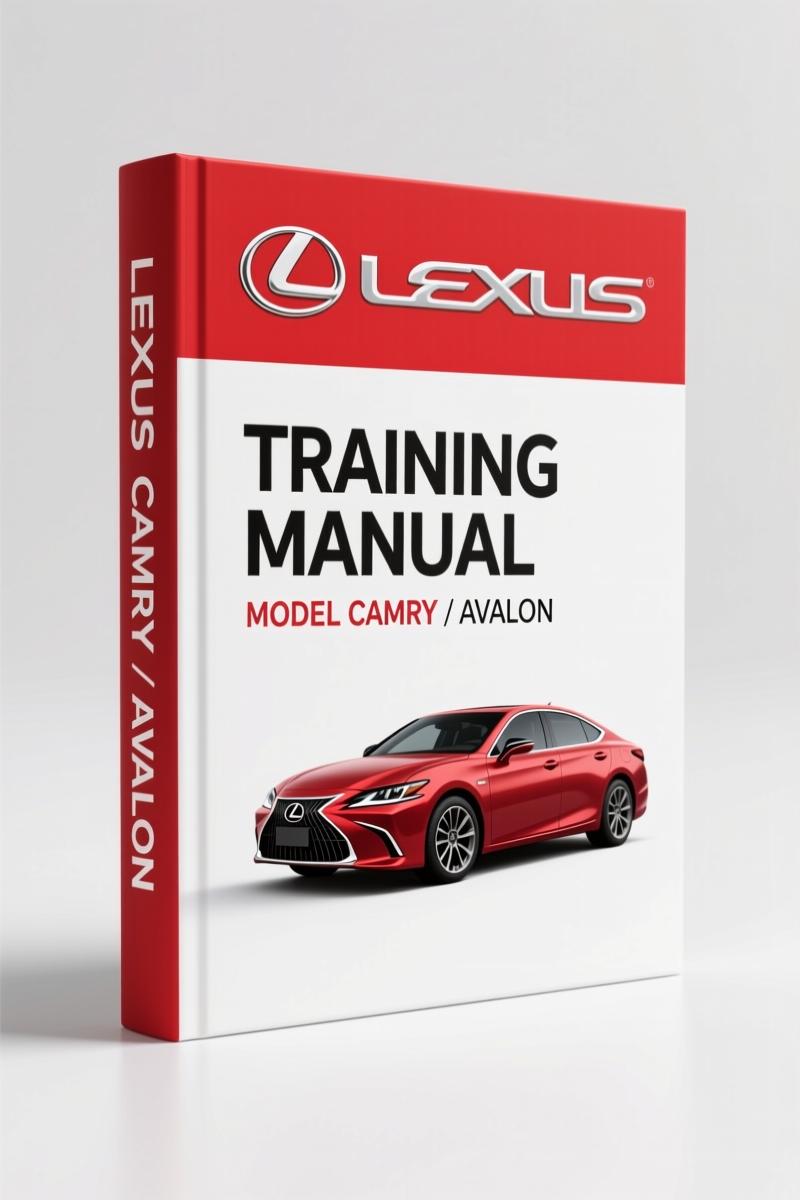
Lexus Camry, Avalon, Supra Technical Manual – TRAC System Diagnostics
Original price was: $29.03.$22.50Current price is: $22.50.
35-page Lexus Technical Training manual on TRAC systems for Camry, Avalon, and Supra. Covers component diagrams, torque control, and fail-safe functions.
Description
Lexus Camry, Avalon, Supra Technical Manual – TRAC System Training
You’ve got a 1997 Camry on the lift with the slip light stuck on, or maybe a Supra that cuts power under hard cornering. Without factory schematics, you’re tracing wires and guessing solenoid states – that burns billable hours and risks cooking an ECU. This Lexus Camry, Avalon, Supra Technical Manual is the exact 35-page training document Lexus used to teach its own technicians how the Traction Control System (TRAC) works. It’s not a reprint of some aftermarket rewrite; it’s the original OEM training material from Lexus Technical Training, printed on page 172 of their section 12 binders.
TRAC System: What This Training Manual Actually Contains
The whole document is split into five lesson objectives you’ll find on page 172: identify main TRAC components, describe their function, explain engine torque control on Camry and Avalon, describe the fail-safe function of the actuator, and list the primary differences between Camry/Avalon and Supra TRAC systems. Each section walks through the input-process-output flow – wheel speed sensors feed the ABS/TRAC ECU, which fires actuator solenoids and the pump motor while the ECM cuts fuel to up to five cylinders. You get the hydraulic brake application logic and the torque reduction strategy, both separated by model because the Supra uses a different actuator setup.
Camry/Avalon vs. Supra: Key Differences on Page 174
Page 174 lays out the component locations for Camry and Avalon – they share ABS components to control traction, while the Supra runs a dedicated TRAC actuator with its own pump. The manual calls out that the 1994 Turbo Supra introduced TRAC first, then it expanded to the six-cylinder Camry and Avalon in 1997. If you are working on a Supra that went into limp mode after a wheel speed sensor swap, this page shows you exactly which actuator solenoids to test and how the fail-safe mode differs from the Camry’s. Aftermarket manuals often blur these differences into one generic diagram – this factory document keeps them separate.
Why OEM Training Beats Aftermarket Documentation
I have lost count of how many times a third-party wiring book sent me down the wrong pinout. This Lexus technical manual is a photocopy of the actual training slide deck Lexus used in their service schools. The block diagrams on pages 1-3 match the OEM connector layouts you will find on the car. No one redrew them from memory. If you want to understand why the ECM denies fuel injection on five cylinders instead of all six during TRAC activation, the original engineers wrote that explanation. Aftermarket books leave that out because they do not own the engineering data. For shop owners, having the factory source document on hand cuts diagnostic time on traction-control complaints by at least an hour per job.
Safety Warnings for ABS/TRAC Work
You cannot bleed a TRAC actuator without the proper scan tool sequence or you will damage the pump motor. The manual warns that the pump motor runs at battery voltage and draws serious current – do not ground test the solenoid pack with a test light unless you want to fry the ECU driver. The slip indicator light circuit is covered on the input-process-output diagram: the ABS/TRAC ECU turns it on when the system activates, but if the light stays on, the manual shows you how to isolate a stuck solenoid or a failed wheel speed sensor. Every shop technician should print the two-page actuator hydraulic flow diagram and tape it to the toolbox for reference.
Who Should Use This Manual
Home garage enthusiasts who own a 1994-1997 Camry, Avalon, or Supra will finally understand why the engine stumbles when the tires start spinning. The manual does not give you routine service intervals or oil-change torque specs – it is a training document, not a full service manual. Pair it with a proper factory service manual for torque values and fastener specs. If you are a pro tech who sees one TRAC car a month, this 35-page book will save you the headache of chasing phantom electrical faults. Start by reading the lesson objectives on page 172, then go to the differences table on page 174 to see which test procedure applies to your chassis.
Related manuals that match this OEM training approach: See the Lexus Technical Training ABS Diagnosis”>Lexus Technical Training ABS Diagnosis for the hydraulic side, the Lexus LS430 Technical Manual – Wireless Door Lock Registration”>Lexus LS430 Technical Manual – Wireless Door Lock Registration for electrical body systems, and the 1999 Lexus RX 300 3.0L V6 Engine Adjustment Manual”>1999 Lexus RX 300 3.0L V6 Engine Adjustment Manual for engine tuning specs. For broader automotive technical context, the Automotive Industry Overview”>Automotive Industry Overview covers how traction control evolved, and the Manual Transmission”>Manual Transmission reference explains the drivetrain side of power delivery.
- Does this manual include every torque spec for the Camry engine?
- No. This is a TRAC system training document, not a full service manual. Torque values for head bolts, oil pans, and suspension fasteners are in the factory engine service manual. The torque for the ABS actuator bracket bolts is inside the ABS section – you need the separate Lexus ABS training manual for those numbers.
- Can I use the wiring diagrams in this PDF to trace a no-communication fault on a 1997 Avalon?
- The manual gives system-level block diagrams (ECU inputs and outputs), not chassis-specific connector pinouts. You will see the wheel speed sensors, actuator solenoids, and ECM injector control signals, but for detailed wire colors and connector locations you need the Lexus EWD (Electrical Wiring Diagram) for that model year. That said, the block diagram is enough to verify that the ABS/TRAC ECU receives signal from all four sensors – if one is missing, you know which wheel circuit to inspect with an oscilloscope. The fail-safe description on page 174 also tells you what the ECU does when a sensor fails, so you can distinguish a dead sensor from a stuck solenoid.
Access the Factory Manual now and get the exact training material Lexus gave its own technicians. Skip the guesswork on TRAC diagnostics – 35 pages of OEM procedure will pay for itself on your first traction-control repair.
Additional information
| Brand | Lexus |
|---|---|
| Language | English |
2 reviews for Lexus Camry, Avalon, Supra Technical Manual – TRAC System Diagnostics
You may also like…
-
Sale!
Lexus Camry, Avalon Training Manual – ABS Diagnostic Procedures
Original price was: $56.80.$40.00Current price is: $40.00. -
Sale!

Lexus ES330 2005 Repair Manual – Factory RM1124U
Original price was: $46.20.$35.00Current price is: $35.00. -
Sale!
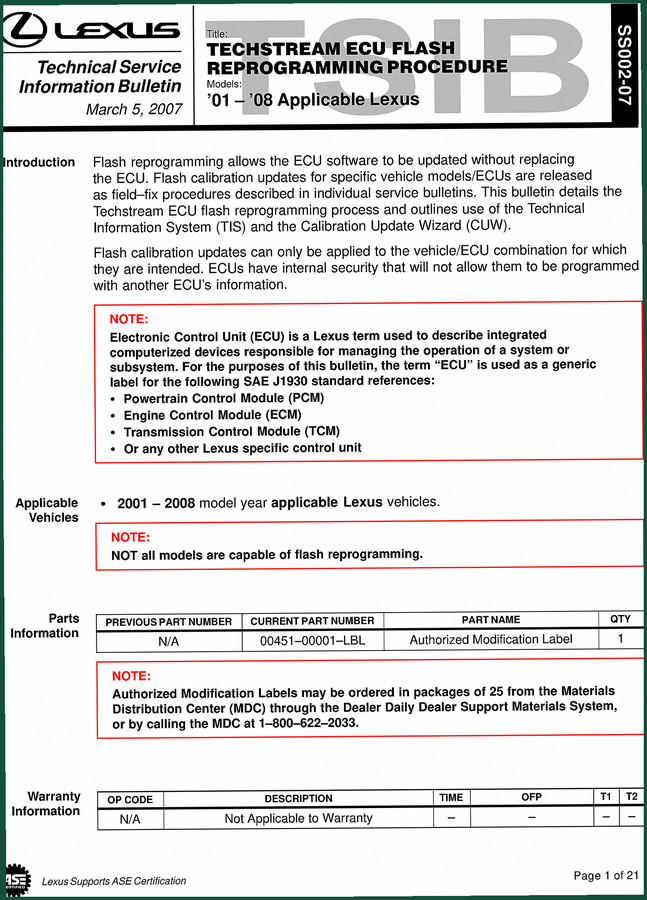
Lexus Lexus 2007 Technical Manual – ECU Flash Reprogramming
Original price was: $44.70.$30.00Current price is: $30.00. -
Sale!
Lexus ES 300 1998 Wiring Diagram – Factory Electrical Schematics
Original price was: $57.20.$40.00Current price is: $40.00.
Related products
-
Sale!

Service Manual – International HS 2.8L Engine – 130 Pages of Factory Specs
Original price was: $56.40.$40.00Current price is: $40.00. -
Sale!

1993 Operators Manual – International Bus 1000-3000 OEM Specs
Original price was: $12.30.$7.99Current price is: $7.99. -
Sale!
1996 Operators Manual – International 1000-4000 Series (246 pages)
Original price was: $15.28.$9.99Current price is: $9.99. -
Sale!

2011 Parts Catalog – International 7400 SFA 6X6 – 1886 Pages of OEM Part Numbers
Original price was: $32.00.$25.00Current price is: $25.00.
James L. –
Great buy! It is easily zoomable on my tablet without losing quality. Every torque spec is provided for Lexus Camry,. Saved my weekend project! Thanks.
Thomas B. –
This is exactly what I required. The text is searchable and well indexed. Contains clear bolt torque specs for Lexus. Worth every penny.