
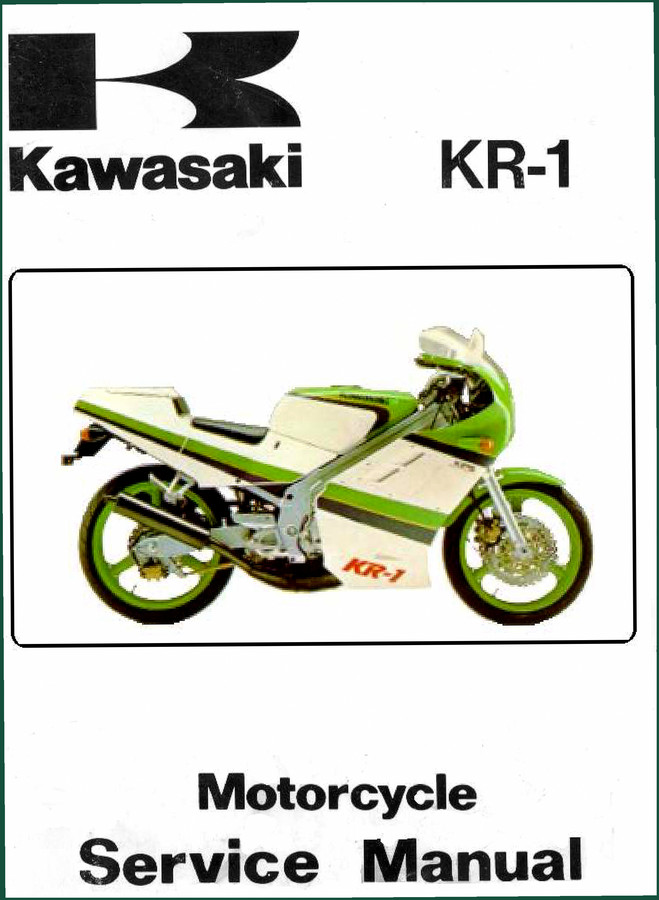
Kawasaki KR-1 Service Manual – Factory Specs & Procedures
Original price was: $37.20.$30.00Current price is: $30.00.
Factory-service manual for Kawasaki KR-1: 183 pages of torque values, fuel system diagnostics, and electrical schematics. OEM-sourced.
Description
Kawasaki KR-1 Service Manual
I’ve been turning wrenches for 28 years, and nothing burns my ass faster than a backyard mechanic who skips the torque sequence because an aftermarket PDF said “tighten until snug”. That’s how you crack a cylinder head or warp a brake rotor. This Kawasaki KR-1 Service Manual is the genuine OEM print — 183 pages of factory procedures that Kawasaki engineers wrote for their own techs. If you’re rebuilding the top end or chasing an electrical gremlin, you want the document that matches the bike on the lift, not some generic rewrite from a guy who’s never seen a KR-1 in person.
Before you touch a fastener, read the “Before Servicing” section on page 1-2. It tells you exactly how to disconnect the battery ground before disassembly — prevents sparks, accidental cranking, and fried electronics. The manual covers 16 chapters from General Information through the Appendix. You’ll find the Fuel System in Chapter 2, Cooling System in Chapter 3, and the whole Engine Top End in Chapter 4. Every chapter has its own table of contents with black tab indexing, so you can fold the pages back and find what you need without flipping through half the book.
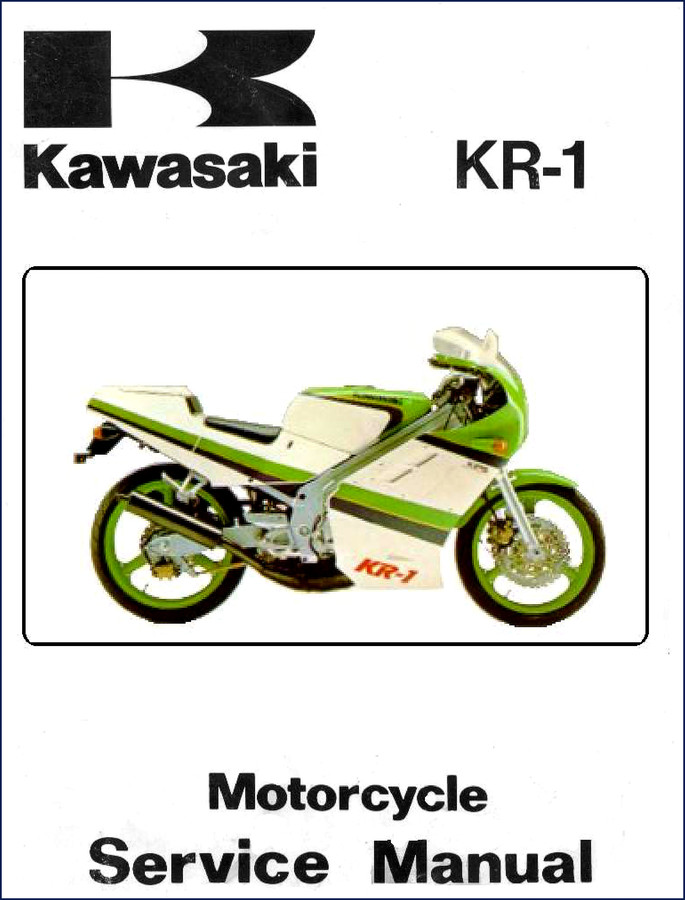
Fuel System: Chapter 2 Coverage
The Fuel System chapter walks you through carburetor disassembly, float level adjustments, and fuel line routing. Page 1-12 has the suggested wiring, cable, or hose routing diagrams — use that before you zip-tie anything. I’ve seen guys route the fuel hose over a hot cylinder head because they didn’t check the factory routing. That’s a fire waiting to happen. The manual shows the correct path so you don’t pinch or melt a line.
Does This Manual Cover the Crankshaft and Transmission?
Yes. Chapter 8 is labeled “Crankshaft/Transmission”. It covers crankshaft removal, bearing inspection, and transmission gear stack assembly. If you’re splitting the cases, you need the specs for main bearing clearance and shift fork alignment. The manual includes torque values for the connecting rod bolts and crankcase bolts — those are critical. Use a good torque wrench, not your calibrated elbow. For a deep dive on how a Manual Transmission works with the clutch and primary drive, this chapter is your guide. After you read the factory procedure, check out the Manual Transmission overview on Wikipedia for background theory.
3 Reasons to Use OEM Documentation Over Aftermarket
First, the torque and locking agent table on page 1-9 tells you exactly which bolts get threadlocker and how many ft-lb to apply. Aftermarket manuals often leave that out, and you end up with a loose cam sprocket or an oil leak. Second, the wiring diagrams in Chapter 15 are color-coded and match the actual harness. Third, the periodic maintenance chart on page 1-8 lists service intervals in miles and time — no guesswork. This is the document Kawasaki relied on.
Engine Top End Rebuild: What the Manual Reveals
Chapter 4 gets into cylinder head removal, valve clearance adjustment, and piston ring installation. The manual warns you about tightening sequence and cross-pattern torquing. Don’t skip that. If you torque the head bolts in the wrong order, you’ll warp the cylinder. The Cooling System chapter (Chapter 3) ties into this because you have to drain the coolant before you pull the head. Follow the steps in order — the manual is laid out so each step depends on the previous one.
Suspension and Steering: Factory Settings
The Suspension chapter (Chapter 12) covers fork oil capacity, damping adjustment, and rear shock service. The Steering chapter (Chapter 13) includes steering head bearing preload and alignment. If you’re replacing fork seals, the manual specifies the correct oil weight and volume — don’t guess. Use the factory specs and your ride won’t handle like a shopping cart. Related manuals like Kawasaki Ninja 250R Service Manual – 428 Pages of Factory Specs and Kawasaki KLX250 D-TRACKER X Service Manual – 558 Pages follow the same engineering standards. For a sportbike with similar electrical architecture, see Kawasaki Ninja ZX-6R Motorcycle Service Manual.
Electrical System: Factory Wiring Saves Your Hair
Chapter 15 covers the entire Electrical System — ignition, lighting, charging, and starting circuits. The manual includes voltage specifications for the regulator/rectifier and stator output. If you’re troubleshooting a no-start, start with the wiring routing diagram on page 1-12 and then go to the specific circuit. The schematic shows every connector location and wire color. I’ve fixed electrical problems in ten minutes using this manual that would have taken two hours with a generic Hayne’s. The Kawasaki factory book doesn’t mess around.
- What torque values are listed in this manual?
- Page 1-9 has a dedicated Torque and Locking Agent table covering engine, chassis, and brake fasteners. All values are in ft-lb.
- Does the manual include the cooling system bleed procedure?
- Yes, Chapter 3 covers coolant draining, flushing, and air bleeding. It specifies the coolant capacity in US quarts and tells you how to burp the system to prevent air pockets.
- Is the wiring diagram color-coded?
- Yes, Chapter 15 uses factory wire colors. The diagram is fold-out style with pin numbers for every connector. You can trace a short in minutes.
- What about final drive and brakes?
- Chapter 10 (Final Drive) details chain adjustment and sprocket replacement. Chapter 11 (Brakes) covers pad replacement, caliper rebuild, and bleeding. Torque specs for banjo bolts and caliper mounting bolts are on page 1-9. Bleed the system using the factory sequence—don’t pump the lever like crazy or you’ll push air in. Follow the manual exactly and you’ll get a solid pedal.
You can keep guessing with generic PDFs that skip the critical steps, or you can work from the document that Kawasaki trusted for their own dealerships. Access the Factory Manual and get the complete 183-page OEM service manual for your KR-1. No fluff, no reprints — just factory data you can torque to.
Additional information
| Brand | Kawasaki |
|---|---|
| Language | English |
4 reviews for Kawasaki KR-1 Service Manual – Factory Specs & Procedures
You may also like…
-
Sale!

Kawasaki 92ZV-2 2011 Workshop Manual – 541 Pages Factory Specs
Original price was: $83.20.$65.00Current price is: $65.00. -
Sale!

Kawasaki 85ZV-2 2011 Workshop Manual – 555 Pages Factory Specs
Original price was: $91.00.$65.00Current price is: $65.00. -
Sale!
Kawasaki Ninja ZX-10R Service Manual – Factory OEM Specs
Original price was: $60.75.$45.00Current price is: $45.00. -
Sale!
Kawasaki KLF 250, BAYOU 250 Service Manual – 322 Pages Factory Specs
Original price was: $63.00.$45.00Current price is: $45.00.
Related products
-
Sale!

2006 Service Manual – International DT 466E, 530E Diesel Engine
Original price was: $67.50.$50.00Current price is: $50.00. -
Sale!

2005 Parts Catalog – International NGD 3.0 L Engine (77 pages)
Original price was: $44.70.$30.00Current price is: $30.00. -
Sale!

2004 Acura TSX Wiring Diagram – 73-Page Factory Electrical Schematics
Original price was: $15.88.$9.99Current price is: $9.99. -
Sale!

2012 Service Manual – Body Builder Electrical Systems 480 Pages
Original price was: $48.28.$34.00Current price is: $34.00.
pro_mechanic –
Great buy! Instant access after payment. Every spec sheet is included for Kawasaki KR1. Highly recommended for mechanics.
Michael T. –
Excellent quality! The document quality is excellent. Contains detailed bolt torque specs for Kawasaki. Saves me so much time.
Charles W. –
I am very pleased with this purchase. The file looks clean. A must-have for any Kawasaki KR1 DIYer doing maintenance. Saved my weekend project! Thanks.
James L. –
This is exactly what I required. It is very easy to read on my phone without blur. Every torque spec is provided for Kawasaki KR1. Saves me hundreds of time.