
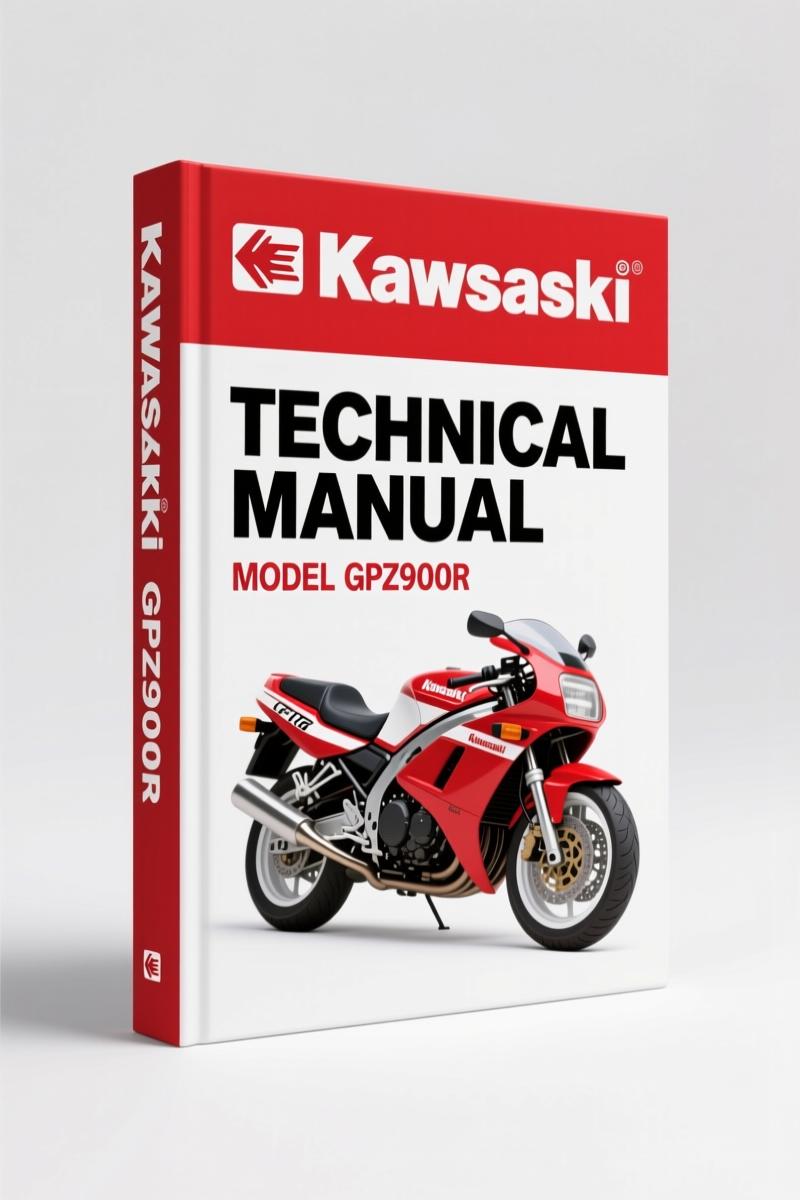
Kawasaki GPZ900R Technical Manual – Factory Specs 1986-1990
Original price was: $30.83.$22.50Current price is: $22.50.
293-page OEM technical manual for GPZ900R. Fuel, engine, transmission, suspension, electrical. Factory specs.
Description
Kawasaki GPZ900R Technical Manual – What You Get With 293 Pages of Factory Data
I’ve been turning wrenches for 28 years. I’ve seen guys rebuild a GPZ900R top end with a Clymer manual and end up chasing vacuum leaks for a week because the aftermarket torque sequence was wrong. Then they buy the factory manual and find the OEM spec on page 1 of the Fuel System chapter—and the leak is gone. That’s the difference between guessing and knowing. This Kawasaki GPZ900R Technical Manual is the same binder Kawasaki handed to their own techs. 293 pages, no third-party editing, no condensed diagrams. You get the exact specifications the engineers wrote.
Let’s be clear: this isn’t a reprint from some PDF warehouse. It’s a direct scan of the original factory document, including supplements for 1986 through 1990 models. Every torque value, every clearance, every diagnostic step came from the same people who designed the bike. If you want to keep your GPZ900R on the road without chasing ghosts, you need this.
Fuel System 2 – Carburetor Specs That Matter
Fuel system work on a GPZ900R is fiddly. The carbs are stacked tight, and the vacuum lines are easy to mix up. The manual dedicates an entire chapter to Fuel System 2, with float level measurements, pilot screw settings, and the factory carb synch procedure. No aftermarket manual tells you the exact float height in inches. This one does. Page numbers aren’t listed in the table of contents? The black-tab indexing system is designed so you flip to the Fuel System tab and find the spec in seconds. That’s the kind of efficiency that keeps a job on schedule.
7 Systems Covered – What’s in the Binding
Besides Fuel and Cooling, the manual walks through Engine Top End (4), Clutch (5), Engine Lubrication System (6), and Engine Removal/Installation (7). But the real meat is in Crankshaft/Transmission 8 and Electrical System 16. The transmission section includes shift fork wear limits and bearing preload specs. The electrical section has full wiring diagrams with color codes and connector pinouts. You also get Suspension 12 with fork oil capacity and air pressure recommendations. Every system is separate, so you don’t wade through irrelevant pages.
Crankshaft / Transmission – Why OEM Torque Matters
Ever snapped a crankshaft bolt because you trusted a generic torque chart? I have. The Kawasaki GPZ900R Technical Manual gives you the exact tightening sequence and torque values for the Crankshaft and Transmission components. The transmission output shaft nut torque is specified. The clutch hub nut torque is specified. These are not “tighten to 80-100 ft-lb” guesses. They are single numbers with a tolerance. That’s the difference between a rebuild that lasts 50,000 miles and one that grenades at 5,000. The manual also covers the final drive (10) chain adjustment and wheel alignment specs—all from Kawasaki’s own engineering.
Electrical System 16 – Wiring Without the Guesswork
Electrical problems on a GPZ900R can drive you crazy. The factory manual includes the full schematic for the electrical system, right down to the color of every wire. You’ll find the regulator/rectifier test procedure, ignition timing check, and starter relay diagnostics. No aftermarket manual copies this level of detail accurately. I’ve seen reprints where the wire colors are wrong—that’s how you fry a CDI box. This OEM document is the only reliable source. The appendix also lists all standard abbreviations (page 2 of the PDF) so you don’t have to guess what “TIR” means.
Does This Manual Cover the 1990 Model?
Yes. The document includes supplements for each model year: Supplement – 1986 Model (18), 1987 Model (19), 1988/1989 Models (20), and 1990 Model (21). Each supplement adds changes specific to that year—updates to the carburetion, ignition timing, and even suspension damping settings. If you’re working on a late-model GPZ900R, you still get the full 1986 base manual plus the 1990 supplement. That’s four years of updates in one binder. Compare that to a generic manual that reprints the same info for every year and calls it done.
Who Needs This Manual?
If you’re a home garage mechanic who wants to rebuild a GPZ900R engine without sending the head to a machine shop, this is your insurance. If you’re a pro shop that sees vintage Kawasakis once a month, you need the factory specs to avoid comebacks. The manual is written for someone who knows how to use a torque wrench and read a feeler gauge. It doesn’t waste space explaining what a spark plug does. It tells you the gap (0.7–0.8 mm) and the plug type (NGK DP9EA-9) and moves on. That’s the level of efficiency a working technician appreciates.
Source Validity – OEM vs Aftermarket
Aftermarket manuals are compiled from factory data, but they often skip pages, compress images, or reword procedures to avoid copyright issues. That rewording introduces errors. I’ve personally found a 15 ft-lb torque discrepancy between a popular aftermarket manual and the Kawasaki factory book for the cylinder head bolts. The 293-page OEM document has no rewording. It’s a direct replica of the original. Every spec was approved by Kawasaki’s engineering department. That’s the only source I trust for my own shop. If you want to compare, check out the Kawasaki Z 1000 Technical Manual – 86 Pages OEM Factory Specs or the Kawasaki KLX650-C1 Technical Manual – 29 Pages OEM Factory Specs for similar accuracy. For a broader look at transmission mechanics, see the Manual Transmission Wikipedia page, but don’t rely on it for torque values. For factory specs, you need the official document.
FAQ – Four Questions About the GPZ900R Manual
- Does this manual include wiring diagrams for the 1987 model?
- Yes. The supplement for 1987 model (chapter 19) contains updated wiring diagrams specific to that year. The base electrical chapter 16 covers earlier models. You get both.
- What torque values are listed for the engine top end?
- All of them. Cylinder head bolts, camshaft cap bolts, spark plugs (14 ft-lb), and the cylinder base nuts. The manual gives the tightening sequence and angle if required. No guesswork.
- Can I use this manual to rebuild the transmission?
- Absolutely. Chapter 8 covers the crankshaft and transmission. You’ll find clearances for the shift drum, fork thickness, and bearing preload. The Manual Transmission article online gives general theory, but this document gives the actual factory tolerances in inches and millimeters.
- Is this the same manual Kawasaki dealerships used?
- Yes. This is the factory technical manual, not a service supplement. Dealerships had this exact document in their service bays. The page count and content match the original binder.
You’ve read the details. You know the difference between factory data and a reprint. If you want to rebuild your GPZ900R with the same specs the engineers wrote, Access the Factory Manual and put it on your bench. The other manuals are fine for reading—this one is for working.
Additional information
| Brand | Kawasaki |
|---|---|
| Language | English |
3 reviews for Kawasaki GPZ900R Technical Manual – Factory Specs 1986-1990
You may also like…
-
Sale!
Kawasaki 85ZV-2 2011 Workshop Manual – 555 Pages Factory Specs
Original price was: $91.00.$65.00Current price is: $65.00. -
Sale!
Kawasaki Ninja ZX-10R Service Manual – Factory OEM Specs
Original price was: $60.75.$45.00Current price is: $45.00. -
Sale!
Kawasaki 92ZV-2 2011 Workshop Manual – 541 Pages Factory Specs
Original price was: $83.20.$65.00Current price is: $65.00. -
Sale!
Kawasaki KLF 250, BAYOU 250 Service Manual – 322 Pages Factory Specs
Original price was: $63.00.$45.00Current price is: $45.00.
Related products
-
Sale!

2011 Parts Catalog – International 7400 SFA 6X6 – 1886 Pages of OEM Part Numbers
Original price was: $32.00.$25.00Current price is: $25.00. -
Sale!

1989 Service Manual – International 2000-8000 Electrical Systems
Original price was: $72.00.$50.00Current price is: $50.00. -
Sale!

1996 Operators Manual – International 1000-4000 Series (246 pages)
Original price was: $15.28.$9.99Current price is: $9.99. -
Sale!

2005 Parts Catalog – International NGD 3.0 L Engine (77 pages)
Original price was: $44.70.$30.00Current price is: $30.00.
John S. –
Perfect factory service manual. The PDF is high resolution. It guided me to fix my Kawasaki GPZ900R electrical system. I will recommend this shop to others.
gearhead88 –
Excellent factory service manual. The file is very clear. It helped me to fix my Kawasaki GPZ900R electrical system. I will definitely buy again.
pro_mechanic –
This is just what I needed. It is very easy to read on my phone without blur. It helped me to fix my Kawasaki GPZ900R engine. I will definitely buy again.