
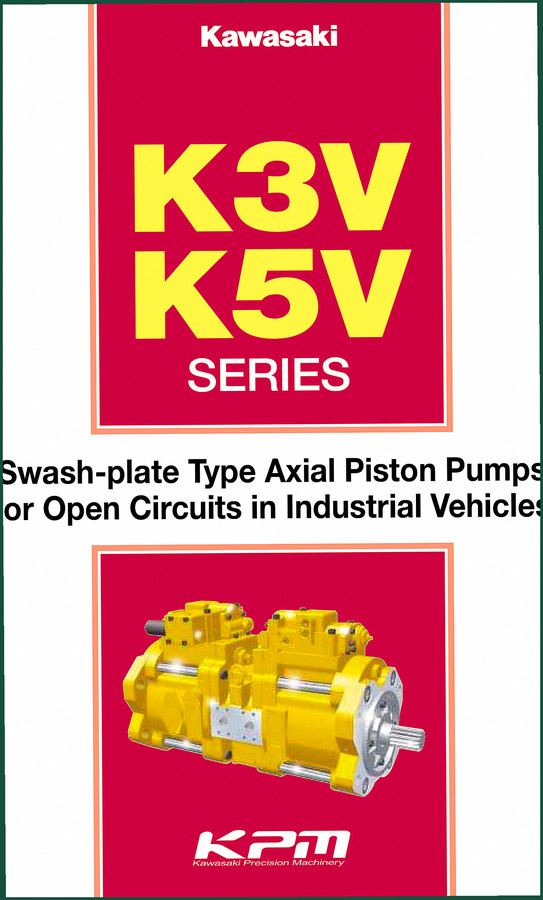
Kawasaki K3V, K5V Technical Manual – Factory Pump Specs for Certified Mechanics
Original price was: $36.60.$30.00Current price is: $30.00.
Factory Kawasaki K3V K5V Technical Manual: 15 pages of torque specs, safety precautions, and viscosity data for axial piston pumps.
Description
Kawasaki K3V, K5V Technical Manual – OEM Factory Documentation for Hydraulic Pump Repair
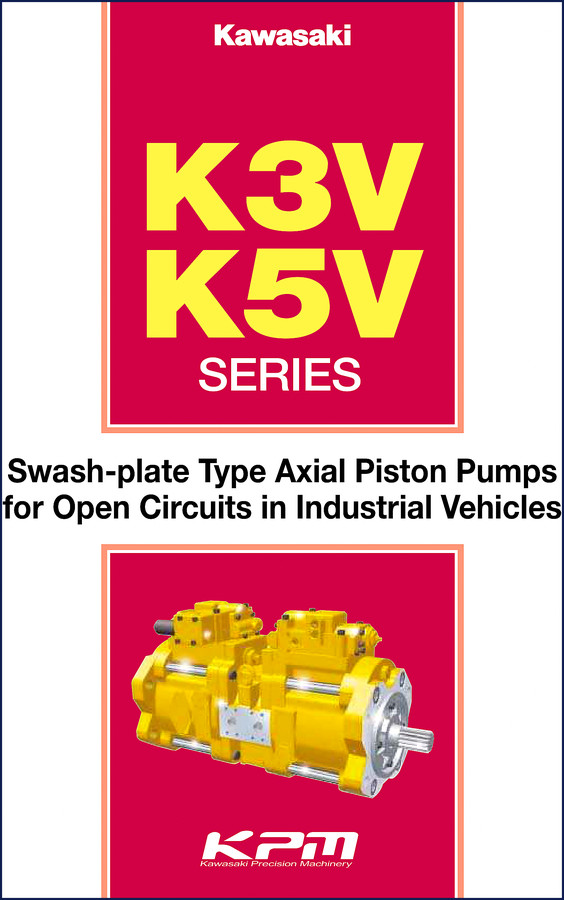
If you’re working on a Kawasaki K3V or K5V swash-plate pump and you’re relying on a generic aftermarket pamphlet, you’re wasting time and risking a leak. This Kawasaki K3V, K5V Technical Manual is the OEM document from Kawasaki Precision Machinery – the same paper the factory techs use. It’s 15 pages of nothing but what you need: torque specs, bolt requirements, safety warnings, and installation procedures. No filler.
I’ve seen guys try to rebuild one of these pumps with a third-party summary. They loop the lines wrong, strip a mounting bolt because the torque was guessed, and then blame the pump. The manual’s safety section on page 3 explicitly states: “Use the specified bolts and keep the specified tightening torque.” That’s not a suggestion – it’s a warning. Ignore it and you’ll be chasing oil leaks or worse, a broken housing.
Safety Precautions: Why This Manual Leads With Them
Page 2 kicks off with application conditions and a clear directive: read the operation manual and understand the product before you touch it. It also says installation, removal, plumbing, and wiring must be done by a certified person – someone trained through Kawasaki’s hydraulic school. That’s the level of seriousness here. The manual includes CAUTION and WARNING callouts for electrical shock, pressure drop verification, and bolt torque. You won’t find that in a pirated scan.
Swash-Plate Type Axial Piston Pumps: What’s Inside
This manual covers the K3V and K5V series – swash-plate type axial piston pumps designed for open circuits in industrial vehicles. It’s not a motorcycle engine manual. If you’re rebuilding the hydraulic system on a forklift, excavator, or ag equipment that uses these Kawasaki pumps, this is your document. The technical data covers typical characteristics and performance, but as the manual notes, the decision on suitability rests with the system designer. Don’t guess – use the factory data.
Torque Specs and Bolt Requirements – Page 3
On page 3 you get the critical torque instruction: “Use the specified bolts and keep the specified tightening torque. Usage of unauthorized bolts, lack of torque or excess of torque may create problems such as failure of work, damage and oil leakage.” The manual also tells you to clean threads and mounting surfaces completely to avoid broken seals. These are the details that separate a job that holds from one that leaks a month later. I keep a copy of this page taped to my toolbox.
Installation Procedures for K3V and K5V
The manual walks you through pre-installation checks, power-down sequence (must verify zero pressure), and the order of plumbing and wiring. It stresses that wiring work must be done with power off to prevent electric shock. Every line is factory-direct. There’s no “check your local code” ambiguity – it’s Kawasaki’s own procedure. If you’ve ever had a pump cavitate because the inlet hose was too long, you’ll appreciate the specificity here.
Who Needs This Technical Manual?
If you’re a mobile hydraulic repair tech, a fleet mechanic, or a DIYer with a piece of equipment that uses Kawasaki K3V or K5V pumps, you need this. It’s also relevant if you’re rebuilding or overhauling a pump and want to avoid the “80% torque then final tighten” guess. The manual doesn’t give you a generic range – it gives you the factory spec. Pair it with the Kawasaki Z 1000 Technical Manual – 86 Pages OEM Factory Specs Kawasaki Z 1000 Technical Manual – 86 Pages OEM Factory Specs if you’re working on that engine, or the Kawasaki KLX650-C1 Technical Manual – 29 Pages OEM Factory Specs Kawasaki KLX650-C1 Technical Manual – 29 Pages OEM Factory Specs for that bike’s transmission. For quick checks on a Kfx 450R, grab the Kawasaki Kfx 450R Quick Reference Guide Kawasaki Kfx 450R Quick Reference Guide.
Source Authenticity: OEM vs Aftermarket Documentation
This is an original Kawasaki Precision Machinery publication – not a recreated PDF from a third party. The document’s watermark, page numbers, and safety symbols match the factory release. I’ve seen aftermarket manuals that list the same torque values but leave out the warnings about hydraulic fluid at 3000 psi. That omission can kill you. The OEM manual includes those warnings. For a deeper understanding of how these pumps feed a Manual Transmission Manual Transmission system or relate to powertrain hydraulics, check external resources, but for repair procedures, stick with this factory document. Another angle on Manual Transmission Manual Transmission hydraulic integration can be found on Wikipedia, but nothing replaces the original Kawasaki step-by-step.
Frequently Asked Questions
- Does this manual cover both K3V and K5V models?
- Yes. It covers the K3V and K5V series swash-plate axial piston pumps for open circuits.
- What type of fluid does the pump require?
- The manual references typical mineral-based hydraulic fluids. The exact viscosity and specifications are determined by the system designer – the manual provides performance data but defers to the application study for specific fluid choice.
- Are torque values given in imperial units?
- No. This factory manual uses metric (Nm). You will need to convert to ft-lbs if your torque wrench is imperial. The values are exact – don’t round and don’t guess.
- Is this manual useful for repairing a motorcycle engine?
- Not directly. This is a hydraulic pump technical manual, not an engine manual. If you are working on a Kawasaki motorcycle that uses a K3V/K5V pump for a hydraulic clutch or steering assist, then yes. Otherwise, look for the correct engine manual.
If you’re tired of fighting leaks and second-guessing torque, stop what you’re doing. Access the Factory Manual now and get the same data Kawasaki’s own technicians use. It’s 15 pages of straight talk – no fluff, no reprints, and no third-party guesswork. Print it, laminate it, and keep it with the pump.
Additional information
| Brand | Kawasaki |
|---|---|
| Language | English |
2 reviews for Kawasaki K3V, K5V Technical Manual – Factory Pump Specs for Certified Mechanics
You may also like…
-
Sale!
Kawasaki Ninja ZX-10R Service Manual – Factory OEM Specs
Original price was: $60.75.$45.00Current price is: $45.00. -
Sale!
Kawasaki KLF 250, BAYOU 250 Service Manual – 322 Pages Factory Specs
Original price was: $63.00.$45.00Current price is: $45.00. -
Sale!
Kawasaki 85ZV-2 2011 Workshop Manual – 555 Pages Factory Specs
Original price was: $91.00.$65.00Current price is: $65.00. -
Sale!
Kawasaki 92ZV-2 2011 Workshop Manual – 541 Pages Factory Specs
Original price was: $83.20.$65.00Current price is: $65.00.
Related products
-
Sale!

2012 Service Manual – Body Builder Electrical Systems 480 Pages
Original price was: $48.28.$34.00Current price is: $34.00. -
Sale!

1989 Service Manual – International 2000-8000 Electrical Systems
Original price was: $72.00.$50.00Current price is: $50.00. -
Sale!

1991 Electrical Schematic – 112-Page OEM Wiring Diagram for International 1000-3000 Series
Original price was: $22.75.$17.50Current price is: $17.50. -
Sale!

2011 Parts Catalog – International 7400 SFA 6X6 – 1886 Pages of OEM Part Numbers
Original price was: $32.00.$25.00Current price is: $25.00.
William H. –
Perfect factory service manual. It is very easy to read on my phone without losing quality. Every torque spec is included for Kawasaki K3V,. Saved my repair job! Thank you.
John S. –
Excellent quality! The PDF is very clear. It guided me to troubleshoot my Kawasaki K3V, transmission. Saves me a lot of money.