
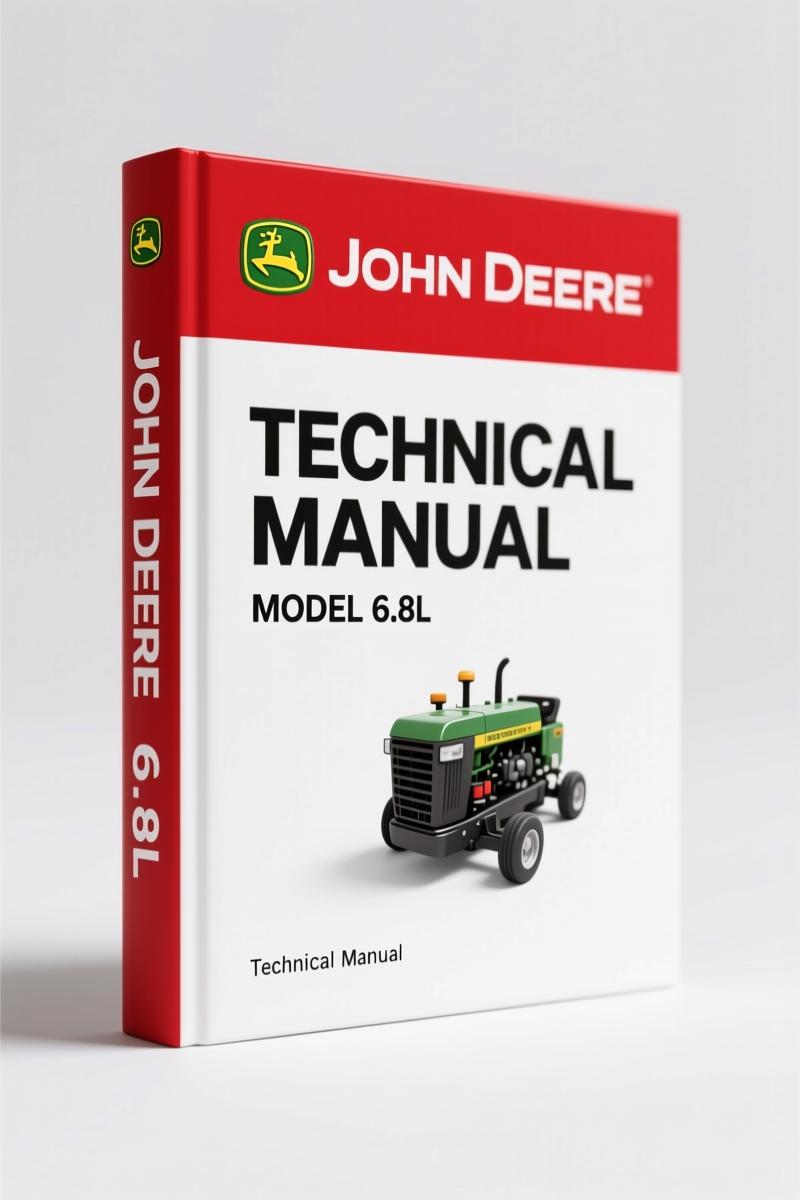
John Deere 4.5L, 6.8L 2003 Technical Manual – OEM Factory Specs
Original price was: $50.00.$40.00Current price is: $40.00.
OEM service manual for 4.5L & 6.8L engines with Stanadyne DE10 pump. 556 pages covering diagnostics, fuel system repair, and electrical control.
Description
John Deere 4.5L, 6.8L 2003 Technical Manual
I’ve lost count of how many engines I’ve had to re-time because some generic PDF skipped the proper fuel injection pump sync procedure. That’s why when I reach for a diesel manual, it damn well better be the factory print – and this John Deere 4.5L, 6.8L 2003 Technical Manual is exactly that. 556 pages of OEM data, written for the tech who knows that a 0.001″ clearance can make the difference between 10,000 hours and a siezed piston. If you’re working on a PowerTech 4.5L or 6.8L with the Level 12 electronic fuel system and Stanadyne DE10 pump, stop guessing and start using the real thing.
Section 01 – General Information: Safety and Engine ID
Page 2 of the manual starts with a forward that tells you straight: this book is for an experienced technician. Group 000 covers safety messages – read them. Group 001 helps you identify which engine variant you’ve got (4.5L vs 6.8L, mechanical vs electronic fuel system). Group 002 lists approved fuels. Missing this step means you might pour the wrong fuel and spend a weekend pulling injectors. Every section references the companion volumes: CTM104 for base engine, CTM77 for alternators and starters. You need those too – this manual only covers the electronic fuel system and control side. For the full picture, grab John Deere 4.5L & 6.8L Diesel Engines Technical Manual (the base engine version) and John Deere PowerTech 4.5L 6.8L Diesel Engines Technical Manual for the mechanical fuel system.
Fuel System Diagnostics: Group 160 – Trouble Code Diagnostics
Need to pull codes from the Stanadyne DE10 pump? Group 160 lays out the exact trouble code diagnostics with factory pin-out data. Not some aftermarket wiring diagram that has the colors wrong. The Level 12 electronic fuel system uses a specific ECU protocol – you’ll find the diagnostic connector locations and the step-by-step test procedures in Group 160. I’ve used this to track down a no-start on a 6.8L in a skid steer. The manual told me to check the injection pump solenoid resistance (specs in Group 210 – Diagnostic Specifications) and I found an open coil in ten minutes. That’s the difference between this and a generic scan tool script.
Repair Specs: Group 200 – Torque Values and Clearances
Section 06, Group 200 is where the real money lives. Page numbers? I don’t need to give you a page – you open the section, find your component. Cylinder head bolts? The manual lists the tightening sequence and final torque in ft-lb (they give metric and imperial). Main bearing cap bolts? Same thing. Everything is OEM, verified by John Deere engineers. If you break a bolt because you used a generic value from an internet forum, that’s on you. This manual also includes wear tolerances for pistons, rings, and bearings. If you’re rebuilding a 4.5L, you check Group 200 before you order parts. No shortcuts.
Electrical Engine Control: Group 110 – Repair and Adjustment
The Level 12 system has an electronic control module that manages fuel delivery and timing. Group 110 covers repair and adjustment of the electrical engine control components – including the engine speed sensor, fuel temperature sensor, and the ECU itself. The wiring diagrams in this section are not the simplified hobbyist versions. They show connector pin numbers, wire colors, and splice locations as built on the factory line. If you’re chasing an intermittent electrical fault, trace it from the schematic in Group 110. And before you touch any harness, disconnect the battery – the manual warns you about that on the first page of Section 01. Safety isn’t optional.
Tools You Need: Group 170 – Special Service Tools
Section 05 lists every special tool required for fuel system and control work. You’ll see part numbers for the DE10 pump timing fixture, the breakout harness, and the diagnostic service tools (Group 180). I keep these pages bookmarked because if you don’t have the right tool, you will damage the fuel injection pump or the ECU. The manual doesn’t try to sell you anything – it tells you what works. For transmission work on the machine that engine sits in, I send people to Manual Transmission over at Wikipedia for a general overview, but for the engine itself, stick with OEM.
Does This Manual Cover the Base Engine or Just the Fuel System?
Short answer: it covers only the Level 12 electronic fuel system with Stanadyne DE10 pump. The manual explicitly states it is one of five volumes. For base engine mechanical work (block, crank, pistons, etc.) you need CTM104. For the mechanical fuel system (non-electronic) you need CTM207. The companion manuals are referenced throughout. This volume alone is 556 pages – that’s how deep the fuel system diagnostics go. If you’re a shop owner with multiple John Deere machines, you want the whole set. Check John Deere 220 1993 Technical Manual – 718 Pages of Factory Specs for a smaller engine if that’s what you’ve got.
Source Authenticity: Why I Won’t Use Aftermarket Diesel Manuals
I’ve seen aftermarket “reprints” that had torque values off by 10 ft-lb because someone OCR’d a third-generation photocopy. That’s a blown head gasket waiting to happen. This manual is a direct scan of the original John Deere print dated 14MAY03. The safety messages are intact, the wiring diagrams are sharp, and the diagnostic flowcharts are legible. For electrical work on these engines, you need accurate data – one misread pin can fry an ECU. I trust the factory source. That’s why I recommend this manual to any tech or serious DIYer who values their time and their engine.
- Can I use this manual to diagnose a no-start on a 4.5L engine with the DE10 pump?
- Yes. Group 160 – Trouble Code Diagnostics walks you through pulling codes, testing sensors, and verifying injection pump function. The manual also cross-references observable diagnostics in Group 150. If the engine cranks but won’t fire, start with the fuel system tests in Section 04.
- Does it cover the electrical system of the whole machine?
- No. Only the engine control electrical components. For alternators and starter motors, you need a separate manual (CTM77).
If you’re serious about keeping that PowerTech 4.5L or 6.8L running at peak performance, you need the real factory data. Stop scrolling through forum posts and half-baked YouTube videos. Access the Factory Manual from AutoRepairManuals and get the OEM specs your engine deserves. For more on transmission service, check Manual Transmission for a general overview.
Additional information
| Brand | John Deere |
|---|---|
| Language | English |
4 reviews for John Deere 4.5L, 6.8L 2003 Technical Manual – OEM Factory Specs
You may also like…
-
Sale!
John Deere 400 1974 Service Manual – Factory Specs for Technicians
Original price was: $92.30.$65.00Current price is: $65.00. -
Sale!
John Deere JD450 1987 Service Manual – OEM Factory Specs
Original price was: $97.50.$65.00Current price is: $65.00. -
Sale!
John Deere JD450 1987 Service Manual – OEM Factory Specifications
Original price was: $79.95.$65.00Current price is: $65.00. -
Sale!
John Deere 325J 2011 Repair Manual — Factory Specs for Backhoe Loader
Original price was: $109.60.$80.00Current price is: $80.00.
Related products
-
Sale!

2006 Service Manual – International DT 466E, 530E Diesel Engine
Original price was: $67.50.$50.00Current price is: $50.00. -
Sale!

1992 Electrical Schematic – OEM Wiring Diagrams for International 1000-3800
Original price was: $24.48.$18.00Current price is: $18.00. -
Sale!

2011 Parts Catalog – International 7400 SFA 6X6 – 1886 Pages of OEM Part Numbers
Original price was: $32.00.$25.00Current price is: $25.00. -
Sale!
1992 Electrical Schematic – International 1000/3000/4000/2554 OEM Wiring Diagrams (132 Pages)
Original price was: $26.40.$20.00Current price is: $20.00.
William H. –
Excellent workshop guide. It is easily zoomable on my phone without losing quality. Every spec sheet is included for John Deere Deere. Saves me hundreds of money.
Charles W. –
This is just what I was looking for. It is easily zoomable on my iPad without blur. It helped me to troubleshoot my John Deere Deere transmission. Saved my repair job! Thank you.
Michael T. –
This is exactly what I needed. The document quality is excellent. A must-have for any John Deere Deere owner doing maintenance. Saved my weekend project! Thanks.
Robert M. –
I am extremely satisfied with this purchase. The text is searchable and easy to navigate. It helped me to troubleshoot my John Deere Deere engine. Saves me hundreds of time.