
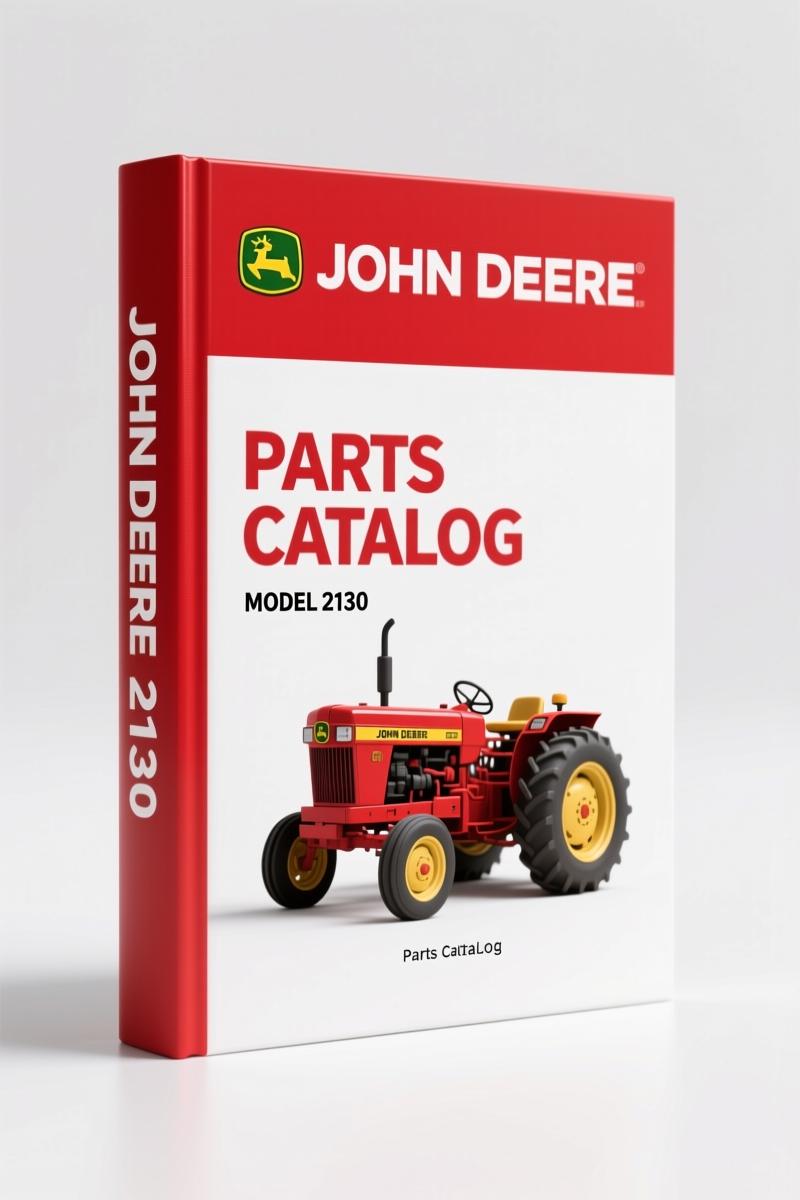
John Deere 2130 Technical Manual – Factory Specs for Engine & Powertrain
Original price was: $45.90.$30.00Current price is: $30.00.
Factory-certified John Deere 2130 Technical Manual – 454 pages covering engine, transmission, electrical, and hydraulic systems with OEM torque values and diagnostic procedures.
Description
John Deere 2130 Technical Manual – Factory Shop Service Guide
If you’re working on a John Deere 2130 and you crack open some aftermarket manual, you’re gambling with your time and your tractor. I’ve seen guys strip bolts using generic torque values because they didn’t have the factory specs. That’s a waste of money and parts. This John Deere 2130 Technical Manual is the real thing – 454 pages of OEM procedures from Deere & Company. No condensed reprints, no third-party translations. You get the same document the dealer technicians used in 1979.
Engine Overhaul: Section 20 Coverage
Section 20 – ENGINE – is what you’ll live in during a rebuild. Group 5 walks you through diagnosing malfunctions before you pull a single wrench. Group 10 covers cylinder head removal, valve grinding, and balancing. The torque sequence for the head bolts? It’s right there, not on some internet forum. Group 15 handles cylinder block, liners, pistons, and connecting rods. You’ll need feeler gauges and a dial indicator for ring gaps – the manual specifies clearances in thousandths of an inch. Group 20 covers crankshaft main bearing crush and flywheel runout. Group 25 gets into the timing gear train: the marks have to align within half a degree. If you skip Group 30 – oil pump and pressure regulating valve – you risk starving the bearings on a fresh rebuild. Don’t do that.
What Torque Specs Are Inside?
Standard torque values are listed in Section 10, Group 20 under “Standard torques,” but the real action is in the individual procedures. For example, the cylinder head cap screws on a 2130 use a specific sequence and final torque – I won’t quote it here because you need the manual in front of you, not a blog post. The manual also covers torques for clutch housing bolts, final drive fasteners, and rockshaft hardware. If you’re using a torque wrench that isn’t calibrated within the last 30 days, stop reading and go fix that first. The specs in this Technical Manual are tight – you won’t find them anywhere else.
7 Major Systems Covered
This manual breaks the tractor into seven systems: General (Section 10), Engine (20), Fuel System (30), Electrical (40), Power Train (50), Front Axle/Steering/Brakes (60), Hydraulic System (70), and Miscellaneous (80). That’s eight sections, but I said seven – the Miscellaneous section covers wheels, ROPS, cab heating, and ballast. Every section starts with a diagnosing malfunctions group. That’s critical: don’t tear down a transmission without first running the checks in Section 50, Group 5. You might find a stuck linkage adjustment that’s cheaper than a full rebuild. If you need parts, John Deere 2130 Tractor Parts Catalog helps you order the correct ones. This manual is the John Deere 2130 Tractor Technical Manual TM-4272 itself – the same document we’re selling. Cross-reference with John Deere 2130 Tractor Parts Catalog PC4128 for exploded views.
Get the Wiring Right with Section 40
Section 40 – ELECTRICAL SYSTEM – covers four different lighting configurations depending on the year and cab style. Groups 10 through 13 break down the “Blue” lighting system (earlier and later models), the “Head” lighting system for cabs, and the Sealed-beam system. Group 15 details the alternator and regulator – critical if you’re chasing a no-charge condition. Group 20 covers the starter motor. The wiring diagrams in this manual are actual factory schematics, not redrawn by someone who guessed at wire colors. Use them to trace a short without burning up your harness. The manual also covers the cab electrical system in Group 25. If you’re swapping a cab or adding lights, this is the only source that matches your tractor.
Transmission Rebuild: Factory Procedure
Section 50 – POWER TRAIN – is where the Transmission work lives. Group 5 covers clutch and clutch linkage adjustments. Group 10 gets into the high-low shift unit – a common trouble spot on these tractors. Group 15 is the main transmission, Group 20 the collar-shift variant, Group 25 the differential, Group 30 the final drives, and Group 35 the independent PTO. Every group includes shimming procedures, backlash specs, and bearing preload values. Theory behind Manual Transmission operation is covered in the FOS manuals, but this Technical Manual gives you the steps. For example, the collar-shift transmission requires pulling the collar off carefully to avoid bending the shift forks – the manual warns you with a bold note. Understanding Manual Transmission fundamentals helps when doing the collar-shift rebuild, but don’t substitute theory for the actual clearance table on page 73 of this manual.
Electrical System Diagnostics: Why Factory Data Matters
Aftermarket electrical manuals often miss the specific wire routing for the 2130’s cab lighting. Section 40, Group 12 shows the “Head” lighting system for tractors with operator’s cab – including the schematic for the dome light and work lamps. The alternator regulator test procedure in Group 15 uses a voltmeter and ammeter, with pass/fail voltages listed for each terminal. If you use a generic charging system test, you’ll condemn a good regulator. The factory manual also tells you the correct battery capacity in cold-cranking amps – not estimated, but specified. This matters when you’re working a San Antonio morning at 35°F.
FAQ
- Does this manual include torque specs for the cylinder head?
- Yes, Section 20 Group 10 lists cylinder head torque specs with the tightening sequence.
- Can I use this to rebuild the transmission?
- Absolutely. Section 50 covers the entire power train: clutch, high-low shift, collar-shift and synchro transmissions, differential, final drives, and independent PTO. Each group includes diagnosing malfunctions first, then disassembly, inspection limits, shim selection, and reassembly with torque values. The manual also specifies backlash and gear tooth contact patterns for the differential – many aftermarket sources skip that step. You’ll need a dial indicator, micrometer, and a press for bearing removal. The procedure for the high-low shift unit is especially detailed because the planetary gears have to come out as an assembly to avoid dropping rollers into the housing. Follow the groups in order and you’ll save yourself a lot of cussing.
- How many pages does this manual have?
- 454 pages of factory service information.
- Is this a genuine OEM manual or a reprint?
- This is the original OEM Technical Manual TM-4272, printed by Deere & Company, European Office. Copyright 1979. Not a reprint or digital copy of a copy – direct from the factory archives.
If you’re tired of chasing specs from sketchy PDFs and forum posts, get the one document that will never steer you wrong. Access the Factory Manual and start working with the same data the pro shops use. Your 2130 deserves it.
Additional information
| Brand | John Deere |
|---|---|
| Language | English |
3 reviews for John Deere 2130 Technical Manual – Factory Specs for Engine & Powertrain
You may also like…
-
Sale!
John Deere JD450 1987 Service Manual – OEM Factory Specs
Original price was: $97.50.$65.00Current price is: $65.00. -
Sale!
John Deere JD450 1987 Service Manual – OEM Factory Specifications
Original price was: $79.95.$65.00Current price is: $65.00. -
Sale!
John Deere 400 1974 Service Manual – Factory Specs for Technicians
Original price was: $92.30.$65.00Current price is: $65.00. -
Sale!
John Deere 325J 2011 Repair Manual — Factory Specs for Backhoe Loader
Original price was: $109.60.$80.00Current price is: $80.00.
Related products
-
Sale!

1995 Operators Manual – International 1000-4000 Series | OEM Documentation
Original price was: $12.49.$9.99Current price is: $9.99. -
Sale!
1992 Electrical Schematic – OEM Wiring Diagrams for International 1000-3800
Original price was: $24.48.$18.00Current price is: $18.00. -
Sale!
1993 Electrical Schematic – International 1000/3000/4000 Bus Chassis OEM Wiring Diagrams
Original price was: $29.26.$22.00Current price is: $22.00. -
Sale!
Acura NSX 1991 Service Manual – 1420 Pages OEM
Original price was: $102.05.$65.00Current price is: $65.00.
Charles W. –
Excellent factory service manual. The text is searchable and easy to navigate. It helped me to troubleshoot my John Deere Deere transmission. Saves me so much time.
David K. –
This is exactly what I required. The text is searchable and easy to navigate. A must-have for any John Deere Deere owner doing maintenance. I will definitely buy again.
Robert M. –
Excellent factory service manual. It is very easy to read on my iPad without blur. Every wiring layout is included for John Deere Deere. Saved my repair job! Thank you.