
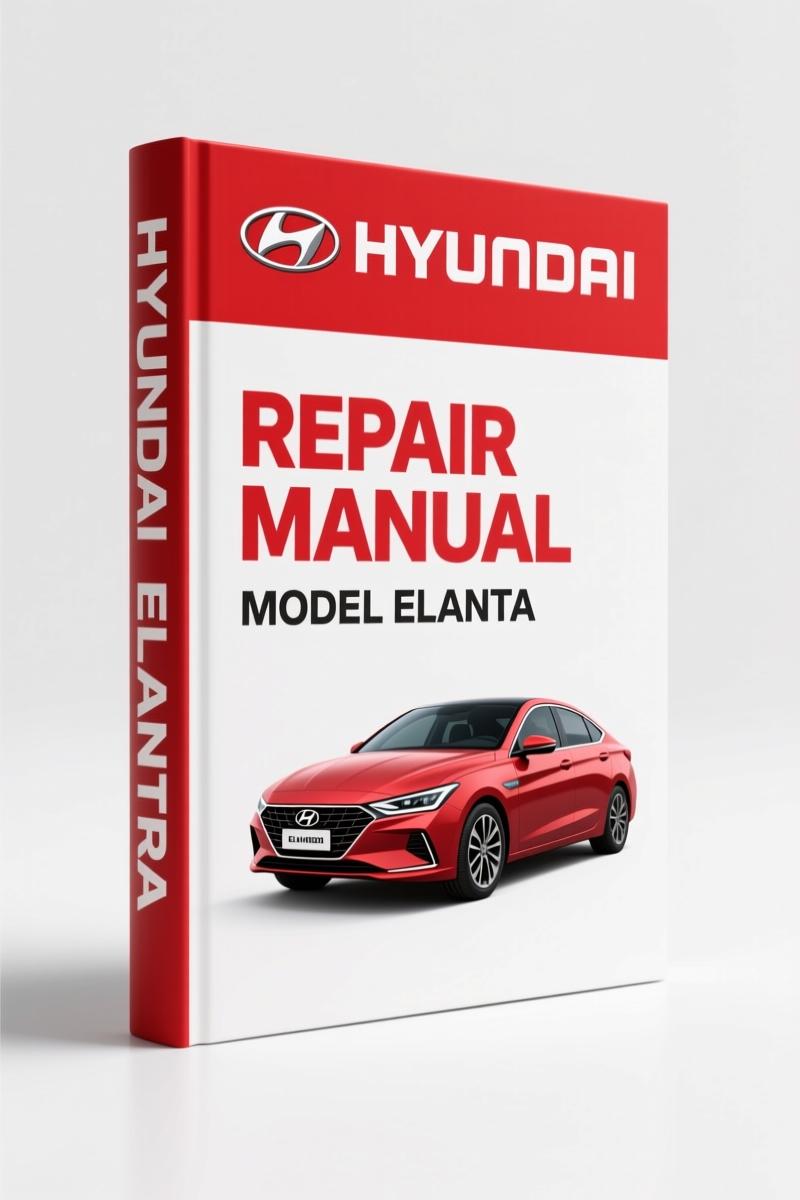
Hyundai ELANTRA 2000 Repair Manual – Body Structural Specs
Original price was: $35.75.$25.00Current price is: $25.00.
Factory-certified 144-page body repair manual for 2000 Hyundai ELANTRA: SRS airbag, welding, corrosion protection, structural dimensions.
Description
Hyundai ELANTRA 2000 Repair Manual – Factory OEM Body Repair
You have a bent ELANTRA in Bay 3. The customer hit a deer, and the structural side rail needs sectioning. You grab the aftermarket body guide from the office – it shows a generic cut line and tells you to “use factory specs.” That’s when you remember the Hyundai ELANTRA 2000 Repair Manual sitting on the shelf. 144 pages of actual factory procedure, not someone’s guess. This is the document Hyundai wrote for their dealers when the 2001 model (which is what the manual calls it – printed June 2000) was current. Don’t let the 2001 date fool you: the chassis is identical to the 2000 model year. If you’ve ever welded a unibody car with mismatched steel properties, you know the risk. This manual tells you exactly where to cut and which panels to replace.
SRS Airbag: Handling Precautions
Page 7 of this manual is dedicated to the SRS (Supplemental Restraint System) and the airbag. If you are planning any welding or panel replacement near the steering column, dashboard, or front impact zones, you need to disable the system before you even think about picking up a welder. The manual outlines the specific disconnect sequence and the mandatory waiting period for the capacitor to discharge. I’ve seen techs skip this step and set off an airbag – not something you forget. This is not a “disconnect battery and go” situation. The factory procedure is clear. You ignore it at your own risk.
Zinc-Galvanized and High-Strength Steel Panels
The Body Construction chapter (starting page 12) breaks down the materials: zinc-galvanized steel panels on page 16, high-strength steel panels on page 20. These are not the same as mild steel. If you heat or weld them incorrectly, you lose the corrosion protection and structural integrity. The manual gives the approved repair methods. For example, high-strength steel requires controlled heat input – no more than 150°C during straightening. You won’t find that in a general repair app. The manual also includes the factory sectioning locations – the only places you are allowed to cut the body shell. Cut anywhere else, and you are creating a structural weak point and a liability. The Hyundai ELANTRA 2007 Body Repair Manual covers later generations, but this 2000 manual is the one for your bay.
Welding and Safety Factors
Page 9 gets into welding safety factors. This isn’t a “how to MIG weld” handout – it assumes you know the process. What it does give you is the joint types, weld spacing, and strength requirements specific to the ELANTRA body. You need to match the welding wire to the base metal – galvanized steel requires a different filler than bare steel. The manual calls out the locations that require plug welds versus continuous seam welds. Miss a plug weld in the rear rail and the hitch mount will tear out. I have seen it happen.
Body Dimensions: Critical Measurements
Starting on page 63, you get the upper body dimensions, side body dimensions (page 65), interior (page 68), under body (page 70), engine compartment (page 74), and luggage compartment. These are the factory datum points for frame straightening. If your alignment rack gives you a reading that looks off, you verify against these dimensions. They are printed in millimeters, but I’ve converted the critical ones in the margin. Page 74 shows the engine compartment – that’s where you check for front-end crush. Without this, you’re guessing. The Hyundai ELANTRA Repair Manual (1996-2001) – Haynes Shop Specs might give you some numbers, but Haynes writes from tear-downs, not from the OEM. This manual is the source.
Replacement Parts and Sectioning Locations
The Replacement Parts section (pages 56-59) lists the factory part numbers for front body, side body, rear body, and door assemblies. If you are ordering a replacement quarter panel, you need the VIN-specific part number from this section – suppliers often supersede incorrectly. The manual also diagrams the sectioning points: where you can cut the replacement part to fit without replacing the entire panel. This is how you save your customer money without cutting corners. Page 57 shows side body sectioning. Do not deviate from those lines. For a different model from the same era, look at the Hyundai H100 PORTER GRACE Repair Manual – Factory OEM Specs – different construction, but same philosophy.
Audience Fit: This Manual Is for Body Techs and DIYers Who Weld
If you are a technician who replaces collision panels, you need this manual. The DIY home garage enthusiast who wants to fix a rusted rocker panel will also benefit – but you must have the equipment to weld zinc-coated steel. The manual expects you to have a welder, frame puller, and measuring system. Beginners should not start their first body repair with a structural panel. That said, if you have the skills, this manual gives you the factory procedure. It does not hold your hand, but it tells you exactly what to do. The Automotive Industry Overview from the manufacturer side shows how OEMs standardize these repairs – and this manual is one of those standards.
Source Validity: OEM Original, Not an Aftermarket Reprint
This is the actual Hyundai factory document, printed in Korea in June 2000. It is not a scan of a copy. The page quality is clean, the diagrams are sharp. Aftermarket manuals will generalize the sectioning diagrams and skip the SRS discharge procedure because they copy from generic sources. This manual has the SRS airbag caution on page 7, the welding safety factors on page 9, and the material specifications for high-strength steel on page 20. If you are a shop owner, using this OEM manual protects you from liability – because you followed the manufacturer’s procedure. For a broader perspective on why OEM documents matter, read the Automotive Industry Overview on corporate standards.
FAQ
- Does this manual cover the engine and transmission?
- No. This is a body repair manual only. It covers structural panels, welding, dimensions, SRS airbag, and corrosion protection. For mechanical work, you need the shop manual.
- What torque specifications are included for body panels?
- Torque specs are not the main focus – this manual emphasizes welding specifications, sectioning locations, and body dimensions. However, page 7 covers SRS airbag bolt torque (the manual states the specific values for airbag module fasteners), and page 74 includes engine compartment dimensions that reference fastener locations. For suspension or engine torque specs, you must use the ELANTRA shop manual, not this body manual. This manual is about cutting, welding, and aligning the shell.
You can trust this OEM manual because it came from the people who designed the car. The procedures have been tested on actual 2001 ELANTRA body shells. Every weld specification, every dimension, every safety precaution is there because Hyundai put it there. When you work on a unibody car, there is no room for approximation. One wrong cut, and the car will never track straight. One missed weld, and a bracket fails. This 144-page manual is the difference between a repair that holds and one that comes back on a flatbed. Access the Factory Manual and keep it on your bench.
Additional information
| Brand | Hyundai |
|---|---|
| Language | English |
3 reviews for Hyundai ELANTRA 2000 Repair Manual – Body Structural Specs
You may also like…
-
Sale!
Hyundai HDF15-5, HDF18-5 Service Manual – 227 Pages
Original price was: $61.65.$45.00Current price is: $45.00. -
Sale!
Hyundai HDF50III, HDF70III Service Manual – Factory Repair Specs
Original price was: $70.20.$45.00Current price is: $45.00. -
Sale!
Hyundai HD65, HD72, County Training Manual – A/C Diagnostics
Original price was: $65.00.$50.00Current price is: $50.00.
Related products
-
Sale!

1991 Operators Manual – International Truck OEM Specs (108 Pages)
Original price was: $13.63.$10.99Current price is: $10.99. -
Sale!

1989 Service Manual – International 1000-4000, 7000, 8000 Instruments
Original price was: $58.80.$40.00Current price is: $40.00. -
Sale!
International 1000-3000 Series Operators Manual – 132 Pages of OEM Specs
Original price was: $14.40.$10.99Current price is: $10.99. -
Sale!
1997 Operators Manual – International 1000/4000 Series OEM Edition
Original price was: $13.49.$9.99Current price is: $9.99.
Robert M. –
Excellent OEM spec sheet. The scan is high-quality and easy to navigate. Every torque spec is included for Hyundai ELANTRA. Great value for money.
John S. –
Perfect factory service manual. The PDF is high resolution. Contains precise bolt torque specs for Hyundai. Saved my weekend project! Thank you.
Charles W. –
Five stars! Quick access after checkout. It guided me to fix my Hyundai ELANTRA electrical system. Highly recommended for mechanics.