
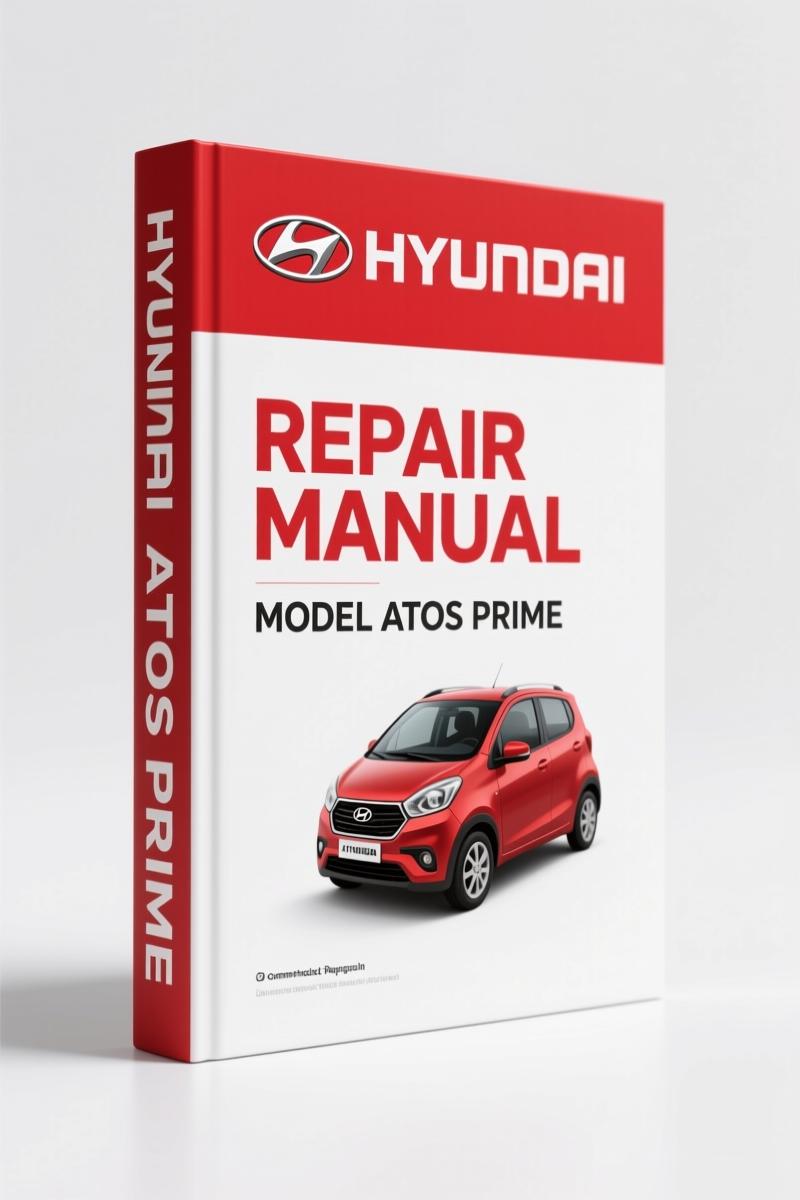
Hyundai ATOS PRIME 2003 Repair Manual – OEM Body Specs
Original price was: $22.93.$14.99Current price is: $14.99.
OEM body repair manual for Hyundai ATOS PRIME 2003. 139 pages covering structural sectioning, corrosion protection, and SRS airbag procedures.
Description
Hyundai ATOS PRIME 2003 Repair Manual
If you’ve ever tried to fix collision damage on a Hyundai ATOS PRIME 2003 with a generic aftermarket guide, you know the frustration. The torque values are vague, the sectioning locations are guesses, and the SRS airbag precautions? Missing entirely. That’s why I only trust factory documentation. This Repair Manual is the real deal – 139 pages of Hyundai Motor Company’s own instructions, printed April 2003. It covers exactly what a body man needs: where to cut, what to weld, how to seal, and when to back away from an airbag system. No third-party reprints, no guesses.
SRS Air-Bag System: Factory Precautions
Page 7 of this manual is dedicated to the SRS airbag system. If you’re replacing a damaged front body panel or doing any welding near a sensor, you need those precautions. The manual tells you how to disable the system, where the sensors are located, and what parts must be replaced after a deployment. Miss that step, and you’re looking at a lawsuit or a face full of inflator. The factory doesn’t leave that to chance, and neither should you.
Body Construction and Steel Panels
The manual dedicates pages 12 through 50 to body construction – front body, side body, floor panels, rear body, fender and hood, roof, doors, tailgate. It also specifies which panels are zinc-galvanized (page 14) and which are high-strength steel (page 16). That matters when you’re welding because the heat-affected zone and filler metal need to match. You don’t want to create a weak point by overheating a boron steel panel. The factory knows the exact procedures because they built the car.
Also covered: corrosion protection and sealing. Page 8 lists the locations where sealant must be reapplied after repair. Skip that, and you’ll have a rusty ATOS PRIME in two winters. This manual doesn’t let you overlook those details.
Why OEM Documentation Beats Aftermarket
I’ve seen aftermarket manuals that claim to cover the ATOS PRIME but don’t even list the correct torque for the front bumper mounting brackets. This OEM manual includes the actual measurement methods (page 58) and upper body dimensions (page 59). If you’re pulling a unibody frame back into spec, those numbers are your bible. Aftermarket books fudge them; the factory prints them because they’re accountable. Trust the people who engineered the car, not someone who photocopied a Chilton.
Torque Specs and Structural Sectioning
One of the most important sections in this Hyundai ATOS PRIME 2003 Repair Manual is the structural sectioning guidelines. The manual explicitly states: “The vehicle should not be sectioned in locations other than those illustrated in this repair manual.” Those locations are shown in the body component diagrams. You get the exact overlap dimensions, weld spacing, and reinforcement requirements. For the DIY mechanic working in a home garage, this eliminates the guesswork. Combine that with the torque specs for body bolts – listed in the body dimensions section – and you have the information to do the job like a pro. For related model coverage, see the Hyundai ATOS PRIME 2005 Body Repair Manual.
Does This Manual Cover the Fuel System?
No. This manual is for collision-damaged body panels only. Engine, transmission, brakes, and fuel systems are in the separate ATOS PRIME shop manual. Use this one for dented doors, smashed fenders, torn floor pans, and accident reconstruction. For the H100 PORTER or ELANTRA, check the Hyundai H100 PORTER GRACE Repair Manual – Factory OEM Specs and Hyundai ELANTRA 2002 Repair Manual | 275 Pages | Haynes. Each model has its own critical differences – don’t mix them up.
Welding procedures are covered on page 9. The manual gives base metal thicknesses, recommended weld types (plug, spot, continuous), and the minimum number of welds per joint. If you’re a beginner, follow those exactly. Over-welding distorts the panel; under-welding fails in a crash. The factory tolerates neither.
Understanding how the automotive industry approaches structural repair can also help. The Automotive Industry Overview from manufacturers like Toyota shows a commitment to standardized repair methods. For further reading on general body repair principles, the Automotive Industry Overview offers background, but nothing replaces the specific data in this manual.
Audience Fit: Who Needs This Manual
DIY mechanics who own a 2003 Hyundai ATOS PRIME and plan to fix rust, accident damage, or bent panels themselves. Home garage enthusiasts who want to avoid paying a body shop two grand for a door skin and quarter panel. You need to know the exact sectioning location for a pillar so you don’t compromise the roof strength. This manual gives you that. It’s also useful for restoration shops that deal with older Korean imports. Beginners should pair it with hands-on practice on a scrap panel – don’t learn on your daily driver.
Source Validity – This Is the Real Thing
Printed in Korea by Hyundai Motor Company in April 2003. 139 pages, OEM part number visible in the PDF metadata. No aftermarket reprint, no copied diagrams. The SRS section was written by the engineers who designed the restraint system. The body dimensions were measured from production vehicles. If you’re serious about repairing an ATOS PRIME correctly, don’t waste time on generic guides. Access the Factory Manual now and get the job done with actual factory specifications.
- Is this manual for the 2003 Hyundai ATOS PRIME only?
- Yes. It specifically covers the 2003 model year ATOS PRIME body repair. Do not use for other years or models.
- What kind of torque specs are in this manual?
- Factory torque values for structural bolts, body panel fasteners, and SRS components are specified in the Body Dimensions and General Information sections. For example, page 58 describes measurement methods and includes tightening specifications for critical attachment points.
- Does this manual include engine or transmission repair procedures?
- No. This is strictly a body repair manual covering collision damage repair: body construction, replacement parts, dimensions, corrosion protection, sealing, and welding procedures. Engine and transmission work requires the separate ATOS PRIME shop manual.
- How do I use the sectioning locations?
- The manual explicitly identifies where body members may be structurally sectioned during repair. Never section outside those illustrated locations. The repair procedures were developed to simplify body repair and reduce insurance costs, but you must follow them exactly. The manual states: ‘The vehicle should not be sectioned in locations other than those illustrated in this repair manual.’ This is critical for maintaining structural integrity. Also note that these procedures apply only to the ATOS PRIME 2003, not any other vehicle. Pages 22-50 cover front, side, floor, rear, fender, hood, roof, door, and tail gate panel sections with exact cutting and welding guidelines.
Additional information
| Brand | Hyundai |
|---|---|
| Language | English |
2 reviews for Hyundai ATOS PRIME 2003 Repair Manual – OEM Body Specs
You may also like…
-
Sale!
Hyundai HDF50III, HDF70III Service Manual – Factory Repair Specs
Original price was: $70.20.$45.00Current price is: $45.00. -
Sale!
Hyundai HD65, HD72, County Training Manual – A/C Diagnostics
Original price was: $65.00.$50.00Current price is: $50.00. -
Sale!
Hyundai HDF15-5, HDF18-5 Service Manual – 227 Pages
Original price was: $61.65.$45.00Current price is: $45.00.
Related products
-
Sale!

Technical Manual – International DT 530 & HT 530 (118 Pages)
Original price was: $37.00.$25.00Current price is: $25.00. -
Sale!

2011 Parts Catalog – International 7400 SFA 6X6 – 1886 Pages of OEM Part Numbers
Original price was: $32.00.$25.00Current price is: $25.00. -
Sale!

1991 Operators Manual – International Truck OEM Specs (108 Pages)
Original price was: $13.63.$10.99Current price is: $10.99. -
Sale!

Acura Integra 1998 Service Manual – 1891 Pages Factory OEM Documentation
Original price was: $31.75.$25.00Current price is: $25.00.
diy_master –
I am extremely satisfied with this transaction. Immediate link after checkout. Every spec sheet is provided for Hyundai ATOS. Saved my weekend project! Thanks.
pro_mechanic –
I am extremely satisfied with this purchase. The document quality is excellent. It helped me to rebuild my Hyundai ATOS engine. Saved my weekend project! Thanks.