
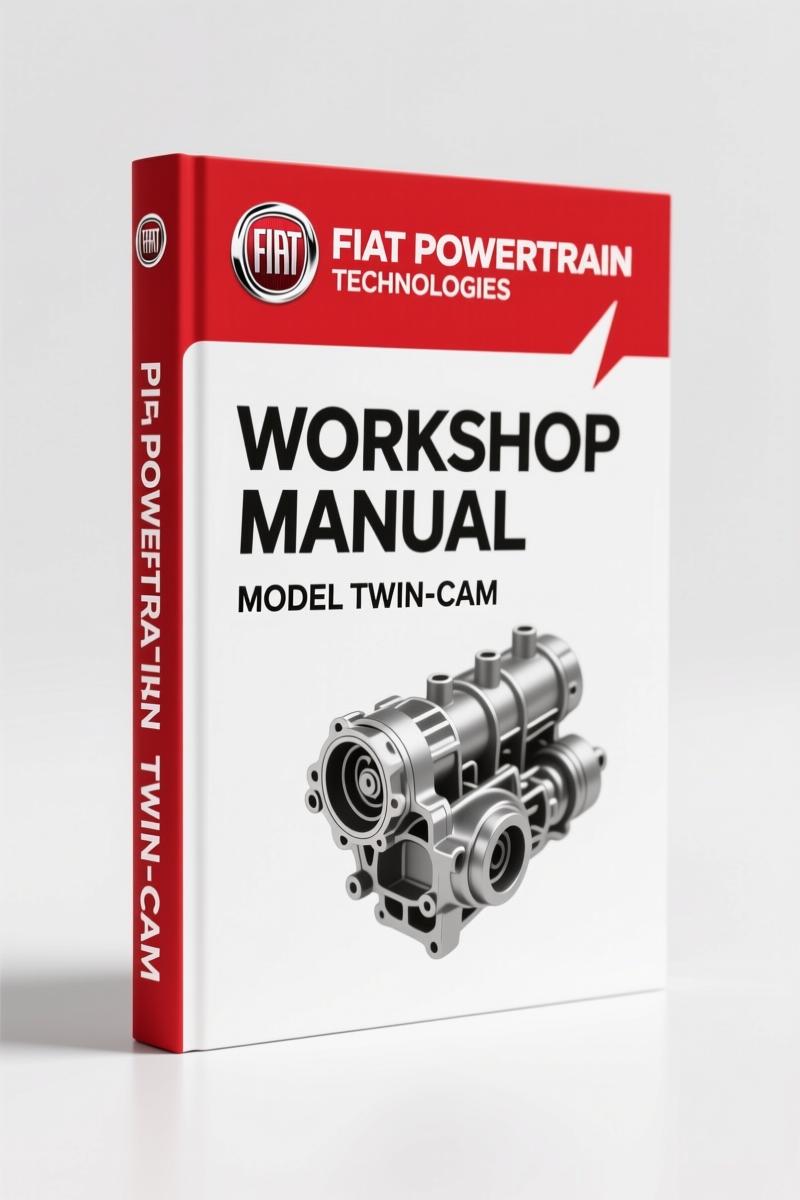
Fiat Powertrain Technologies Twin-cam Workshop Manual – 258 Pages
Original price was: $91.65.$65.00Current price is: $65.00.
258-page workshop manual by Guy Croft for Fiat/Lancia Twin-cam engines. Covers cylinder head prep, fuel systems, cooling, and forced induction.
Description
Fiat Powertrain Technologies Twin-cam Workshop Manual
I’ve lost count how many twin-cam engines I’ve seen ruined because someone thought they knew the valve clearance spec. You don’t guess on a 16-valve head. This Fiat Powertrain Technologies Twin-cam Workshop Manual – 258 pages – is what you need on the bench before you turn a wrench. Guy Croft didn’t write this for casual reading; he wrote it for guys who actually build engines and race cars. The table of contents alone tells you it’s serious: stripping and inspecting (Chapter 4), cylinder head preparation (5), camshafts and valve train (6), block prep (7), pistons and rings (9), fuel systems (10), ignition systems (11), forced induction (12), lubrication and cooling (13), building up the engine (14), exhaust systems (15), testing (16), clutches and gearboxes (17). All 258 pages are packed with real-world tuning and assembly data, not fluff.
Fiat Powertrain Technologies Twin-Cam Workshop Manual: What’s Inside
Pull the chapter list and you’ll see the depth. Chapter 5 covers cylinder head preparation from page 43 – valve seat angles, port shapes, and torque sequences you need to keep the head flat. Page 43 gives the factory tightening procedure for the head bolts. Chapter 10 on fuel systems starts at page 111 and walks through carburetor jetting and injection modifications. You get the full picture on Weber, Dellorto, and Bosch setups – no guesswork on jet sizes or fuel pressure. Every chapter follows a logical order: strip, inspect, machine, assemble, test.
Cylinder Head Prep – Why Page 43 Is Mandatory
Too many DIY guys skip the valve guide height check. This manual doesn’t let you. On page 43, Croft details the step-by-step process for removing and inspecting valve guides, cutting seats, and measuring installed valve spring height. He gives specific tolerances for valve stem protrusion. Ignore that and you’ll either kiss a piston or lose compression. The torque sequence for the cylinder head bolts is laid out in a diagram – you need to follow it in three stages. I’ve seen head gasket failures from skipping the final angle torque. This book beats any generic aftermarket manual because it calls out the exact spec for each version of the twin-cam head.
Fuel System Chapter – From Carb to Injection
Chapter 10 is 26 pages of fuel system tuning. Page 111 picks up with carburetor selection and choke settings for road and race use. Then it moves into fuel injection – Weber-Marelli and Bosch L-Jetronic. You get wiring diagrams, injector flow rates, and fuel pressure regulator settings. If you’re converting from carb to injection, the table on page 130 lays out the correct pump and return line sizing. Don’t guess on fuel line diameter – use the manual’s specs to avoid vapour lock. The ignition chapter (11) backs it up with timing maps and advance curve modifications for forced induction setups.
3 Chapters on Engine Assembly and Testing
Chapter 14 (Building up the engine) takes you from crank installation through to timing belt tension. Piston ring gap specs are listed per bore size – a mistake there kills a rebuild before it starts. Chapter 16 (Testing) covers dyno procedure and break-in sequences. Chapter 15 (Exhaust systems) gives header pipe length and collector sizing. Together they form a complete assembly guide. If you’ve never built a twin-cam before, follow these chapters in order and you’ll have a chance at a first-fire success.
Get the Right Torque Data
Torque values scatter through the manual – main bearing cap bolts, rod bolts, flywheel fasteners, cylinder head bolts. Every one is specified in lb-ft or Nm with tightening sequences. The appendix includes a suggested component life schedule for competition engines (Appendix A) and initial start-up procedure (Appendix B). That start-up checklist has saved me from dry-starting a fresh build. You want that on a laminated card near the engine stand.
Is This Manual for Pros or DIYers?
This manual assumes you have basic mechanical skill – you know how to safely support a car and use a torque wrench. If you’re a home garage enthusiast who wants to rebuild a twin-cam for a kit car or track day, this is the right manual. But don’t expect step-by-step “remove four bolts” handholding. Croft writes for people who respect the work. That said, the clarity of the instructions and the real-world troubleshooting in Appendix C (trackside diagnosis for sudden power loss) make it usable for a beginner who’s ready to learn. Professional engine builders will appreciate the tuning theory (Chapter 2) and the rolling-road tuning hints (Appendix D).
When pairing this engine with a transmission, refer to Manual Transmission basics for clutch matching and gear ratios. The manual’s Chapter 17 covers clutch and gearbox assembly, but understanding transmission theory helps you choose the right clutch plate. Another resource is the Manual Transmission article on common failure modes – useful if you’re rebuilding a gearbox alongside the engine.
If you work on other Fiat engines, check out the Fiat Powertrain Technologies Seicento Workshop Manual – 291-Page OEM Factory Spe for smaller engine specs. For older models, the Fiat Powertrain Technologies 500 1992 Workshop Manual – OEM Specs covers classic two-cylinder and four-cylinder engines. And if you need late-90s front-wheel-drive platform data, the Fiat Powertrain Technologies Bravo Brava 2001 Workshop Manual 712 pages is the most comprehensive resource on the site.
- Does this manual cover stock rebuilds?
- Yes. It covers both stock and modified twin-cam engines.
- What torque values are given for cylinder head bolts?
- The manual lists the factory three-stage torque procedure on page 43 with pound-foot and Newton-meter values. It also includes angle torque for final pass.
- Is this manual suitable for a complete beginner?
- If you have never touched an engine, this manual will be challenging. It assumes you know how to use a micrometer and torque wrench. But the step-by-step assembly chapters and testing procedures give a beginner a solid path if they take it slow and read each section twice. I’d recommend watching some basic engine rebuild videos first, then use this manual as your spec bible. The troubleshooting guide in Appendix C is especially helpful for diagnosing issues after first start-up – it lists symptoms, possible causes, and fixes in plain language.
- Can I use this for a Lancia Delta Integrale engine?
- Yes. The manual covers all Fiat and Lancia twin-cam engines, including the 2.0 16V turbo used in the Delta Integrale. Chapter 12 on forced induction is directly relevant.
Look, if you’re serious about building these engines right, stop guessing. Access the factory manual and keep it open on your bench. Every spec you need is on those 258 pages. Your engine will thank you, and so will your wallet.
Additional information
| Brand | Fiat Powertrain Technologies |
|---|---|
| Language | English |
2 reviews for Fiat Powertrain Technologies Twin-cam Workshop Manual – 258 Pages
You may also like…
-
Sale!
Fiat Powertrain Technologies Bravo, Brava 1999 Service Manual – 868 Pages
Original price was: $59.85.$45.00Current price is: $45.00. -
Sale!
Fiat Powertrain Technologies Palio 2008 Training Manual – Electrical Diagnostics
Original price was: $80.00.$50.00Current price is: $50.00. -
Sale!
Fiat Powertrain Technologies 8361 Parts Catalog – OEM Spare Parts Index
Original price was: $51.80.$35.00Current price is: $35.00. -
Sale!
Fiat Powertrain Technologies T13, T14, T17 2004 Service Manual – 488 Pages
Original price was: $36.90.$30.00Current price is: $30.00.
Related products
-
Sale!

Technical Manual – International 6.0L Power Stroke FICM Diagnostics
Original price was: $29.80.$20.00Current price is: $20.00. -
Sale!
2004 Acura TSX Wiring Diagram – 73-Page Factory Electrical Schematics
Original price was: $15.88.$9.99Current price is: $9.99. -
Sale!

1991 Operators Manual – International Truck OEM Specs (108 Pages)
Original price was: $13.63.$10.99Current price is: $10.99. -
Sale!

Service Manual – International HS 2.8L Engine – 130 Pages of Factory Specs
Original price was: $56.40.$40.00Current price is: $40.00.
John S. –
Excellent factory service manual. The text is searchable and well indexed. It guided me to rebuild my Fiat Powertrain Technologies Powertrain transmission. Saves me so much money.
workshop_guy –
I am extremely satisfied with this manual. The text is searchable and easy to navigate. A must-have for any Fiat Powertrain Technologies Powertrain mechanic doing maintenance. I will recommend this shop to others.