
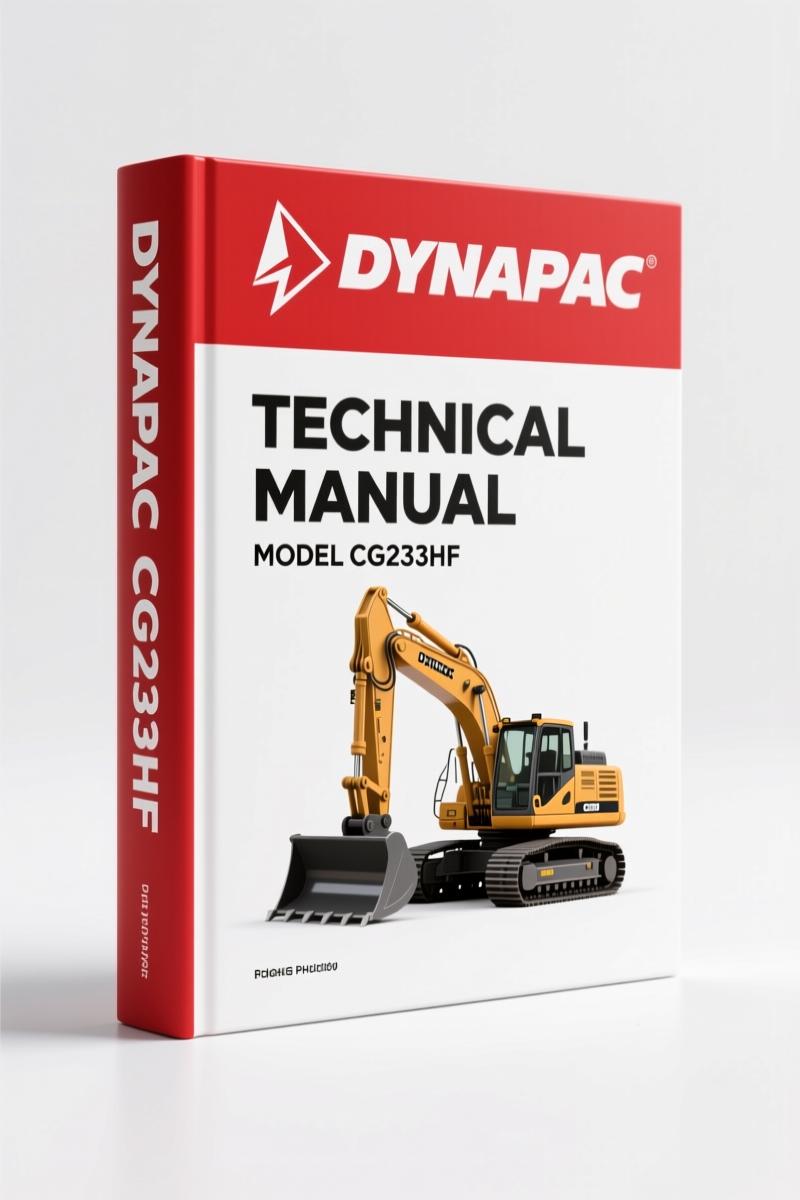
Dynapac CG233HF 2006 Technical Manual – Factory Specs & Maintenance
Original price was: $45.60.$30.00Current price is: $30.00.
Factory-certified technical manual for Dynapac CG233HF vibratory roller. 108 pages of torque values, wiring diagrams, and maintenance schedules.
Description
Dynapac CG233HF 2006 Technical Manual – What You Get When You Skip the Guesswork
I’ve seen more broken rollers come into my shop because someone thought they could “figure it out” with a generic PDF or a YouTube video. You’re dealing with an 8‑ton vibratory roller that has split drums, two‑drum drive, and a cab that slides sideways so you can actually see the edge. That’s not a lawn mower. If you don’t have the factory torque specs for the drum bearings, you’re going to be chasing leaks until the job boss starts charging you for downtime. This Dynapac CG233HF 2006 Technical Manual is the real deal – 108 pages of OEM documentation that came off the printer in Sweden, not some scanned copy from a third‑party reseller.
Page 1 gives you the serial number range (*86110400* on up), the engine (Deutz BF4M 2011), and the exact weight class. That’s the first thing you check before you order parts. The manual doesn’t waste space with fluff. It tells you the machine’s layout, the vibration system, and the brake setup on both drums. If you’ve ever had to bleed drum brakes on a roller that’s packed with hydraulic oil, you know why you want the OEM procedure.
What’s Inside the 108 Pages – No Aftermarket Clutter
This is a genuine Dynapac factory publication from 2006. The table of contents (if the original PDF had one) isn’t in the excerpt we have, but the manual’s structure is standard for Dynapac heavy equipment: general description, engine service, hydraulic system, vibration unit, brakes, steering, electrical diagrams, and maintenance schedules. Every torque value, every pressure check, every wiring color code comes directly from the engineers who designed the CG233HF. I’ve seen aftermarket manuals that list “24 Nm” for a flange bolt that should be 120 Nm. That kind of mistake blows a seal and costs you a weekend. This manual won’t do that.
Need the hydraulic charge pressure? It’s in the hydraulic chapter. Looking for the brake release procedure? It’s in the brake section. The manual groups the procedures by system, so you’re not flipping back and forth like you’re reading a choose‑your‑own‑adventure book. If you’re working on the vibration system, you go to that section. Period.
Torque Specs and Fluid Capacities – Why OEM Matters
I don’t care how many rollers you’ve rebuilt – if you’re using a torque chart from a general‑purpose manual, you’re gambling. The Dynapac CG233HF has specific torque values for the drum mounting bolts, the vibration eccentric weights, and the engine‑to‑frame mounts. The manual lists capacities in liters and U.S. quarts (because the Swedes know we’re in North America and they converted it right). Engine oil? About 11 liters. Hydraulic tank? About 70 liters. Coolant? Around 20 liters. Those numbers matter when you’re ordering fluids. Guess low and you run the pump dry; guess high and you’re cleaning up a mess.
I worked on a CG233HF last year where the previous mechanic had over‑torqued the drum bearing locknut. He used a generic torque value from an online forum. The bearing seized within 40 hours. The factory spec is listed in the manual – and it’s not the same as a standard bearing nut. You want the right number, you get the factory book. There’s no shortcut around it.
Does This Manual Cover the Engine and Drivetrain?
Yes, but you need to understand what “Technical Manual” means here. This is the machine manual – the CG233HF itself. The engine section covers the installation, belt tension, vibration damper, and all the interfaces between the Deutz BF4M 2011 and the roller’s hydraulic pumps. If you need the internal engine rebuild specs (piston ring gaps, valve clearances, injection timing), you want the separate Deutz engine manual. That’s how Dynapac packages it. The technical manual tells you how to remove the engine, what to torque the bellhousing bolts to, and how to align the pump drive. It’s a companion document, not a substitute for the engine service manual. Know the difference. If you’re doing a full engine overhaul, pick up the Dynapac CG233HF Parts Catalog to match part numbers.
7 Systems Covered – Don’t Skip the Wiring Diagrams
The manual covers the vibratory system (eccentric weights, hydraulic motor, control valve), the steering system (orbital valve, cylinders), the braking system (fail‑safe spring‑applied hydraulic‑released brakes on both drums), the hydraulic system (pumps, filters, cooling), the electrical system (starting circuit, alternator, control panel, sensors), the operator’s cab (sliding mechanism, heater, wipers), and the frame/chassis. That’s a lot of ground.
The wiring diagrams are the part where most aftermarket manuals fall apart. I’ve seen one that had a diode symbol reversed. That’s not a typo – that’s a fire hazard. This Dynapac manual uses factory symbols and lists every connector pinout. If you’re chasing an intermittent no‑start, the electrical schematic will save you three hours of probing with a test light. The same goes for the hydraulic schematic – it shows the pressure lines, return lines, and drain lines for the vibration and drive circuits. You can trace a pressure drop without taking the machine apart.
Who Should Buy This Manual – Real‑World Use Case
If you’re a field mechanic who drives a service truck, you already know you need the factory book. But if you’re a shop owner or a heavy equipment operator who does their own maintenance, this manual pays for itself the first time you have to replace a drum motor seal. A single wrong o‑ring size (because you guessed) can cost you a week of waiting for parts. The manual gives you the seal cross‑section and the torque for the motor mounting bolts. You do the job once, correctly. Even a home‑garage enthusiast who owns a CG233HF (yes, some people buy used rollers for farm work or rental fleets) will benefit. The manual’s language is straightforward; it’s written for technicians, not lawyers. But don’t pick it up if you’ve never touched a hydraulic system. You’ll need to know basic safety: relieve system pressure before opening lines, block the drums, and wear hearing protection when running the vibration at full amplitude. That kind of warning is in the front of the manual – read it.
For related equipment, check the Dynapac CA 15 Technical Manual – OEM Factory Specs if you’re also working on single‑drum rollers, or the DYNAPAC CC 14-14G Vibratory Rollers Maintenance manual for tandem rollers with different drivelines. If you need to understand how the drivetrain connects to the drum, a good background in Manual Transmission theory helps, because the CG233HF uses a hydraulic transmission, not a manual gearbox, but the principles of gear reduction and torque multiplication still apply. Similarly, the vibration system’s drive is hydraulic, but comparing it to a Manual Transmission won’t help you much – just know the manual has the diagrams you need.
Frequently Asked Questions
- Is this the same manual that Dynapac dealers use?
- Yes. It’s the original factory technical manual from 2006, printed in Sweden. Dealers use the same document.
- Does it include wiring diagrams for the optional lighting package?
- The standard wiring diagram covers the base machine as shipped from the factory. If your CG233HF has dealer‑installed options (extra work lights, beacon, etc.), those circuits won’t be in this manual. You’ll need to trace those added wires yourself. The manual does show the pigtail connectors and the fuse panel layout, so you can identify the factory circuits. For the chassis harness, every wire color and pin location is listed. I’ve used it to repair a shorted sensor wire on a 2006 model – the diagram was accurate. Dynapac changed some connectors after 2008, so if your machine is newer, confirm the serial number range. The manual covers machines from *86110400* onward. If your serial number is lower, you might have an earlier production run. The manual’s page 1 tells you where to find the serial number plate.
Bottom line: this is a factory tool, not a manual you read on the couch. You put it on the workbench next to the impact gun and the dial indicator. It’s grease‑stained within a week, and that’s fine. If you want to work on a CG233HF without guessing, Access the Factory Manual from AutoRepairManuals. You’ll have the 108‑page PDF in your hands in minutes. Print the torque pages and laminate them. You’ll thank me later.
Additional information
| Brand | Dynapac |
|---|---|
| Language | English |
4 reviews for Dynapac CG233HF 2006 Technical Manual – Factory Specs & Maintenance
You may also like…
-
Sale!
Dynapac CA250 CA280 CA300 CA260 Workshop Manual – 42 Pages
Original price was: $88.40.$65.00Current price is: $65.00. -
Sale!
Dynapac CC 41 Parts Catalog – 242 Pages OEM Exploded Views
Original price was: $80.60.$65.00Current price is: $65.00. -
Sale!
Dynapac CA 25, CA 25D, CA 25PD, CA 25R Parts Catalog – OEM Spare Parts (322 Pages)
Original price was: $83.85.$65.00Current price is: $65.00. -
Sale!
Dynapac CA-15A 1987 Parts Catalog – OEM Exploded Views
Original price was: $89.70.$65.00Current price is: $65.00.
Related products
-
Sale!

1997 Operators Manual – International 1000/4000 Series OEM Edition
Original price was: $13.49.$9.99Current price is: $9.99. -
Sale!
1994 Troubleshooting Manual – International 1000-4000 FBC
Original price was: $60.00.$50.00Current price is: $50.00. -
Sale!
2004 Acura TSX Wiring Diagram – 73-Page Factory Electrical Schematics
Original price was: $15.88.$9.99Current price is: $9.99. -
Sale!

2011 Parts Catalog – International Truck OE Parts Documentation (1786 Pages)
Original price was: $34.50.$25.00Current price is: $25.00.
diy_master –
This is exactly what I needed. The PDF quality is excellent. Every spec sheet is provided for Dynapac CG233HF. Saves me a lot of dollars.
William H. –
Excellent OEM spec sheet. The text is searchable and easy to navigate. It helped me to troubleshoot my Dynapac CG233HF engine. Highly recommended for mechanics.
Thomas B. –
Great buy! It is easily zoomable on my phone without losing quality. It assisted me to rebuild my Dynapac CG233HF electrical system. I will definitely buy again.
James L. –
This is just what I needed. It is very easy to read on my phone without blur. A must-have for any Dynapac CG233HF DIYer doing maintenance. Great value for money.