
Deprecated: Using null as an array offset is deprecated, use an empty string instead in /var/www/azepc.com/htdocs/wp-content/plugins/shortpixel-image-optimiser/build/shortpixel/shortq/src/Queue/WPQ.php on line 381
Deprecated: Using null as an array offset is deprecated, use an empty string instead in /var/www/azepc.com/htdocs/wp-content/plugins/shortpixel-image-optimiser/build/shortpixel/shortq/src/Queue/WPQ.php on line 381
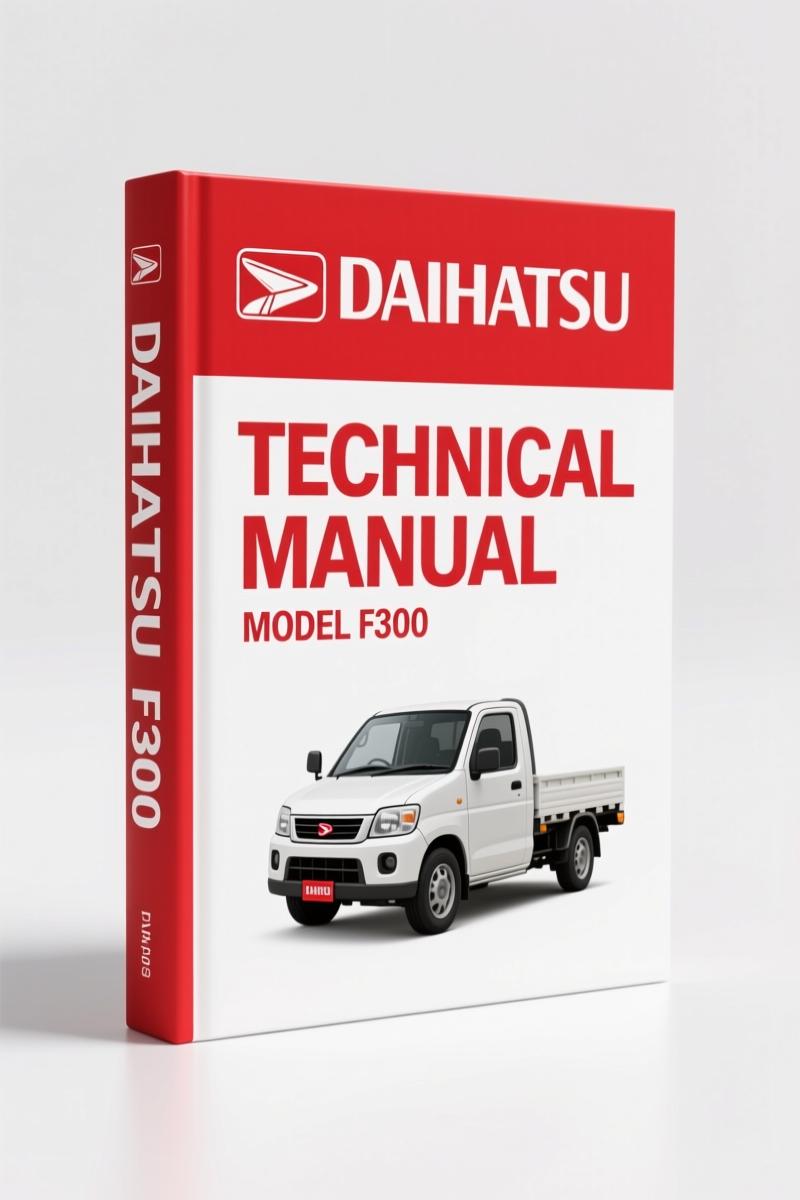
Daihatsu F300 Technical Manual – Factory Cooling System Specs
Original price was: $28.13.$22.50Current price is: $22.50.
25-page factory manual for Daihatsu F300 cooling system: torque specs, troubleshooting, water pump, thermostat, and fluid coupling data.
Description
Daihatsu F300 Technical Manual – Cooling System Deep Dive
You got a Daihatsu F300 with an HD engine that’s running hot. You’re staring at a radiator and wondering if the thermostat is stuck, or maybe the water pump is shot. I’ve seen guys throw parts at these things because the aftermarket manual they bought skips half the checks. This Daihatsu F300 Technical Manual is what the factory techs used. It’s not a novel – it’s a workbench tool. The section on trouble shooting alone (page CO-2) lists nine possible causes for engine overheating, from poor coolant to a cracked block. That saves you swapping parts you don’t need.
Troubleshooting at CO-2: Real Problems, Real Remedies
Page CO-2 doesn’t waste space. It gives you a problem – engine overheats – then lists the possible cause and the page to jump to. Poor quality coolant? Replace it. Belt loose? Adjust or replace. Thermostat faulty? Check thermostat. That table alone has saved me three trips to the parts store on one job. You’d be surprised how many guys skip the radiator cap check. The manual reminds you: a deteriorated cap loses pressure and the system boils over. It’s all right there. For transmission concerns, see Manual Transmission separate documentation.
Precautions: Handling Coolant and Pressure
The precautions on CO-2 are worth repeating. “Never open the radiator cap when the cooling water is hot.” I don’t care if you’re in a hurry – you open a hot pressurized cap and you’re getting a face full of boiling coolant. The manual also specifies using soft water, not tap water with minerals. Hard water scales up the inside of the radiator and water jackets, reducing heat transfer. That’s the kind of detail aftermarket books omit because they assume you know. You don’t? Too bad. This factory manual tells you.
Cooling System Components – Outline
The outline on CO-3 describes the system as a water-cooled, forced-circulation type with a fluid coupling fan. It explains the reverse-flow fan driven by belt-pulley and the thermostat with a by-pass valve at the inlet side. Total coolant capacity is approximately 6.5 dm³ including the reserve tank. Knowing that capacity is critical when you mix coolant. Overfill and you get foam; underfill and you get air pockets. The manual also shows the flow path: radiator, water pump, cylinder head, water jackets, hoses. If you need the engine-side procedures, the Daihatsu F300 Engine Service Manual covers that.
Water Pump and Thermostat: Factory Step-by-Step
The water pump section (CO-14) and thermostat section (CO-17) include the order of operations. You don’t just pull the pump – you drain the coolant, remove the drive belt, unbolt the fan coupling, then the pump. The thermostat housing bolts have a torque value you’ll find on CO-55. I’ve seen stripped housing threads because some guy used a wrench and finger-tight logic. The manual also tells you to check the thermostat’s opening temperature by boiling it in water. That test is not guesswork – it’s in the service spec. For emission-related torque, see DAIHATSU F300 Emission Control Service Manual.
Torque Specs on CO-55 – Get Them Right
The Tightening Torque table on page CO-55 lists every fastener in the cooling system: water pump bolts, thermostat housing, radiator mounts, fluid coupling bolts. These are OEM specs, not aftermarket approximations. Using the wrong torque on an aluminum cylinder head can crack the casting or pull threads. The manual also warns – in the precautions – that the system is pressurized, so gasket clamp loads matter. If you need the HD-C variant, the DAIHATSU F300 HD-C Service Manual has the same rigor.
Who This 25‑Page Manual Serves
DIY guys who want to replace a water pump without having to take the truck to a shop. Beginners who haven’t learned that “tight enough” isn’t a spec. Even pros will grab this manual when they hit a plumbing problem on an F300 for the first time. It’s 25 pages of focused procedures – trouble shooting, coolant change, radiator removal, fluid coupling service, and the service specification that tells you the correct coolant concentration. No fluff, no wasted words. You get the loom-up diagram for the HD-E engine and the flow schematic. For clutch or gearbox work, check Manual Transmission references.
Why Factory Documentation Beats Aftermarket
The aftermarket manuals I’ve seen for the F300 cooling system leave out the fluid coupling torque on the fan nut and the bypass hose routing. This manual has a dedicated Fluid Coupling section (CO-10) that shows how to inspect the viscous unit. You don’t need to guess whether squirrel cage fan spins freely or drags – the spec is in the service specification. The OEM torque table on CO-55 was written by the same engineers who designed the engine. Aftermarket “generic” torque values can be off by 10 ft-lbs. That’s the difference between a seal that holds and a leak you chase for months.
- How many pages is the manual?
- 25 pages, covering cooling system components and service specs.
- Is this an original OEM manual?
- Yes, it’s a factory Daihatsu technical manual. Not a reprint or aftermarket copy. The layout matches factory service bulletins.
- What torque values are included?
- The Tightening Torque section on page CO-55 lists every fastener in the cooling system: water pump bolts, thermostat housing, radiator mounting, etc. These are OEM specs, not generic guesses. If you use aftermarket values, you risk stripping threads in the aluminum head or blowing a gasket. Page CO-55 is your insurance policy. The service specification part also gives fluid capacities and coolant type. The manual says to use soft water – no mineral salts – otherwise you get scale buildup that kills the radiator. So follow these numbers exactly.
- How detailed are the water pump instructions?
- The Water Pump section (starting around CO-14) breaks down removal and installation with bolt torque sequences. It includes the step to replace the gasket and inspect the impeller. No shortcuts.
You want your F300 cooling system back to factory reliability? You need the specs from the people who built the engine. Stop chasing leaks with guesswork. Access the Factory Manual and get the torque values, flow diagrams, and trouble shooting table that real techs rely on.
Additional information
| Brand | Daihatsu |
|---|---|
| Language | English |
2 reviews for Daihatsu F300 Technical Manual – Factory Cooling System Specs
You may also like…
-
Sale!
Daihatsu F300 Service Manual – Factory Specs for EFI & Engine
Original price was: $61.60.$40.00Current price is: $40.00. -
Sale!
Daihatsu Charade 1987 Workshop Manual – Factory Specs
Original price was: $60.75.$45.00Current price is: $45.00. -
Sale!
Daihatsu 5DK-20 2005 Technical Manual – 847 Pages | AutoFix Global
Original price was: $100.75.$65.00Current price is: $65.00.
Related products
-
Sale!

1993 Electrical Schematic – International 1000/3000/4000 Bus Chassis OEM Wiring Diagrams
Original price was: $29.26.$22.00Current price is: $22.00. -
Sale!

2005 Parts Catalog – International NGD 3.0 L Engine (77 pages)
Original price was: $44.70.$30.00Current price is: $30.00. -
Sale!
1994 Troubleshooting Manual – International 1000-4000 FBC
Original price was: $60.00.$50.00Current price is: $50.00. -
Sale!
1993 Operators Manual – International Bus 1000-3000 OEM Specs
Original price was: $12.30.$7.99Current price is: $7.99.
diy_master –
Outstanding! The document is very clear. A must-have for any Daihatsu F300 owner doing repairs. Saves me so much money.
gearhead88 –
I am so happy with this transaction. It is very easy to read on my phone without blur. Every wiring layout is included for Daihatsu F300. Saved my weekend project! Thank you.