
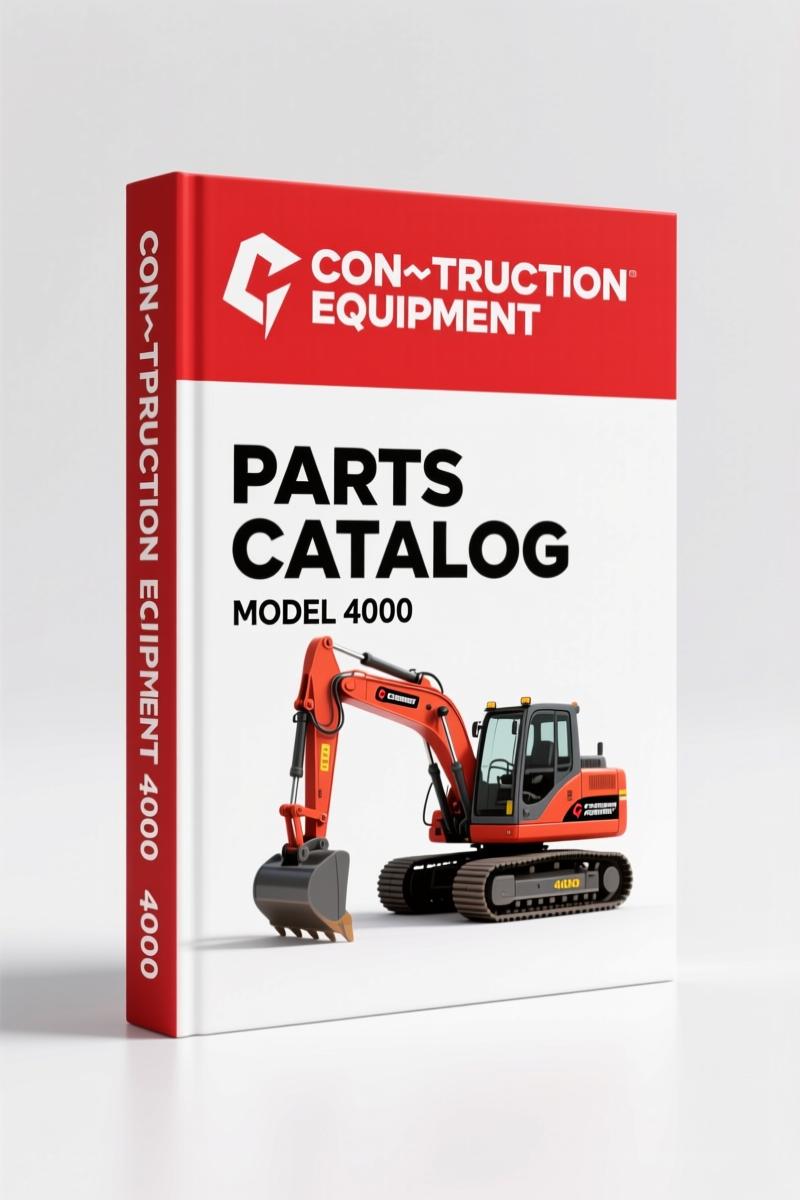
Con~truction Equipment 4000 1975 Parts Catalog – OEM Part Numbers
Original price was: $36.30.$30.00Current price is: $30.00.
Factory-printed parts catalog for Con~truction Equipment 4000. 306 pages with OEM part numbers, torque specs, brake & axle diagrams. For technicians.
Description
Con~truction Equipment 4000 1975 Parts Catalog – Factory Specs for the 4000
You’ve got a Con~truction Equipment 4000 1975 Parts Catalog on your bench, and you’re staring down a brake system that won’t adjust or an axle that’s leaking. If you’ve ever tried to pull torque specs from some third-party website and ended up with a stripped bolt and a ruined afternoon, you know the frustration. That’s why this 306-page OEM parts manual exists – to give you the exact factory data you need without guesswork. I’ve torqued enough head bolts to know that when the manual says 150 ft-lbs on page 23, you set your wrench to 150, not 145, not 155. Anything else is asking for a comeback.
Brake System Adjustments and Overhaul
The brake section in this manual covers more than just part numbers. You get the adjustment procedure for the brakes (page 52), the air chamber components (page 51), and the full brake system troubleshooting chart on pages 49-50. If you’ve ever had a 4000 that pulls to one side or locks up, the trouble-shooting chart will point you straight to a seized air chamber or a misadjusted slack adjuster. Don’t trust aftermarket brake parts catalogs that skip the adjustment specs – this one spells out the clearance and stroke limits in inches. Safety first: if you miss the adjustment step, you’re putting the operator at risk. I’ve seen it happen. Get the OEM procedure from this catalog.
Axle Overhaul: Differential and Planetary Sections
Pages 59 through 67 walk you through the axle overhaul – differential, planetary, and brake components. The planetary section (pages 59-61) shows the exact shim stack and bearing preload. The differential overhaul (pages 64-67) includes the backlash setup. Without factory specs, you’ll guess on shim thickness and end up with a noisy axle that eats gears. I’ve had to redo jobs where someone used a generic manual and missed the crush spec on the pinion nut. This parts catalog lists every bearing and washer by part number, so you order the right parts the first time. Pair it with the torque chart on page 23 for the housing bolts. Massey-Harris-Ferguson FF 30 GS 1957 Parts Catalog | OEM Fastener Guide covers fastener specs for older machinery if you’re working across multiple marques.
Torque Chart and Capacities – Page 23 and 12
Page 23 has the torque chart – bolts from 1/4-inch up to 1-inch with torque values in ft-lbs. That’s the data you need when you’re buttoning up the main pivot or the steering gear. Page 12 lists the capacities, pressures, and electrical system specs: hydraulic oil capacity, transmission fluid, tire pressures. Most aftermarket catalogs leave out the hydraulic pressures. This one gives you the main hydraulic system pressure and the steering hydraulic specs (pages 26-27). If you’re troubleshooting a weak bucket, check the main control valve overhaul (pages 32-37) and the pump overhaul (pages 39-40) – all with OEM part numbers. Don’t guess on pressures; use the factory numbers or you’ll blow seals.
Audience Fit: Who Needs This 306-Page Catalog?
This is for the guy who owns a 1975 Con~truction Equipment 4000 loader or backhoe, or for the shop that services them. It’s not a repair manual – it’s a parts catalog with operating instructions. That means you get exploded diagrams with callouts for every nut, bolt, seal, and bearing. If you’re a home garage enthusiast trying to rebuild the steering cylinder (pages 41-42) or the lift cylinder (pages 29-31), you’ll need these illustrations to identify the correct seal kit. Professional mechanics will use it to cross-reference part numbers when the dealer says “obsolete.” Beginners: this manual assumes you know how to use a wrench, but it tells you what to torque and where to lubricate (lubrication charts on pages 24-25). Futura FC200-FC400 Parts Catalog – OEM Wear Parts Specs is a good companion if you’re working on similar hydraulic systems in utility equipment.
Source Authenticity: OEM vs Aftermarket Documentation
I’ve been burned by aftermarket reprints that skip pages, photocopy blurred diagrams, or guess at torque values. This is an original Con~truction Equipment manual printed in October 1975 (Manual No. T8053, Part No. 2022684). It’s a direct scan of the factory binder. The parts listings include the GM Diesel and Cummins Diesel variants, with separate sections for brake controls and lines (pages 134-137). The indexing is thorough – you can find the ball slip overhaul on pages 57-58, the pillow block overhaul on pages 55-57. If you’re used to generic manuals that lump everything together, this one separates engine options and axle configurations clearly. Automotive Industry Overview can give you background on why OEM documentation matters, but this catalog speaks for itself: it’s the real factory data. Automotive Industry Overview offers context but doesn’t replace the specs you hold in your hands.
3 Reasons to Choose Factory Parts Catalog
First: every bolt size and torque value comes from the original design engineers. Second: the troubleshooting charts (brake system, main control valve) follow OEM logic – start with the most likely cause, not a random guess. Third: the 306 pages include operating and start-up/shut-down procedures (pages 12-14) that aftermarket manuals ignore. If you’re towing the machine (page 14) or adjusting the clutch cut-out switch (page 139), the factory page tells you the exact procedure. Longagribusiness 410 DTC, 450, 450 DTC, 470 DTC, 530 DTC 2002 Parts Catalog is another example of OEM-level parts documentation for later equipment. This 1975 catalog is the baseline for keeping the 4000 running.
- Does this manual cover the entire brake system, including air chambers?
- Yes. Pages 49-51 cover the brake system components and air chamber, with adjustment procedure on page 52. It also includes a trouble-shooting chart for the brake system on page 50. This is not a generic brake overview – it’s specific to the 4000’s axle brakes.
- How detailed are the overhaul procedures for the main hydraulic control valve?
- The valve section (pages 32-37) gives you the complete part breakdown for a 2-spool valve, with callout numbers for seals, springs, and spools. You also get a trouble-shooting chart on page 38. If you’re rebuilding the valve, you’ll need the torque specs for the valve body bolts – those are on page 23. The manual doesn’t include every step of the rebuild (it’s a parts catalog, not a service manual), but it gives you the part numbers and exploded view so you can order the right kits.
Access the Factory Manual now and keep it on the bench next to your torque wrench. You’ll pull it out every time you need to confirm a bearing number or a brake adjustment spec. No guessing – just factory data from 1975 that still applies today.
Additional information
| Brand | Con~truction Equipment |
|---|---|
| Language | English |
3 reviews for Con~truction Equipment 4000 1975 Parts Catalog – OEM Part Numbers
You may also like…
-
Sale!

Acura Integra 1998 Service Manual – 1891 Pages Factory OEM Documentation
Original price was: $31.75.$25.00Current price is: $25.00. -
Sale!
2004 Acura TSX Wiring Diagram – 73-Page Factory Electrical Schematics
Original price was: $15.88.$9.99Current price is: $9.99. -
Sale!

CDS 705C, 706C, 708C 1981 Parts Catalog – OEM Forklift Specs
Original price was: $61.60.$40.00Current price is: $40.00. -
Sale!
Acura NSX 1991 Service Manual – 1420 Pages OEM
Original price was: $102.05.$65.00Current price is: $65.00.
Related products
-
Sale!

1989 Service Manual – International 1000-4000, 7000, 8000 Instruments
Original price was: $58.80.$40.00Current price is: $40.00. -
Sale!

Service Manual – International HS 2.8L Engine – 130 Pages of Factory Specs
Original price was: $56.40.$40.00Current price is: $40.00. -
Sale!

Technical Manual – International 6.0L Power Stroke FICM Diagnostics
Original price was: $29.80.$20.00Current price is: $20.00. -
Sale!

2005 Parts Catalog – International NGD 3.0 L Engine (77 pages)
Original price was: $44.70.$30.00Current price is: $30.00.
David K. –
I am so happy with this manual. The text is searchable and well indexed. It helped me to fix my Con~truction Equipment Equipment electrical system. Saved my weekend project! Thanks.
gearhead88 –
Highly recommended! The scan is high-quality and well indexed. A must-have for any Con~truction Equipment Equipment DIYer doing repairs. Saved my weekend project! Thanks.
William H. –
Excellent workshop guide. The pages are clean and well indexed. Every torque spec is provided for Con~truction Equipment Equipment. Highly recommended for mechanics.