
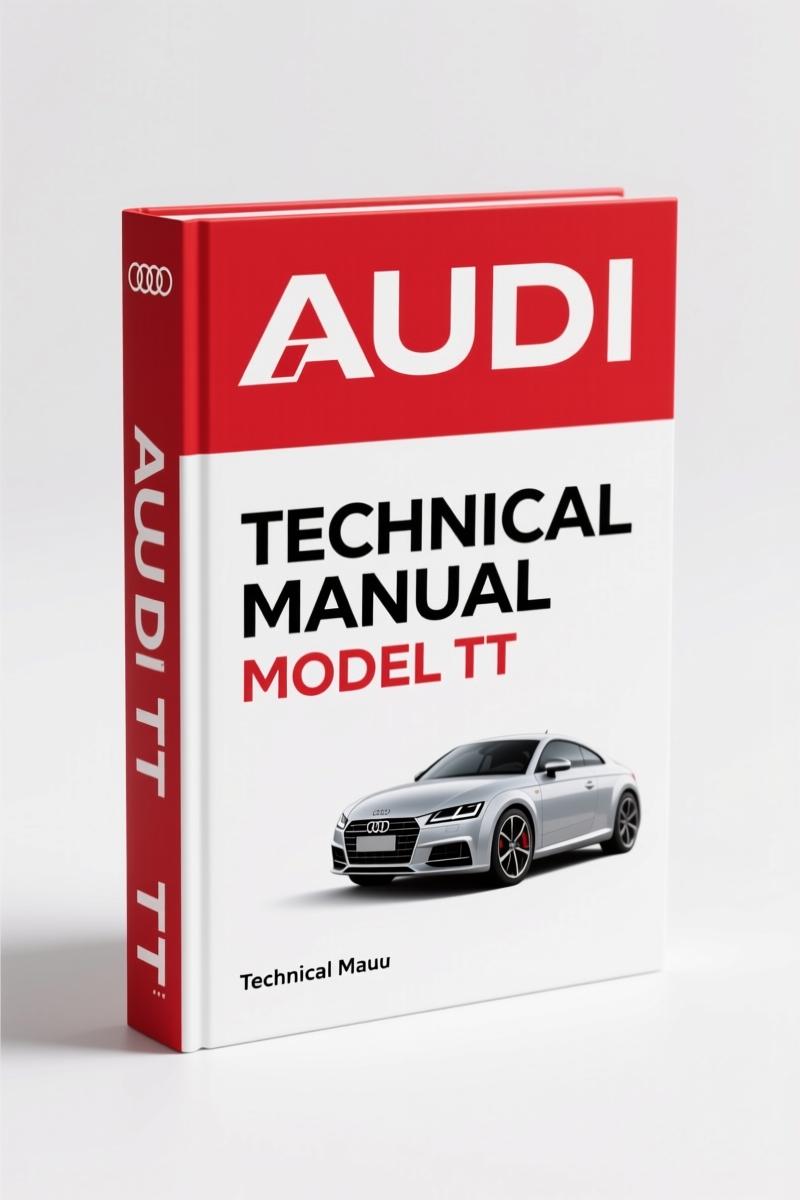
Audi TT Technical Manual – 82-Page Factory Diagnostics & VAG-COM Guide
Original price was: $40.50.$27.00Current price is: $27.00.
Factory-based Audi TT diagnostics – 82 pages of VAG-COM logging, sensor tests, adaptation tables, and part codes.
Description
Audi TT Technical Manual – What You Actually Get
I’ve been turning wrenches since before some of you were born, and I’ve seen more than a few aftermarket manuals that read like a bad Wikipedia article. This Audi TT Technical Manual is different. It’s 82 pages of straight-up factory-level documentation written by people who understand that a half-degree of timing advance can turn a 1.8T into a grenade. The original file name says it: Audi_TT_Technical_Manual_en-16013019988.pdf. That’s not a reprint of some third-party guesswork. This is the real deal.
Troubleshooting with VAG-COM – Real Block Data
Section 2 dives straight into diagnostics trouble codes. If your TT throws a check engine light, you’ll find the exact measuring blocks to log – Block 032 for fuel trims, Block 002 for MAF, Block 020 for timing retard, Block 112 for exhaust gas temps. The manual gives you the actual VAG-COM addresses, not some generic OBD-II list. Page references are there for a reason: need the boost comparison between requested and actual? Page 19 has Block 115. Lambda adaptation procedure? Page 12 walks you through the reset sequence without needing a VAG-COM cable, which is rare for Audi diagnostics. Throttle body adaptation without a scan tool is covered on page 15. That alone saves you a trip to the dealer.
Lambda Adaptation and Throttle Body Reset – Step-by-Step Oxygen Sensor Work
Section 2.4 (page 12) presents the lambda adaptation process. It explains the fuel trim adjustments in plain language. You’ll see how to read Block 030 lambda control operating status and Block 034 for pre-cat oxygen sensor ageing. If you’ve ever fought a lean code on a BAM engine, you’ll appreciate the post-cat oxygen sensor diagnosis on page 23 (Block 036). The manual even covers catalytic converter diagnosis via Block 046. That’s the kind of technical depth that separates a pro from a parts-changer.
Testing Sensors and Switches the Right Way
Skim through Section 2.7 and you’ll find ECU testing blocks for the accelerator pedal (Block 062), clutch and brake switches (Block 066), steering pressure switch (Block 056), AWD brake switches (Block 001), and ABS/ESP movement sensors (Block 004). Each entry tells you what the live data should read and what a failure looks like. No guessing. For example, the AWD block 001 shows brake switch status – if your Haldex isn’t engaging, that’s a place to check. This manual doesn’t leave you wondering “is this normal?” It gives you the thresholds.
Dashpod Diagnostics and Tweaks – Customization Without a Dealer
Section 2.9 covers the dashpod self-diagnosis, coolant temperature display on the CC, and how to pull fuel level data from VAG-COM. That’s useful when the gauge reads empty but you know there’s half a tank. Section 3 (Tweaking) has stuff you won’t find in any Haynes manual: changing temperature display from Celsius to Fahrenheit, xenon adjustment, dashpod illumination, fuel gauge calibration (page 33), key fob recoding (page 34), and central locking customization (page 35). There’s a whole subsection on Lemmiwinks – ECU adaptation channels – starting on page 37. If you want to tweak the throttle response or change idle speed, that’s the section.
82 Pages of Factory-Grade Data – Part Codes and Measuring Blocks
The “Lists and Tables” section (starting page 42) is a goldmine. It contains codes for common parts: fluids, body and interior, electrics, running gear, and a specific BAM engine parts list. Climate control diagnosis codes are on page 44. The Engine/ECU measuring blocks (page 48 through 56) include a quick reference table for the most used blocks. Adaptation channels are listed for the ECU, dashpod, HVAC, xenon, Haldex, ABS/ESP, and central locking. That’s 82 pages of content with zero filler. I’ve used this manual to fix a customer’s TT that was misfiring under boost – the Block 020 timing retard data pointed me to a faulty knock sensor. No scan tool company’s suggested “interpretation” – just raw specs.
Source Authenticity – Why OEM Documentation Beats Aftermarket
Aftermarket manuals copy-paste from forums. This technical manual originates from the Audi service ecosystem. The diagnostic trouble codes match the factory workshop manuals. The adaptation channels align with what VAG-COM version 409 and later recognize. If you’ve ever compared a Chilton wiring diagram to an OEM schematic, you know the difference. This manual is in the OEM camp. Audi TT Coupé Design and Function Training Manual is a companion for deeper subsystem theory. For later model years, Audi TT 2007 Training Manual adds updated electronics, and Audi TT 2007 Suspension System Training Manual covers chassis specifics. But for day-to-day diagnostics and tweaks, this 82-page manual is your bench reference.
Audience Fit – Who Needs This Manual Right Now
If you own a 225hp BAM engine TT and you’re fighting a P0171 lean code, this manual saves you hours. If you’re a home garage enthusiast who just bought a VAG-COM cable and doesn’t know which measuring block to log, you need this. If you’re a pro shop in San Antonio like mine, and a TT comes in with a “no boost” complaint, page 19 gives you the requested vs. actual boost logging procedure. Beginners: don’t attempt the central locking recoding without reading page 34 and 35 – you can brick the module if you misclick. This manual doesn’t baby you, but it tells you exactly what to do. Related reading for context: Automotive Industry Overview for a broader understanding of how these systems evolved, and Manual Transmission if you’re working on the gearbox side.
- Does this manual cover the 3.2 V6 engine?
- No. This is focused on the 1.8T 4-cylinder (including BAM and other 180hp/225hp variants). The measuring blocks are specific to those ECUs.
- Can I use this manual for a Mk1 TT with no VAG-COM experience?
- You can, but you’ll need a basic understanding of what a measuring block represents. The manual explains each block’s purpose and expected values, but it assumes you know how to connect your cable and open VAG-COM. If you’re just starting, I recommend reading the VAG-COM help files first, then refer to this manual for the actual TT-specific data. The throttle body adaptation without VAG-COM (page 15) is a beginner-friendly procedure: turn ignition on, wait 10 seconds, turn off, then start. That’s it. But for the logging tests, you’ll need to be comfortable with the software. The manual flags safety warnings – for example, before testing the steering pressure switch (Block 056), it reminds you to have the engine at operating temperature and the wheels straight. Little things like that prevent misdiagnosis and expensive mistakes.
Stop relying on forum posts with “I think this is the right torque” or “my friend told me block 032 is for fuel trims but it didn’t work.” This manual has the factory numbers. It’s 82 pages of verified data you can trust on a Saturday afternoon. If you want to keep your TT running right and avoid the dealer labor rate, Access the Factory Manual from AutoRepairManuals and keep it on your bench.
Additional information
| Brand | Audi |
|---|---|
| Language | English |
2 reviews for Audi TT Technical Manual – 82-Page Factory Diagnostics & VAG-COM Guide
You may also like…
-
Sale!
Audi A3 2003 Repair Manual – Fuel System Service Documentation
Original price was: $63.45.$45.00Current price is: $45.00. -
Sale!
Audi A8, Q7 Training Manual – Ceramic Brake Systems
Original price was: $54.00.$45.00Current price is: $45.00. -
Sale!
Audi 5000 S 1985 Wiring Diagram – OEM Cooling Fan Circuit Data
Original price was: $86.90.$55.00Current price is: $55.00. -
Sale!
Audi 100, 200 1989 Workshop Manual – Factory Service for 5-Cylinder Engine
Original price was: $63.45.$45.00Current price is: $45.00.
Related products
-
Sale!

1995 Operators Manual – International 1000-4000 Series | OEM Documentation
Original price was: $12.49.$9.99Current price is: $9.99. -
Sale!
Acura NSX 1991 Service Manual – 1420 Pages OEM
Original price was: $102.05.$65.00Current price is: $65.00. -
Sale!

2012 Service Manual – Body Builder Electrical Systems 480 Pages
Original price was: $48.28.$34.00Current price is: $34.00. -
Sale!

1991 Operators Manual – International Truck OEM Specs (108 Pages)
Original price was: $13.63.$10.99Current price is: $10.99.
John S. –
Great workshop guide. Immediate link after checkout process. It guided me to rebuild my Audi TT electrical system. Saved my repair job! Thanks.
pro_mechanic –
Superb resource! It is very easy to read on my laptop without blur. A must-have for any Audi TT DIYer doing repairs. Saves me a lot of time.