
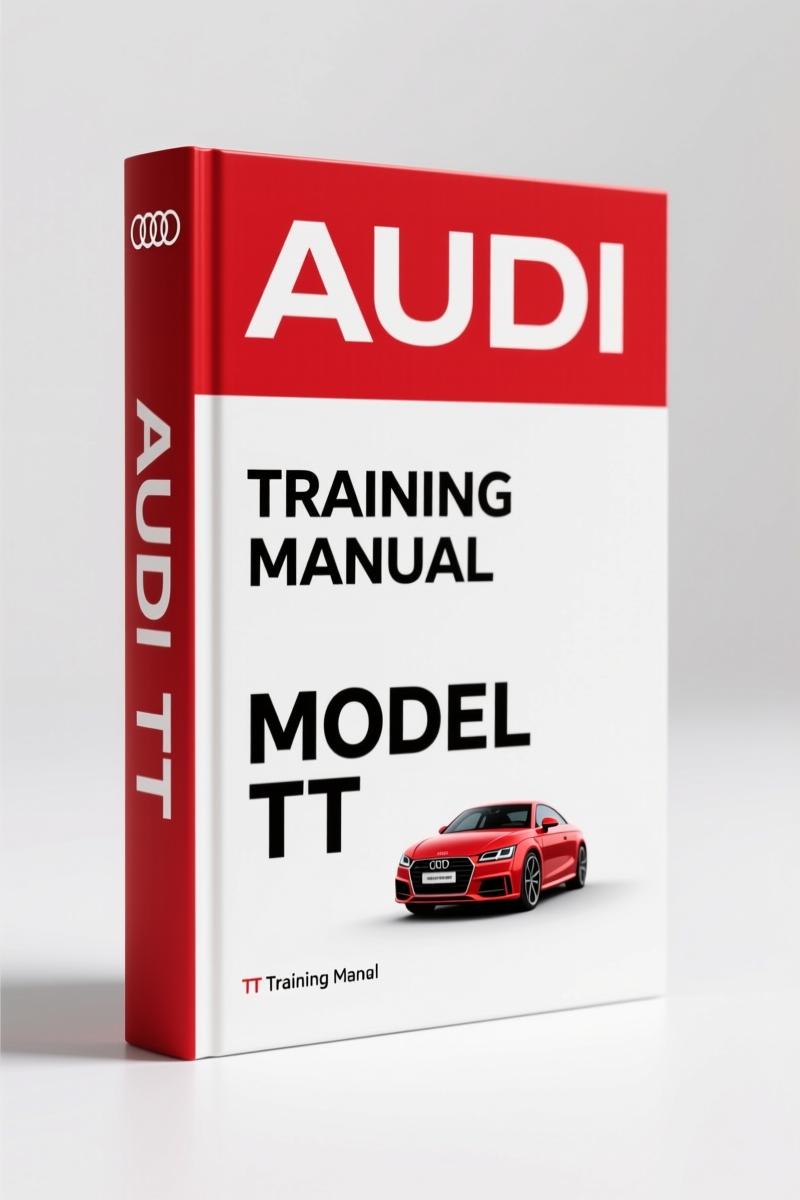
Audi TT 2007 Training Manual – Body Structure & Repair Protocols
Original price was: $30.00.$20.00Current price is: $20.00.
32-page factory training manual for Audi TT 2007 body structure, joining techniques, and repair concepts. Essential for bodyshop technicians.
Description
Audi TT 2007 Training Manual – Body Structure & Repair Concepts
So you’ve got a 2007 Audi TT in the bay with structural damage. If you start cutting and welding without knowing what’s under the primer, you’re going to have a bad day. This Audi TT 2007 Training Manual is not a repair manual – it’s the factory’s deep dive into how they built the thing. 32 pages of exactly what joining methods went where, why they used aluminium in some spots and steel in others, and how to repair it without turning the car into a scrap pile. You need that knowledge before you touch the first rivet.
Audi Space Frame ASF® Construction
Page 2 of the manual lays out the ASF concept. The Audi TT’s bodyshell uses a composite of aluminium and steel, with a 48% weight saving over an all-steel shell. That’s a big number, but it means you can’t treat a dent like you would on a Chevy. The frame uses extruded aluminium sections, cast nodes, and steel panels in specific load paths. Understanding where the high-strength steel is and where the aluminium crush zones are is the difference between a repair that passes inspection and one that folds in the next fender-bender.
What Joining Techniques Does This Manual Cover?
Punch riveting, clinching, MIG welding, resistance spot welding, MAG welding, structural bonding – it’s all in there. Pages 13 through 18 walk through each process. But the real value is in the new techniques: solid punch riveting (Kerb-Konus riveting) on page 16, Flow Drill screwing on page 17, and aluminium laser welding on page 18. I’ve seen guys try to MIG over a laser-welded seam and ruin the panel. This manual shows you exactly what tool and process Audi used at each joint. Aftermarket documentation won’t give you that kind of detail – most of them just say “weld as necessary.” That’s a joke.
3 Critical Repair Concepts for Aluminium-Steel Hybrid Bodies
Page 20 starts the repair concept section. Three distinct repair areas: aluminium repairs (page 20), steel repairs (page 22), and aluminium-steel repairs (page 23). The last one is the kicker. If you don’t account for the galvanic corrosion between the two metals, you’ll have a rust bucket in two years. The manual covers contact corrosion on page 6 and explains the isolation methods – special primers, sealers, and fasteners. I’ve seen a shop skip that step and then wonder why the repair failed. Audi spelled it out. Read it.
Workshop Equipment Requirements
Page 24 lists the specific equipment you need for an Audi TT body repair. This is not a suggestion – Audi expects you to use certain rivet guns, weld controllers, and bonding dispensers. The manual also covers the qualification of aluminium (page 25) – meaning you need to know your material grades before you start. If you’re a shop owner, this page alone justifies the cost. Hand your tech this manual and tell them to read the workshop equipment section before they touch the car. It saves tool damage and rework.
Crash Safety and Pedestrian Protection: Factory Design Philosophy
Pages 26 and 28 cover head-on, side, and rear collision structures plus pedestrian safety. The front bulkhead and bumper carrier are designed to deform in a specific way. If you weld a reinforcement plate where it doesn’t belong, you change the crash characteristics. Audi documents the load paths. That information is not in any third-party book. You want to fix the car right – you need the factory training manual, not a summary.
One more thing: the manual repeatedly states it is not a repair manual. You still need the actual workshop manual for torque specs and disassembly steps. But this training manual gives you the why behind the how. Get it, study it, then go to the shop.
- Is this a repair manual?
- No. It’s a training manual. You still need the factory repair manual for torque specs and procedures.
- What is the most important thing this manual teaches?
- The section on contact corrosion (page 6) and the combination of steel and aluminium (page 7). If you mix those materials without the correct isolation methods, you’ll create a galvanic cell that eats the aluminium. The manual explains exactly where Audi uses steel, where they use aluminium, and how to handle repairs without causing corrosion. That alone can save you from a comeback that costs more than the manual.
Related Manuals
- Audi TT Coupé Design and Function Training Manual
- Audi TT 2007 Training Manual
- Audi TT 2007 Suspension System Training Manual
For broader context on how the Automotive Industry Overview is standardizing, this manual is a perfect example of factory-level detail that aftermarket guides can’t touch Automotive Industry Overview. Access the Factory Manual and keep a copy in your toolbox. Your next Audi TT job will thank you.
Additional information
| Brand | Audi |
|---|---|
| Language | English |
2 reviews for Audi TT 2007 Training Manual – Body Structure & Repair Protocols
You may also like…
-
Sale!
Audi 100, 200 1989 Workshop Manual – Factory Service for 5-Cylinder Engine
Original price was: $63.45.$45.00Current price is: $45.00. -
Sale!
Audi A8, Q7 Training Manual – Ceramic Brake Systems
Original price was: $54.00.$45.00Current price is: $45.00. -
Sale!
Audi A3 2003 Repair Manual – Fuel System Service Documentation
Original price was: $63.45.$45.00Current price is: $45.00. -
Sale!
Audi 5000 S 1985 Wiring Diagram – OEM Cooling Fan Circuit Data
Original price was: $86.90.$55.00Current price is: $55.00.
Related products
-
Sale!

Technical Manual – International 6.0L Power Stroke FICM Diagnostics
Original price was: $29.80.$20.00Current price is: $20.00. -
Sale!

1993 Operators Manual – International Bus 1000-3000 OEM Specs
Original price was: $12.30.$7.99Current price is: $7.99. -
Sale!
1995 Operators Manual – International 1000-4000 Series | OEM Documentation
Original price was: $12.49.$9.99Current price is: $9.99. -
Sale!

Acura Integra 1998 Service Manual – 1891 Pages Factory OEM Documentation
Original price was: $31.75.$25.00Current price is: $25.00.
diy_master –
I am very pleased with this transaction. It is easily zoomable on my phone without losing quality. A must-have for any Audi TT DIYer doing repairs. I will recommend this shop to others.
Michael T. –
This is just what I needed. The PDF quality is excellent. Every wiring layout is provided for Audi TT. Highly recommended for mechanics.