
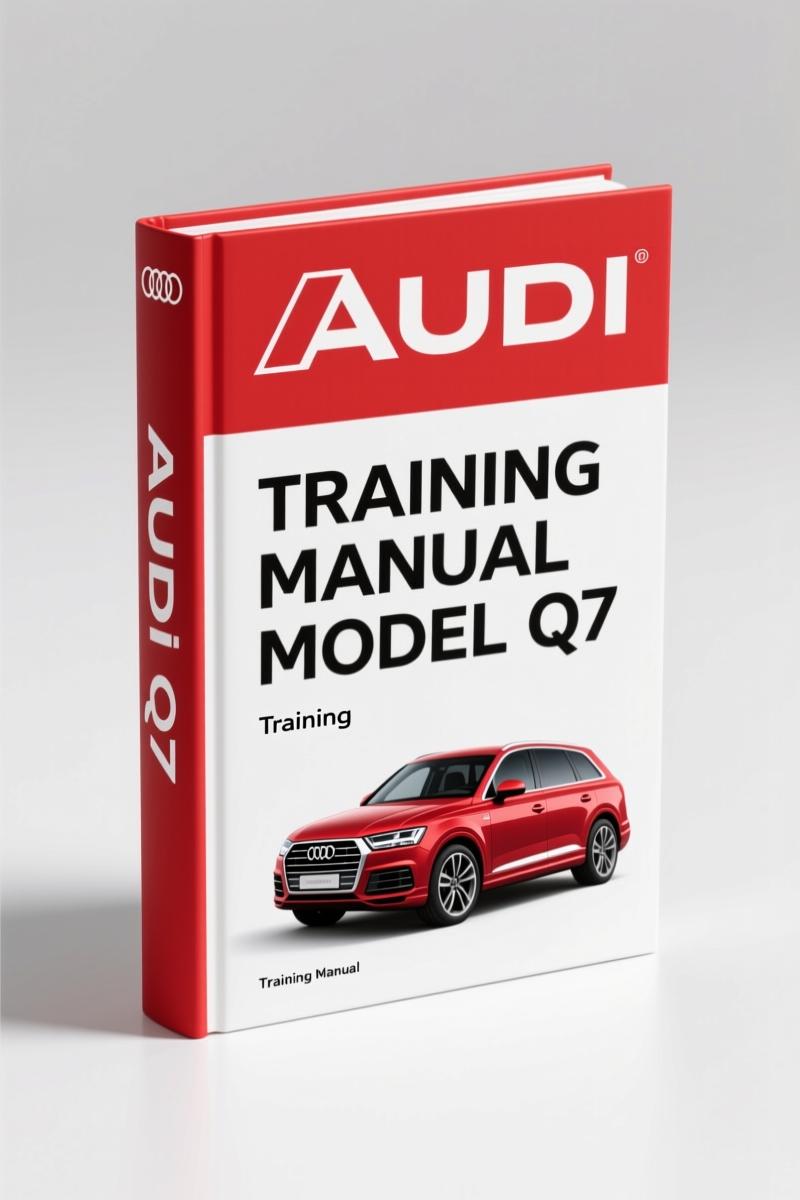
Audi Q7 Training Manual: Electrical System Network Topology & Control Units
Original price was: $15.48.$9.99Current price is: $9.99.
Audi Q7 Self-Study Programme 364: 60-page factory training manual covering control units, bus systems, and battery management.
Description
Audi Q7 Training Manual – Electrical System Self-Study Programme 364
You have an Audi Q7 Training Manual on the bench that’s giving you electrical problems. Maybe a control unit won’t wake up, the battery management is throwing codes, or the convenience system is acting up. The first thing you need isn’t a wiring diagram – it’s a map of which control unit does what and how they talk to each other. That’s exactly what this 60-page Self-Study Programme 364 delivers. I’ve been turning wrenches for 28 years, and I’ll tell you straight: if you don’t understand the network topology before you start probing, you’re asking for a comeback. This isn’t a workshop manual – it’s the training document Audi uses to teach their own techs how the electrical system is laid out. Use it to understand where J519 lives, what the data bus diagnostic interface J533 controls, and how the CAN, LIN, and MOST buses interconnect. Without that knowledge, you’re chasing ghosts.
Control Units: More Than 20 Modules
Page 2 of this manual lays out the philosophy: the Q7 uses a multiplicity of electronic control units interconnected via efficient bus systems. The table of contents lists over 20 individual modules, from the onboard power supply control unit J519 (page 13) to the rear lid control units J605 and J756. Each one gets its own section with installation location and functional description. For example, the data bus diagnostic interface J533 is covered on page 10 – that’s the gateway that translates between the different bus protocols. If you’ve got a no-communication fault, you need to know which gateway handles which network. This manual shows you exactly that. The door control units are detailed starting page 38, and the convenience system central control unit J393 begins on page 42. Every module’s location in the vehicle is documented, which saves you from tearing the interior apart to find something that’s behind the glovebox or under the rear seat.
Battery and Energy Management: System Overview
From page 15 through page 25, the manual covers the battery and alternator along with the energy management strategy. This isn’t a step-by-step replacement procedure – it’s the theory of operation. You’ll learn how the control unit monitors state of charge, how the alternator regulates output based on load, and what happens when the battery management system decides to cut loads to preserve starting capability. For a diag tech, this is gold. If a customer complains about the radio shutting off or the seat heaters quitting, you can trace it back to the energy management strategy described here. Pair this with a factory repair manual for actual torque specs and removal steps, but don’t start a battery replacement without understanding the reset procedures explained in Section 15.
Does This Manual Cover Diagnostic Procedures?
No. Look at the note on page 3: “The self-study programme is not a workshop manual! All values given are intended as a guideline only, and refer to the software variant valid at the time of publication.” I’ve seen guys try to use this to find pinouts or torque values – you’ll be disappointed. What it does give you is the network topology and component locations that make diagnosis faster. For example, the entry and start authorisation control unit J518 on page 33 – knowing its physical location and which bus it communicates on will cut your diagnostic time in half. The manual also covers the trailer detector control unit J345 (page 54) and the open sky system (page 48). That’s the sunroof, and if that module goes haywire, you’ll thank yourself for reading this before ordering parts.
60 Pages of Topology and Installation Locations
Let me be blunt: if you’re used to aftermarket manuals that generalize across models, you’ll hate this manual. It’s specific to the Q7 and its exact control unit architecture. The Training Manual format means every diagram is from Audi’s engineering team, not a third-party repackaging. Page 2 shows a block diagram of the bus system – MOST for infotainment, CAN for powertrain and chassis, LIN for low-speed body functions. The manual explains how data flows between these networks through the gateway. For a DIYer who’s never dealt with network diagnostics, this is the clearest overview you’ll find. For a pro, it’s a quick reference to confirm which bus a particular module uses before you hook up your oscilloscope.
Source Authenticity – Audi Factory vs Aftermarket
I won’t touch a third-party wiring diagram for a modern European car. They’re often wrong, incomplete, or based on a different model year. This Training Manual comes directly from Audi’s Service Training division. It’s the same material used in their own technical seminars. The Automotive Industry Overview shows that OEM-level documentation is the only reliable source for network data. If you’re comparing this to a generic aftermarket CD, stop. You’ll waste hours. Related manuals that pair well with this one include Audi Q7 Self-study programme 375 Training Manual for the engine management system, Audi Q7 Self-study programme Training Manual covering the chassis, and Audi A2 A3 Q7 Sunroof System Training Manual if you’re dealing with roof module issues. For a broader perspective on documentation standards, see Automotive Industry Overview.
FAQ
- Can I use this to replace a control unit on my Q7?
- No. This manual teaches system design, not repair steps. You need the factory workshop manual for component replacement and coding.
- What is the difference between this and a workshop manual?
- A workshop manual gives you torque specs, removal sequences, and diagnostics. This training manual explains how the systems work, where the modules are, and how the buses communicate. I always use both – the training manual tells me where to look, the workshop manual tells me how to fix it.
- Does it include wiring diagrams?
- Block diagrams, not full pin-to-pin wiring schematics. You’ll see bus topologies and control unit connections, but not individual wire colors or terminal numbers.
- How many pages does the manual have?
- 60 pages covering the complete electrical system topology, from the battery management to the rear lid control units.
If you’re working on a Q7 with electrical gremlins, don’t waste time guessing where the control units are or how they communicate. Get the actual factory documentation. Access the Factory Manual now and have the network topology and component locations at your fingertips.
Additional information
| Brand | Audi |
|---|---|
| Language | English |
2 reviews for Audi Q7 Training Manual: Electrical System Network Topology & Control Units
You may also like…
-
Sale!
Audi 100, 200 1989 Workshop Manual – Factory Service for 5-Cylinder Engine
Original price was: $63.45.$45.00Current price is: $45.00. -
Sale!
Audi 5000 S 1985 Wiring Diagram – OEM Cooling Fan Circuit Data
Original price was: $86.90.$55.00Current price is: $55.00. -
Sale!
Audi A3 2003 Repair Manual – Fuel System Service Documentation
Original price was: $63.45.$45.00Current price is: $45.00. -
Sale!
Audi A8, Q7 Training Manual – Ceramic Brake Systems
Original price was: $54.00.$45.00Current price is: $45.00.
Related products
-
Sale!

1992 Electrical Schematic – OEM Wiring Diagrams for International 1000-3800
Original price was: $24.48.$18.00Current price is: $18.00. -
Sale!

1991 Operators Manual – International Truck OEM Specs (108 Pages)
Original price was: $13.63.$10.99Current price is: $10.99. -
Sale!
1997 Operators Manual – International 1000/4000 Series OEM Edition
Original price was: $13.49.$9.99Current price is: $9.99. -
Sale!
2004 Acura TSX Wiring Diagram – 73-Page Factory Electrical Schematics
Original price was: $15.88.$9.99Current price is: $9.99.
James L. –
This is exactly what I required. Quick access after payment. Every torque spec is included for Audi Q7. Saves me a lot of dollars.
Richard G. –
Superb resource! The pages are clean and well indexed. A must-have for any Audi Q7 DIYer doing maintenance. Saves me a lot of dollars.