
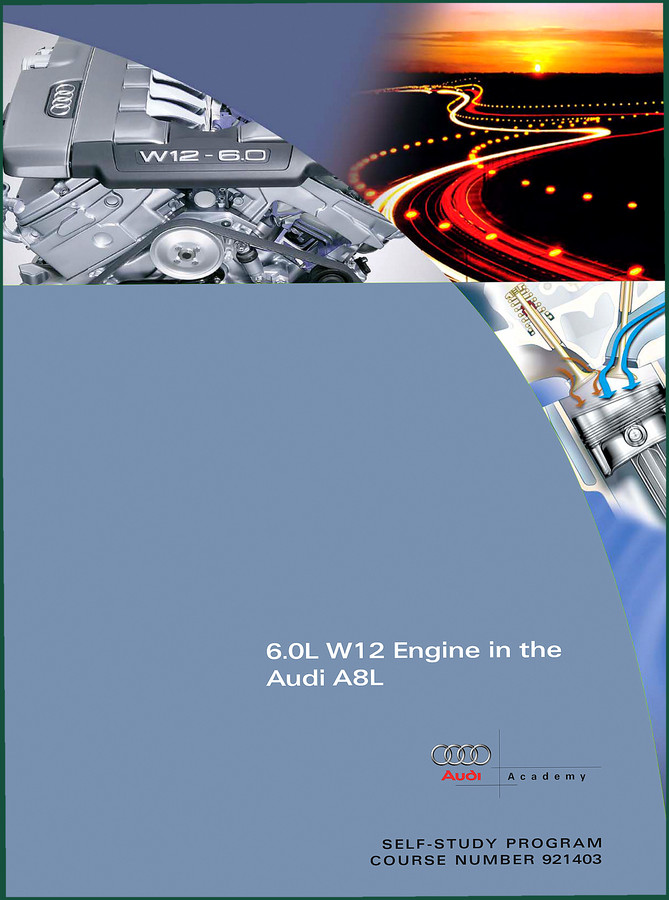
Audi A8L 2004 Training Manual – W12 Engine Design & Function
Original price was: $37.50.$30.00Current price is: $30.00.
84-page factory training manual detailing the 6.0L W12 engine design: cylinder block, crankshaft, cooling system, and emissions-relevant subsystems.
Description
Audi A8L 2004 Training Manual – Factory W12 Engine Self-Study Programme
I’ve been turning wrenches for 28 years. ASE Master, six bays in San Antonio, and I’ve seen more ruined engines from skipped steps than from bad parts. The Audi W12 is a different animal. If you’re opening up a 2004 Audi A8L 6.0L, you need the actual factory material – not some aftermarket rewrite that guesses at the timing chain tensioner sequence. This is the 84-page Audi A8L 2004 Training Manual (Course Number 921403, printed November 2004). It’s the same book Audi handed to dealer techs when this engine launched. No fluff, no reprints – just the design theory and the critical numbers you need before you pull a bolt.
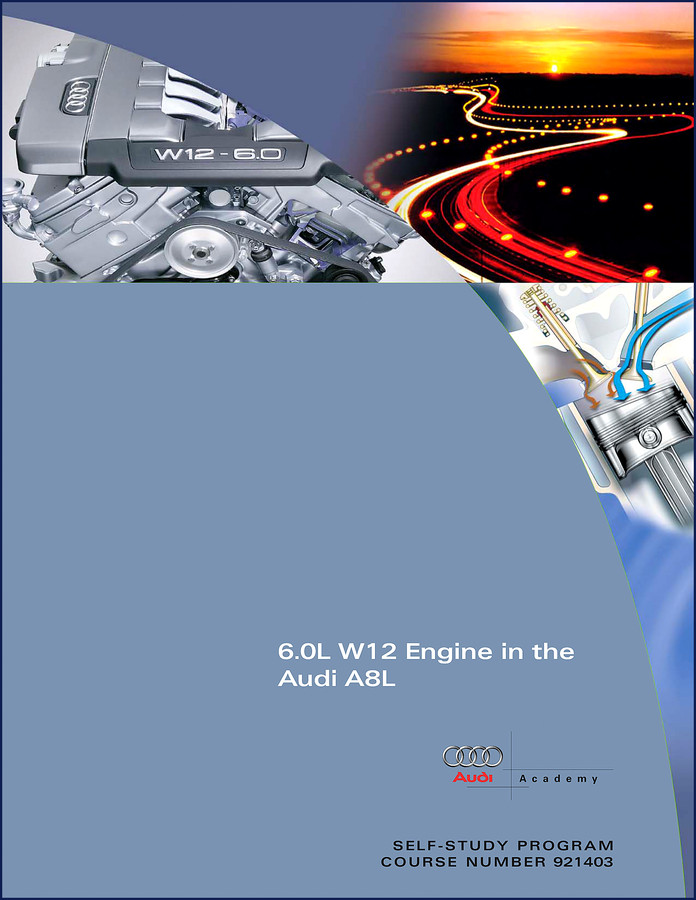
W12-6.0 Engine: Technical Data and Cross Section
The manual opens with a full cross-section and longitudinal cutaway of the W12. You get bore, stroke, compression ratio, firing order – all the numbers that matter. On page 2 you’ll find the introduction that explains this is a self-study programme, not a workshop manual. That’s important: it teaches you why the W12 is laid out the way it is, so when you start the actual repair you understand the logic. I’ve used this book to train green techs who’d never seen a W configuration. After an hour with these diagrams they could tell you exactly where the two cylinder banks meet and why the crank throws are offset.
Cylinder Block and Crankcase – Why Alignment Matters
Pages 7 through 15 cover the cylinder block and crankcase. This is where most aftermarket manuals fail – they show a generic V12 picture and call it close enough. Audi cast this block in one piece with a 72-degree angle between banks. The training manual shows the bedplate construction, main bearing cap torque sequencing, and the critical alignment dowels that locate the crankcase halves. Miss one dowel and you’ll fight oil leaks forever. I’ve seen it. Don’t be that guy.
Crankshaft – Page 13 Specs and the W Design
The crankshaft section on page 13 explains the split-pin design that gives the W12 its unique firing order. The manual includes a diagram of the crank throws and the connecting rod journal offsets. If you’re rebuilding, you need to know that the two inner connecting rods share a journal – that changes how you measure bearing clearance. The training manual gives you the factory tolerance range. Aftermarket sources? They’ll tell you to “use standard specs” and leave you guessing. This book doesn’t guess.
Camshaft Drive and Timing Control – Internal EGR Explained
The camshaft drive chapter (starting around page 32) dives into the timing chain layout and the adjusters. Audi’s W12 uses four chain drives – two primary chains from the crank to the inlet camshafts, then secondary chains to the exhaust cams. The training manual walks through the electro-hydraulic control of the camshaft adjusters, including how the system triggers internal EGR by holding the exhaust valves open slightly at low load. That’s not something you’ll find in a generic repair guide. If you’re diagnosing a rough idle or a P0011 on an A8L, this section is where you start. Also check the related Audi multitronic 01J Training Manual – CVT Design & Function (100 Pages) for transmission integration on front-wheel-drive models, though the A8L uses ZF 6HP.
Service Procedures – What the Training Manual Doesn’t Replace
Page 77 lists the service section, but the manual itself warns: “The self-study program is not intended as a Workshop Manual.” That’s honest. You still need the full factory repair manual for torque specs and step-by-step disassembly. But this training manual gives you the background that makes those specs make sense. Want to know why the W12 uses a map-controlled thermostat on the cooling system? It’s in the cooling section (page 22). Need to understand the water-cooled alternator on page 47? It’s there. For engine management, page 54 covers the MSK 2.0 controller. Pair this with the Audi 09L, 0AT, 0B6, 0BQ, 09E 2006 Training Manual – Factory Specs if you’re dealing with the transmission side. And for the suspension and body electronics, the Audi Q7 Training Manual – 76-Page Factory Self-Study Programme 361 follows the same design philosophy.
One more thing: 84 pages might sound thin, but every page is dense with diagrams, control loop schematics, and hydraulic circuits. The W12 is a tight engine bay – you need to know where the coolant pipes run before you try to drop the subframe. This manual shows you. For broader context on why OEM training materials matter, see Automotive Industry Overview for how manufacturers standardize technical documentation across model lines.
Source Validity – OEM Print vs. Aftermarket Copies
This is an original Audi of America, Inc. publication (Printed in U.S.A., 11/2004). It carries the Audi Academy branding and Course Number 921403. The copyright notice prohibits reproduction and reposting. That’s the kind of provenance you want when you’re trusting a document with a $15,000 engine. Aftermarket copies often have smudged torque tables or missing pages on cylinder head seating. Here, the cylinder head section on page 31 is crisp, the valve timing chart is legible, and the camshaft adjuster cross-sections are clear enough to follow with a multimeter.
- Is this a workshop manual with torque specs and repair steps?
- No. It is a Self-Study Programme (SSP). It explains design and function, not step-by-step repair. You need a separate workshop manual for disassembly and reassembly. But without this background, you’ll waste time figuring out why Audi did what they did.
- Does the manual cover the cylinder block and crankshaft in detail?
- Yes. Pages 7–15 cover the cylinder block, crankcase, and crankshaft with full diagrams. It explains the W-design split-pin crankshaft, the two-piece bedplate, and the cooling jacket routing. If you are rebuilding a W12, these pages are the foundation. The crankshaft specs on page 13 include journal diameters and main bearing clearances – all factory numbers. I’ve used those numbers to catch a bad bearing grind before the engine went back together. It saved the shop a comeback.
If you’re working on a 2004 Audi A8L with the 6.0L W12, you need this book open on your bench. It won’t tell you every fastener torque, but it will stop you from making the mistakes that cost you an engine. Access the Factory Manual now and get the real engineering story before you turn a wrench.
Additional information
| Brand | Audi |
|---|---|
| Language | English |
3 reviews for Audi A8L 2004 Training Manual – W12 Engine Design & Function
You may also like…
-
Sale!
Audi 100, 200 1989 Workshop Manual – Factory Service for 5-Cylinder Engine
Original price was: $63.45.$45.00Current price is: $45.00. -
Sale!
Audi A8, Q7 Training Manual – Ceramic Brake Systems
Original price was: $54.00.$45.00Current price is: $45.00. -
Sale!
Audi 5000 S 1985 Wiring Diagram – OEM Cooling Fan Circuit Data
Original price was: $86.90.$55.00Current price is: $55.00. -
Sale!
Audi A3 2003 Repair Manual – Fuel System Service Documentation
Original price was: $63.45.$45.00Current price is: $45.00.
Related products
-
Sale!

1992 Electrical Schematic – OEM Wiring Diagrams for International 1000-3800
Original price was: $24.48.$18.00Current price is: $18.00. -
Sale!

1991 Operators Manual – International Truck OEM Specs (108 Pages)
Original price was: $13.63.$10.99Current price is: $10.99. -
Sale!
1996 Operators Manual – International 1000-4000 Series (246 pages)
Original price was: $15.28.$9.99Current price is: $9.99. -
Sale!
1993 Operators Manual – International Bus 1000-3000 OEM Specs
Original price was: $12.30.$7.99Current price is: $7.99.
Robert M. –
This is exactly what I required. It is very easy to read on my tablet without blur. A must-have for any Audi A8L DIYer doing repairs. I will recommend this shop to others.
pro_mechanic –
This is just what I needed. It is easily zoomable on my tablet without losing quality. Contains precise schematics for Audi. Saves me a lot of time.
James L. –
Great buy! The document looks clean. It assisted me to repair my Audi A8L engine. I will definitely buy again.