
Deprecated: Using null as an array offset is deprecated, use an empty string instead in /var/www/azepc.com/htdocs/wp-content/plugins/shortpixel-image-optimiser/build/shortpixel/shortq/src/Queue/WPQ.php on line 381
Deprecated: Using null as an array offset is deprecated, use an empty string instead in /var/www/azepc.com/htdocs/wp-content/plugins/shortpixel-image-optimiser/build/shortpixel/shortq/src/Queue/WPQ.php on line 381
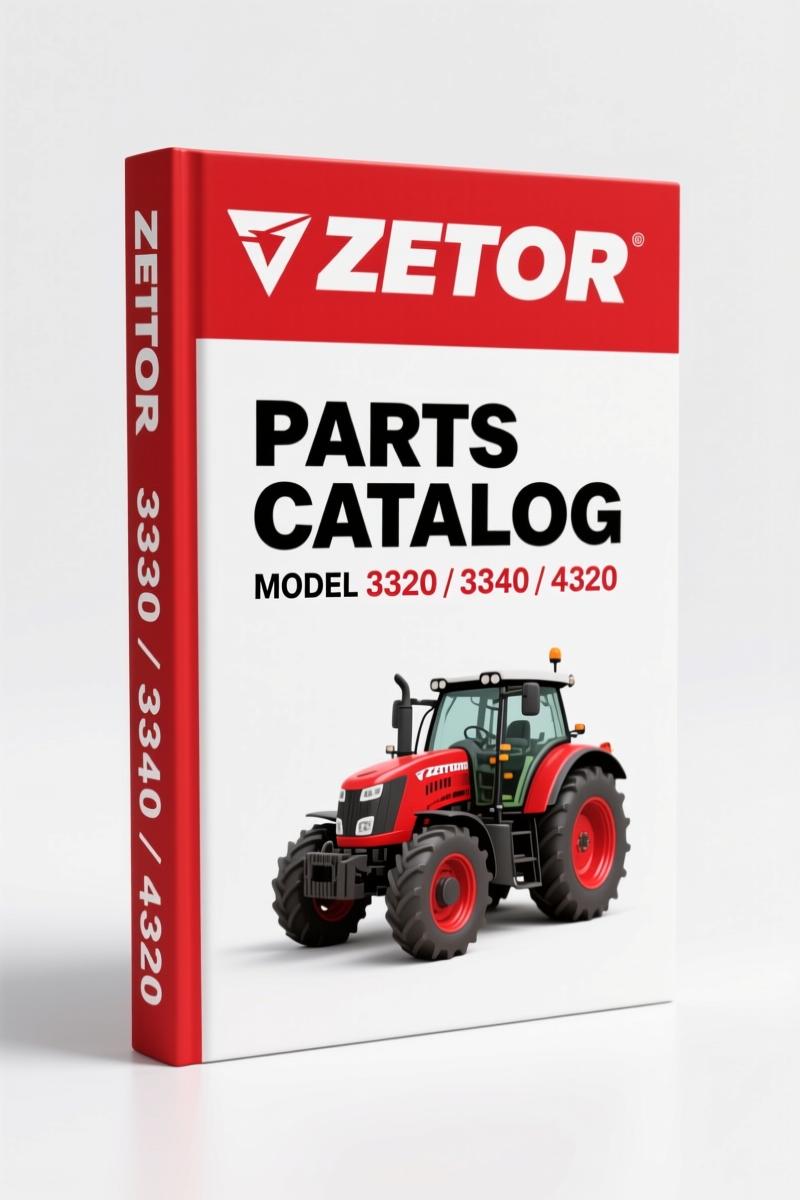
Zetor 3320-5320 1993 Workshop Manual – OEM Factory Service Specs
Original price was: $53.38.$34.00Current price is: $34.00.
255-page OEM workshop manual for Zetor 3320, 3340, 4320, 4340, 5320 tractors. Covers engine, transmission, hydraulics, electrical. Factory specifications only.
Description
Zetor 3320, 3340, 4320, 4340, 5320 1993 Workshop Manual
If you are turning wrenches on a Zetor 3320, 3340, 4320, 4340, or 5320 from the early 90s, you already know the aftermarket manuals are a gamble. One wrong torque on a head bolt and you’re pulling it apart again. This is the factory-issued Workshop Manual from 1993 – 255 pages of what the engineers in Brno actually spec’d. It covers the Z 5201 and Z 7701 TURBO engines, the synchronized transmission, the front and rear axles, and every system that keeps these tractors running. I’ve been wrenching since the 80s, and I’ll tell you straight: you want the OEM document, not a photocopied reprint with blurred torque charts.
This manual came out of the factory in 1993, publication I., and it’s written in the language of a real service manual – dense, specific, and full of warnings that save you from damaging parts. It’s not a reprint; it’s the original scan from the Zetor factory. Every page matches the actual printed book, including the fold-out diagrams for the hydraulic system and the bearing list at the back.
Engine Overhaul: Z 5201 and Z 7701 TURBO Specs
The first section, Motor (pages 7–58), breaks down the entire engine. Technical parameters for both naturally aspirated and turbocharged variants are given in metric units – you’ll find bore, stroke, compression ratios, and firing order. Page 9 lists the specific torque for the cylinder head bolts on the Z 5201 engine. Don’t guess: the sequence is phased, and the manual calls for a multi-step angle-torque procedure. If you’re rebuilding the head, you need these numbers. The oil pump disassembly is on page 26, with clearances for the gears and the relief valve spring length. They even include the procedure for the heat exchanger and oil filter housing – something the aftermarket guys always leave out.
Turbocharger removal is on page 12. They tell you to support the exhaust manifold, keep the oil drain line clear, and replace the gasket – nothing vague. The cooling system chapter (page 56) includes the coolant heater used in cold climates. If you operate north of the Rio Grande, that page alone will save you a frozen block episode.
Does This Manual Cover the Fuel Injection System?
Yes – section 1.11, Palivový systém (Fuel System), runs from page 43 to 52. It covers the injection pump timing, the governor adjustments, and the injector pressure specs. The manual lists the bench settings for the pump and the static timing marks on the flywheel. No guesswork – you set the pump timing with a dial indicator and lock the nut at the specified angle. The lift pump and fuel filters are also detailed, including the priming procedure. For the Zetor 5320 with the turbo, the injection pump is different; this manual gives the specific part number and the calibration data.
If you are chasing a no-start or low-power issue, start with the fuel system chapter. But the wiring chapter (11) also has the glow plug circuit and the stop solenoid wiring – so check both before throwing parts at it.
Transmission and Rear Axle: What the Manual Expects
The Převodová ústrojí (Transmission) section, pages 59–110, is serious business. It covers the synchromesh transmission used in the 4320 and 4340 models, plus the shuttle shift on the 5320. The manual calls out specific tolerances for each gear, the shift fork clearance, and the preload on the main shaft bearings. Page 73 has the charge pressure specs for the hydraulic clutch pack – if you have slipping, that’s where you start. The rear axle chapter (3) includes the differential lock engagement mechanism and the planetary reduction at the wheels. Torque for the ring gear bolts is given in the specs – use a beam-style torque wrench, not a clicker that’s never been calibrated.
The front axle (chapters 4 and 5) covers both non-driven and driven (MFWD) versions. The 5320 with front-wheel assist has a separate disassembly procedure for the final drive. The manual shows the shim stack locations and the bearing preload sequence – ignore it and you’ll be replacing pinion bearings inside a year.
3 Reasons to Choose This Factory Manual Over Aftermarket
First: the torque specs. Every fastener in the engine, transmission, and hydraulics is listed with the correct value in Nm and then converted to lb-ft in the appendix. Aftermarket manuals often round or transpose values – one stripped M12 bolt can cost you a weekend. Second: the diagrams. The wiring schematic on page 224 is a full-color fold-out (rendered in grayscale here, but still crisp) with Zetor part numbers for every connector and relay. Third: the service intervals and special tools list. The last section, Seznam ložisek, gufer a servisního nářadí (page 259), lists every bearing, seal, and the specific Zetor tool numbers. You can order the right tool instead of jury-rigging it with a puller that damages the races.
Hydraulic System: The Chapter That Saves Your PTO
Section 9, Hydraulika (pages 185–204), is where most tractor owners get burned. This manual tells you the exact pressure setting for the relief valve, the flow rate for the remote outlets, and the procedure to bleed air from the system after a pump replacement. It covers the three-point linkage adjustment with the draft and position control rods. The manual also includes the PTO clutch pack adjustment – a job that requires a feeler gauge and a specific shim kit. If you ignore the clearance specs, the PTO will drag or slip under load.
The brake section (chapter 7 and 8) covers both mechanical and air brakes – the 5320 with air brakes needs the chamber stroke checked per the manual. Page 165 gives the adjustment for the parking brake linkage. A 5-minute check can prevent a rollaway accident.
Get the Right Torque Data – Even for the Wiring
Electrical work on these tractors is simpler than modern CAN-bus systems, but the manual still spells out the ground locations and the fuse ratings. Section 11 (page 221) has the starter motor and alternator specifications – the replacement part numbers and the bench test procedures. If your charge light stays on, the manual leads you through the insulation test for the rotor and stator, not just a blanket “replace the alternator”. That level of diagnostic logic saves you from buying parts you don’t need.
Audience Fit: Who Needs This on the Bench?
If you own a Zetor 3320, 3340, 4320, 4340, or 5320 and do your own repairs – engine rebuilds, transmission pulls, hydraulic overhauls – this manual is where you start. It’s also for the farm workshop that services a fleet of these models. The 255 pages cover the 1993 model year, but most of the mechanical systems carried through until the late 90s. Beginners? This manual expects you to know how to use a micrometer and a torque wrench. It’s not a “step-by-step guide” for novices – it’s a professional reference. If you are new to tractors, pair it with a good general repair book, but always cross-check specs against this original manual.
The Zetor 3320 3340 4320 4340 5320 Tractor Parts Catalog 2002 gives you part numbers for ordering, while this workshop manual gives you the assembly procedures and torque specs. Together they are the complete factory library. Need [Manual Transmission] theory? The section on synchromesh in the transmission chapter is better than any generic textbook. And for broader context on the [Automotive Industry Overview], this manual was produced by a manufacturer that has been building tractors since 1946 – the engineering is solid.
Source Validity: OEM Factory Print, Not a Copy
The PDF you access from AutoRepairManuals is a direct scan of the original 1993 Zetor publication. The watermark on page 2 says “VYDÁNÍ I. – 1993”. There are no added tables, no redrawn diagrams, no translated notes that introduce errors. You get the Czech technical terms with clear diagrams that use international symbols (ISO) for hydraulic and electrical components. I have seen too many “aftermarket” manuals that omit the safety warnings on page 4 – like the instruction to use lifting equipment with rated capacity. This factory manual includes all of it. If you are working on the 6320 TURBO or 6340 HORAL (also listed on the cover), the engine and drivetrain are nearly identical – you still need this manual.
FAQ
- Does this manual cover the Zetor 6340 HORAL?
- The cover lists 6340 HORAL. The engine and transmission sections apply. The front axle chapter covers the HORAL version specifically on page 131.
- Are torque specs given in lb-ft or Nm?
- Original values are Nm. A conversion table is included in the appendices. I recommend using a Nm wrench for accuracy and converting only if necessary.
- What about the PTO clutch adjustment – is it in here?
- Yes. The PTO is covered in the transmission section (page 76) and again in the hydraulics chapter (page 192). The manual gives the clearance for the clutch pack and the oil flow rate for the pump. It also lists the special tool needed to compress the springs. Do not attempt this without the spec – the clearance is 0.3 mm to 0.5 mm.
- Will this work for the 5320 model with turbocharged engine?
- The manual covers both naturally aspirated and turbo versions of the Z 7701 engine. The turbocharger removal procedure is on page 12, and the injection pump calibration differs between the two – that’s in section 1.11. All engine specs are listed separately in the technical parameters on page 9.
If you are working on a Zetor from the 3320 to 5320 series, do not waste time with aftermarket PDFs that hide the real data. Access the Factory Manual – it will sit next to your torque wrench and save you repeat jobs.
Additional information
| Brand | Zetor |
|---|---|
| Language | English |
4 reviews for Zetor 3320-5320 1993 Workshop Manual – OEM Factory Service Specs
You may also like…
-
Sale!
Zetor 8011, 8045, 12011, 12045 Parts Catalog – 418 Pages
Original price was: $52.40.$40.00Current price is: $40.00. -
Sale!
Zetor 8211, 8245, 9211, 9245, 10211 Parts Catalog – OEM Component Identification
Original price was: $58.50.$45.00Current price is: $45.00. -
Sale!
Zetor 3011, 2011, 4011 Workshop Manual – 267 Pages of Factory Specs
Original price was: $66.15.$45.00Current price is: $45.00. -
Sale!
Zetor 5511 Repair Manual – Factory OEM Specifications
Original price was: $73.80.$60.00Current price is: $60.00.
Related products
-
Sale!

2005 Parts Catalog – International NGD 3.0 L Engine (77 pages)
Original price was: $44.70.$30.00Current price is: $30.00. -
Sale!

2006 Service Manual – International DT 466E, 530E Diesel Engine
Original price was: $67.50.$50.00Current price is: $50.00. -
Sale!
Acura NSX 1991 Service Manual – 1420 Pages OEM
Original price was: $102.05.$65.00Current price is: $65.00. -
Sale!

International 1000-3000 Series Operators Manual – 132 Pages of OEM Specs
Original price was: $14.40.$10.99Current price is: $10.99.
Michael T. –
Excellent quality! It is easily zoomable on my phone without blur. Contains precise wiring diagrams for Zetor. I will definitely buy again.
William H. –
I am extremely satisfied with this purchase. The pages are clean and well indexed. It helped me to troubleshoot my Zetor 33205320 engine. Highly recommended for mechanics.
diy_master –
I am very pleased with this purchase. Instant access after checkout process. Contains clear wiring diagrams for Zetor. Worth every penny.
Thomas B. –
Superb resource! The text is searchable and well indexed. Every spec sheet is provided for Zetor 33205320. Saves me so much money.