
Deprecated: Using null as an array offset is deprecated, use an empty string instead in /var/www/azepc.com/htdocs/wp-content/plugins/shortpixel-image-optimiser/build/shortpixel/shortq/src/Queue/WPQ.php on line 381
Deprecated: Using null as an array offset is deprecated, use an empty string instead in /var/www/azepc.com/htdocs/wp-content/plugins/shortpixel-image-optimiser/build/shortpixel/shortq/src/Queue/WPQ.php on line 381
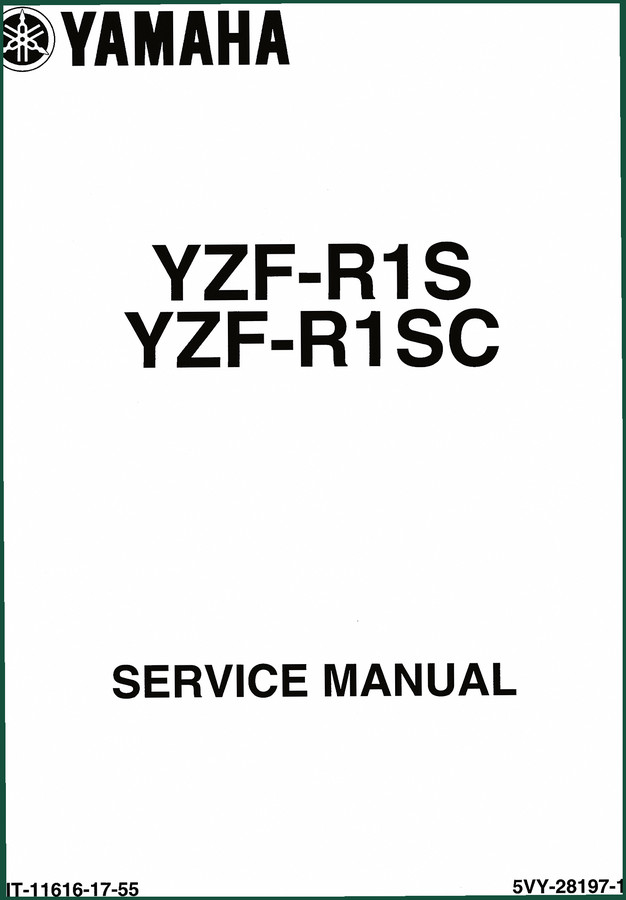
Yamaha YZF-R1S, YZF-R1SC 2003 Service Manual – 457 Pages
Original price was: $31.05.$22.50Current price is: $22.50.
Factory-certified 2003 service manual for Yamaha YZF-R1S and YZF-R1SC. 457 pages of torque specs, engine overhaul, and wiring diagrams.
Description
Yamaha YZF-R1S, YZF-R1SC 2003 Service Manual – Factory Torque and Specs
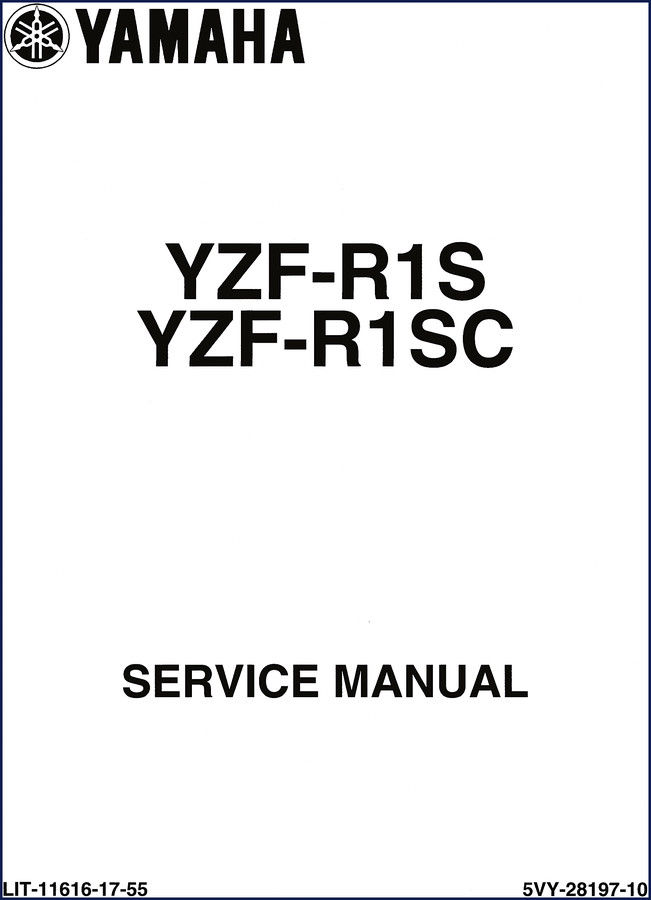
If you’re working on a 2003 Yamaha YZF-R1S or YZF-R1SC, you need the factory service manual. Not a reprint, not a generic CD. The 457‑page original. Without it, you’re guessing on torque values, wiring colors, and clearances. I’ve seen too many bikes come into my shop with stripped threads and warped heads because somebody used aftermarket numbers. Don’t be that guy.
Page 3 of this Service Manual carries a notice: anyone doing repairs should have basic mechanical knowledge. That’s honest. But even a pro needs the right specs. This book gives you the exact procedures Yamaha wrote for their own techs. Nothing else comes close.
Engine Overhaul: Camshaft, Cylinder Head, and Valve Specs
Chapter 5 dives into the Engine – camshaft removal, cylinder head disassembly, valves and valve springs. Each step is laid out in order, with torque values for every fastener. For example, the camshaft cap bolts require a specific sequence and a final torque in inch‑pounds. Miss that, and you’ll wipe out a cam journal. I’ve seen it happen. The manual also covers the starter clutch and generator, clutch, shift shaft, oil pan and pump, crankcase splitting, connecting rods and pistons, crankshaft, and transmission. Every clearance and tolerance is listed – no guesswork.
When you pull the cylinder head, the manual tells you the warpage limit and the correct gasket surface prep. That kind of data keeps head gaskets sealed. Following the factory procedure from start to finish is the only way I trust an engine rebuild.
Cooling System Diagrams: Radiator, Thermostat, Water Pump
Chapter 6 covers the Cooling system – radiator, oil cooler, thermostat, and water pump. You get evacuation and refill procedures, coolant capacity, and bleed instructions. The radiator cap pressure spec is straight from Yamaha. Overheat a bike because you went by a generic chart? Not on my watch. The manual also includes cooling system diagrams that show hose routing and clamp positions. That matters when you’re trying to get air out of the system after a pump replacement.
For the thermostat, you’ll find the opening temperature and the test procedure to check it in a pan of hot water. Simple stuff, but it saves hours of chasing a cooling issue that’s really a stuck thermostat.
Electrical System Diagnostics: Self-Diagnosis and Switch Continuity
Chapter 8 – Electrical system – is where this manual earns its keep. It starts with a component locator, then walks you through checking switch continuity and bulb sockets. The self‑diagnosis section lets you pull trouble codes without a dealer scanner. I’ve used that feature to find a bad crankshaft position sensor in ten minutes. The wiring diagram at the back is full‑color and shows every connector, wire gauge, and splice. Page 4 explains how to read the diagrams and trace circuits.
Need to test the starter motor? The manual gives you the no‑load current spec. Charging system output voltage? That’s in the specs chapter. You don’t guess – you measure against factory numbers.
What Torque Values Are Listed in the Specs Chapter?
Chapter 2 – Specifications – includes two torque tables: General Tightening Torque Specifications for standard fasteners, and Tightening Torques for specific components like the cylinder head, clutch hub nut, and front axle. Every bolt on the bike has a number. I’ve seen a lot of manuals that only list a generic chart; this one gives you the exact value for each bolt location, plus the required lubrication (oil, grease, or dry). That’s the difference between a joint that stays tight and one that rattles loose.
The same chapter includes engine specs – bore, stroke, displacement, compression ratio, valve clearances, and oil capacity. Chassis specs cover rake, trail, and suspension travel. Use these numbers when you set up the bike after a rebuild.
Does This Manual Cover the Fuel Injection System?
Yes – Chapter 7 covers the fuel injection system, throttle bodies, and air induction system. It includes injector resistance checks, throttle position sensor adjustment, and idle speed setting via the diagnostic mode. If you have a stumble at mid‑range, the troubleshooting chapter (Chapter 9) lists causes and fixes for poor medium‑and‑high‑speed performance. That kind of diagnostic flow chart saves time when you’re chasing a fuel issue.
Source Validity: Why OEM Beats Aftermarket Every Time
Yamaha themselves printed this manual for their dealers. The part number is LIT‑11616‑17‑55. Page 2 shows the copyright and states that any unauthorized reproduction is prohibited. That’s how you know it’s the real deal. Aftermarket manuals often skip steps or use vague language like “tighten securely.” OEM manuals give you a torque value and a sequence. I’ll take that any day.
If you need a different bike, check the Yamaha XT350 1985 Service Manual – Factory Specs & Torque Data. For sportbike owners, the Yamaha YZF600RJ Service Manual is also available, and the Yamaha YZF-R6R/SR 2002 Service Manual for the 600 class. Understanding the basics of a Manual Transmission helps when diagnosing drivetrain issues, and the Automotive Industry Overview provides context for emissions standards.
- Is this manual compatible with the YZF-R1?
- No, the R1S and R1SC are specific models with unique engine and electrical specs.
- What if I need a wiring diagram?
- Chapter 8 includes the full wiring diagram and pinout data for the 2003 YZF-R1S and YZF-R1SC. It covers the ignition system, starting system, charging system, lighting, signaling, and the self-diagnosis module. Every connector is labeled with wire colors and expected voltage values at each test point. Page 4 explains how to use the manual to follow circuit paths. Without this diagram, chasing an electrical fault is a guessing game that will waste hours.
Stop working with incomplete info. Get the factory document that Yamaha wrote for their own techs. Access the Factory Manual – it’s the only spec sheet you should trust on that YZF‑R1S or R1SC.
Additional information
| Brand | Yamaha |
|---|---|
| Language | English |
2 reviews for Yamaha YZF-R1S, YZF-R1SC 2003 Service Manual – 457 Pages
You may also like…
-
Sale!
Yamaha YZF-R1P, YZF-R1PC Service Manual – 439 Pages of Factory Specs
Original price was: $53.60.$40.00Current price is: $40.00. -
Sale!
Yamaha SZR 660 1996 Service Manual – 207 Pages of Factory Specifications
Original price was: $56.80.$40.00Current price is: $40.00. -
Sale!
Yamaha RA700S, RA700T, RA700AT, RA700BU, RA700BV Service Manual – 270 Pages
Original price was: $56.40.$40.00Current price is: $40.00. -
Sale!
Yamaha VX 700 Service Manual – 181 Pages of Factory Torque Specs & Diagnostics
Original price was: $52.40.$40.00Current price is: $40.00.
Related products
-
Sale!

1991 Electrical Schematic – 112-Page OEM Wiring Diagram for International 1000-3000 Series
Original price was: $22.75.$17.50Current price is: $17.50. -
Sale!

1991 Operators Manual – International Truck OEM Specs (108 Pages)
Original price was: $13.63.$10.99Current price is: $10.99. -
Sale!

Technical Manual – International DT 530 & HT 530 (118 Pages)
Original price was: $37.00.$25.00Current price is: $25.00. -
Sale!
1992 Electrical Schematic – International 1000/3000/4000/2554 OEM Wiring Diagrams (132 Pages)
Original price was: $26.40.$20.00Current price is: $20.00.
pro_mechanic –
I am extremely satisfied with this purchase. It is very easy to read on my phone without blur. A must-have for any Yamaha YZFR1S, DIYer doing repairs. I will definitely buy again.
gearhead88 –
Perfect workshop guide. The file quality is excellent. Every spec sheet is provided for Yamaha YZFR1S,. I will recommend this shop to others.