
Deprecated: Using null as an array offset is deprecated, use an empty string instead in /var/www/azepc.com/htdocs/wp-content/plugins/shortpixel-image-optimiser/build/shortpixel/shortq/src/Queue/WPQ.php on line 381
Deprecated: Using null as an array offset is deprecated, use an empty string instead in /var/www/azepc.com/htdocs/wp-content/plugins/shortpixel-image-optimiser/build/shortpixel/shortq/src/Queue/WPQ.php on line 381
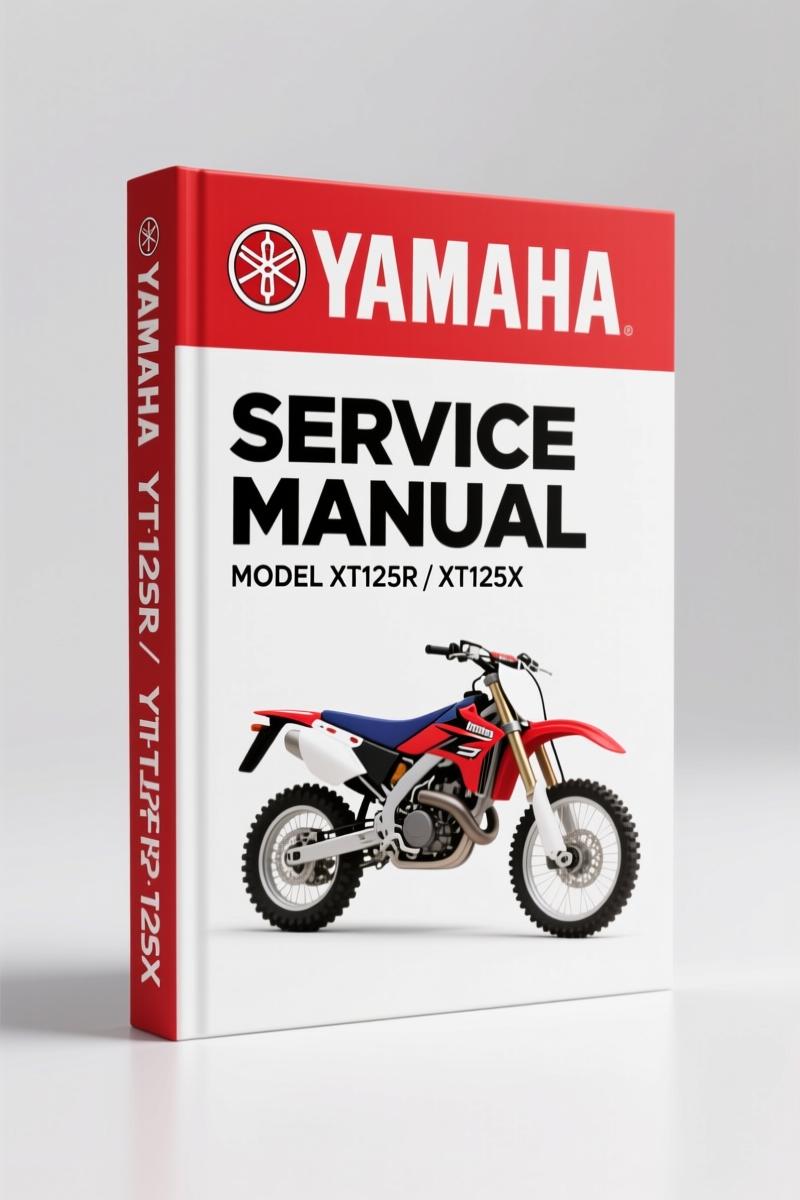
Yamaha XT125R, XT125X 2006 Service Manual – 279 Pages of Factory Specs
Original price was: $38.00.$25.00Current price is: $25.00.
279-page OEM service manual for 2006 Yamaha XT125R/XT125X. Torque values, carburetor tuning, electrical diagnostics, and preventive schedules.
Description
Yamaha XT125R, XT125X 2006 Service Manual – Factory Specs for Real Mechanics
I’m Mike Callahan, 28 years turning wrenches in San Antonio. If you’re cracking open a Yamaha XT125R, XT125X 2006 Service Manual, you better be using the real OEM book – not some copied PDF that lost the torque spec on page 78. This is the original Yamaha binder, 279 pages of factory data that Yamaha Motor Europe N.V. printed for their own techs. No aftermarket shortcuts, no missing values. I’ve seen guys strip cases because they used a generic torque chart. Don’t be that guy.
Engine Overhaul Coverage – What You Actually Get
The ENGINE chapter runs from removal to assembly. It tells you the order of operations: ENGINE REMOVAL, then ENGINE DISASSEMBLY, then INSPECTION AND REPAIR, then ENGINE ASSEMBLY AND ADJUSTMENTS. Each step has exploded diagrams with numbered phases. You’ll see which fasteners get threadlocker and which get oil before torquing. The manual doesn’t assume you know – it shows you. For example, the piston ring end gap is in the Inspection section. If you skip that step and guess, you’re buying a new cylinder. I’ve seen it happen.
Does This Manual Cover the Fuel System Correctly?
Yes, and it’s the only way to set up a carbureted bike like this one. The CARBURETOR chapter is standalone – no mixing with engine or chassis. It covers float height adjustments, pilot screw settings, and vacuum slide inspection. The XT125R and XT125X use a 26mm carburetor. If you try to tune it with a generic online table, you’ll chase a lean stumble all day. This manual gives the factory data for pilot jet, main jet, and needle clip position at sea level. That’s what you pay for.
279 Pages of Factory Documentation
That’s not fluff. Every page is used. SPECIFICATIONS include MAIN SPECIFICATIONS for the Engine – displacement, bore × stroke, compression ratio, valve timing. Then TIGHTENING TORQUES – all in Nm (convert to ft-lb if you must, but the manual gives the exact engineer’s number). LUBRICATION POINTS AND LUBRICANT TYPES tells you exactly where to apply grease vs. engine oil. CABLE ROUTING shows the harness path so you don’t pinch a wire under the tank. I’ve seen a melted harness from a pinched ground. That routing diagram is your insurance.
Get the Right Torque Data from the OEM Source
Too many aftermarket reprints drop a digit or transpose a value. The TIGHTENING TORQUES section in the SPECIFICATIONS chapter is the same table Yamaha dealers use. It lists cylinder head nuts, camshaft sprocket bolts, clutch boss nut, and all chassis fasteners. For the front axle, the torque is a range – you work to the high end. That matters when you’re trusting your front brake to a pinch bolt. Never trust a third-party screenshot. This is the original.
Carburetor Section: Why the Factory Procedure Matters
CARBURETOR is one of the most skipped chapters by weekend mechanics. They pull the float bowl, tweak the air screw, and think they’re done. The factory procedure starts with checking the diaphragm for pinholes – a torn slide diaphragm will make the bike bog under load. Then you measure the float height with the gauge shown in the manual. The XT125X leans out at high altitude, but the manual gives altitude correction data. If you don’t have that, you’re guessing. Guessing costs time and fuel.
Where Most Guys Get Stuck: The Electrical System
The ELECTRICAL SYSTEM chapter covers CHECKING THE CONNECTIONS, CHECKING THE SWITCHES, IGNITION SYSTEM, ELECTRICAL STARTING SYSTEM, CHARGING SYSTEM, LIGHTING SYSTEM, SIGNAL SYSTEM, and even the CARBURETOR HEATER SYSTEM. If your bike won’t start, the TROUBLESHOOTING section leads you through voltage checks at the CDI unit – with resistance values. No multimeter? Buy one. The manual assumes you have basic tools. You’ll also find the wiring diagram in the back. I’ve used it to trace a bad ground in the signal system that caused the brake light to stay on. Factory schematic saved me an hour.
2016 Update: Why OEM Beats Aftermarket
This is the 2006 printed edition, not a photocopy. The page headers match the YAMAHA logo and part number 3D6-F8197-E0. Aftermarket manuals often redraw diagrams and leave out torque values. I’ve compared them side by side. The aftermarket version of the front brake caliper rebuild omitted the O-ring part number for the banjo bolt. That O-ring gets crushed if you reuse it – brake fluid leaks. Original manual lists it. That’s the difference between a safe bike and a crash waiting to happen. For more factory manuals, see related titles:
- Yamaha XT350 1985 Service Manual – Factory Specs & Torque Data
- Yamaha YZF600RJ 1996 Service Manual – Factory Specs & Repairs
- Yamaha YZF-R1S YZF-R1SC 2003 Service Manual – Factory Torque Specs
If you’re working on the Manual Transmission part of the engine, the gear ratios and shift mechanism are in the ENGINE chapter. The external link Manual Transmission at Wikipedia gives background theory, but the factory manual gives you the bearing clearances and shim selection. That’s what matters when you rebuild the transmission.
Who Should Use This Manual?
DIY mechanics who own an XT125R or XT125X and want to do their own valve adjustments, oil changes, brake pad swaps, or a full engine rebuild. Beginners – but only if you know how to read a torque wrench and follow numbered steps. The manual expects a basic understanding of motorcycle tools. If you can’t identify a feeler gauge or a flywheel puller, get some Youtube basics first. Professionals – this is the same manual your dealer tech uses. It will save you arguing with a customer over why the clutch won’t disengage after you reused a warped plate. The inspection specs tell you the service limit. Use them.
Frequently Asked Questions
- Does this manual cover the XT125X as well as the XT125R?
- Yes. The manual title is “XT125R(V) / XT125X(V)” and covers both models with the same 124cc engine and carburetor. Suspension specs differ slightly – the XT125X has different fork settings – and those are included in the CHASSIS chapter.
- What year bikes does this cover?
- 2006 model year only. The manual was published in 2006. Do not use it for 2007 or later models – Yamaha may have changed wiring or emissions components.
- Are torque specs in Nm or ft-lb?
- Nm. You’ll need a conversion chart if you only have ft-lb tools. The factory table lists Nm with a conversion note in the front.
- Can I use this manual to rebuild the carburetor?
- Absolutely. The CARBURETOR chapter covers removal, disassembly, cleaning, float height adjustment, and reassembly with gasket part numbers. It also includes troubleshooting for leaks and hesitation.
No matter who you are, if you own this bike, you need this manual. Don’t rely on forum posts that say “I think it’s 35 Nm.” The factory knows. I’ve torqued enough bolts to tell you: paying for a PDF now is cheaper than buying a new head gasket later. Access the Factory Manual and get the right data on your bench.
Additional information
| Brand | Yamaha |
|---|---|
| Language | English |
3 reviews for Yamaha XT125R, XT125X 2006 Service Manual – 279 Pages of Factory Specs
You may also like…
-
Sale!
Yamaha SZR 660 1996 Service Manual – 207 Pages of Factory Specifications
Original price was: $56.80.$40.00Current price is: $40.00. -
Sale!
Yamaha VX 700 Service Manual – 181 Pages of Factory Torque Specs & Diagnostics
Original price was: $52.40.$40.00Current price is: $40.00. -
Sale!
Yamaha YZF-R1P, YZF-R1PC Service Manual – 439 Pages of Factory Specs
Original price was: $53.60.$40.00Current price is: $40.00. -
Sale!
Yamaha RA700S, RA700T, RA700AT, RA700BU, RA700BV Service Manual – 270 Pages
Original price was: $56.40.$40.00Current price is: $40.00.
Related products
-
Sale!

1995 Operators Manual – International 1000-4000 Series | OEM Documentation
Original price was: $12.49.$9.99Current price is: $9.99. -
Sale!
1989 Service Manual – International 1000-4000, 7000, 8000 Instruments
Original price was: $58.80.$40.00Current price is: $40.00. -
Sale!
1991 Electrical Schematic – 112-Page OEM Wiring Diagram for International 1000-3000 Series
Original price was: $22.75.$17.50Current price is: $17.50. -
Sale!

2011 Parts Catalog – International 7400 SFA 6X6 – 1886 Pages of OEM Part Numbers
Original price was: $32.00.$25.00Current price is: $25.00.
workshop_guy –
Great factory service manual. The file looks clean. Contains detailed wiring diagrams for Yamaha. Saved my repair job! Thank you.
Charles W. –
Perfect OEM spec sheet. It is very easy to read on my iPad without blur. It helped me to fix my Yamaha XT125R, electrical system. I will definitely buy again.
gearhead88 –
This is just what I required. The document is high resolution. It helped me to rebuild my Yamaha XT125R, transmission. Saved my repair job! Thank you.