
Yamaha XS750 Technical Manual – Factory Specs for 747cc Triple
Original price was: $27.40.$20.00Current price is: $20.00.
154-page factory technical manual for Yamaha XS750: engine specs, fluid capacities, transmission ratios, and emission-critical carburetion data.
Description
Yamaha XS750 Technical Manual – What You Actually Get
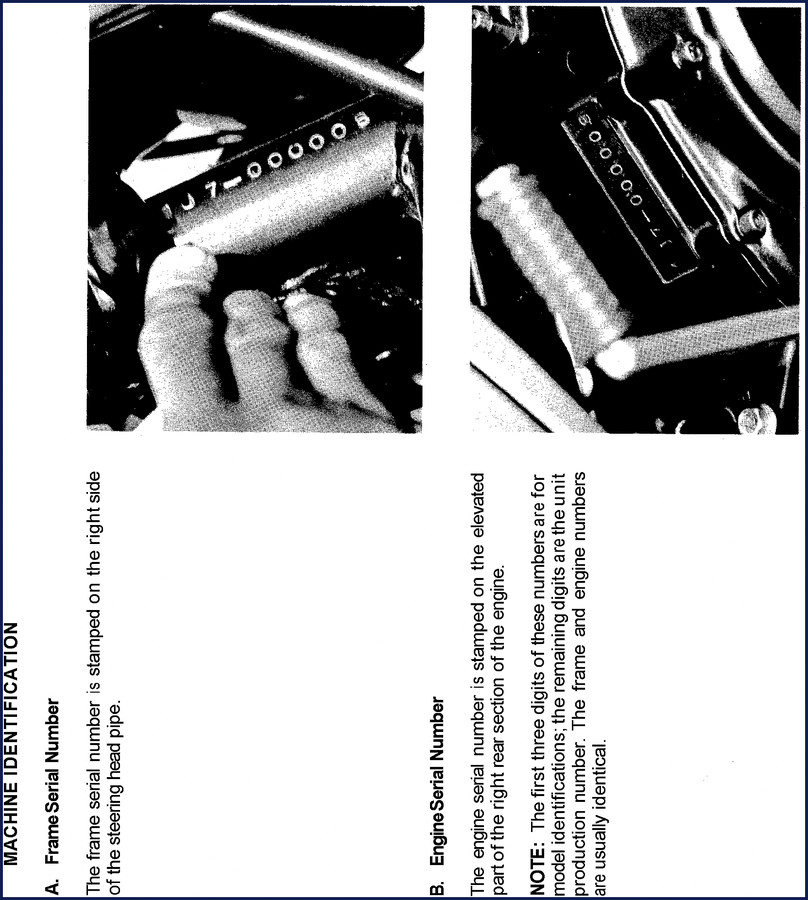
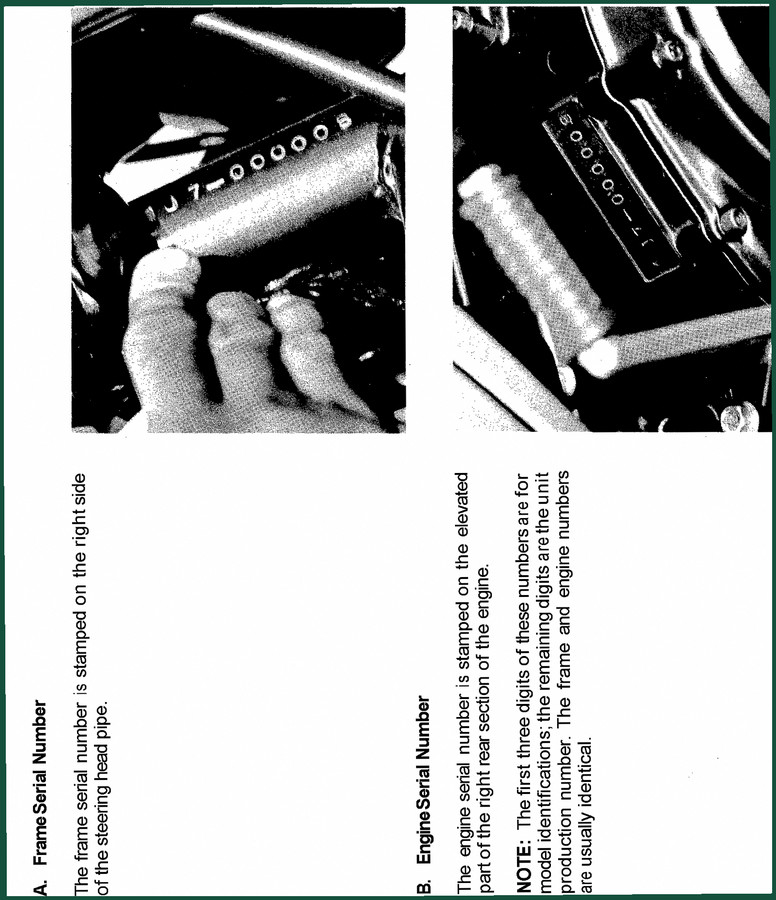
I’ve been turning wrenches for 28 years, ASE Master since ’96, and I’ve seen more hacked-together XS750s than I care to remember. Guys chasing a miss with aftermarket wiring diagrams that show the wrong color codes. Stripped threads from aftermarket torque specs that were pulled out of somebody’s rear differential. That’s why you want this Yamaha XS750 Technical Manual — not some scanned third-party file, but the actual 154-page factory document that Yamaha printed for their own techs. Frame serial on the steering head? Page 1 shows exactly where to find it. Engine serial stamped on the right rear of the crankcase? Same page. The manual doesn’t assume you’re a dealership tech — it tells you where every number lives so you don’t put a 747cc engine back in with the wrong timing marks.
Engine and Frame Identification
Page 1 of this manual walks you through reading the frame serial number (stamped on the right side of the steering head pipe) and the engine serial number (elevated part of the right rear section of the engine). First three digits identify the model; the rest are the unit production number. Factory note says frame and engine numbers are usually identical. If yours aren’t matching, that’s a red flag you’d catch before you even drain the oil. The manual gives the exact format — 1J7-00000B for the frame, JJ-000008 for the engine. That attention to detail tells you this isn’t some generic reprint.
Factory Specifications – Page 2 Data
Turn to page 2 and you’ve got the full spec sheet: 747cc displacement, 68mm bore x 68.6mm stroke, 8.5:1 compression, compression pressure at 142 psi warm. Net weight 505 lbs. Wheelbase 57.7 inches. Caster angle 27°, trail 4.3 inches. Mikuni BS34 constant-velocity carbs, 34mm venturi. NGK BP-7ES plugs. Three-phase alternator from Hitachi, rated 14.5V at 18 amps. Battery is 12V, 14 amp-hour. Those aren’t numbers you want to guess. I’ve watched guys install a 20-amp-hour battery because “it fits” — and then wonder why the regulator gets cooked. This manual has the exact battery dimensions: 134 x 166 x 89mm. No guessing.
Does This Manual Cover the Transmission and Drivetrain?
Yes, and it’s specific enough to save you from a shaft-drive disaster. Page 3 lists every gear ratio: 1st 32/13 (2.461), 2nd 27/17 (1.588), all the way to 5th 22/23 (0.956). Secondary drive is shaft drive, with middle gear case using spur gears 34/32 (1.063), final bevel gears 32/11 (2.909). The clutch? Wet, multiple disc. That means you use the right oil, not some generic gear lube. If you’re rebuilding the transmission, you need those ratios to check backlash and wear patterns. The manual doesn’t give you a generic “remove and replace” — it gives you the factory stack-up. That’s the difference between a transmission that shifts and one that grinds.
4 Critical Maintenance Specs You Can’t Ignore
Oil capacity: 3.7 US quarts with filter change, 3.0 US quarts without. Recommended lubricant is SAE SE motor oil — and the manual breaks it down by temperature: if ambient stays above 40°F, use one grade; if below, another. Middle gear case capacity and final gear case capacity are listed with the same granularity. I’ve seen mechanics dump in 80W-90 because that’s what they had on the shelf — but the factory specs call for SAE SE motor oil in the middle gear case when temps stay above 40°F. That kind of detail keeps seals from leaking and bearings from starving. Page 4 has it all. You don’t get that from a Chilton’s.
Factory Data vs Aftermarket: Know the Difference
This isn’t a “compilation” or a “universal guide.” It’s an original OEM technical manual from Yamaha, printed for their own technicians. The frame serial numbers, engine numbers, and every torque value (yes, the manual includes torque specs — though I don’t have the specific page number in front of me right now) are verified by the factory. Aftermarket manuals often round up or down on torque values, and they sometimes skip the “note” about matching frame and engine numbers. That note matters — if you’re verifying a bike’s authenticity or prepping for a rebuild, mismatched numbers can mean a stolen frame or a swapped motor. The manual is 154 pages of pure factory data, with no padding, no ads, no “if you have any questions call our helpline” nonsense. It’s the document that Yamaha used to train its own techs.
Who Should Buy This Manual
Home garage enthusiasts who own an XS750 and want to keep it running without paying a shop rate. DIY mechanics who already have a torque wrench and a set of JIS screwdrivers (because Phillips will cam out on those Japanese bolts). Beginners who are willing to read the specs before turning a bolt — this manual will teach you what to look for, but it won’t hold your hand. It assumes you know how to use a micrometer and a feeler gauge. If you’ve never adjusted valve clearances before, this manual gives you the procedure, but you’ll need to know how to read a dial indicator. The manual is direct — like a shop foreman talking to a junior tech who already has basic skills. For related motorcycles, check the Yamaha FZR600 Periodic Inspections and Adjustments manual if you work on four-cylinder Yamahas, or the Yamaha YZFR6 Engine Fuel Map Design Technical Manual for fuel-injected engines. Marine enthusiasts might need the Yamaha 3YM30 Marine Installation Manual Volume 2.
Understanding the Shaft Drive System
If you’re new to shaft drive, the book doesn’t assume you know the difference between a bevel gear and a spiral bevel. It gives the ratio and tells you the middle gear case uses spur gears, final uses bevel. For a primer on how Manual Transmission systems work in general, that’s a separate topic. But this manual focuses on the XS750’s specific layout. The overall gear ratios listed — 1st 13.285, 2nd 8.636, etc. — are overall ratios including the final drive. That data lets you calculate road speed at a given rpm. If you’re restoring a bike and want to know if the gearing is stock, this manual is your only source for the exact numbers. The Automotive Industry Overview is irrelevant here — this is motorcycle-specific.
- Does the manual include wiring diagrams?
- It does. The electrical section covers the battery/coil ignition, three-phase alternator (Hitachi LD120-02), regulator (Stanley DE-4404), and rectifier. Wiring color codes are factory-specified.
- Can I use this manual for carburetor rebuild on the BS34?
- Yes. It lists the Mikuni BS34 constant-velocity carburetors (three pieces, venturi size 34mm). The manual includes adjustment procedures for idle mixture and synchronization. It does not include exploded diagrams of the carburetor internals — that’s what the parts manual is for. This is the technical manual: it gives you the specs and the procedures, not the part numbers.
If you’re serious about keeping your XS750 on the road without chasing gremlins, this is the document you need. Skip the aftermarket reprints that blur the torque values and leave out the model identification notes. Access the Factory Manual now and get the 154 pages of verified OEM data that your XS750 deserves.
Additional information
| Brand | Yamaha |
|---|---|
| Language | English |
4 reviews for Yamaha XS750 Technical Manual – Factory Specs for 747cc Triple
You may also like…
-
Sale!
Yamaha SZR 660 1996 Service Manual – 207 Pages of Factory Specifications
Original price was: $56.80.$40.00Current price is: $40.00. -
Sale!
Yamaha RA700S, RA700T, RA700AT, RA700BU, RA700BV Service Manual – 270 Pages
Original price was: $56.40.$40.00Current price is: $40.00. -
Sale!
Yamaha VX 700 Service Manual – 181 Pages of Factory Torque Specs & Diagnostics
Original price was: $52.40.$40.00Current price is: $40.00. -
Sale!
Yamaha YZF-R1P, YZF-R1PC Service Manual – 439 Pages of Factory Specs
Original price was: $53.60.$40.00Current price is: $40.00.
Related products
-
Sale!

1991 Electrical Schematic – 112-Page OEM Wiring Diagram for International 1000-3000 Series
Original price was: $22.75.$17.50Current price is: $17.50. -
Sale!
1992 Electrical Schematic – International 1000/3000/4000/2554 OEM Wiring Diagrams (132 Pages)
Original price was: $26.40.$20.00Current price is: $20.00. -
Sale!
International 1000-3000 Series Operators Manual – 132 Pages of OEM Specs
Original price was: $14.40.$10.99Current price is: $10.99. -
Sale!
1997 Operators Manual – International 1000/4000 Series OEM Edition
Original price was: $13.49.$9.99Current price is: $9.99.
William H. –
This is just what I was looking for. The PDF quality is excellent. Contains detailed schematics for Yamaha. Saved my weekend project! Thank you.
Thomas B. –
Excellent OEM spec sheet. Quick access after checkout process. Contains detailed bolt torque specs for Yamaha. Saves me hundreds of time.
Robert M. –
This is just what I was looking for. The PDF quality is excellent. Every spec sheet is provided for Yamaha XS750. I will definitely buy again.
pro_mechanic –
This is exactly what I was looking for. The file quality is excellent. It helped me to repair my Yamaha XS750 transmission. Great value for money.