
Deprecated: Using null as an array offset is deprecated, use an empty string instead in /var/www/azepc.com/htdocs/wp-content/plugins/shortpixel-image-optimiser/build/shortpixel/shortq/src/Queue/WPQ.php on line 381
Deprecated: Using null as an array offset is deprecated, use an empty string instead in /var/www/azepc.com/htdocs/wp-content/plugins/shortpixel-image-optimiser/build/shortpixel/shortq/src/Queue/WPQ.php on line 381
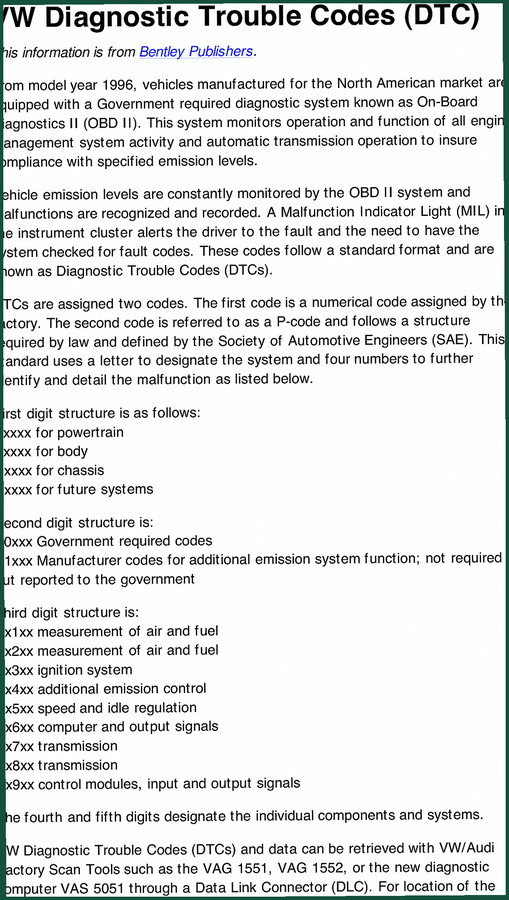
VW Pxxxx, Bxxxx, Cxxxx, Uxxxx Diagnostics Manual – 36 Pages
Original price was: $27.00.$22.50Current price is: $22.50.
Factory DTC diagnostics manual for VW Pxxxx, Bxxxx, Cxxxx, Uxxxx. 36 pages of OEM code structure, scan tool protocols, and emissions data.
Description
VW Pxxxx, Bxxxx, Cxxxx, Uxxxx Diagnostics Manual – 36-Page OEM DTC Guide
I’ve seen more junky aftermarket DTC lists than I’ve had flat-rate hours wasted. Some kid copies a P-code off a forum, bolts on a part he doesn’t need, and the MIL comes right back. That’s because he doesn’t understand the structure behind the codes. This VW Pxxxx, Bxxxx, Cxxxx, Uxxxx Diagnostics Manual is the OEM source. It’s 36 pages of exactly what VW intended for their OBD II system. No fluff. No generic interpretations. Just the factory definitions and the logic behind each code family.
Why This 36-Page Manual Beats Any Aftermarket DTC List
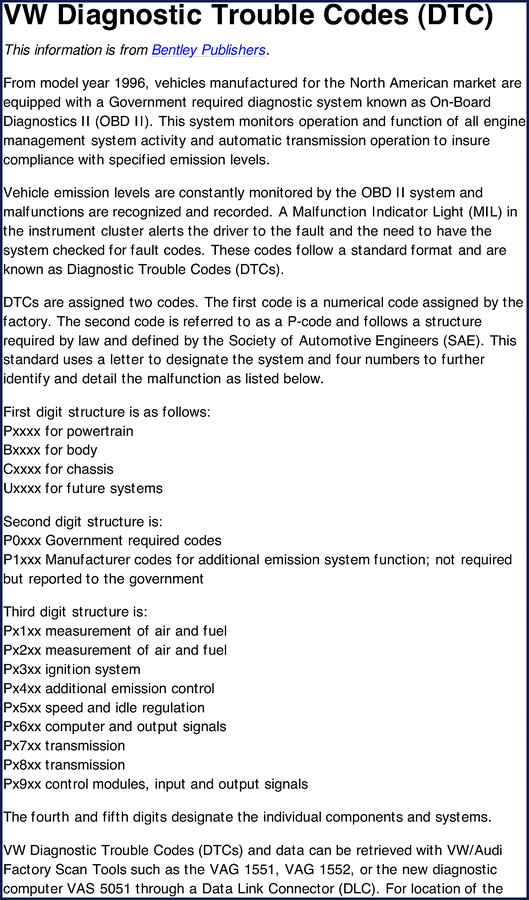
You open a generic OBD II app and it tells you P0420 means “catalyst efficiency below threshold.” That’s fine if you want to guess. But this manual peels back the layers. It explains that the second digit tells you if it’s a government-required code (P0xxx) or a manufacturer-specific code (P1xxx). It shows how the third digit points you to the system: air/fuel measurement, ignition, transmission, control modules. On page 1 you get the whole breakdown of the DTC numbering scheme — Pxxxx for powertrain, Bxxxx for body, Cxxxx for chassis, and Uxxxx for future systems. That structure alone saves you from chasing ghosts.
What the P, B, C, U Codes Actually Mean
You’re working a VW and you pull a Bxxxx code. Generic tools just show “body code.” This manual tells you exactly what that means in the VW context. The first character is the system: P = powertrain, B = body, C = chassis, U = future or network. I’ve had guys ignore a B-code because they thought it was a door lock issue when it was actually tied to the OBD II monitor. The manual covers them all. It even lists specific examples like 16394 P0010 – Camshaft Position Actuator Circuit Bank 1 Malfunction. That’s on page 2. No interpretation needed.
OBD II System Overview – Page 1
From model year 1996, vehicles sold in North America have On-Board Diagnostics II (OBD II). This manual starts with that legal requirement. It explains how the system monitors engine management and transmission operation for emissions compliance. The Malfunction Indicator Light (MIL) triggers when a fault is recorded. Then the manual teaches you the difference between the factory-assigned numerical code and the SAE P-code structure. If you don’t understand that differentiation, you’re working blind. Page 1 gives it to you straight — no filler.
How to Use This Manual with a VAG 1551 Scan Tool
VW uses specific factory scan tools: VAG 1551, VAG 1552, VAS 5051. The manual tells you where the Data Link Connector (DLC) is located and how to retrieve codes in factory mode. It also covers generic mode. I’ve used all three tools. The factory mode gives you live data, actuator tests, and system-specific diagnostics that generic mode can’t touch. The manual warns you that generic mode cannot retrieve the detailed information of a manufacturer-specific scan tool. That alone keeps you from buying the wrong tool. Related to this, the VW Fabia Training Manual – 1.4L 16V Engine Engineering and Systems”>VW Fabia Training Manual on engine engineering goes deeper into the systems behind these codes, and the VW LT2 Training Manual – 2.8L TDI Common Rail Self-Study Programme”>LT2 TDI manual covers the diesel side of DTCs. The VW Passat Training Manual – W8 Motronic ME 7.1.1 Explained”>Passat W8 manual helps you understand the specific Motronic version. All three are solid supplements to this DTC guide.
3 Critical Facts About Generic vs Factory Mode
First: Generic mode reads codes but not the freeze-frame data or manufacturer-specific enhancements. Second: Factory mode can retrieve codes for all systems — not just powertrain. Third: The manual states that some DTC info can be retrieved in generic mode, but it is not as complete. For a professional shop, you want factory mode. For a DIYer using an inexpensive generic scanner, this manual helps you interpret what you see even without VAG hardware. It gives you the manufacturer-specific P1xxx codes that generic tools often mislabel. For more background on OBD II standards, read the Automotive Industry Overview”>Automotive Industry Overview and the On-board Diagnostics (OBD)”>On-board Diagnostics (OBD) article.
VW Pxxxx, Bxxxx, Cxxxx, Uxxxx Diagnostics Manual – What’s Inside
Total pages: 36. Content: OBD II system description, DTC structure breakdown (first through fifth digits), code lists with factory and P-code cross-references, scan tool usage (VAG 1551/1552/VAS 5051), DLC location reference, and 2 pages of example codes including camshaft actuator circuit faults and oxygen sensor heater circuits. The manual does not cover every single possible code, but it covers the logic to decode any P, B, C, or U code you encounter on a VW model year 1996 and later. That’s the value — you learn the system, not just memorize a list.
- How do I use this manual if I only have a generic OBD II scanner?
- The manual explains the P-code structure, so you can interpret the four-digit supplier code even without a VAG tool. Use the factory code cross-reference on page 1 to understand what the manufacturer-specific P1xxx codes mean — generic tools often omit that.
- Does this manual include wiring diagrams for the systems?
- No. This is a diagnostics manual focused on DTC definitions, OBD II operation, and scan tool procedures. For wiring and component testing, you need the full VW workshop manual. The manual references the Data Link Connector location and general system descriptions, but not pinouts.
If you are tired of guessing DTCs on VW models Pxxxx, Bxxxx, Cxxxx, or Uxxxx, this 36-page guide is what you need on your bench. It’s direct, it’s OEM, and it saves you from replacing parts that aren’t broken. Access the Factory Manual now.
Additional information
| Brand | VW |
|---|---|
| Language | English |
4 reviews for VW Pxxxx, Bxxxx, Cxxxx, Uxxxx Diagnostics Manual – 36 Pages
You may also like…
-
Sale!
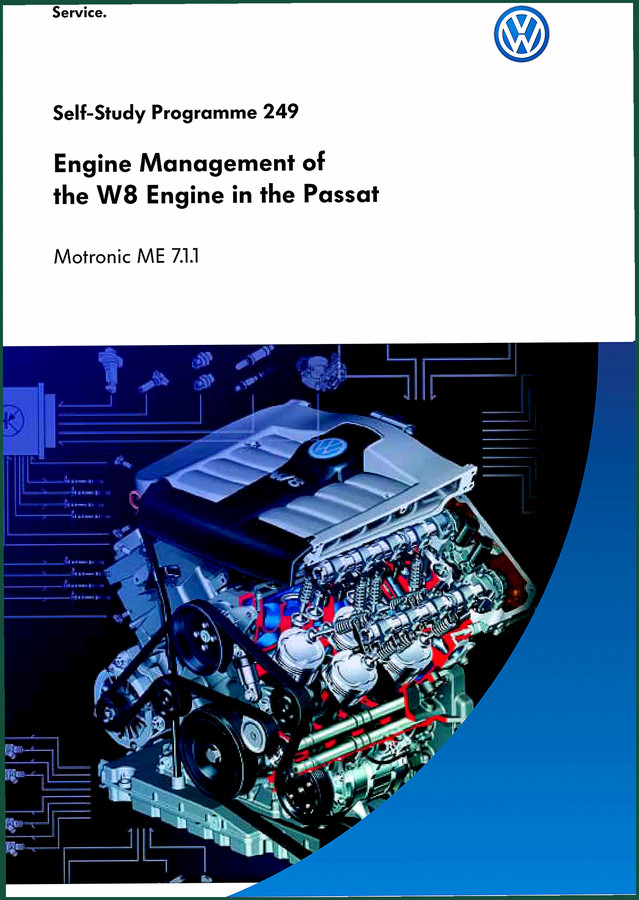
VW Passat Training Manual – W8 Engine Management System Diagnosis
Original price was: $42.00.$30.00Current price is: $30.00. -
Sale!
VW Polo Technical Manual – Relay & Fuse Diagrams (224 Pages)
Original price was: $42.00.$30.00Current price is: $30.00. -
Sale!
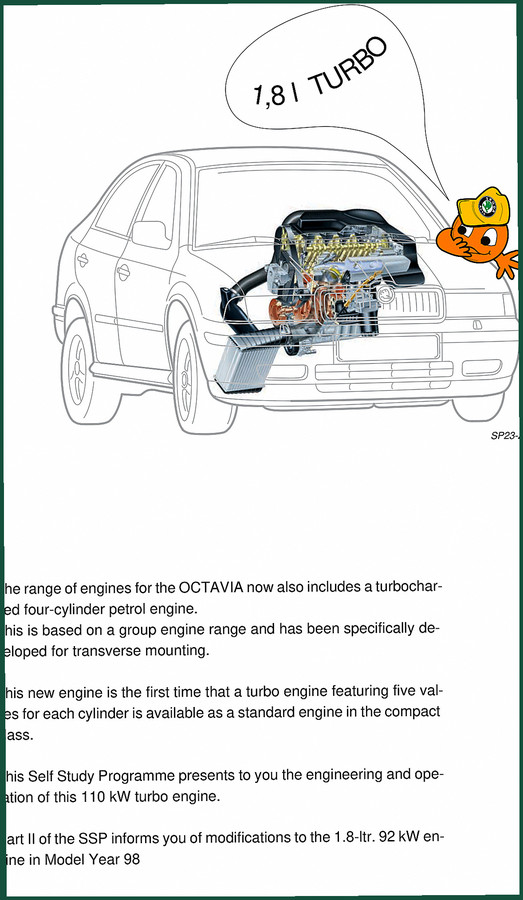
VW OCTAVIA Training Manual – Factory Specs for 1.8L Turbo Engine
Original price was: $45.00.$30.00Current price is: $30.00. -
Sale!
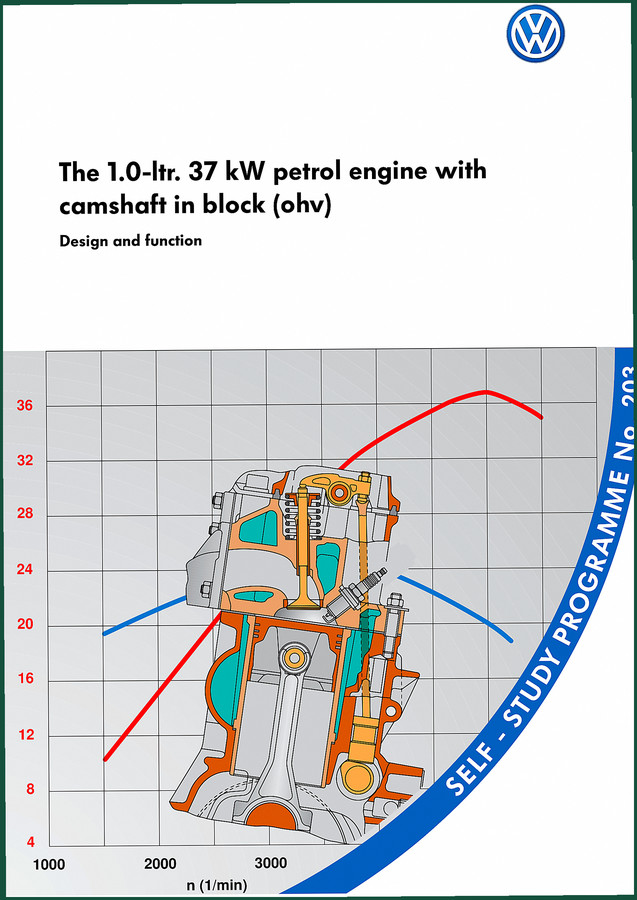
VW Lupo Training Manual – Factory Specs for 1.0L OHV Engine (24 pages)
Original price was: $40.50.$30.00Current price is: $30.00.
Related products
-
Sale!

Technical Manual – International 6.0L Power Stroke FICM Diagnostics
Original price was: $29.80.$20.00Current price is: $20.00. -
Sale!

2012 Service Manual – Body Builder Electrical Systems 480 Pages
Original price was: $48.28.$34.00Current price is: $34.00. -
Sale!

2011 Parts Catalog – International Truck OE Parts Documentation (1786 Pages)
Original price was: $34.50.$25.00Current price is: $25.00. -
Sale!

Technical Manual – International DT 530 & HT 530 (118 Pages)
Original price was: $37.00.$25.00Current price is: $25.00.
William H. –
Highly recommended! It is easily zoomable on my phone without blur. It helped me to troubleshoot my VW Pxxxx, engine. Saved my repair job! Thanks.
gearhead88 –
This is exactly what I needed. The file looks clean. It guided me to rebuild my VW Pxxxx, electrical system. Highly recommended for mechanics.
Richard G. –
Great OEM spec sheet. The document is high resolution. Contains precise schematics for VW. Worth every penny.
workshop_guy –
Excellent workshop guide. It is easily zoomable on my tablet without blur. A must-have for any VW Pxxxx, DIYer doing repairs. Saved my repair job! Thanks.