
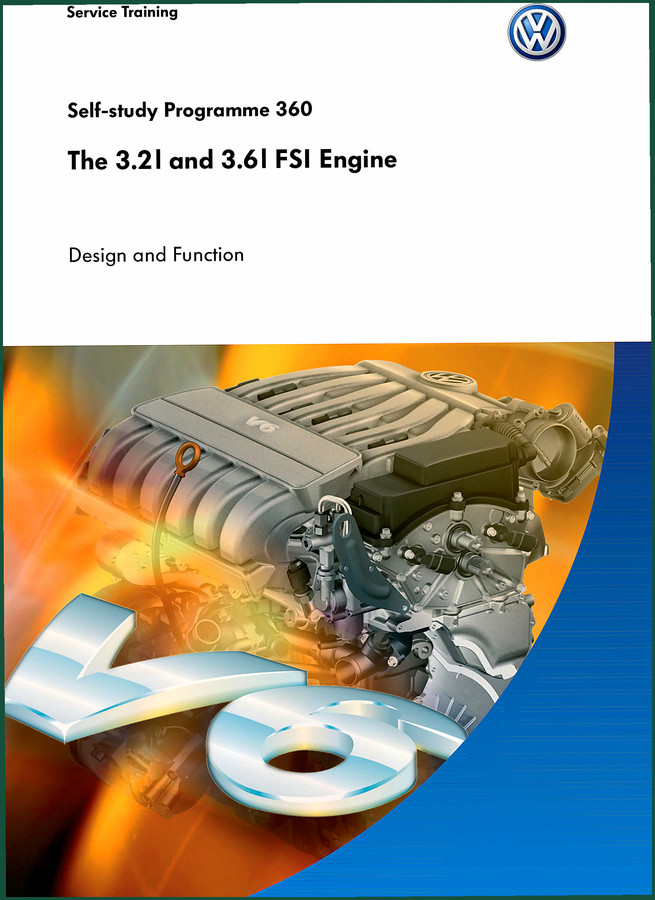
VW 3.2L VR6 FSI, 3.6L VR6 FSI, R36 FSI Training Manual
Original price was: $36.30.$30.00Current price is: $30.00.
Volkswagen factory training manual covering 3.2L/3.6L VR6 FSI and R36 FSI engines. 72 pages of construction, systems, and diagnostic fundamentals.
Description
Volkswagen 3.2l VR6 FSI, 3.6l VR6 FSI, 3.6l R36 FSI Training Manual
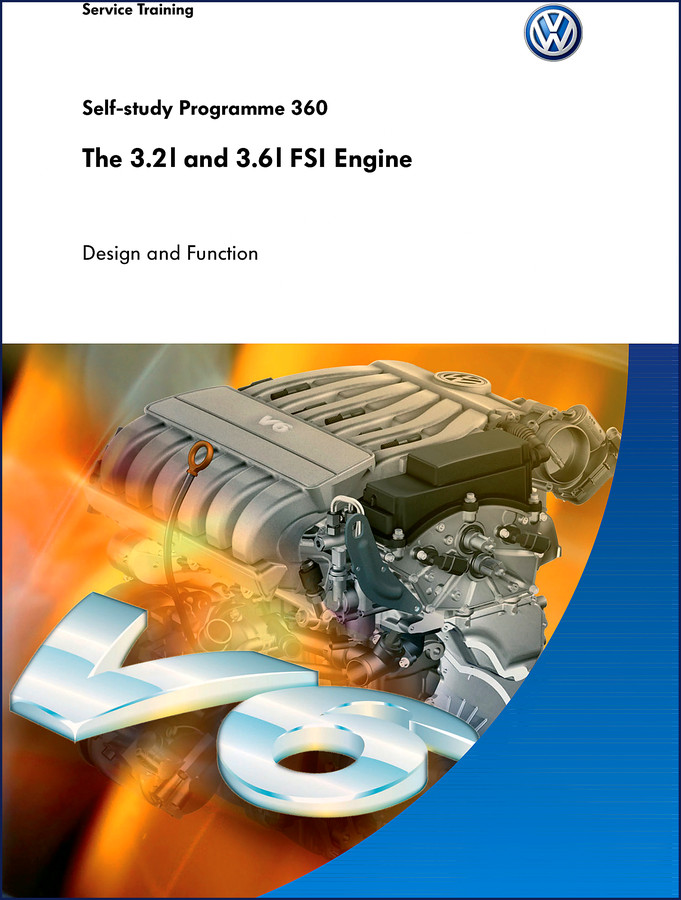
If you are cracking open a VR6 FSI for the first time, you need the factory story – not some aftermarket rewrite that skips the engineering logic. I have seen too many guys pull a timing cover off a 3.6l VR6 FSI and fight the camshaft adjuster because they did not understand the internal exhaust gas recirculation system. That is a waste of billable hours. This Volkswagen 3.2l VR6 FSI, 3.6l VR6 FSI, 3.6l R36 FSI Training Manual is the self-study programme SSP 360 – 72 pages of how Volkswagen designed these VR engines, from crankshaft drive to FSI technology. It is not a repair manual; it is the design-and-function blueprint that tells you why things are where they are. You read this before you touch the engine, and you stop guessing.
I run a 6-bay shop in San Antonio. When a Passat R36 rolls in with a chain rattle, I pull this manual up on the tablet. Page 8 shows the crankshaft drive layout – the exact arrangement of chain guides and tensioners that makes these VR engines different from a typical V6. Page 62 lists the special tools you need for the timing chain service. That is the kind of specificity that saves you from ordering the wrong tensioner tool and burning a day. The manual also covers the cylinder head details, the camshaft adjustment system, and the crankcase breather system. Every section is built from factory data, not a third-party guess.
Crankshaft Drive: What You Need to Know
The crankshaft drive section (page 8) breaks down the VR engine’s compact V-angle and how the crank interacts with the timing chain. Volkswagen uses a unique offset for the crankpins to balance the 15-degree bank angle. If you do not understand that offset, you will misalign the timing chain when you reassemble. The manual includes cross-section diagrams that show the oil passages and the main bearing journal sizes. No aftermarket manual I have seen reproduces that level of detail. You get the OEM tolerance ranges for the crankshaft end play and the correct torque sequence for the main bearing bolts. Do not skip this page.
Does This Manual Cover the FSI Technology?
Yes – and it is the only place you will find the full FSI system explained for these VR engines. The FSI technology chapter (page 33) goes into the high-pressure fuel pump, the injector placement in the cylinder head, and the stratified charge operation. If you are chasing a lean misfire on a 3.2l VR6 FSI, this chapter tells you how the control unit reads the fuel pressure sensor and adjusts the camshaft timing for each cylinder. It also explains the internal exhaust gas recirculation system that reduces NOx without an external EGR valve. That is a common point of confusion – many techs waste time hunting for an EGR valve that does not exist.
7 Engine Sections Explained
The Engine Mechanics chapter alone covers 7 major subsystems: crankshaft drive, cylinder head, camshaft adjustment, internal EGR, crankcase breather, intake manifold, timing chain, poly V-belt drive, lubrication system, cooling circuit, exhaust system, and FSI technology. That is 12 sections packed into 30 pages. Each one starts with a functional diagram and ends with a description of the failure modes. For example, the lubrication system section (page 26) shows the oil pump drive and the pressure relief valve location – critical when you are diagnosing low oil pressure on a 3.6l R36 FSI after a timing chain job. The manual does not tell you how to replace the pump; it tells you how the pump works so you know what to check.
Get the Right Timing Chain Procedure
The timing chain section (page 23) is worth the price of the manual alone. It shows the chain routing, the tensioner piston stroke, and the locking pin positions for both the intake and exhaust camshaft adjusters. If you use aftermarket data, you risk getting the chain guide torque wrong – I have seen chains jump because a tech used a generic 18 ft-lb on a bolt that calls for 22 Nm plus 90 degrees. This manual gives you the factory specs. It also lists the special tools needed (page 62) – tool numbers like T10252 and T10360. You can order the right tool before you start, not halfway through when the engine is apart.
Camshaft Adjustment: Factory Specs
The camshaft adjustment system (page 12) is a variable valve timing setup that uses oil pressure to rotate the camshafts relative to the chain sprockets. The manual explains the control valve operation and the diagnostic trouble codes that trigger when the adjustment range is exceeded. If you get a P0011 on a 3.6l VR6 FSI, you can use this chapter to trace the oil passages to the camshaft phaser. There is a functional diagram on page 58 that maps the entire engine management system – sensors, actuators, control units. That diagram is your wiring diagnostic cheat-sheet. Volkswagen 2.3-ltr. V5 Training Manual – OEM Factory Specs covers a different V-engine but shares the same diagnostic logic. Volkswagen Passat 2005 Training Manual – Technical Overview gives you the vehicle integration details if you are working on a Passat. VW SSP 264 2000 Training Manual Brake Assist System OEM is a separate manual for brake systems – unrelated but useful if the car has brake assist faults.
This training manual is not a reprint or a copy. It is an original Volkswagen self-study programme, built for technicians and engineers. The Automotive Industry Overview context shows why factory documentation matters – aftermarket manuals often omit the design rationale that helps you diagnose intermittent faults. For example, the intake manifold section (page 16) explains the tumble flaps and how they affect low-speed drivability. If you do not know that the flaps close at idle to improve mixture formation, you will misread a vacuum leak test. The Manual Transmission link is unrelated but points to a general resource – stay focused on the VR6 FSI data.
One more thing: the manual includes a “Test Yourself” section (page 63) with 20 questions. Use those to verify you understood the material before you touch the engine. I make my junior techs pass that test before they are allowed to touch a VR6 timing chain.
- Q: Does this manual include torque specs for head bolts?
- No. This is a design-and-function training manual, not a service repair manual. It describes the cylinder head layout (page 11) but does not list torque values. You need the factory repair manual for bolt torques.
- Q: Is this manual suitable for a beginner DIY mechanic?
- Yes, if you have basic engine knowledge. The diagrams are clear and the language is technical but not obscure. Beginners should study the FSI technology chapter first to understand direct injection.
- Q: Can I use this to replace the timing chain on a 3.6l R36 FSI?
- Not alone. It explains the chain routing and tool requirements but lacks step-by-step removal/installation. Pair it with a factory repair manual that includes the service procedures.
- Q: Why would I buy this instead of a free online PDF?
- Because free PDFs are often scanned copies with missing pages or blurry diagrams. This is a clean digital file from an OEM source – every diagram is legible, every page is present. You pay for reliability and legibility. When you are knee-deep in a VR6 job, you do not want to guess what a blurry line represents.
You need the factory story before you start the job. Access the Factory Manual now and keep it on your shop tablet – it will save you the frustration of chasing your tail on a VR6 FSI engine.
Additional information
| Brand | Volkswagen |
|---|---|
| Language | English |
2 reviews for VW 3.2L VR6 FSI, 3.6L VR6 FSI, R36 FSI Training Manual
You may also like…
-
Sale!

Volkswagen Serie C 2003 Service Manual – OEM Factory Specs
Original price was: $53.60.$40.00Current price is: $40.00. -
Sale!

Volkswagen Passat 1995 Repair Manual – Factory Wiring & Engine Specs
Original price was: $57.20.$40.00Current price is: $40.00. -
Sale!

Volkswagen Phaeton Training Manual – Auxiliary Heater System (52 pages)
Original price was: $55.80.$45.00Current price is: $45.00. -
Sale!

Volkswagen Golf Jetta GTI Service Manual – 4954 Pages Official Specs
Original price was: $95.55.$65.00Current price is: $65.00.
Related products
-
Sale!

Acura Integra 1998 Service Manual – 1891 Pages Factory OEM Documentation
Original price was: $31.75.$25.00Current price is: $25.00. -
Sale!

1989 Service Manual – International 1000-4000, 7000, 8000 Instruments
Original price was: $58.80.$40.00Current price is: $40.00. -
Sale!
Acura NSX 1991 Service Manual – 1420 Pages OEM
Original price was: $102.05.$65.00Current price is: $65.00. -
Sale!

2011 Parts Catalog – International 7400 SFA 6X6 – 1886 Pages of OEM Part Numbers
Original price was: $32.00.$25.00Current price is: $25.00.
Charles W. –
Highly recommended! The PDF looks clean. A must-have for any Volkswagen 3.2L mechanic doing repairs. Saved my repair job! Thanks.
Robert M. –
This is just what I required. It is very easy to read on my laptop without losing quality. A must-have for any Volkswagen 3.2L DIYer doing repairs. Saved my repair job! Thanks.