
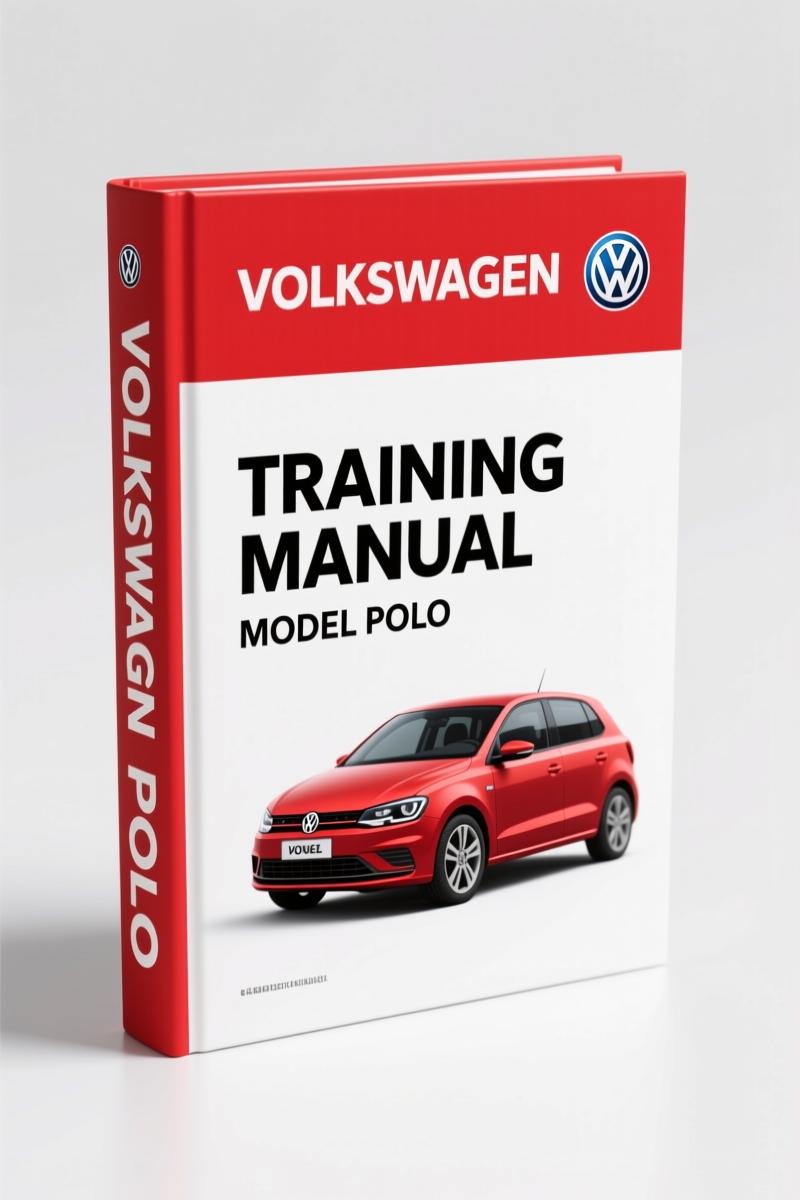
Volkswagen Polo 2002 Training Manual – SSP 265 Electrical
Original price was: $41.10.$30.00Current price is: $30.00.
48-page factory Self-Study Programme (SSP 265) detailing the redesigned vehicle electrics of the Polo 2002. Essential for electrical diagnosis.
Description
Volkswagen Polo 2002 Training Manual
I’ve been turning wrenches since before CAN bus was a thing, and I’ll tell you straight: electrical diagnostics on a Volkswagen Polo 2002 Training Manual will bite you if you rely on aftermarket garbage. This 48-page factory document from Volkswagen is the only way to understand how the onboard power supply control unit actually works—not some rewritten summary that leaves out the databus diagnostic interface. The range of electrical systems in new vehicles expands every year, and the Polo Model Year 2002 is no exception. If you’ve ever chased a parasitic draw or a no-start that turned out to be a CAN gateway issue, you know that guessing costs hours and parts.
Onboard Power Supply Control Unit – What It Actually Does
Page 13 breaks down the onboard power supply control unit. This isn’t a generic relay box; it monitors capacity utilization of the whole onboard power supply and replaces functions that used to require separate relays and control units. The manual explains how the databus diagnostic interface is integrated inside that same control unit, allowing data transfer between different CAN databus systems. I’ve seen techs throw parts at a window regulator problem because they didn’t know the convenience electronics share a bus with the sliding/tilting roof module. Don’t be that guy.
CAN Databus: Why Aftermarket Manuals Get It Wrong
The CAN databus section starts on page 24. Aftermarket manuals love to print one generic CAN diagram for all Volkswagens—then you wonder why your 2002 Polo’s driver door module won’t respond. This Training Manual shows the exact CAN bus topology for this year and model, including the databus diagnostic interface on page 26. You need to know which control units are on the convenience CAN and which are on the drivetrain CAN. Mix them up and you’ll have a car that either won’t start or won’t lock. No room for errors.
7 Systems Covered in This 48-Page Training Manual
Look at the table of contents: Introduction (page 4), Onboard power supply (page 6), Onboard power supply control unit (page 13), Function diagram (page 22), CAN databus (page 24), Databus diagnostic interface (page 26), Special functions (page 30), Convenience and safety electronics (page 32), Sliding/tilting roof (page 37), Dash panel insert (page 38), Lighting (page 42), Self-diagnosis (page 44), and Test your knowledge (page 46). That’s every major electrical system in the car. The manual doesn’t waste space on oil changes—it’s a deep dive into the electrical architecture. If you’re chasing a lighting fault, page 42 gives you the factory logic, not a guess.
Does This Manual Cover the Sliding/Tilting Roof?
Yes. Page 37 is dedicated to the sliding/tilting roof module. That’s a common failure on these Polos—the sunroof gets stuck, and the aftermarket says to replace the motor. The factory Training Manual explains the control logic, including the terminal 15 and 30 circuits that power it. Combined with the self-diagnosis chapter on page 44, you can actually read fault codes and actuate the roof via the control unit. I’d bet my Snap-On scanner that most DIYers skip this and end up replacing a perfectly good motor.
Source Validity: Why Volkswagen Factory Documentation Matters
This is a genuine Volkswagen Self-Study Programme, number 265. The OCR excerpt on page 2 states: “Please always refer to the relevant service literature for up-to-date inspection, adjustment and repair instructions.” That’s the honest truth—this manual teaches design and function, not repair steps. But without understanding the design, you can’t diagnose. Aftermarket manuals often copy the diagrams but leave out critical notes like the CAN bus termination resistors. I’ve seen shadetree mechanics burn up ECUs because they used a generic wiring diagram. Stick with the OEM. This document is the same one Volkswagen dealership techs use during training.
Test Your Knowledge: Page 46
Page 46 includes a “Test your knowledge” section. If you can answer those questions cold, you understand the electrical system. I make every new tech at my shop run through these self-tests before they touch a Polo. It keeps them from asking stupid questions later. The manual is only 48 pages, but every one of them is dense with information you can’t get from a Chilton or Haynes. Related manuals worth having: Volkswagen Polo 2002 Training Manual (the same document), Volkswagen Golf/Passat/Polo Workshop Manual 2010 for broader repair steps, and Volkswagen 1.2 Ltr. 3-Cylinder Petrol Engines Training Manual if you’re working on engine management. For background on modern automotive electrical systems, Automotive Industry Overview provides context, and Manual Transmission is unrelated but useful if you’re swapping transmissions.
- What is the difference between this Training Manual and a repair manual?
- This Training Manual explains how the systems work—the design, function, and electrical logic. It is not a step-by-step repair guide. You need it alongside a workshop manual to understand why a component behaves the way it does. The self-diagnosis chapter helps you interpret fault codes, but adjustments and replacements require the service literature.
- Does this manual cover aftermarket alarm systems?
- No. It covers factory-installed convenience electronics, including central locking, power windows, and the sliding/tilting roof. Aftermarket alarms are not referenced. If you need to install an aftermarket system, use the factory wiring diagrams (page 22 function diagram) to tap into the correct circuits without causing CAN bus errors.
- Will this help me fix a no-crank condition on my 2002 Polo?
- Yes, indirectly. The manual covers the onboard power supply control unit and the CAN databus. A no-crank often involves the immobilizer system or a faulty BCM (body control module). The manual explains how the databus diagnostic interface communicates with the engine control unit. You’ll need a scan tool to perform self-diagnosis (page 44) and read immobilizer codes.
- How many pages are dedicated to the CAN databus?
- Pages 24–29 cover the CAN databus and the databus diagnostic interface. That’s six pages of focused content, including diagrams, signal descriptions, and fault scenarios.
Access the Factory Manual. That’s what you need on your bench—not a PDF from some third-party site that doesn’t show the databus diagnostic interface. This is the real Volkswagen Self-Study Programme. You will understand the Polo’s electrical system better in one evening than you would after a week of forum hunting. Get it here: Volkswagen Polo 2002 Training Manual.
Additional information
| Brand | Volkswagen |
|---|---|
| Language | English |
4 reviews for Volkswagen Polo 2002 Training Manual – SSP 265 Electrical
You may also like…
-
Sale!

Volkswagen Phaeton Training Manual – Auxiliary Heater System (52 pages)
Original price was: $55.80.$45.00Current price is: $45.00. -
Sale!

Volkswagen Serie C 2003 Service Manual – OEM Factory Specs
Original price was: $53.60.$40.00Current price is: $40.00. -
Sale!

Volkswagen Passat 1995 Repair Manual – Factory Wiring & Engine Specs
Original price was: $57.20.$40.00Current price is: $40.00. -
Sale!

Volkswagen Golf Jetta GTI Service Manual – 4954 Pages Official Specs
Original price was: $95.55.$65.00Current price is: $65.00.
Related products
-
Sale!

2006 Service Manual – International DT 466E, 530E Diesel Engine
Original price was: $67.50.$50.00Current price is: $50.00. -
Sale!

2011 Parts Catalog – International Truck OE Parts Documentation (1786 Pages)
Original price was: $34.50.$25.00Current price is: $25.00. -
Sale!

2011 Parts Catalog – International 7400 SFA 6X6 – 1886 Pages of OEM Part Numbers
Original price was: $32.00.$25.00Current price is: $25.00. -
Sale!

Service Manual – International HS 2.8L Engine – 130 Pages of Factory Specs
Original price was: $56.40.$40.00Current price is: $40.00.
diy_master –
Great workshop guide. The document is high resolution. Contains detailed bolt torque specs for Volkswagen. Saved my weekend project! Thanks.
Richard G. –
Superb resource! Instant access after checkout. Every torque spec is provided for Volkswagen Polo. Great value for money.
David K. –
I am extremely satisfied with this purchase. The document is high resolution. Contains precise bolt torque specs for Volkswagen. Saves me hundreds of dollars.
Charles W. –
This is exactly what I was looking for. The PDF is high resolution. It helped me to rebuild my Volkswagen Polo electrical system. Saved my weekend project! Thank you.