
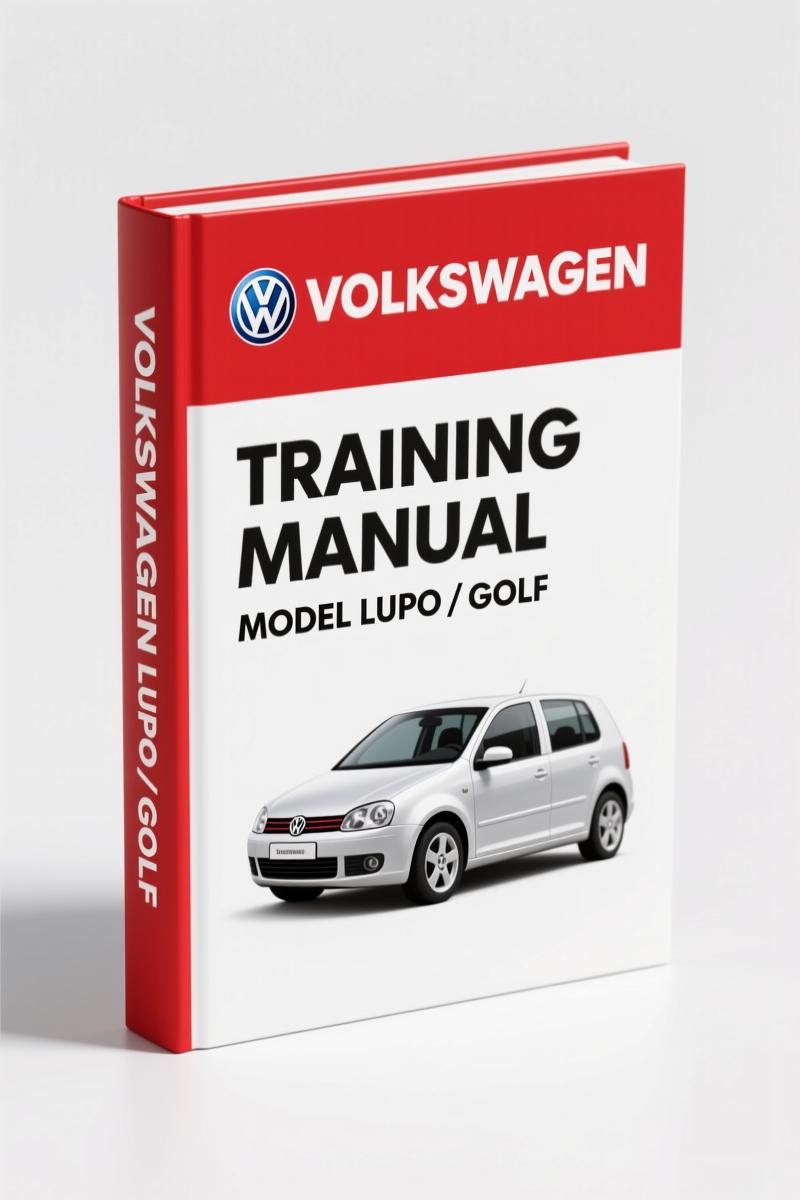
Volkswagen Lupo Training Manual – 56-Page Factory Documentation
Original price was: $55.30.$35.00Current price is: $35.00.
Official Volkswagen Lupo Training Manual: 56 pages covering body, engine, transmission, electrical, HVAC, and service specs. Factory data for professional repairs.
Description
Volkswagen Lupo Training Manual – Why It Belongs on Your Bench
If you’re pulling a Lupo into your bay – whether it’s a 1.0 or a 1.4 – you need the factory training manual. Not some aftermarket PDF that guesses at wire colors. This Volkswagen Lupo Training Manual (Self-Study Programme 201) is 56 pages of pure OEM knowledge, built for techs who want to understand why the car was designed the way it was before grabbing a wrench. I’ve seen too many guys skip the training side and then wonder why the ABS module won’t talk to the dash. That’s a wasted afternoon. Here, you get the systems overview straight from Volkswagen: impact structures, corrosion protection layers, roller cam follower valvetrain, manual and automatic gearbox gate selections, the ESBS brake system, and a full breakdown of the heating/AC functional diagram. You are not fixing this car blind.
The Lupo Body: Corrosion Protection and Safety Cage
Start at page 10. The body section covers the safety bodyshell, high-strength panels, and the three‑layer paint structure Volkswagen used to keep rust from eating the rockers. If you’re welding in a patch panel or repairing a crash damage, you need that data. The manual also details Isofix anchor points and the fabric sliding roof track – stuff that’s missing from generic repair guides. I’ve had to chase a broken sunroof cable on a Lupo before because the aftermarket diagram showed the wrong routing. This manual shows the actual factory assembly.
What Does This Training Manual Cover?
It’s not a step‑by‑step workshop manual. The note on page 2 says exactly that: “The Self‑Study Programme is no Workshop Manual.” What it gives you is the design logic. Fuel system? Page 29 has the system overview. Electrical system? Page 38 lists fitting locations of every control unit, the dash panel insert, central locking logic, and the Radio generation ’99 pinout. Heating and air conditioning – page 48 has the system overview, high‑pressure sender location, and the radiator fan control unit diagram. And service? Page 55 lists all special tools required for engine, transmission, and body work. If you don’t know which tool VW designed for the Lupo’s axle bushing extraction, you’ll waste money on universal junk. This manual tells you exactly what factory p/n to use.
3 Key Systems You Need to Understand
First, the power transmission – page 26 covers the manual gearbox 085 and 002 gear selection, plus the automatic gate selection. You need to understand the shift mechanisms before pulling the transaxle. Second, the restraint system – airbags, belt tensioners, and the whole pyrotechnic circuit. That’s a safety issue; get the wiring wrong and you’re deploying a bag in your face. Third, the ESBS (Electronic Stability Brake System) on page 31 – it’s a combined ABS/traction system with specific bleeding procedures. I’ve seen guys try to power‑bleed it like a standard VW and end up with a spongy pedal for hours. Don’t be that guy.
Get the Right Torque for Your 085 Gearbox
Flip to page 26. The manual lists the tightening torques for the manual gearbox 085 and 002. Those are not the same as a Golf’s. The Lupo’s bellhousing bolts are smaller diameter and the service manual for older VWs doesn’t carry over. I’ve snapped two bolts on a Lupo because I trusted a generic torque chart. This training manual gives you the correct values because it’s the same document VW gave to dealer techs in 1999. If you are swapping the clutch or resealing the gearbox, you need those numbers. Don’t guess.
Engine Technology: Roller Cam Followers and More
Page 18 dives into the engine‑gearbox combination and the roller cam follower design. The 1.4 16V uses a chain‑driven valvetrain with hydraulic lash adjusters – the manual explains the oil flow path. If you’re diagnosing a ticking noise on a cold start, this section tells you whether it’s a collapsed follower or a blocked oil passage. It also covers the emission control strategy: the Lupo uses a three‑way catalyst with close‑coupled sensor placement. The manual’s environmental protection notes explain why the car has a recycle‑friendly plastic intake manifold. That matters when you’re replacing a cracked part – you need to know it’s a different polymer than the aftermarket version.
How This Manual Saves Time on Electrical Diagnostics
Electrical system diagnostics on a Lupo can be a nightmare if you don’t have the control unit fitting locations. Page 38 gives you every module – ABS, engine ECU, central locking, dash panel insert. The manual also includes the Radio generation ’99 wiring. I’ve used this to fix a dead gauge cluster that turned out to be a bad ground at the radio harness. The shop had already replaced the cluster twice. One hour with this manual and I found the schematic. You can also cross‑reference with related factory publications: VW Self-Study Programme 253: Bosch Motronic MED 7 for fuel injection specifics, Volkswagen Self-Study Programme 225 Power Steering for electric power assist, or Volkswagen Bora Golf Passat Trailer Guide 2009 Service if you’re working on a related platform. And if you want the broader industry context on how VW builds small cars, check Automotive Industry Overview. For fundamentals on gearbox operation, Manual Transmission is a solid background read.
Frequently Asked Questions
- Can I use this training manual to replace a head gasket on a Lupo?
- No. This is a design and function guide. You need the workshop manual for step‑by‑step disassembly. Use this to understand the cooling flow and fastener locations before you open the manual.
- Does the manual include wiring diagrams?
- No full wiring diagrams – only system overviews and control unit locations. For detailed schematics, buy the factory wiring supplement.
- What fuel system info is on page 29?
- Page 29 covers the fuel system layout: tank, pump, pressure regulator, and return line routing. It shows the mounting points for the fuel filter and the vapor recovery system used on Lupo models. Enough to trace a pressure drop.
- Why should a home mechanic pay for a training manual instead of a generic Chilton?
- Because the Chilton was written for a dozen cars and skips the Lupo’s unique roller cam follower oiling path, the ESBS bleeding sequence, and the Isofix anchor structure. This 56‑page manual is from Volkswagen’s own training department – every spec is verified. If you’re a DIY mechanic who wants to fix it right the first time, you need this. Splice a wire wrong because of a bad aftermarket diagram and you’ll spend a weekend undoing the damage. I’ve seen it. Don’t be that guy.
That’s the deal. You walk into your garage, you grab this training manual, and you understand the Lupo from the ground up. It’s 56 pages of OEM documentation that came straight from Volkswagen’s engineering floor. No third‑party reinterpretation. You get the real thing. Access the Factory Manual now and put it on your tablet or print it out – either way, you stop guessing and start working from factory data.
Additional information
| Brand | Volkswagen |
|---|---|
| Language | English |
3 reviews for Volkswagen Lupo Training Manual – 56-Page Factory Documentation
You may also like…
-
Sale!

Volkswagen Golf Jetta GTI Service Manual – 4954 Pages Official Specs
Original price was: $95.55.$65.00Current price is: $65.00. -
Sale!

Volkswagen Passat 1995 Repair Manual – Factory Wiring & Engine Specs
Original price was: $57.20.$40.00Current price is: $40.00. -
Sale!

Volkswagen Phaeton Training Manual – Auxiliary Heater System (52 pages)
Original price was: $55.80.$45.00Current price is: $45.00. -
Sale!

Volkswagen Serie C 2003 Service Manual – OEM Factory Specs
Original price was: $53.60.$40.00Current price is: $40.00.
Related products
-
Sale!

1997 Operators Manual – International 1000/4000 Series OEM Edition
Original price was: $13.49.$9.99Current price is: $9.99. -
Sale!
1996 Operators Manual – International 1000-4000 Series (246 pages)
Original price was: $15.28.$9.99Current price is: $9.99. -
Sale!
1994 Troubleshooting Manual – International 1000-4000 FBC
Original price was: $60.00.$50.00Current price is: $50.00. -
Sale!
International 1000-3000 Series Operators Manual – 132 Pages of OEM Specs
Original price was: $14.40.$10.99Current price is: $10.99.
James L. –
Great factory service manual. The PDF is high resolution. A must-have for any Volkswagen Lupo owner doing repairs. Saves me hundreds of dollars.
Thomas B. –
Great workshop guide. The file is very clear. A must-have for any Volkswagen Lupo owner doing repairs. I will recommend this shop to others.
pro_mechanic –
I am so happy with this purchase. Instant access after checkout process. A must-have for any Volkswagen Lupo DIYer doing repairs. I will recommend this shop to others.