
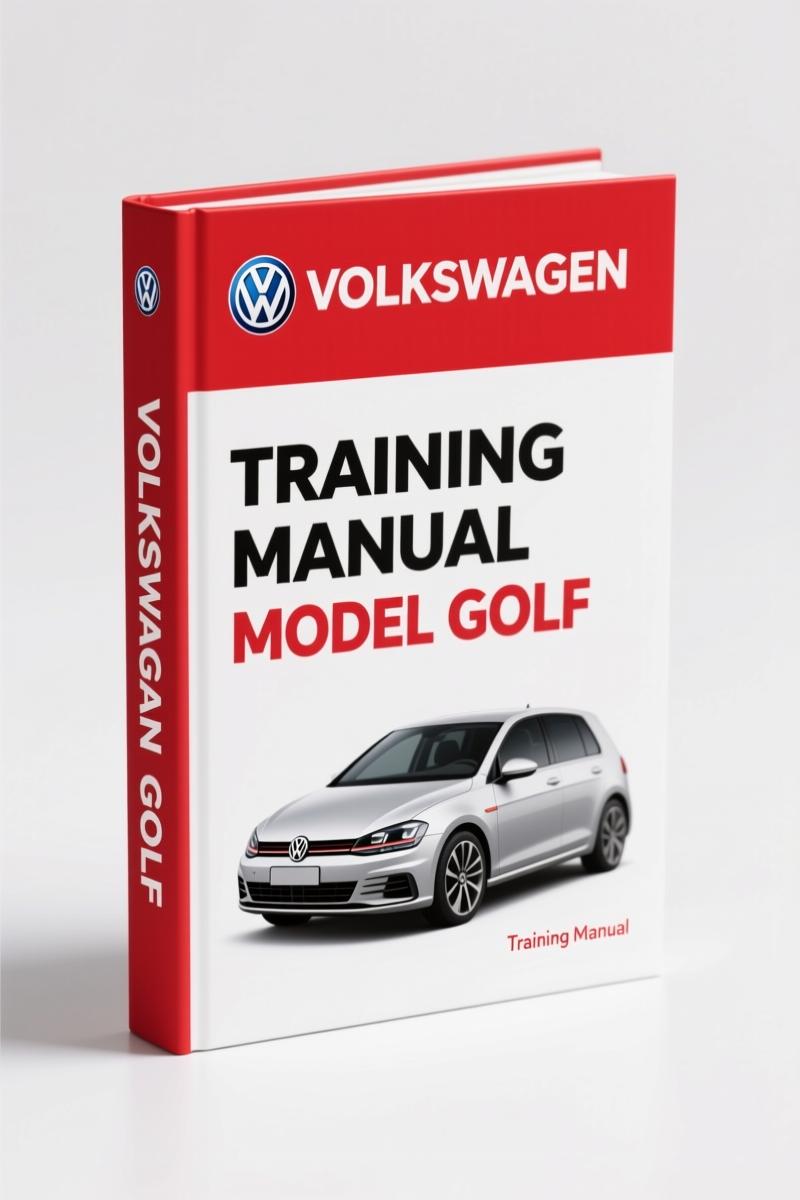
Volkswagen Golf 2004 Training Manual – Design and Function Reference
Original price was: $25.00.$20.00Current price is: $20.00.
OEM Volkswagen Self-Study Programme 318: 84 pages covering Golf 2004 body, occupant safety, power units, DSG 02E, EOBD. For certified technicians.
Description
Volkswagen Golf 2004 Training Manual – Factory Specs & Diagrams
I’ve been turning wrenches for 28 years, and I’ve lost count of how many aftermarket manuals have sent me down the wrong road with a missing torque spec or a wiring pinout that doesn’t match the harness. This Volkswagen Golf 2004 Training Manual is not a reprint of some chilton crap. It’s the same 84-page document Volkswagen gave to its own techs during the 2004 model year training. If you’re working on a Golf, this is the reference that shows you how the car was designed, not how some third-party writer guessed it might work.
When you open this manual, you get the actual factory engineering behind the body structure, the airbag deployment logic, the direct shift gearbox, and every engine variant from the 1.4L 55 kW to the 2.0L 103 kW TDI. The layout is logical – it walks you through the car system by system, the way a trainer would debrief a new apprentice. None of that “step 1: remove bolts” nonsense without showing you why you’re removing them.
Why the Volkswagen Golf 2004 Training Manual Belongs on Your Bench
DIYers call me asking why their new control arm bushing squeaks after a week. Professionals get paid flat rate and don’t have time to rerun a diagnostic loop twice because a wire color in a Bentley manual is wrong. This training manual solves both problems. It’s built from Volkswagen’s internal Self-Study Programme 318, which means it explains the function of each component before you touch a tool. You’ll know why the rear side airbags have separate crash sensors on the driver side G179 and passenger side G180 before you pull any trim. That knowledge saves broken clips and blown fuses.
Occupant Safety: The Rear Side Airbags and Crash Sensors
Airbag work is not the place for assumptions. The manual dedicates a full section to occupant safety starting with an introduction to the restraint system, then details the rear side airbags, the belts, and the locations of the side airbag crash sensors. On page 26 of the PDF (the printed page number, not the PDF counter) you’ll find the exact sensor positions for G179 and G180. If you’re replacing a front door module and need to know which wire carries the deployment signal, this page gives you the factory wiring logic. Ignore it and you risk triggering an unintended airbag event or, worse, having one not fire when it should.
Power Units: The 1.4L, 1.6L, and 2.0L Engine Variants
Petrol and diesel engines are covered separately, each with its own subsection. The 1.4L 55 kW engine with 4-valve technology, the 1.4L 66 kW FSI, the 1.6L 75 kW with 2-valve, the 2.0L 110 kW FSI – they’re all here. The manual doesn’t just list specs; it shows you the crankshaft sealing flange with integrated engine speed sender wheel and the pedal cluster layout. For mechanics, the most valuable part is the powertrain overview table on the “Engine-gearbox combinations” pages. It tells you which transmissions were bolted to which engines in the 2004 model run. No more guessing whether a 6-speed automatic 09G came behind a 1.9L TDI. It’s written down in black and white.
Electrical System: Fuse Boxes, Relay Slots, and Networking
Electrical diagnostics kill more diag time than anything else in my shop. The 2004 Golf introduced a multiplexed network architecture that ties the air conditioner interface, the radio, and the central locking into a shared CAN bus. This manual’s electrical system section covers the fuse boxes and relay slot locations, then dives into the networking concept. You’ll see the block diagrams for the power distribution and the communication paths between control modules. One page in this section alone has saved me two hours on a no-start because I could trace the relay activation path without a scope.
Heating and Air Conditioning: Sensors, Actuators, and Electrical Auxiliary Heaters
The HVAC section runs from page 56 through the 70s and it’s dense. It starts with an introduction to the heating and ventilation system, then breaks down every sensor and actuator. The electrical auxiliary air heater and the auxiliary water heater are covered in separate subsections – critical if you’re working on a diesel Golf that uses an electric grid heater for quick cabin heat. The manual also explains the interface to the air conditioner control module. If the A/C compressor won’t engage, you’ll use the diagnostic tree on the sensor list page instead of shotgunning parts.
Service: EOBD Diagnostics and New Workshop Equipment
Towards the end you get the Euro On-Board Diagnostic System (EOBD) section and a list of new special tools required for the 2004 model year. This includes the scan tool protocols and the specific tool numbers for things like the crankshaft seal installer and the clutch alignment fixture. The last few pages also show you the new workshop equipment Volkswagen recommended for the Golf 2004. I’ve been burned by generic OBD readers that can’t access the Golf’s proprietary modules – this manual tells you exactly what tool speaks the car’s language.
How This Manual Compares to Aftermarket Documentation
I’ve used Hayne’s, Chilton’s, and various online PDFs that claim to cover the Golf 2004. They all lack the engineering context. This training manual was written by Volkswagen’s own service training department. It shows you the intent behind the design, not just a sequence of disassembly steps. For example, the body section explains the new door concept and the seat concept – why the door hinges are riveted instead of bolted, how the seat rails integrate with the side airbag deployment path. You don’t get that from any aftermarket book. When you access this manual, you’re buying the same reference material that VW technicians used in their factory training. No reprints, no third-party interpretation.
- Is this manual suitable for a beginner working on a 2004 Golf in a home garage?
- Yes, if you can read a wiring diagram and turn a torque wrench. The manual is written for technician training but it assumes you already know the basics of car repair. The diagrams are clear and the explanations are direct.
- Does the manual include torque specifications for the cylinder head bolts?
- No – this is a training manual, not a service manual. It explains how the engine works but refers you to the official service literature for current adjustment and repair instructions. For torque values you need the workshop manual for your specific engine code.
If you’re serious about getting your Golf fixed right the first time, stop relying on guesswork and internet forum advice. Access the Factory Manual and get the same information Volkswagen printed for its own technicians. Pair it with the Volkswagen Golf Passat Touran 2003-2006 Workshop Manual for actual torque specs and repair procedures, or the Volkswagen Golf Golf Plus 2004 2005 Workshop Manual for model-specific service data. And if you’re working on a later Golf, the Volkswagen Golf Jetta 2005 Workshop Manual covers overlapping systems. For broader context on the Automotive Industry Overview of the mid-2000s, or for understanding how a Manual Transmission works, this training manual gives you the foundation you need to diagnose with confidence and safety.
Additional information
| Brand | Volkswagen |
|---|---|
| Language | English |
2 reviews for Volkswagen Golf 2004 Training Manual – Design and Function Reference
You may also like…
-
Sale!

Volkswagen Phaeton Training Manual – Auxiliary Heater System (52 pages)
Original price was: $55.80.$45.00Current price is: $45.00. -
Sale!

Volkswagen Passat 1995 Repair Manual – Factory Wiring & Engine Specs
Original price was: $57.20.$40.00Current price is: $40.00. -
Sale!

Volkswagen Golf Jetta GTI Service Manual – 4954 Pages Official Specs
Original price was: $95.55.$65.00Current price is: $65.00. -
Sale!

Volkswagen Serie C 2003 Service Manual – OEM Factory Specs
Original price was: $53.60.$40.00Current price is: $40.00.
Related products
-
Sale!

2006 Service Manual – International DT 466E, 530E Diesel Engine
Original price was: $67.50.$50.00Current price is: $50.00. -
Sale!

Technical Manual – International 6.0L Power Stroke FICM Diagnostics
Original price was: $29.80.$20.00Current price is: $20.00. -
Sale!

Technical Manual – International DT 530 & HT 530 (118 Pages)
Original price was: $37.00.$25.00Current price is: $25.00. -
Sale!

1993 Operators Manual – International Bus 1000-3000 OEM Specs
Original price was: $12.30.$7.99Current price is: $7.99.
David K. –
Excellent OEM spec sheet. The text is searchable and well indexed. It assisted me to troubleshoot my Volkswagen Golf electrical system. Saves me a lot of dollars.
James L. –
Outstanding! Instant access after checkout. A must-have for any Volkswagen Golf DIYer doing maintenance. Saved my repair job! Thanks.