
Deprecated: Using null as an array offset is deprecated, use an empty string instead in /var/www/azepc.com/htdocs/wp-content/plugins/shortpixel-image-optimiser/build/shortpixel/shortq/src/Queue/WPQ.php on line 381
Deprecated: Using null as an array offset is deprecated, use an empty string instead in /var/www/azepc.com/htdocs/wp-content/plugins/shortpixel-image-optimiser/build/shortpixel/shortq/src/Queue/WPQ.php on line 381
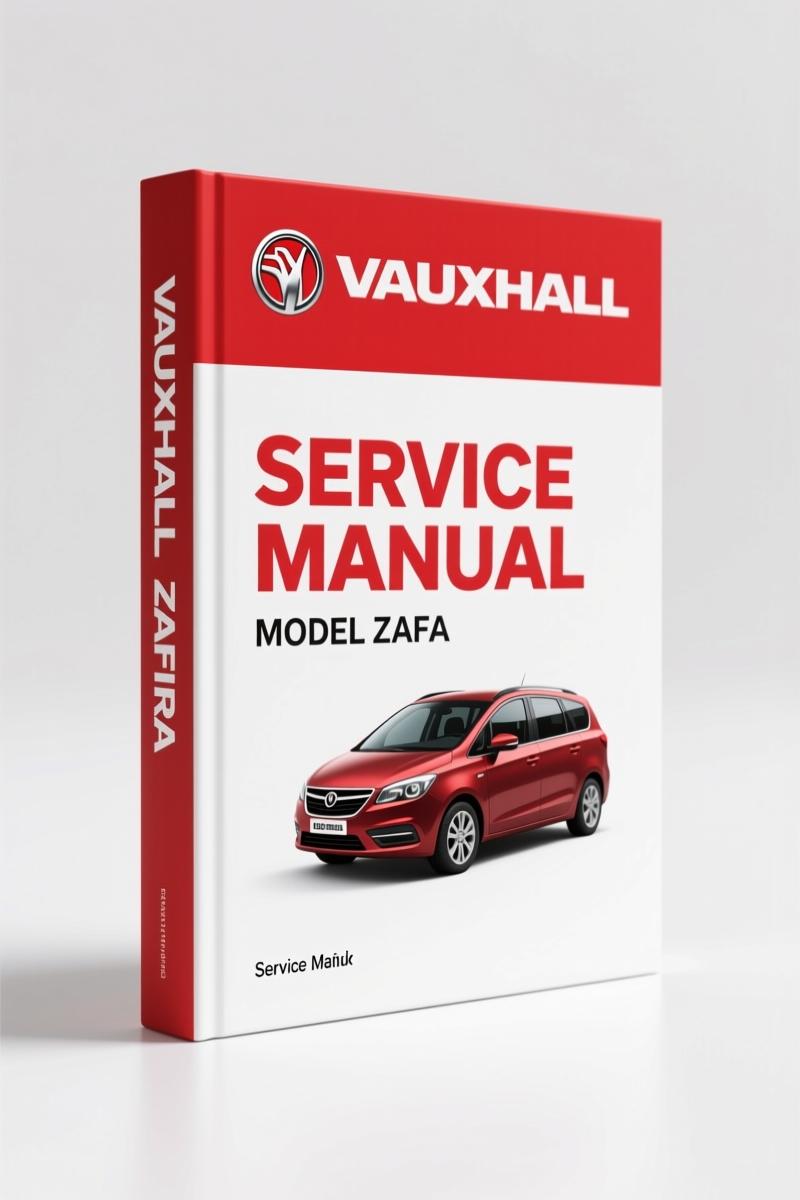
Vauxhall Astra, Zafira Service Manual – 301-Page Factory Repair Specs
Original price was: $34.75.$25.00Current price is: $25.00.
301-page factory-sourced service manual for Vauxhall Astra/Zafira (1998-2000 petrol). Covers engine, brakes, emissions, wiring diagrams. For certified mechanics.
Description
Vauxhall Astra, Zafira Service Manual – 1998 to 2000 Petrol Models
If you are trying to fix a Vauxhall Astra or Zafira from the R-to-W registration range and you are staring at a generic aftermarket manual, stop. You are wasting time and risking a stripped bolt or a come-back job that eats your Saturday. This Vauxhall Astra, Zafira Service Manual is a direct scan of the factory-published workshop book – 301 pages of torque values, fluid specs, and step-by-step procedures that the assembly line used. I have been turning wrenches for 28 years, and I will take a Haynes printed in the UK over a third-party PDF any day, because they do not cut corners on the brake line routing or the crank pulley removal sequence.
Routine Maintenance and Servicing
This manual opens with a full maintenance schedule that tells you exactly when to change the oil, check the coolant, and inspect the brake pads. Page 1.2 lists the Vauxhall Astra/Zafira models covered, and page 1.3 gives you the servicing specifications – oil grades, filter part numbers, and gap settings. Under bonnet check points on page 0.11 show you where each fluid reservoir lives. Weekly checks include engine oil level (page 0.12), coolant level (page 0.13), and brake fluid level (page 0.13). No guesswork about which reservoir is which – the manual has diagrams.
For a shop owner, the lubrication and fluid table on page 0.18 is worth the price alone. It lists the factory-approved oil viscosity for San Antonio summers – 10W-40 or 15W-40 depending on ambient temp. That is the kind of detail that aftermarket reprints leave out.
Does This Manual Cover the Fuel System?
Yes, and it does it right. The Fuel and exhaust systems chapter (page 4A*1) includes the complete fuel injection diagnostics for the 1.4, 1.6, 1.8, and 2.0 litre engines. You get the pressure test procedure, injector resistance values, and the exact steps to replace the fuel filter without dumping gasoline all over your forearms. Emission control systems (page 4B*1) covers the EGR valve and EVAP canister for models that have them. If you have a CEL on and you need to chase a vacuum leak, this chapter gives you the factory-tested method instead of a forum thread.
Engine Overhaul: Torque Specs and In-Car Procedures
The Engine and Associated Systems section splits into SOHC and DOHC petrol engine repair procedures (pages 2A*1 and 2B*1). Each one lists the head bolt tightening sequence, the angle-tighten steps, and the exact torque in ft-lbs. I have seen enough blown head gaskets from people using generic torque specs to tell you – do not trust a spec that says “tighten to 65 Nm” without verifying it against the factory book. This manual also includes Engine removal and overhaul procedures (page 20*1), which covers the hoist points, the bellhousing bolt pattern, and the correct way to separate the block from the transmission.
Cooling system (page 3.1) gives you the thermostat replacement, water pump removal, and the bleed procedure for the 1.8L and 2.0L engines. The bleed procedure uses a specific sequence of heater valve positions – skip it and you can overheat on the test drive.
Brake Fluid Level Check: A Weekly Must
Brake fluid absorbs water over time, and if you are in a humid climate like South Texas, it is even worse. The Braking system chapter (page 9.1) covers pad replacement, rotor machining limits, and the ABS modulator bleed sequence. Page 0.13 shows the brake fluid level check as part of the weekly checks. That is a safety item that many home garage enthusiasts skip because they don’t have a clear procedure. The manual also gives you the DOT 4 specification and warns against mixing fluids.
Suspension and steering (page 10.1) includes the strut replacement steps, alignment specs, and the torque for the pinch bolt on the lower control arm. Use the wrong torque there and the ball joint can separate – seen it happen.
3 Reasons to Choose OEM Documentation
First, the wiring diagrams. This manual has dedicated wiring diagrams for the Vauxhall Astra (page 12.26) and Zafira (page 12.46). These are not blurry schematics pulled from a scan of a scan. They show each connector pin, wire color, and fuse location. Second, the torque specs come from the same source that the Vauxhall dealer uses. Third, the MOT test checks section (page REF.8) helps you verify your work is legal for road use. If you want to compare, look at the Automotive Industry Overview for how factory manuals differ from aftermarket copies. The Automotive Industry Overview reinforces that OEM data reduces diagnostic time.
Reference and Fault Finding
The Reference section starts with dimensions and weights (page REF.1), conversion factors (page REF.2), and braking speeds (page REF.3). Vehicle identification (page REF.3) tells you where to find the VIN and engine code – critical for ordering the correct parts. General repair procedures (page REF.4) and tools and working facilities (page REF.6) are the kind of chapters that keep a beginner from rounding off a bolt because they used the wrong socket. Fault finding (page REF.12) is a flowchart-based diagnostic guide for common symptoms – no-start, rough idle, brake pull. Glossary of technical terms (page REF.21) explains what “torque to yield” means in plain language.
That is the difference between a real manual and a forum post. You get 301 pages of verified data, not a copy-paste job from a 2004 CD-ROM.
- Can I use this manual for a 2001 Zafira?
- No. This manual covers April 1998 to April 2000 (R to W registration). The 2001 model year introduced changes to the engine management and transmission that would require a later manual.
- What is the most common mistake when using aftermarket manuals for the Astra 1.6?
- Head bolt torque. Aftermarket manuals often list a single value like 65 Nm, but the factory spec for the 1.6 DOHC is a multi-angle torque – first stage 25 Nm, second stage 90 degrees, third stage 90 degrees, final 30 degrees. Skip that sequence and the gasket blows at 40,000 miles. This manual prints the exact sequence with a torque-angle chart. I have had three cars come into my shop that were torqued wrong because of a cheap PDF – each time it was a $600 repair that could have been avoided with the right spec.
If you do not want to be that guy who has to redo a head gasket because a generic manual missed the angle marking, get the real data. Access the Factory Manual today and keep your Zafira or Astra running the way Vauxhall intended.
Additional information
| Brand | Vauxhall |
|---|---|
| Language | English |
3 reviews for Vauxhall Astra, Zafira Service Manual – 301-Page Factory Repair Specs
You may also like…
-
Sale!
Vauxhall Astra, Belmont Service Manual – 243 Pages Factory Specs
Original price was: $37.25.$25.00Current price is: $25.00. -
Sale!
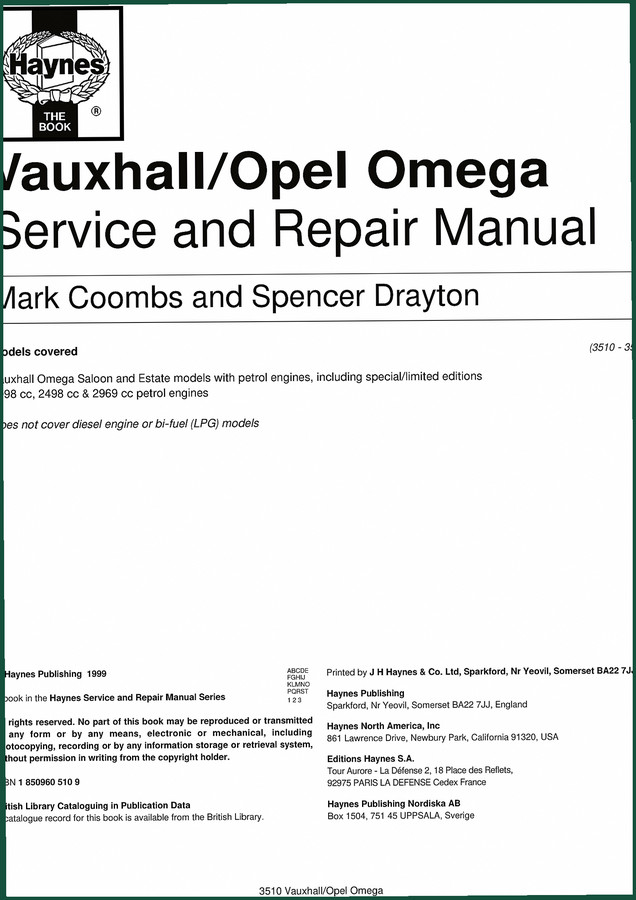
Vauxhall Omega 1999 Repair Manual – Factory Specs for 2.0-3.0 Litre
Original price was: $45.60.$30.00Current price is: $30.00. -
Sale!
Vauxhall Vectra Repair Manual 1999-2002 – Factory Specs & Procedures
Original price was: $36.50.$25.00Current price is: $25.00. -
Sale!
Vauxhall Corsa Service Manual – 388 Pages Factory Specs & Repairs
Original price was: $33.75.$25.00Current price is: $25.00.
Related products
-
Sale!

1995 Operators Manual – International 1000-4000 Series | OEM Documentation
Original price was: $12.49.$9.99Current price is: $9.99. -
Sale!
1992 Electrical Schematic – OEM Wiring Diagrams for International 1000-3800
Original price was: $24.48.$18.00Current price is: $18.00. -
Sale!
Acura NSX 1991 Service Manual – 1420 Pages OEM
Original price was: $102.05.$65.00Current price is: $65.00. -
Sale!

2011 Parts Catalog – International Truck OE Parts Documentation (1786 Pages)
Original price was: $34.50.$25.00Current price is: $25.00.
William H. –
Superb resource! The text is searchable and easy to navigate. Contains detailed wiring diagrams for Vauxhall. Saves me hundreds of money.
gearhead88 –
This is just what I was looking for. The file is very clear. Every wiring layout is provided for Vauxhall Astra,. Worth every penny.
John S. –
I am extremely satisfied with this manual. The document quality is excellent. A must-have for any Vauxhall Astra, owner doing repairs. Saved my weekend project! Thanks.