
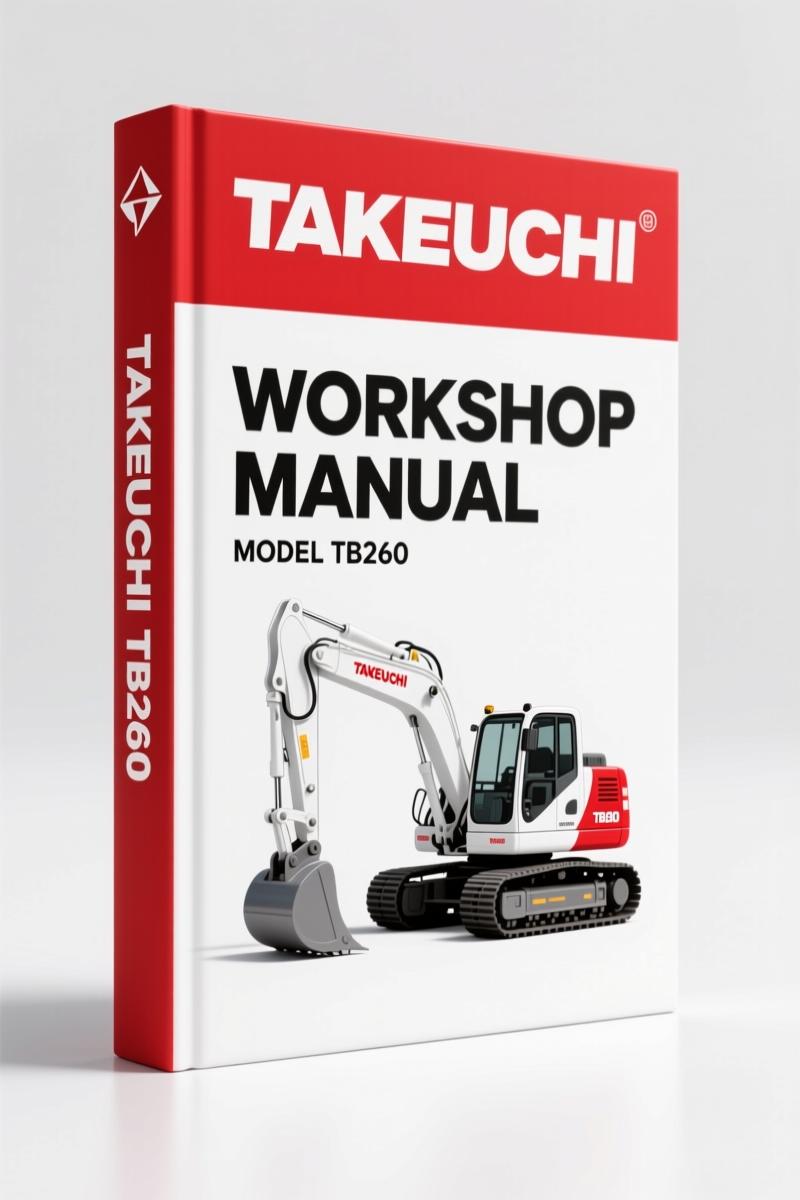
Takeuchi TB260 Operators Manual – OEM Factory Specs for Mini Excavator
Original price was: $13.59.$9.99Current price is: $9.99.
Takeuchi TB260 Operators Manual: 271 pages of OEM safety, control, and maintenance procedures for fleet and shop use.
Description
Takeuchi TB260 Operators Manual
If you’re running a Takeuchi TB260 on a jobsite and you haven’t cracked this Operators Manual, you’re gambling with your machine and your safety. I’ve seen guys throw a track or overheat an engine because they thought they knew better. An operator’s manual isn’t just for the new guy—it’s the reference document for everything from daily fluid checks to understanding what every symbol on the dash means. This one is 271 pages of Takeuchi factory content, not something rewritten by a third party who never touched a wrench. You want to operate this mini excavator the way the engineers intended? You start here.
Safety: The First Section You Read, Not Skip
Page 2 of this manual hits you with the safety alert symbol and a warning that failing to understand these instructions can cause injury or death. That’s not lawyer talk—that’s reality. The manual breaks out signal words (DANGER, WARNING, CAUTION) and tells you exactly what each means. It also covers general precautions, what to do before starting, during operation, and even when transporting the machine. I’ve seen shop owners skip this section because they think they know safety. Then they wonder why an operator runs the machine with the safety lock lever disengaged. This section covers it all. Don’t skip it.
What the Takeuchi TB260 Operators Manual Contains
After the safety chapters, the manual walks you through machine description—front, rear, left and right designation, designated operations, features, and a break-in period section that too many people ignore. Then it gets into controls: names of components, all the covers (starter key, engine hood, fuel lid, fuse box cover), the cab layout including emergency exit and window operation, seat and seat belt, and the multi-information display. The display section alone is worth the price—it explains warning lamps, indicators, screen control key, and navigation. You get every switch diagrammed: starter switch, throttle controller, horn, deceleration button, travel speed button, auxiliary switches, DPF regeneration switch, light/washer/wiper, and more. Then levers and pedals: safety lock lever, operating levers, blade lever, travel levers/pedals, boom swing pedal. The manual even covers accessories like air conditioner, radio, auxiliary hydraulic lines, and the fuel supply pump if equipped.
Operations section includes walk-around inspection, daily inspection, starting/stopping engine, warming up, operating the travel levers, working equipment, prohibited operations, parking, cold climate handling, and rubber crawler care. Transport chapter covers loading/unloading, hoisting, and securing. Maintenance section has service data, fuel/lubricant table, regularly replace hydraulic oil, list of consumables, list of tools, and list of tightening torques. Safety-critical parts are flagged. There’s a maintenance list with intervals—daily (every 10 hours) and beyond.
3 Reasons OEM Matters for an Operator’s Manual
First, torque values. An aftermarket manual might give you a generic spec, but the OEM manual lists exact tightening torques for your TB260. Second, wiring diagrams and control logic—third-party books often copy old revisions. Third, the safety warnings are written for your specific machine model, including serial number ranges (126000002~ and 126100003-). You don’t get that from a photocopy. If you need to go deeper into repairs, pair this with the Takeuchi TB260 Workshop Manual. For parts identification, grab the TAKEUCHI TB260 MINI EXCAVATOR Operator’s Manual (this one) and the Takeuchi TB260 Parts Catalog – 527-Page OEM Factory Manual.
Understand the Controls Before You Start the Machine
This isn’t a service manual—it’s an operator’s manual. That means it focuses on showing you where every lever, switch, and pedal is, and what it does. Section after section names each component and explains its function. The “Names of components” chapter gives you the big picture. Then each cover is detailed: how to open the right side cover, the engine hood, left side cover, fuel lid, and fuse box cover. The cab section includes the door, emergency exit (you need to know this before you’re in a rollover), front window and lower front window operation, side window, and emergency hammer location. Seat and seat belt adjustment is covered—sounds trivial, but I’ve seen operators skip adjusting the seat and then complain about back pain after eight hours.
The multi-information display is a control center. You get the main menu screen, warning lamps (like engine oil pressure, charge alert), indicators (like glow plug, travel speed), and how to navigate using the screen control key. One push and you can switch from hour meter to coolant temperature. If that display freezes or gives a false code, you need to know which lamp means what. The manual explains each symbol. For other equipment like Manual Transmission systems, the basic principles of reading a factory manual apply—but for the TB260, this is the only source you trust.
Maintenance: The Backbone of Machine Life
The maintenance section starts with a general overview and cautions. Then it gives you service data—fuel and lubricant table specifying oil types and capacities. It tells you when to regularly replace hydraulic oil. There’s a list of consumables (filters, belts, etc.) and a list of tools for models 126000002 or later. The list of tightening torques is critical—don’t guess. Use a torque wrench. The manual also lists safety-critical parts you must replace at specified intervals. The maintenance list covers daily (every 10 hours) inspection: coolant level, engine oil, water separator, fuel level, and more. Long-term intervals are in the later pages. If you’re looking for a Manual Transmission rebuild guide, that’s a different department. This manual keeps your excavator running smoothly day to day.
FAQ
- Is this the same as a service or repair manual?
- No. This is an operator’s manual for daily operation, safety, and basic maintenance. You need the workshop manual for major repairs.
- Where do I find the torque specs for track bolts?
- The “List of tightening torques” is in the Maintenance section. It covers bolts and nuts with values in N·m. Always refer to that chart before reassembling any critical joint. I’ve seen guys over-torque track bolts and crack the flange—don’t be that guy. The spec is there because Takeuchi tested it. Use it.
You need a reference that doesn’t lie. This OEM manual was printed by Takeuchi, not copied from a PDF that’s been resold three times. Every page—271 of them—matches what came with the machine from the factory. If you operate, maintain, or supervise a TB260, get the factory documentation under your arm. Access the Factory Manual and keep it in the cab or on your tablet. Your machine, your crew, and your wallet will thank you.
Additional information
| Brand | Takeuchi |
|---|---|
| Language | English |
3 reviews for Takeuchi TB260 Operators Manual – OEM Factory Specs for Mini Excavator
You may also like…
-
Sale!

Takeuchi TW60 2007 Service Manual – 246 Pages
Original price was: $87.75.$65.00Current price is: $65.00. -
Sale!
Takeuchi TB180FR Parts Catalog – 359-Page OEM Exploded-View Index
Original price was: $100.10.$65.00Current price is: $65.00. -
Sale!
Takeuchi TW50 2007 Service Manual – OEM Factory Repair Procedures
Original price was: $96.20.$65.00Current price is: $65.00. -
Sale!
Takeuchi TB-1200, TB-1400 1984 Service Manual – Factory Specs
Original price was: $91.65.$65.00Current price is: $65.00.
Related products
-
Sale!

1989 Service Manual – International 2000-8000 Electrical Systems
Original price was: $72.00.$50.00Current price is: $50.00. -
Sale!

2012 Service Manual – Body Builder Electrical Systems 480 Pages
Original price was: $48.28.$34.00Current price is: $34.00. -
Sale!

2011 Parts Catalog – International 7400 SFA 6X6 – 1886 Pages of OEM Part Numbers
Original price was: $32.00.$25.00Current price is: $25.00. -
Sale!

Technical Manual – International DT 530 & HT 530 (118 Pages)
Original price was: $37.00.$25.00Current price is: $25.00.
gearhead88 –
Superb resource! The text is searchable and easy to navigate. It assisted me to troubleshoot my Takeuchi TB260 engine. Saved my repair job! Thank you.
John S. –
Five stars! It is very easy to read on my laptop without blur. Every spec sheet is provided for Takeuchi TB260. I will definitely buy again.
Michael T. –
This is exactly what I needed. It is very easy to read on my tablet without losing quality. Every torque spec is included for Takeuchi TB260. Saves me a lot of dollars.