
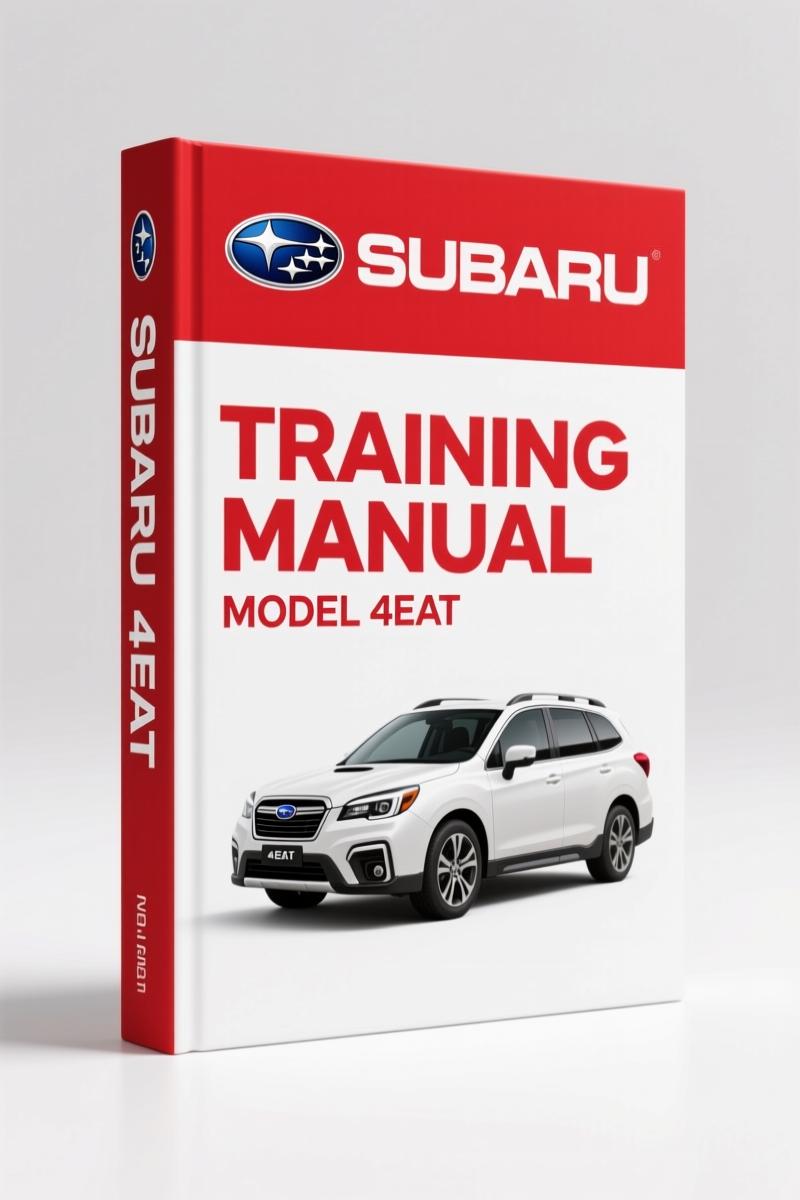
Subaru 4EAT 2001 Training Manual – Factory Specs & Diagnostics
Original price was: $33.25.$25.00Current price is: $25.00.
37-page factory training manual for the 4EAT transmission: hydraulic control, valve body torque, OBD-II, and diagnostic procedures. For certified technicians.
Description
Subaru 4EAT 2001 Training Manual – Factory Specs for Your Build
You know the feeling. You have a 4EAT transmission on the bench, and you are staring at a valve body with a dozen bolts. Without the right torque spec, you are guessing. I have pulled apart transmissions that someone “rebuilt” with a prayer and an impact gun. That is why you need the Subaru 4EAT 2001 Training Manual – not a reprint, not a third-party summary, but the actual factory booklet used to train Subaru techs. 37 pages, no fluff, no missing pages.
This manual is from 2001, but the 4EAT platform ran for years. The hydraulic control system and the lock-up torque converter principles have not changed. Page 31 covers the Pressure Test section – that alone will save you from chasing ghosts in a worn-out pump or a stuck accumulator. If you have ever had a transmission that shifted fine cold but slipped hot, you know what I mean.
Valve Body Bolts: Why Torque Specs Matter
The last page of this manual – page 37 – lists the 4EAT Valve Body Bolts. These are not generic values. Subaru engineers tested each bolt’s clamping load to prevent valve body distortion. One wrong torque and you get cross leaks between circuits. That is a two-day job to fix. I have seen it happen. The manual gives you the exact inch-pound values. Use a calibrated beam torque wrench, not a clicker that has been dropped three times.
What Does This Training Manual Cover?
Open the table of contents and you see every major system. Lock-Up Operating Modes, Oil Pump Assembly, Transmission Gear Train, High Clutch and Reverse Clutch, AWD principles, Hydraulic Control System, Accumulators, Transfer Clutch Valve Assembly, Electronic Control System, Self Diagnostic System, OBD-II, and more. It even includes the 302 Module Lesson Plan Bulletins and Service Help-Line Updates – real field fixes from Subaru. If you need to understand the Fail Safe System or the Combination Meter Light Operation, it is in there.
7 Key Systems Explained
The manual breaks down the 4EAT into seven sections that matter: 1) General Overview & Features, 2) Lock-Up Torque Converter & Operating Modes, 3) Oil Pump & Gear Train, 4) Clutches and Band Servo Operation, 5) AWD & Final Drive, 6) Hydraulic Control with Accumulators, 7) Electronic Control & Diagnostics. Each section starts with a functional description and ends with inspection or reassembly steps. For example, the Reverse Clutch Drum End-Play check is right after the Torque Converter Case section. You get the total end-play spec and the shim selection procedure.
Get the Lock-Up Operating Modes Right
Many DIY guys think the lock-up torque converter is just on or off. The 4EAT has multiple lock-up modes – partial lock, full lock, and coast lock. The manual explains exactly when the Transmission Control Unit commands each mode based on throttle position and vehicle speed. If you are swapping a converter or troubleshooting a shudder, read that section before you throw parts at it. The lock-up valve body in the pump cover is a common failure point; the manual shows you how to inspect it.
Torque Converter Case and End-Play Checks
Reassembly of the torque converter case requires checking the reverse clutch drum end-play and total end-play. The manual gives the specifications – no guessing. I have seen a brand-new converter fail because someone forgot to measure the selective washer thickness. Page numbers? You get the end-play procedures right after the transfer clutch valve assembly. Use a dial indicator. Do not rely on feel.
One thing that separates this OEM training manual from aftermarket books is the level of detail in the hydraulic circuit diagrams. The Hydraulic Control System section traces oil pressure through every valve and accumulator. If you need to understand why a shift flare happens, you trace the circuit. Aftermarket glosses over that. This manual does not.
Audience Fit: Who Should Buy This
Home garage enthusiasts who have rebuilt a transmission before – or want to try – will get the most out of this. Beginners should pair it with a service manual for torque specs on external bolts, but the training manual is the best way to learn how the 4EAT actually works. For pro mechanics, this is a quick reference for diagnostics and pressure tests. The Time Lag Test and Stall Test procedures are on the same pages as the troubleshooting flow charts. You do not waste billable hours flipping through generic guides.
If you work on Subaru all-wheel-drive cars from the late 90s to mid-2000s, you will reference this manual often. The AWD operating principles section explains the transfer clutch hydraulic control – a system that fails when the duty solenoid loses calibration. The manual tells you how to test it.
Source Validity: OEM vs Aftermarket
Aftermarket manuals often copy the basics but leave out updates. This is a genuine Subaru of America training booklet, copyrighted 2001, with all rights reserved. The OCR excerpt shows the trademark notice and the disclaimer about changes without notice – that is factory language. The diagrams are Subaru original, not redrawn by a third party. If you compare the Valve Body Bolt torque values in this manual to an aftermarket source, you will likely find a mismatch. Trust the OEM.
For a broader look at automotive transmission technology, check out Automotive Industry Overview. And if you are curious about the differences with a Manual Transmission design, that is a separate can of worms. But for the 4EAT, stick with the factory doc.
Related Manuals
- Subaru 4EAT Phase II 2001 Training Manual – the follow-up covering later variants.
- 1987 Subaru Serie E Repair Manual Supplement – Section: Spezifikationen (Specifi – if you work on older Subaru models.
- Subaru BRZ Body Repair Manual Introduction Pages – for body work on newer cars.
Frequently Asked Questions
- Does this manual include torque values for the valve body bolts?
- Yes. Page 37 lists the exact torque specs for the 4EAT valve body bolts. Use a factory torque wrench – no guessing.
- I have a 2002 Outback with a 4EAT. Will this training manual cover diagnostics like the pressure test?
- Absolutely. The manual includes the Pressure Test section on page 31, along with stall test, time lag test, and troubleshooting for the fail-safe system. It also covers OBD-II diagnostics and the self-diagnostic system for XT and L-Series models. Even though the manual is dated 2001, the hydraulic and electronic control systems remained consistent through the early 2000s. The only difference might be connector pin locations for the TCU, but the functional descriptions and pressure test procedures are still valid. If you need updated TSBs, pair this training manual with the latest Subaru service information. But for understanding how the transmission works and where to start testing, this 37-page booklet is worth more than a 500-page generic book.
Do not rely on memory or aftermarket summaries. When you are holding a valve body in your hand and need the right spec, you want the factory number. Access the Factory Manual and keep it on your tablet or print the pages you need. Your transmission will thank you.
Additional information
| Brand | Subaru |
|---|---|
| Language | English |
3 reviews for Subaru 4EAT 2001 Training Manual – Factory Specs & Diagnostics
You may also like…
-
Sale!

Subaru Forester 2002 Service Manual – 2073 Pages of Factory Specs
Original price was: $67.05.$45.00Current price is: $45.00. -
Sale!
Subaru Forester 1999 Service Manual – 1972 Pages of Factory Diagnostic Data
Original price was: $67.05.$45.00Current price is: $45.00. -
Sale!

Subaru IMPREZA 1998 Service Manual – 1906 Pages Factory Specs
Original price was: $58.05.$45.00Current price is: $45.00. -
Sale!
Subaru IMPREZA 2003 Service Manual – 3024 Pages of Factory Specs
Original price was: $61.20.$45.00Current price is: $45.00.
Related products
-
Sale!

1991 Electrical Schematic – 112-Page OEM Wiring Diagram for International 1000-3000 Series
Original price was: $22.75.$17.50Current price is: $17.50. -
Sale!

2011 Parts Catalog – International 7400 SFA 6X6 – 1886 Pages of OEM Part Numbers
Original price was: $32.00.$25.00Current price is: $25.00. -
Sale!

2006 Service Manual – International DT 466E, 530E Diesel Engine
Original price was: $67.50.$50.00Current price is: $50.00. -
Sale!

Service Manual – International HS 2.8L Engine – 130 Pages of Factory Specs
Original price was: $56.40.$40.00Current price is: $40.00.
David K. –
Excellent workshop guide. It is very easy to read on my laptop without losing quality. It helped me to troubleshoot my Subaru 4EAT electrical system. I will definitely buy again.
diy_master –
This is just what I required. It is easily zoomable on my phone without losing quality. Contains precise schematics for Subaru. I will recommend this shop to others.
Thomas B. –
Perfect factory service manual. The pages are clean and well indexed. Every torque spec is provided for Subaru 4EAT. Highly recommended for mechanics.