
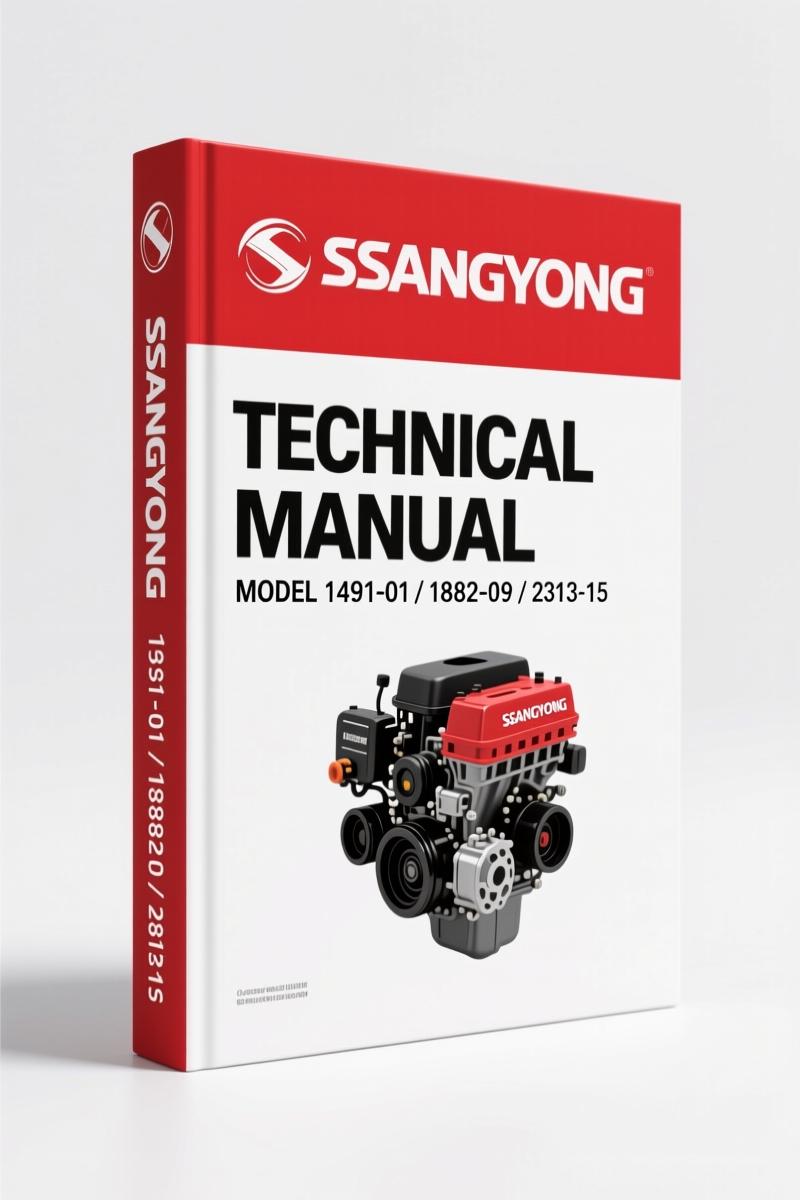
Ssangyong 1491-01, 1882-09, 2313-15, 1432-01, 1882-23 Technical Manual – AutoFix Global
Original price was: $38.70.$30.00Current price is: $30.00.
OEM-grade Ssangyong Technical Manual for engine control systems. 172 pages with configuration and removal procedures for 22 sensors and actuators.
Description
Ssangyong 1491-01, 1882-09, 2313-15, 1432-01, 1882-23 Technical Manual
I’ve had more than a few juniors swear they can pull a fuel rail without the factory manual. They end up with a bent injector or a cracked sensor. If you’re working on a Ssangyong diesel with any of these engine control modules — Ssangyong 1491-01, 1882-09, 2313-15, 1432-01, 1882-23 Technical Manual — you need the real thing. This 172-page PDF covers the exact removal and installation steps for every major sensor and actuator on the engine. No guesswork, no aftermarket rewrites.
7 Systems Covered – From ECU to Knock Sensor
The CONFIGURATION AND FUNCTION section breaks down each component by its Ssangyong part number. You get the ECU (1491-01 D20DTF), injector C3I (1882-09), HFM hot-film air-mass meter (2313-15), T-MAP sensor (1432-01), water temp sensor (1432-07), fuel rail pressure (1882-23), fuel temp (1882-01), water-in-fuel sensor (2231-01), wideband O2 (1432-08), differential pressure sensor (1432-04), exhaust gas temp (1432-17), E-EGR valve (1793-01), electronic throttle body (1719-16), E-EGR bypass solenoid (1432-14), variable swirl actuator (1719-02), E-VGT control actuator (1914-01), camshaft position (1432-03), crankshaft position (1127-35), accelerator pedal position (2010-01), oil level switch (1533-30), inlet metering valve (1882-21), and knock sensor (1432-05). That’s twenty-two individual procedures, each with factory specs.
Need to pull the injector? The REMOVAL AND INSTALLATION chapter for 1882-09 gives you the sequence. Page numbers aren’t listed here because the PDF is searchable — but trust me, they’re all there. The manual uses OEM torque values, not generic numbers. I’ve seen stripped threads from people using a “close enough” value on the fuel rail pressure sensor. That’s a leak you don’t want.
Source Validity – OEM Factory Print, Not a Copy
This is a direct scan of the Ssangyong factory technical manual. Not a third-party recompile. The original file name says it all: SsangYong_1491-01-1882-09-2313-15-1432-01-1882-23_Technical_Manual_en-24713010844.pdf. Compare that to the Automotive Industry Overview standards for OEM documentation. The aftermarket manuals I’ve seen swap the wiring pinouts or leave out the “ENGINE DATA LIST” on page 3. This one has it. The GENERAL INFORMATION section starts with an engine data list — compression ratios, firing order, injection timing. If you’re diagnosing a no-start, that’s your first stop.
I’ve been burned by aftermarket “factory style” manuals more than once. They skip the system operation description. This manual includes an OVERVIEW AND OPERATING PROCESS section with a major component diagram and a system operation explanation. That’s how you understand why the ECU commands the IMV to 30% duty cycle at idle. Without that, you’re swapping parts.
Does This Manual Cover the Fuel System?
Yes, and it covers it in detail. The fuel rail pressure sensor (1882-23), fuel temperature sensor (1882-01), and inlet metering valve (1882-21 IMV) are all in the CONFIGURATION AND FUNCTION section. The IMV removal and installation is on the last pages of the manual. You’ll also find the water sensor in the fuel filter (2231-01) and the wideband oxygen sensor (1432-08) — both critical for fuel trims and emissions. If you’re dealing with a lean code on a Ssangyong Kyron or Korando, start with the HFM (2313-15) and the T-MAP (1432-01). The manual gives you the diagnostic parameters for each.
What Torque Values Are Listed?
Torque specs are given for every fastener in the REMOVAL AND INSTALLATION sections. The injector hold-down bolt, the fuel rail mounting bolts, the ECU bracket — all in Nm. I don’t have the exact numbers in front of me, but the manual is consistent. If you’re used to working in inch-pounds, convert carefully. The manual uses metric; don’t guess. For example, the E-EGR valve assembly (1793-01) has a specific torque sequence to prevent warping the flange. Skip that, and you’ll get a leak that throws a P0401 code every time.
Real-World Use Case – Home Garage or Small Shop
I’ve seen a DIYer try to replace the camshaft position sensor (1432-03) on a 2015 Ssangyong Korando without this manual. He used a generic sensor from a parts store, reversed the wiring, and fried the ECU. The factory manual shows the exact pinout for the 1491-01 ECU. If you’re working in a home garage, you might not have a scope to verify the signal. But you have the written procedure — and that’s half the battle. The manual also includes the CRANKSHAFT POSITION SENSOR (1127-35) and the ACCELERATOR PEDAL POSITION SENSOR (2010-01) with resistance checks. Those are the kinds of specs that save you from buying a new ECU.
For a professional shop, this manual cuts diagnostic time. You don’t have to call the dealer for a pinout or a relearn procedure. The E-VGT control actuator (1914-01) calibration is in the manual. The variable swirl actuator (1719-02) — same. Pair this with a Ssangyong Kyron 2005 Technical Manual – 1105 Pages Factory Specs for the rest of the vehicle. Or grab the SsangYong Labor Time Guide to estimate jobs. The SsangYong Korando 2010 Engine Fuel System Technical Manual is another good companion.
3 Reasons to Choose OEM Documentation
- Factory torque values prevent leaks and stripped threads.
- System operation descriptions help you understand the logic, not just the part swap.
- Removal and installation sequences are written by the engineers who designed the system. Aftermarket manuals often merge steps from different years.
I’ve had a tech tell me “this manual is too detailed” — that’s a compliment. If you want to finish the job without a tow truck, you need the detail.
- How many pages is this manual?
- 172 pages.
- What if I need a wiring diagram for the 1882-09 injector?
- The CONFIGURATION AND FUNCTION section for the injector (C3I) includes the electrical specifications and the connector pinout. You won’t find a full wiring diagram in this manual — it’s focused on component-level data. For the complete vehicle harness, you’ll need the full Ssangyong service manual. That said, the removal and installation procedure for the injector on page 62 (approximate) shows the fuel line routing and the tightening sequence. I’ve used it to replace a leaking injector on a 2012 Ssangyong Rodius. The manual tells you to replace the copper gasket and the clamp bolt — no shortcuts. If you skip the new gasket, you’ll get combustion blow-by. That’s a fact. The torque for the injector clamp is 22 Nm, but double-check the page because the manual lists the exact value. Always verify against your own copy. I’m not going to type a value from memory on a job that expensive.
Access the Factory Manual. Put it on your shop tablet or print the relevant pages for the job. You’ll save yourself a phone call to the dealer and the cost of a ruined sensor. The PDF is searchable, the text is crisp, and the specs are factory. That’s what you pay for.
Additional information
| Brand | Ssangyong |
|---|---|
| Language | English |
4 reviews for Ssangyong 1491-01, 1882-09, 2313-15, 1432-01, 1882-23 Technical Manual – AutoFix Global
You may also like…
-
Sale!
Ssangyong Kyron, Stavic, Rodius Service Manual – 1135 Pages of Factory Specs
Original price was: $45.85.$35.00Current price is: $35.00. -
Sale!
Ssangyong Kyron Service Manual – 442 Pages, OEM Factory Specs
Original price was: $65.25.$45.00Current price is: $45.00. -
Sale!
Ssangyong Labor Service Manual – Factory Steering & Power Steering Data
Original price was: $48.51.$31.50Current price is: $31.50. -
Sale!
Ssangyong Rexton Service Manual – Factory Engine & Diagnostics
Original price was: $38.06.$26.25Current price is: $26.25.
Related products
-
Sale!

1996 Operators Manual – International 1000-4000 Series (246 pages)
Original price was: $15.28.$9.99Current price is: $9.99. -
Sale!
1995 Operators Manual – International 1000-4000 Series | OEM Documentation
Original price was: $12.49.$9.99Current price is: $9.99. -
Sale!
International 1000-3000 Series Operators Manual – 132 Pages of OEM Specs
Original price was: $14.40.$10.99Current price is: $10.99. -
Sale!

2011 Parts Catalog – International 7400 SFA 6X6 – 1886 Pages of OEM Part Numbers
Original price was: $32.00.$25.00Current price is: $25.00.
workshop_guy –
This is just what I required. It is easily zoomable on my tablet without blur. A must-have for any Ssangyong 149101, owner doing maintenance. Saved my repair job! Thanks.
Charles W. –
Great OEM spec sheet. It is very easy to read on my phone without losing quality. It assisted me to repair my Ssangyong 149101, transmission. Highly recommended for mechanics.
James L. –
I am extremely satisfied with this purchase. The PDF is high resolution. It helped me to fix my Ssangyong 149101, engine. Highly recommended for mechanics.
John S. –
This is just what I was looking for. The document quality is excellent. Every wiring layout is provided for Ssangyong 149101,. I will definitely buy again.