
Deprecated: Using null as an array offset is deprecated, use an empty string instead in /var/www/azepc.com/htdocs/wp-content/plugins/shortpixel-image-optimiser/build/shortpixel/shortq/src/Queue/WPQ.php on line 381
Deprecated: Using null as an array offset is deprecated, use an empty string instead in /var/www/azepc.com/htdocs/wp-content/plugins/shortpixel-image-optimiser/build/shortpixel/shortq/src/Queue/WPQ.php on line 381
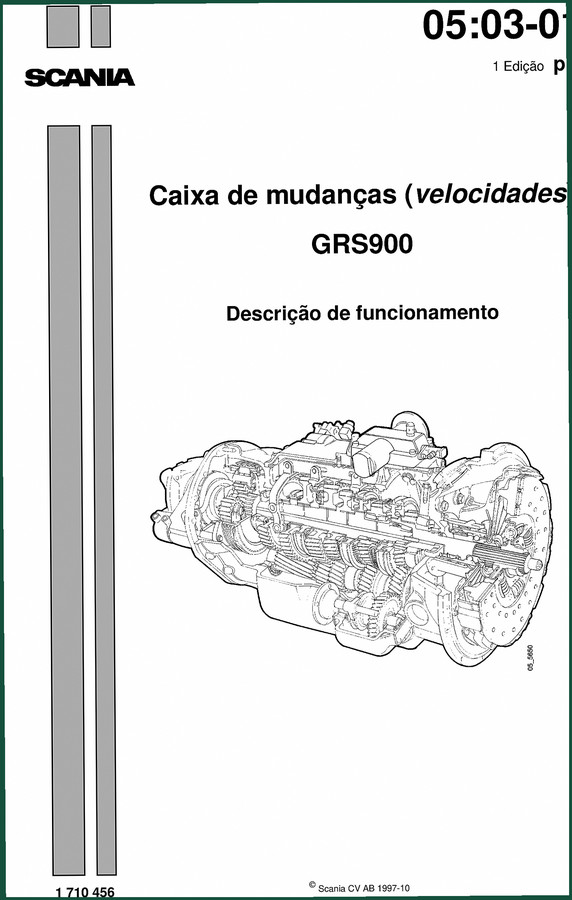
Scania GRS900 1997 Technical Manual – Factory Gearbox Specs
Original price was: $45.00.$30.00Current price is: $30.00.
Factory Scania GRS900 1997 Technical Manual: 23 pages covering gearbox operation, splitter/range valves, and specifications for professional diagnostics.
Description
Scania GRS900 1997 Technical Manual – Factory Description of Operation
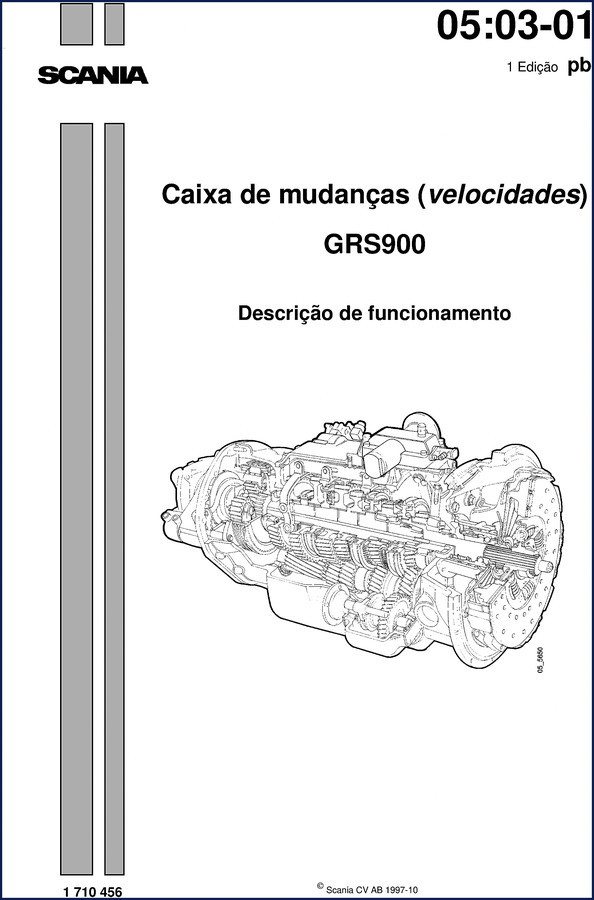
If you are cracking open a GRS900 transmission and you have not read through the function description first, you are asking for trouble. I have pulled more of these boxes apart than I care to count, and the difference between a job that goes smooth and one that ends with a call to the parts counter is knowing exactly how the splitter, range, and main box interact. This 23-page Scania GRS900 1997 Technical Manual is the OEM factory document Scania issued in 1997. Not some aftermarket translation that leaves out the critical valves. Not a reprint with blurred diagrams. This is the real thing, in Portuguese, and it gets straight into the guts of the GRS900.
Let me tell you what you are actually buying. It is the original factory-published manual with part number 1 710 456, edition 05:03-01. Twenty-three pages, no fluff, no filler. Every page pulls its weight. The entire document is a description of operation – the how and why behind every shift, every synchronizer, every valve. If you have tried to diagnose a splitter that will not engage using a generic chassis manual, you know the pain of chasing ghost problems. This manual kills the guesswork because it tells you the sequence of air and mechanical action in plain text backed by Scania engineering.
Generalidades – What the GRS900 Actually Is
Page 3 lays out the architecture. The GRS900 is a 14-speed transmission built around a 3-speed main box with an integrated splitter and an ultra-low gear, plus a planetary range section. The range gives you a low and high band. You run through the gears in low range, then flip to high and run them again. Each gear splits, giving you 12 forward speeds. In low range there is an ultra-low that also splits, making 14 total. The manual shows a simple schematic with labeled components – input shaft, output shaft, countershaft, selector housing, and the splitter actuator. No guesswork about which is which. If you are rebuilding one of these, read that section twice. It saves you from mixing up the shift sequence.
Caixa de Mudanças Principal – Main Gearbox Shafts and Layout
There is a whole chapter on the main box – primary shaft, secondary shaft, intermediate shaft, and reverse idler. The manual walks through each shaft’s role and how the gears are positioned. For example, the secondary shaft carries the main gears, and the intermediate shaft drives the splitter. You get a clear mental picture of the power flow. This is not a service manual with torque specs (those come in the specifications section later), but it is the foundation you need before you touch any fasteners. If you are a DIYer who has never worked on a Scania truck, start here. Professionals: skip the assumptions and read it anyway. I have seen experienced mechanics waste hours because they assumed the splitter shifted the same way as an older model. It does not. The manual spells out the difference.
Sincronização – Single and Double Synchronizer Explained
The synchronizer section (page 7) breaks down the single-cone and dual-cone sync systems used in the GRS900. The manual explains how the splitter uses a single synchronizer while the main gears use a dual-cone setup. It covers the engagement sequence – how the output shaft speed matches the gear before the dog clutch slides home. If you have ever stripped a synchronizer because you forced a shift, you understand why this matters. The manual gives you the theory, not just a parts list. After reading this, you will know why certain shifts are blocked when the air pressure is low. That knowledge alone can keep you from dropping the transmission for a problem that is actually in the air system.
Faixa de Marchas (Range) e Splitter – Valve Logic and Neutral Locks
This is where most aftermarket documentation falls apart. The GRS900 uses a command valve for splitter/range, a neutral position valve (3/2 valve), and a splitter lock valve. The manual diagrams the air circuits and explains the logic: the neutral valve prevents the truck from taking off in gear, and the splitter lock valve stops the splitter from shifting under load. I have had to rescue a fleet truck where a previous tech bypassed the neutral valve because he did not understand its purpose. That truck was one bump away from driving itself through a shop wall. The factory manual explains the safety function in clear terms – not just what the valve does, but why it exists. If you are wiring or plumbing a replacement, you need this chapter. Page 13 onward covers the specific valve functions and the inductive speed sensor with its overload protection. That sensor is a common failure point. The manual describes its operation and how it interfaces with the control unit.
Sistema de Lubrificação – Oil Flow and Cooling
The lubrication system section (page 18) is short but essential. The GRS900 relies on a pump that draws oil from the sump and distributes it to the bearings and synchronizers. There is no external cooler listed in this description, but the manual states the oil capacity and the recommended viscosity. For winter operation in North America, you need to know the correct grade, or the splitter will hang up in cold weather. The manual gives those specs in the Especificações section (page 22). If you are doing a fluid change, look at page 22 for the approved oils. Do not guess.
Troca de Marchas – Power Flow for Every Gear Combination
Pages 19 through 21 list every gear combination – 2nd and 5th with splitter high, 1st and 4th with splitter low, ultra-low in both splitter positions, reverse with splitter high and low, and 3rd and 6th in both splitter positions. Each combination shows the torque path through the main shaft, countershaft, and planetary section. This is the cheat sheet for diagnosing a gear that disappears. If 6th gear works but 3rd does not, the splitter is fine, but the main box engagement has an issue. The manual makes that obvious. I keep a copy of this page taped to my toolbox.
3 Reasons to Choose OEM Documentation Over Aftermarket
First, the specs are original Scania. Aftermarket books often transcribe torque values wrong because they convert units poorly. This manual uses the factory metric values. Second, the diagrams are scans of the actual Scania drawings, not redrawn by someone who does not understand the valve function. Third, this manual includes the original index and page numbering. You can reference it with confidence during a phone call to a dealer. If you need related Scania manuals, check out Scania ZF 8098 Power Steering Gear Function and Work Description, Scania Coordinator Generation 3 Function Description, and Scania Alternator and Battery Technical Manual. For general background on how a manual transmission operates, you can read the Manual Transmission article on Wikipedia. But for the GRS900 specifically, there is no substitute for the factory document.
Does This Manual Cover the Fuel System?
No. This is strictly the transmission description of operation. No engine, no chassis, no electrical beyond the shift controls. If you need fuel injection specs, look elsewhere.
What Torque Values Are Listed?
Page 22 has the Especificações section. It lists tightening torques for the main components – input shaft nut, countershaft nut, range section bolts. All values are in Newton-meters. For example, the main shaft nut is 650 Nm. Convert to foot-pounds if you must, but use a chart. Do not estimate. Also listed are oil capacities: 12.5 liters for the standard sump, and the recommended oil viscosity. These are the numbers you trust because they came from Scania, not a third-party compiler. If you are a professional mechanic, you already know the pain of stripping a range section bolt because the aftermarket book was off by 20 Nm. That stops here.
Is This Manual in English?
No, the original factory manual is in Portuguese. That is what you get – the same PDF the Brazilian Scania dealers used. However, the diagrams, numbers, and system descriptions are language-independent. The technical terms (splitter, range, synchronizer) are mostly cognates. If you cannot read Portuguese, you can still follow the illustrations and the torque specs. For the valve logic descriptions, you may need a translator app. That is a small price for factory accuracy. I have used this manual for years despite not speaking Portuguese. The diagrams tell the story.
Can I Print This Manual?
Yes. The PDF is 23 pages, no copy protection. You can print it, laminate the pages you need most, and keep them in the shop. I recommend printing the power flow diagrams and the specification page. Those two pages save you more time than any aftermarket binder. When you access the factory manual, you own the content for personal use. Put it on a tablet or print it – either way, you have the correct information at your fingertips.
If you are serious about working on a Scania GRS900, you need this factory document. Access the Factory Manual now and save yourself the aggravation of chasing bad data.
- Does This Manual Cover the Fuel System?
- No. This is strictly the transmission description of operation.
- What Torque Values Are Listed?
- Page 22 has the Especificações section. It lists tightening torques for the main components – input shaft nut, countershaft nut, range section bolts. All values are in Newton-meters. For example, the main shaft nut is 650 Nm. Convert to foot-pounds if you must, but use a chart. Do not estimate. Also listed are oil capacities: 12.5 liters for the standard sump, and the recommended oil viscosity. These are the numbers you trust because they came from Scania, not a third-party compiler. If you are a professional mechanic, you already know the pain of stripping a range section bolt because the aftermarket book was off by 20 Nm. That stops here.
- Is This Manual in English?
- No, the original factory manual is in Portuguese. That is what you get – the same PDF the Brazilian Scania dealers used. However, the diagrams, numbers, and system descriptions are language-independent. The technical terms (splitter, range, synchronizer) are mostly cognates. If you cannot read Portuguese, you can still follow the illustrations and the torque specs. For the valve logic descriptions, you may need a translator app. That is a small price for factory accuracy.
- Can I Print This Manual?
- Yes. The PDF is 23 pages, no copy protection. You can print it, laminate the pages you need most, and keep them in the shop. I recommend printing the power flow diagrams and the specification page. Those two pages save you more time than any aftermarket binder.
Additional information
| Brand | Scania |
|---|---|
| Language | English |
3 reviews for Scania GRS900 1997 Technical Manual – Factory Gearbox Specs
You may also like…
-
Sale!
Scania CP12 1995 Diagnostics Manual – Bosch ABS/TC System
Original price was: $73.50.$50.00Current price is: $50.00. -
Sale!
Scania T cab 11-16 Litre 2002 Repair Manual – Fuel System Specs
Original price was: $72.60.$60.00Current price is: $60.00. -
Sale!
Scania Comfort Shift, CS 1997 Service Manual – 67 Pages
Original price was: $69.50.$50.00Current price is: $50.00. -
Sale!
Scania 4-series 1999 Service Manual – Factory ABS/TC Diagnostics
Original price was: $70.00.$50.00Current price is: $50.00.
Related products
-
Sale!

1996 Operators Manual – International 1000-4000 Series (246 pages)
Original price was: $15.28.$9.99Current price is: $9.99. -
Sale!

Technical Manual – International DT 530 & HT 530 (118 Pages)
Original price was: $37.00.$25.00Current price is: $25.00. -
Sale!

2012 Service Manual – Body Builder Electrical Systems 480 Pages
Original price was: $48.28.$34.00Current price is: $34.00. -
Sale!
1992 Electrical Schematic – OEM Wiring Diagrams for International 1000-3800
Original price was: $24.48.$18.00Current price is: $18.00.
Michael T. –
This is just what I required. The scan is high-quality and well indexed. Every wiring layout is provided for Scania GRS900. I will definitely buy again.
Robert M. –
Excellent quality! Immediate link after checkout process. Every torque spec is included for Scania GRS900. Saved my weekend project! Thanks.
Thomas B. –
Five stars! Instant access after checkout. Every torque spec is provided for Scania GRS900. Highly recommended for mechanics.