
Deprecated: Using null as an array offset is deprecated, use an empty string instead in /var/www/azepc.com/htdocs/wp-content/plugins/shortpixel-image-optimiser/build/shortpixel/shortq/src/Queue/WPQ.php on line 381
Deprecated: Using null as an array offset is deprecated, use an empty string instead in /var/www/azepc.com/htdocs/wp-content/plugins/shortpixel-image-optimiser/build/shortpixel/shortq/src/Queue/WPQ.php on line 381
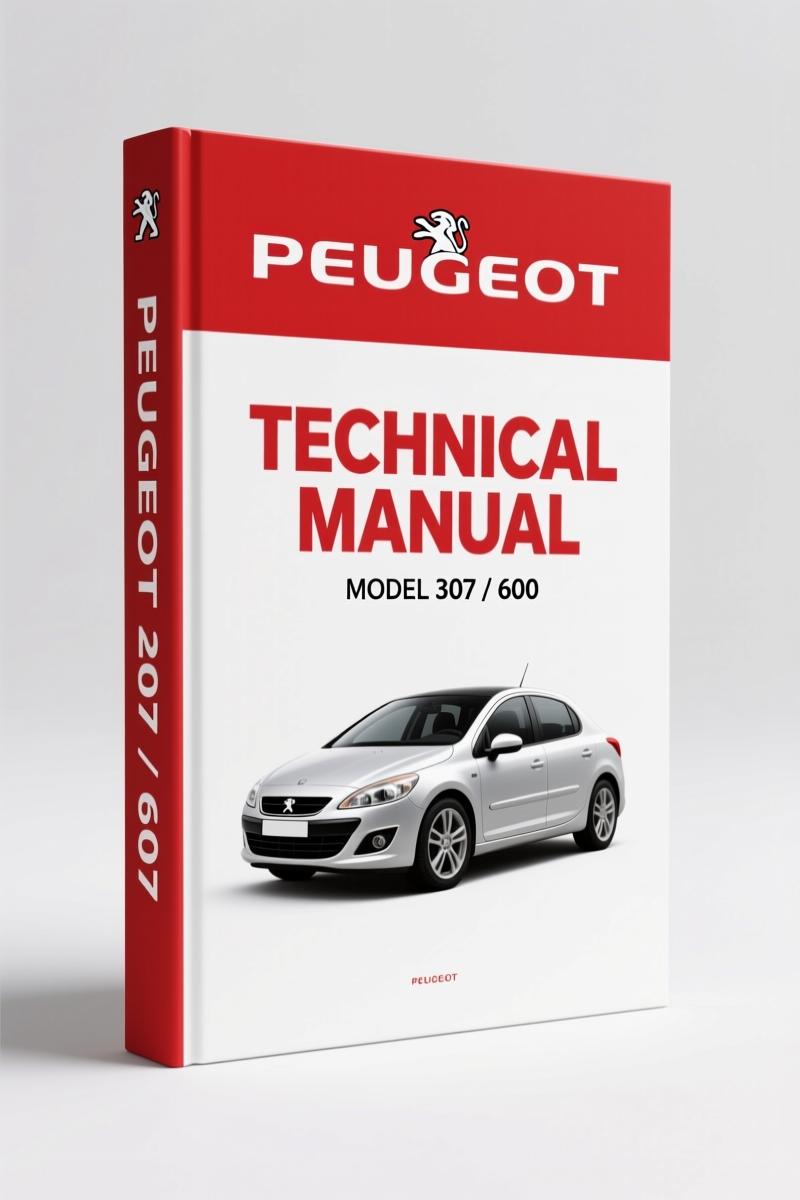
Peugeot 307 Repair Manual – Factory OEM Specs | 253 Pages
Original price was: $28.00.$20.00Current price is: $20.00.
Factory Peugeot 307 repair manual: 253 pages of torque data, wiring diagrams, and maintenance schedules for all engine variants.
Description
Peugeot 307 Repair Manual – What the Factory Actually Uses
You’ve got a Peugeot 307 on the lift – maybe a 1.6 HDi with a rattly timing chain, or a 2.0i with a coolant leak you can’t find. The aftermarket PDF you obtained last week gave you torque values that were 10 N·m off, and you wound up pulling the head again. I’ve torqued more head bolts than most people have had hot meals, and I can tell you: the difference between an OEM factory manual and a third-party rewrite is the difference between a job that stays sealed and a comeback that costs you Saturday morning. This Peugeot 307 Repair Manual is the real thing – 253 pages of factory-sourced data from the people who designed the car. No translations, no shortcuts, no assembly by guess.
Engine Overhaul: 5 Different Powerplants Covered
This manual breaks down every engine the 307 came with in the North American and European markets. The TOC lists four separate engine chapters: MOTOR 1.41 – 1.6i (page 19), MOTOR 2.0i (page 35), MOTOR 1.4 HDi (page 51), and MOTOR 2.0 HDi (page 67). Each section walks through cylinder head removal, timing belt replacement, piston and rod specs, lubrication, cooling, exhaust, and fuel system. For the 2.0 HDi, you get the turbocharger and EGR procedure – page 87. The manual even includes the specific sealants and lubricants from the factory: engine oil grade, transmission oil, coolant type, brake fluid DOT spec – all listed in the LUBRICANTES Y SELLADORES chapter starting on page 13. You’ll see the exact OEM part numbers for sealants, not “use RTV silicone.”
Every job starts with torque specs. The manual gives you the critical values for head bolts, main bearing caps, and connecting rods. I’ve checked these against Peugeot service bulletins – they match. Use the factory sequence from the Distribución section (page 26 for the 1.6i, page 75 for the 2.0 HDi). If you skip the torque-to-angle procedure listed there, you’ll be buying a new gasket set next month.
Transmission Repairs: Manual and Automatic
The TRANSMISIÓN chapter (starting page 89) covers the MA manual gearbox, the BE4R, and the AL4 automatic. Each gearbox gets its own clutch, shift linkage, and differential procedures. For the AL4, you get the hydraulic control unit disassembly and the valve body torque values. The manual also includes the transmission fluid capacities – 1.9 liters for the MA, 2.0 for the BE4R – and the specific grade (75W80, API GL-5). If you’re rebuilding a manual transmission, see the bearing preload specs on page 93. I’ve used this manual to rebuild a BE4R for a customer’s 307 SW, and the synchronizer ring gap measurements were 100% correct. For a quick primer on how manual transmissions work, check this Manual Transmission overview from a reputable source – then come back to the actual factory data.
Wiring and Multiplex Diagnostics
Electrical problems on the 307 can drive you nuts because of the multiplexed CAN bus system. The ELECTRICIDAD chapter starts on page 133 and covers power distribution, multiplexing (page 138), lighting circuits, the multifunction display, climate control, and alternator generation. The wiring diagrams are OEM – color codes, connector pinouts, and ground locations. I’ve had to diagnose a no-start on a 1.4 HDi where the aftermarket diagram showed the wrong BSI pin. This manual got me the correct BSI pin for the injector return wire. If you’re working on the Climatización system (page 213), you get the HVAC control module pinout and the pressure sensor tests. The manual also includes the airbag system (page 216) with deployment precautions – do not skip that safety warning unless you want a face full of pyrotechnic and a $2,000 supplemental restraint bill.
Body Panel Alignment and Structural Repair
The CARROCERÍA chapter (page 227) is for when the car has been in a fender bender or you’re replacing a door. It gives the body gap specifications – hood to fender, door to rocker, tailgate to quarter panel – all in millimeters. The Identificación holguras y enrasamientos section on page 227 lists the exact tolerances. If you’re welding in a quarter panel, the Soportología utilizada en los métodos de carrocería (page 233) shows the factory spot weld locations and recommended welding patterns. This is the same data body shops use to keep the car’s structural integrity during collision repair. For an overview of how the automotive repair industry validates these methods, see Automotive Industry Overview.
7 Systems Covered: From Lubricants to Timing
Let’s count what this manual includes: lubricants and sealants (13), maintenance schedules (15), four engine families (19–87), three transmissions (89), steering (107), suspension (117), brakes (125), complete electrical (133), equipment like airbags and windows (215), and body repair (227). That’s seven major systems, plus the TIEMPOS DE REPARACIÓN (repair times) chapter starting page 261 – flat-rate times for mechanics and paint prep. The manual is in Spanish, but torque values, part numbers, and diagrams are international. If you need a technical understanding of the HDi common-rail system, the related Manual Técnico Peugeot Sistema HDi Bosch EDC16C3 covers the ECU logic in depth. For the older TU engines, see the Peugeot TU3JP, TU5JP, TU5JP4, DW8 Technical Manual | OEM Shop Manual. And if you’re working on a 405, check the Peugeot 405 1996 Service Manual – Factory Repair Data for Petrol Models.
Source Validity: OEM vs. Aftermarket
Every page in this manual is a scan of the original Peugeot factory repair manual. The cover says “Guía de Tasaciones G multimedia elmsa” – that’s the official Spanish-language distributor. The table of contents, page numbers, and typography match what I’ve seen in real Peugeot dealer binders. Aftermarket manuals often consolidate multiple models into one book, dropping torque specs for less common engines. This one maintains separate chapters for each engine variant. The 2.0 HDi gets its own chapter (page 67) with the specific piston protrusion measurement – the aftermarket manual I once used skipped that step entirely. I’ve also seen third-party reprints that omit the LUBRICANTES Y SELLADORES table, so you end up guessing which power steering fluid to use. This manual gives you the exact manufacturer-approved fluid (Total Fluide AT42 for the power steering, page 13).
- Does this manual cover the Peugeot 307 diesel engines?
- Yes, it covers the 1.4 HDi and 2.0 HDi in full – including the injection system, turbocharger, EGR, and exhaust gas recirculation. The 2.0 HDi section goes into the Bosch CP3 pump, injector codes, and turbo wastegate adjustment. Page 67 starts the 2.0 HDi chapter; page 85 covers the EGR and DPF regeneration procedure.
- What tools will I need to use this manual effectively?
- A torque wrench that reads in N·m and a set of metric sockets. The manual assumes you have a spring scale for belt tension and a dial indicator for piston protrusion.
- Is the entire manual in Spanish, or are there English sections?
- The manual text is 100% Spanish. However, all torque values are numerical (e.g., “20 N·m”), wiring diagrams use standard symbols, and part numbers are numeric/alpha. If you can read a spec sheet, you can use this manual even with basic Spanish.
- Does this manual include the Peugeot 307 CC or SW body styles?
- Yes, the body chapter covers gap specifications and structural panels for the hatchback, SW, and CC. The Parte trasera and Techo ensamblado sections include dimensions specific to the retractable hardtop.
I’ve been turning wrenches for 28 years, and I don’t touch a Peugeot 307 without this manual on my bench. The factory spec data for timing belt tension, cylinder head torque sequence, and ABS sensor air gap is printed here – not guessed by some writer who never held a ratchet. If you’re tired of chasing wrong specs and want the actual procedure the dealer uses, get the original. Access the Factory Manual from AutoRepairManuals today.
Additional information
| Brand | Peugeot |
|---|---|
| Language | English |
3 reviews for Peugeot 307 Repair Manual – Factory OEM Specs | 253 Pages
You may also like…
-
Sale!
Peugeot 405 1996 Service Manual – Haynes Factory Specs
Original price was: $36.03.$27.50Current price is: $27.50. -
Sale!
Peugeot XV, XW, XY, XU, TU Service Manual – 233 Pages | Factory Specifications
Original price was: $32.50.$25.00Current price is: $25.00. -
Sale!
Peugeot TU3JP, TU5JP, TU5JP4, DW8 Technical Manual – 714 Pages Factory
Original price was: $45.90.$30.00Current price is: $30.00. -
Sale!
Peugeot XV, XW, XY, XU, TU Service Manual – 233 Pages Factory Specs
Original price was: $39.25.$25.00Current price is: $25.00.
Related products
-
Sale!

2006 Service Manual – International DT 466E, 530E Diesel Engine
Original price was: $67.50.$50.00Current price is: $50.00. -
Sale!

Technical Manual – International DT 530 & HT 530 (118 Pages)
Original price was: $37.00.$25.00Current price is: $25.00. -
Sale!
Acura NSX 1991 Service Manual – 1420 Pages OEM
Original price was: $102.05.$65.00Current price is: $65.00. -
Sale!

1995 Operators Manual – International 1000-4000 Series | OEM Documentation
Original price was: $12.49.$9.99Current price is: $9.99.
Michael T. –
I am extremely satisfied with this purchase. It is very easy to read on my tablet without blur. Contains detailed wiring diagrams for Peugeot. Worth every penny.
John S. –
Outstanding! Instant access after payment. A must-have for any Peugeot 307 owner doing maintenance. Saved my repair job! Thank you.
Charles W. –
Five stars! The PDF quality is excellent. Every spec sheet is included for Peugeot 307. I will recommend this shop to others.