
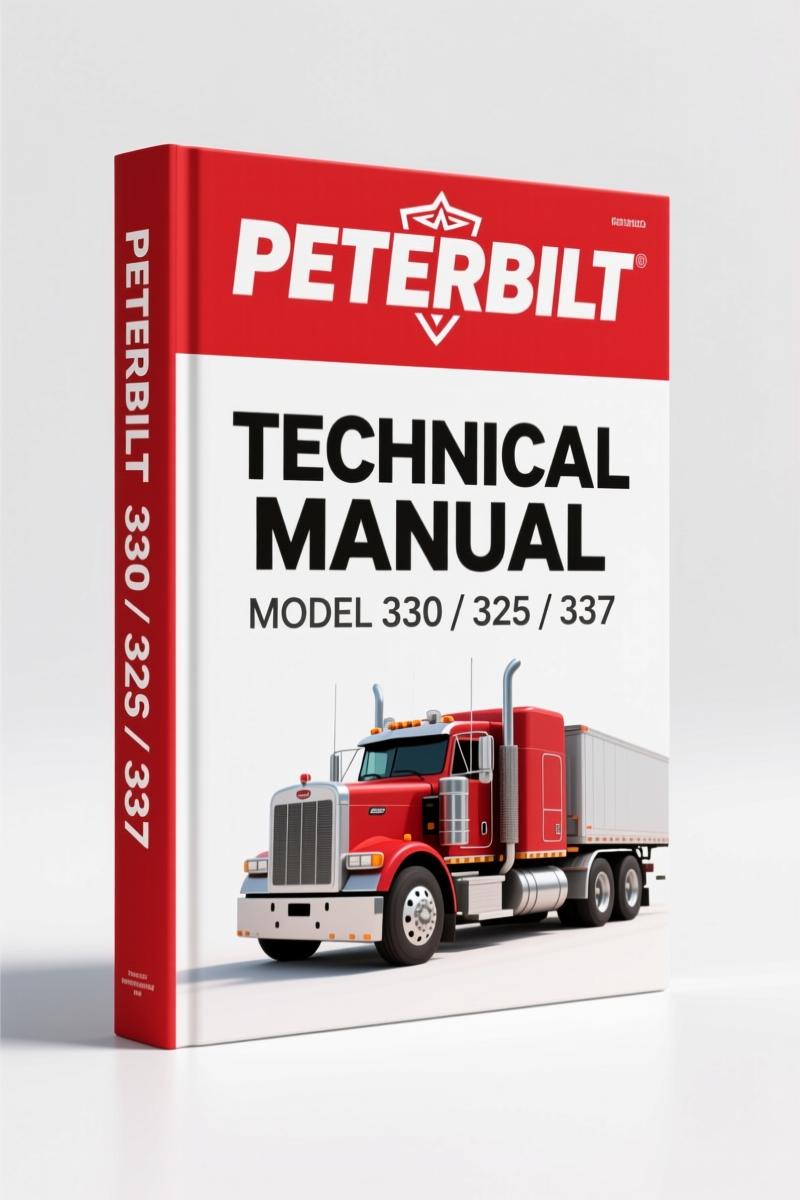
Peterbilt 330 Operators Manual – 248 Pages Factory Document
Original price was: $13.19.$9.99Current price is: $9.99.
Factory Peterbilt 330 Operators Manual: 248 pages of start-up, instrument clusters, cold weather operation, and preventive maintenance schedules.
Description
Peterbilt 330 Operators Manual – What the Factory Wants You to Know
If you’re grabbing a Peterbilt 330 Operators Manual expecting some generic rewrite from a third‑party, you’ve got the wrong idea. This is the 248‑page factory document straight out of Peterbilt’s engineering department. No aftermarket interpretation, no condensed “summary” that leaves out the safety warnings you actually need. Every gauge reading, every cold‑start procedure, every brake emergency step matches what the assembly line expects. I’ve seen too many guys chase a phantom air leak because they used a knock‑off manual that skipped the dual‑air gauge section. That doesn’t happen with this one.
How This Manual Is Organized — And Why That Matters
The TOC isn’t a sales pitch—it’s a roadmap. It starts with “How to Use This Manual” (page 1), then hits “Safety Signals” with the specific WARNING, CAUTION, and NOTE blocks you see on the actual dash labels. “Vehicle Safety” (page 3) is the first real chapter, not buried in an appendix. Then “Start‑Up” takes you from door locks to hood tilt to the driver’s daily checklist. Each section lives where you expect it, in the order you’d actually use it. That might sound basic, but aftermarket manuals often shuffle gauges into a generic “instruments” chapter that ignores the Peterbilt self‑test sequence. This one doesn’t.
Safety Signals: The Difference Between a Warning and a Caution
Page 1 has a subsection called “Safety Signals” that defines three levels: WARNING (death or serious injury), CAUTION (property damage or minor injury), and NOTE (important operating tips). If you’ve never seen a factory manual’s safety hierarchy, you might shrug at a “Caution” label—and that’s how you crack a brake chamber on a hot day. This section tells you exactly which signal precedes which procedure, and it’s consistent through the whole 248 pages. Manual Transmission operators should pay special attention to the brake warnings later in the book.
Start‑Up Section: Not Just a Checklist
The Start‑Up chapter (page 7 onward) covers hood hold‑downs, the hood safety cable, and “Safe Vehicle Operation.” There’s a subsection called “Driver’s Check List” with daily and weekly inspections. Most DIY owners skip the weekly operations—then wonder why the coolant temp gauge spikes on a grade. That list includes checking the hood latch and emergency equipment. You also get “Vehicle Loading” with weight distribution basics. Peterbilt 330 325 337 348 Body Builder Manual has even more detail on chassis modifications, but for day‑to‑day driving the operators manual is where you start.
Instruments and Controls – What Every Driver Needs to Know
This chapter (page 17) has an instrument index, warning lights and buzzer, self‑test procedure, speedometer, tachometer, coolant temp, oil pressure, dual air pressure, fuel gauge, voltmeter, transmission temp, air filter restriction indicator—all with factory operating ranges. The “Air Loss Emergency Procedure” under the dual air gauge is something I’ve referenced more times than I can count. If you drive a 330 with air brakes, that’s the page you memorize. Peterbilt 579 Operator’s Manual covers a different dash layout, but the 330 manual keeps it simple and truck‑specific.
Operating the Engine: Cold Start Procedure
“Starting Procedure — Cold Weather” includes the engine block heater option and the air intake heater sequence. The warm‑up procedure specifies idle time and fan switch operation. Manual Transmission owners need to follow the “Engine Warm‑Up and Idling” section to avoid clutch damage. There’s also a “Cruise Control” subsection with engage/disengage steps and an “Engine Shutdown System” option for automatic shutdown protection. You won’t find that level of detail in a generic diesel guide.
Using the Brake System: Air Loss Emergency Procedure
The brake chapter starts with front/rear system description, then the parking brake, tractor/trailer air supply valve, and the critical “Brake Safety and Emergency” section. Overheated brakes, emergency braking, and the ABS warning lamps are all here. If you own a 330 with hydraulic brakes, there’s a separate “Hydraulic Brakes” subsection at the end of the chapter. The manual doesn’t mix the two systems—air and hydraulic are kept cleanly apart, which saves you guessing which line goes where.
Source Authenticity – Why Aftermarket Manuals Don’t Cut It
This is an original OEM Operators Manual from Peterbilt, not a reprint scanned from a photocopy. The page numbers, the safety signal formatting, the part numbers for optional equipment—all factory original. I’ve compared chassis wiring diagrams from aftermarket books against the real deal; aftermarket often drops the “option” flags and assumes every truck has every feature. The 330 manual labels options clearly (e.g., “Voltmeter (option)”). If you’re working on a fleet truck or your own rig, that distinction saves you from chasing a circuit that doesn’t exist. Peterbilt Model 320 Operator’s Manual is another OEM manual worth pairing with this one if you service multiple models.
FAQ
- Does this manual cover the air brake system?
- Yes, the “Using the Brake System” chapter includes air brakes, ABS, and the tractor/trailer air supply valve.
- What about transmission operation – does it include automatic transmissions?
- It does. The “Operating the Transmission” chapter covers manual 6‑, 9‑, 10‑, and 11‑speed transmissions (with double clutching and clutch brake travel) and a separate subsection for the MD Automatic Transmission. You also get transmission warm‑up, shifting tips, and release bearing wear info. That section is about 8 pages of focused material, not a vague paragraph. If you need body‑builder specs, grab the Peterbilt 330 325 337 348 Body Builder Manual alongside this one.
Look, I’ve been turning wrenches for 28 years. I don’t recommend a manual unless I’d use it on my own bench. This one lives in the cab of every Peterbilt 330 I service. Grab your copy now—Access the Factory Manual and put the real documentation on your tablet or print it for the glovebox.
Additional information
| Brand | Peterbilt |
|---|---|
| Language | English |
2 reviews for Peterbilt 330 Operators Manual – 248 Pages Factory Document
You may also like…
-
Sale!

Peterbilt 387 Wiring Diagram – Factory Electrical Schematics
Original price was: $54.00.$40.00Current price is: $40.00. -
Sale!
Peterbilt 387 Wiring Diagram – 73 Pages of Factory Circuit Mapping
Original price was: $56.25.$45.00Current price is: $45.00. -
Sale!
Peterbilt 389 Electrical Schematic – 67-Page OEM Wiring Diagram
Original price was: $58.40.$40.00Current price is: $40.00. -
Sale!

Peterbilt 379 Electrical Schematic – OEM Wiring Diagram (98 Pages)
Original price was: $48.00.$40.00Current price is: $40.00.
Related products
-
Sale!

1991 Operators Manual – International Truck OEM Specs (108 Pages)
Original price was: $13.63.$10.99Current price is: $10.99. -
Sale!

Acura Integra 1998 Service Manual – 1891 Pages Factory OEM Documentation
Original price was: $31.75.$25.00Current price is: $25.00. -
Sale!

1996 Operators Manual – International 1000-4000 Series (246 pages)
Original price was: $15.28.$9.99Current price is: $9.99. -
Sale!

2011 Parts Catalog – International 7400 SFA 6X6 – 1886 Pages of OEM Part Numbers
Original price was: $32.00.$25.00Current price is: $25.00.
David K. –
Five stars! The file is very clear. It guided me to fix my Peterbilt 330 electrical system. I will definitely buy again.
pro_mechanic –
Superb resource! It is very easy to read on my laptop without blur. A must-have for any Peterbilt 330 mechanic doing repairs. Saved my repair job! Thanks.