
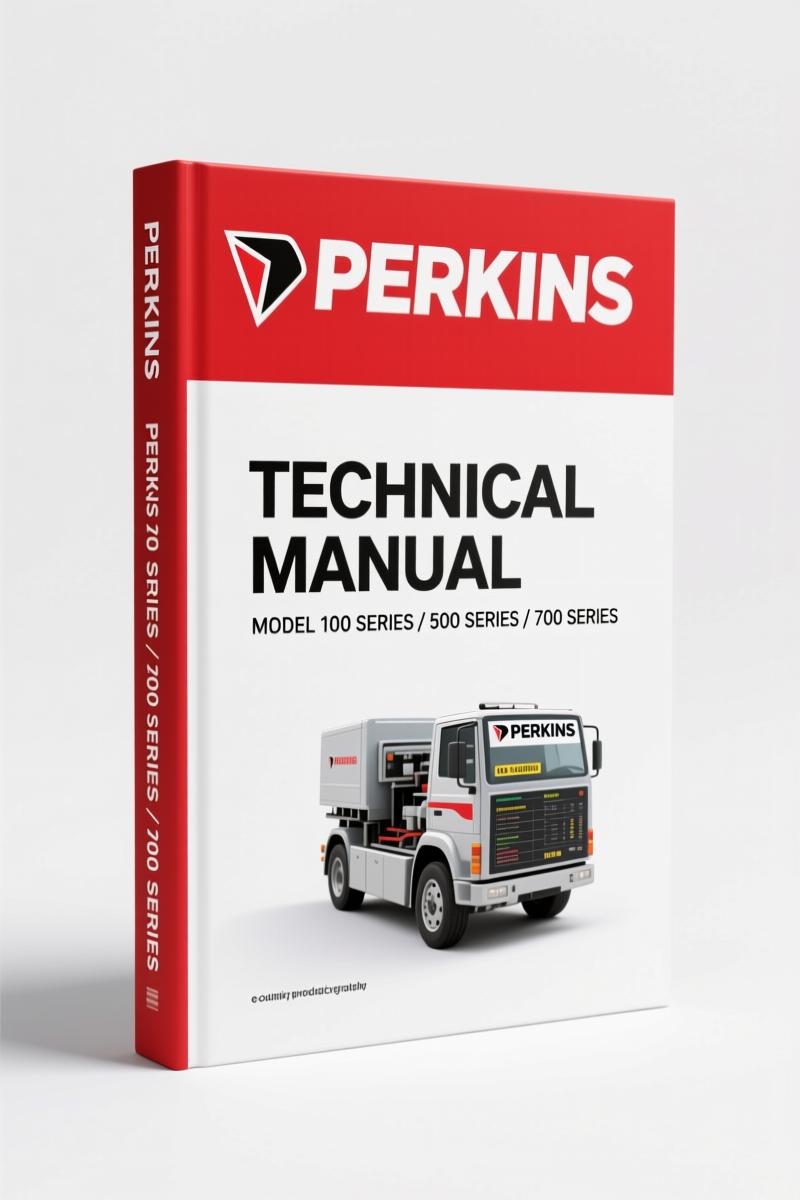
Perkins 1000-900 Series 1997 Technical Manual – Factory Specs
Original price was: $38.00.$25.00Current price is: $25.00.
OEM Perkins Technical Manual for 1000, 500, 100, 700, 900 Series engines. 35 pages of factory torque, fluid, and fault data.
Description
Perkins 1000 Series, 500 Series, 100 Series, 700 Series, 900 Series 1997 Technical Manual
If you’re pulling a Perkins engine and you don’t have the factory data booklet in your hand, you’re covering ground blind. I’ve seen guys snap head bolts because they used a generic torque chart from a forum. This 35-page Perkins 1000 Series, 500 Series, 100 Series, 700 Series, 900 Series 1997 Technical Manual is what Perkins gave its own shops in 1997. It covers the 100 Series, the Prima/500 Series, the 700 Series, the 900 Series, and the Phaser/1000 Series – all engines up to 8.7 liters (530 cu in). No reprints, no aftermarket guesswork.
General Information: Safety, Fault Finding, and Engine Numbers
Section 1 of this Technical Manual starts with the basics you need before you touch a wrench. The engine number location guide on page 1.05 tells you exactly where to find the serial number on each series – 100 Series, 500 Series, etc. After that comes the basic fault-finding guide (page 1.08) and a dedicated turbocharger fault guide. General safety precautions are listed on page 1.12. If you’re a DIYer working on a Perkins in your home garage, start here. It saves you from chasing the wrong problem.
Engine Data: Maintenance Schedules and Torque Values
Open to page 2 and you get the meat: maintenance schedules, basic technical data, fuel pump codes, and the recommended torque tensions. The cylinder head torque sequence is on that same page – do not skip it. I’ve seen head gaskets fail because someone tightened in the wrong order. This booklet gives you the sequence for each engine family. For the 1000 Series, the torque values are specific to the Phaser platform. Use a calibrated torque wrench and follow the steps in the manual.
Cylinder Head Torque Sequence: Why Sequence Matters
Sequence is everything on a multi-cylinder diesel. The Perkins factory procedure lists the order of tightening and the torque increments. Page 2 shows the pattern. If you’re doing a head gasket on a 700 Series, you need that sequence. Aftermarket manuals often simplify it to a single torque value – that’s how you warp the head. Stick to the factory data.
Turbocharger Fault Guide: When Boost Drops
The turbocharger fault guide on page 1.10 walks through common issues: oil leaks, bearing wear, boost loss. It’s a systematic checklist. For a home garage mechanic, this is gold. You don’t need to pull the turbo to diagnose – the guide tells you what to check first. Pair it with the compression test data in Section 3 (page 3) to rule out internal engine problems.
General Data: Fluid Specs, Conversion Tables, and Compression Test Data
Section 3 rounds out the Technical Manual with specification of engine fluids, standard torque settings, conversion tables, thermostat ratings, and compression test data. If you’re rebuilding a 100 Series or a 500 Series, you need the correct oil viscosity and coolant specs. The conversion tables help when your tools are in imperial and the brochure uses metric. Compression test data gives you the acceptable range for each engine family. Write it down before you start cranking.
One thing this manual does not cover: the 1300 Series (Peregrine). That’s in a different booklet. For the 1000 Series, 500 Series, 100 Series, 700 Series, and 900 Series, this is the doc you want
For a deeper dive into a specific family, grab the companion service manuals. The Perkins 1000 Series 1995 Service Manual has full overhaul procedures. The Perkins Prima and 500 Series Workshop Manual covers the 500 Series in detail. If you need later updates, the Perkins 1000 Series 2000 User Manual – Factory Specs for 4 & 6 Cylinder Engines includes newer revisions. Outside this engine manual, you might be working on a Manual Transmission that mates to the bellhousing – check the flywheel dimensions in Section 2. For general knowledge, a Manual Transmission rebuild guide is a different animal, but the torque specs here apply to the engine side.
Short paragraph: That’s all the factory data you need for these five engine families. Nothing extra, no filler. Just the numbers that keep your Perkins running tight.
- Does this manual cover the Perkins 1300 Series?
- No. It covers up to 8.7 liters and excludes the 1300 Series.
- What is the proper cylinder head torque sequence for a Perkins 700 Series?
- The Engine Data section on page 2 includes recommended torque tensions and the cylinder head torque sequence. You need to follow the sequence in the manual exactly – aftermarket sources often get the order wrong. The booklet specifies a multi-stage tightening procedure with specific torque values for each step. Use a calibrated torque wrench and tighten in the indicated pattern. If you skip a stage or use a different order, you risk head gasket failure and warped surfaces. The sequence is unique per engine family, so do not assume it’s the same across the 100, 500, 700, 900, and 1000 Series.
Stop guessing and start using the data that Perkins engineers published. Access the Factory Manual and keep it on your workbench next to your torque wrench. You paid for the engine – now pay for the specs that keep it alive.
Additional information
| Brand | Perkins |
|---|---|
| Language | English |
3 reviews for Perkins 1000-900 Series 1997 Technical Manual – Factory Specs
You may also like…
-
Sale!
Perkins 2300, 2800 2006 Training Manual – OEM Factory Diagnostics
Original price was: $79.20.$60.00Current price is: $60.00. -
Sale!
Perkins 1104C Service Manual – Factory Specs for Electronic Diesel Engines
Original price was: $79.20.$60.00Current price is: $60.00. -
Sale!
Perkins 1106D 2007 Service Manual – OEM Factory Diagnostics
Original price was: $94.90.$65.00Current price is: $65.00. -
Sale!
Perkins RE, RF, RG, RH, RJ 2002 Workshop Manual – OEM Service Data
Original price was: $94.25.$65.00Current price is: $65.00.
Related products
-
Sale!

1992 Electrical Schematic – OEM Wiring Diagrams for International 1000-3800
Original price was: $24.48.$18.00Current price is: $18.00. -
Sale!

2011 Parts Catalog – International 7400 SFA 6X6 – 1886 Pages of OEM Part Numbers
Original price was: $32.00.$25.00Current price is: $25.00. -
Sale!
1994 Troubleshooting Manual – International 1000-4000 FBC
Original price was: $60.00.$50.00Current price is: $50.00. -
Sale!

2006 Service Manual – International DT 466E, 530E Diesel Engine
Original price was: $67.50.$50.00Current price is: $50.00.
Michael T. –
Superb resource! The text is searchable and easy to navigate. A must-have for any Perkins 1000900 mechanic doing repairs. Great value for money.
Thomas B. –
This is just what I was looking for. The document is very clear. A must-have for any Perkins 1000900 DIYer doing repairs. Great value for money.
James L. –
Five stars! Quick access after payment. A must-have for any Perkins 1000900 owner doing repairs. Saved my repair job! Thanks.