
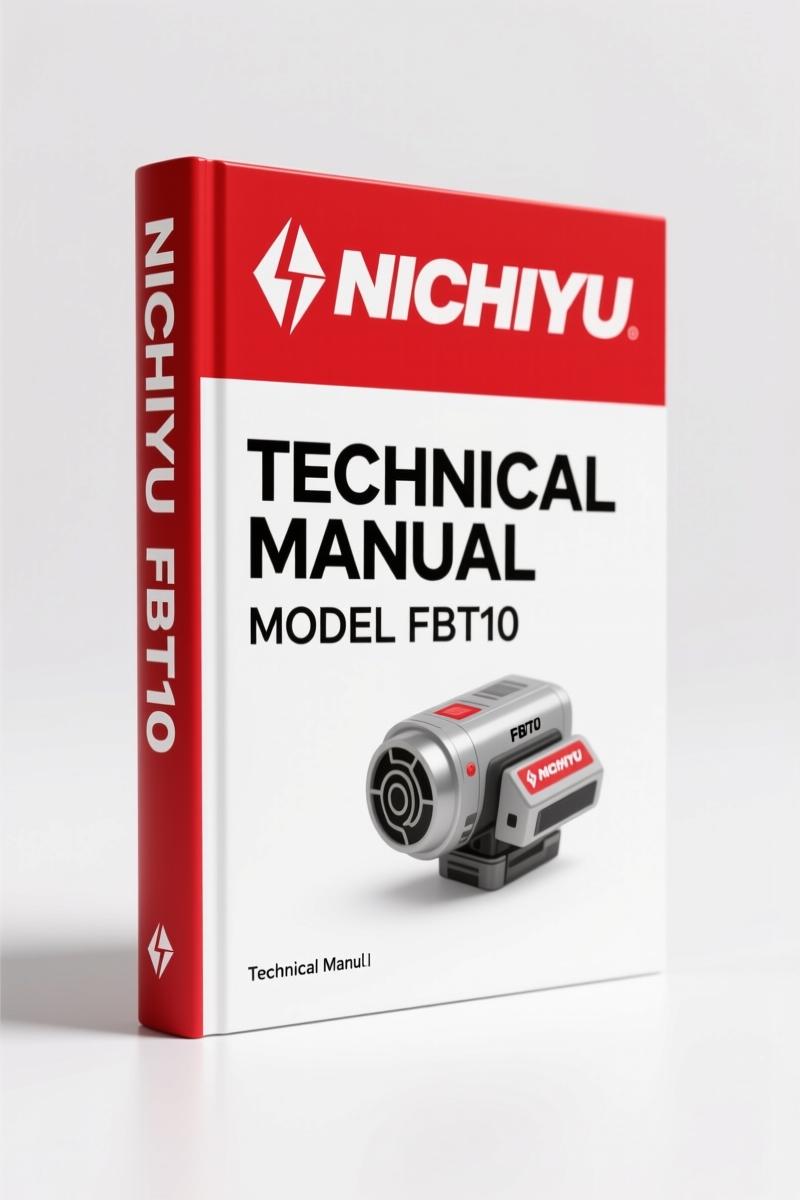
Nichiyu FBT13, FBT15, FBT18, FBT10 Troubleshooting Manual – OEM Diagnostic Data
Original price was: $40.80.$30.00Current price is: $30.00.
61-page factory troubleshooting manual for Nichiyu FBT10/FBT13/FBT15/FBT18 electric forklifts. Covers SICOS 50 controller, self-diagnosis, wiring diagrams, and fault-finding procedures.
Description
If you’ve ever thrown a parts cannon at an electric forklift that just wouldn’t drive, you know how fast that adds up. I’ve seen techs replace the entire chopper unit on a Nichiyu because they didn’t have the correct diagnostic flow. This Nichiyu FBT13, FBT15, FBT18, FBT10 Troubleshooting Manual stops that. 61 pages direct from the factory. Not a generic compilation.
FBT-50 Series: Component Layout and Features
Chapter 1 gives you the outline and feature list for the FBT-50 series. Page 1 shows you exactly where the controller, motor, and sensors sit. If you don’t know which component is which, you’ll waste time pulling the wrong panel. This section calls out every part by name and location. That matters when you’re staring at a contactor unit and need to find the I/O check terminals.
How Does the SICOS 50 Controller Adjust?
Section 2 is where most aftermarket manuals fall short. The SICOS 50 uses potentiometers and rotary switches for acceleration feel, power control, and low-speed travel. You can’t guess these settings. The manual walks you through adjustment by potentiometers (2-1) and rotary switches (2-2) with the exact steps. No “adjust until it feels right” — you get the spec. Use a V-ohm meter as described in section 5-2 to verify.
7 Key Sections for Electrical Diagnostics
The troubleshooting manual breaks down into seven logical areas: series overview (chapter 1), SICOS adjustment (chapter 2) covering potentiometers and rotary switches, new functions (chapter 3) including regenerative braking, reducing speed, power control, and acceleration feeling, safety monitor and self-diagnosis (chapter 4) with LCD display and I/O checking, connector handling (chapter 5) with correct crimping and terminal fitting, fault-finding procedure (chapter 6) with caution and analysis, and full diagrams (chapter 7) including circuit diagram, chassis wiring, harness, chopper unit, contactor unit, indicator panel, and component positions. Each section builds on the last. You don’t jump to wiring without first checking the self-diagnosis history memory in section 4-4. That’s the factory order and it saves hours of misdiagnosis. Without this structure, you risk replacing a perfectly good controller because you missed a standard I/O check.
Get the Right Diagnostic Procedures from Chapter 6
Fault-finding is where this manual earns its keep. Chapter 6 starts with a caution section (6-1) that tells you what not to do — like shorting terminals while the system is live. Then it walks you through analysis of fault cause (6-2). You follow a logical tree, not a random flowchart. Combine that with the safety monitor table on page 16, and you can isolate a bad accelerator potentiometer in minutes instead of hours.
Regenerative Braking: What the Manual Reveals
Section 3 covers new functions: regenerative braking, reducing speed of traveling, power control, and acceleration feeling. These aren’t optional features — they’re critical to proper operation. If the forklift jerks on deceleration, you need to check the regenerative braking settings. The manual tells you how to adjust them via the SICOS 50, not by swapping parts.
One more thing: aftermarket documentation almost always omits the terminal crimping procedure in section 5-4. That’s how you get intermittent faults — poorly crimped terminals. This manual includes the correct method for pulling out terminals and fitting them. That level of detail separates a factory manual from a reprint.
Why OEM Documentation Beats Aftermarket Reproductions
You can find a dozen “Nichiyu wiring diagrams” online. Most are copied from scanned copies that lost resolution. Torque specs get rounded, and pinouts shift. This manual is the original factory document. The circuit diagram, I/O check terminals, chassis wiring, harness, chopper unit wiring, contactor unit wiring, and indicator panel — all drawn to factory standard. If you’re working on a fleet of FBT10, FBT13, FBT15, or FBT18 forklifts, you need the real thing.
I’ve been in this trade 28 years. I don’t trust third-party manuals. They don’t have the safety monitor table or the self-diagnosis history memory procedure. This one does.
For related manuals that cover service and repair in more depth, see the following:
Also, if you’re unfamiliar with the difference between electric drive and Manual Transmission systems, that context helps when isolating drivetrain faults. Similarly, understanding how the controller communicates is separate from a Manual Transmission overhaul. Keep that in mind.
- What models does this manual cover?
- FBT10, FBT13, FBT15, and FBT18. That’s it.
- Does it include wiring diagrams?
- Yes. Chapter 7 includes full circuit diagrams, chassis wiring, harness diagrams, and chopper unit wiring.
- Is this the same manual dealers use?
- This is the official factory troubleshooting manual used by Nichiyu dealers and service centers. It contains the same diagnostic procedures, self-diagnosis tables, and component layouts that technicians rely on. Aftermarket manuals often skip sections like adjusting the SICOS 50 controller potentiometers or checking I/O terminals with a V-ohm meter. This one covers every step, including handling new wiring connectors and crimping terminals correctly. If you want to avoid misdiagnosis, this is the source.
- Can I use this for a different Nichiyu model?
- It is specific to the FBT-50 series. Other Nichiyu models have different control systems. Check the Nichiyu FB-70 Series Forklift Troubleshooting Manual for other series.
Stop guessing and start diagnosing with the same document the factory techs use. Access the Factory Manual now and keep it on your tablet or bench. When a lift won’t move and the LCD shows error code 2, you’ll have the answer in seconds.
Additional information
| Brand | Nichiyu |
|---|---|
| Language | English |
4 reviews for Nichiyu FBT13, FBT15, FBT18, FBT10 Troubleshooting Manual – OEM Diagnostic Data
You may also like…
-
Sale!
Nichiyu FBT13P, FBT15P, FBT18P, FBT20PN Service Manual – 154 Pages of Factory Specs
Original price was: $52.00.$40.00Current price is: $40.00. -
Sale!
Nichiyu FBR-75 2008 Troubleshooting Manual – OEM Diagnostic Data
Original price was: $58.05.$45.00Current price is: $45.00. -
Sale!
Nichiyu FBT13P, FBT15P, FBT18P, FBT20PN Troubleshooting Manual – 105 Pages of Factory Diagnostic Data
Original price was: $54.45.$45.00Current price is: $45.00. -
Sale!
Nichiyu FB10P, FB30P Workshop Manual | 97 Pages OEM
Original price was: $67.50.$45.00Current price is: $45.00.
Related products
-
Sale!
E-P Equipment R Series 2005 Operators Manual – Forklift Ops & Maintenance
Original price was: $12.49.$9.99Current price is: $9.99. -
Sale!

E-P Equipment CPCD50–CPCD100 2007 Service Manual | 92 Pages
Original price was: $34.93.$27.50Current price is: $27.50. -
Sale!

E-P Equipment CPC10/15/18N-RG26 Parts Catalog – 262 Pages OEM
Original price was: $35.00.$28.00Current price is: $28.00. -
Sale!
E-P Equipment CPCD50-CPCD100 2007 Operators Manual – OEM Forklift Specs
Original price was: $15.58.$9.99Current price is: $9.99.
Robert M. –
Excellent quality! The PDF is very clear. It guided me to repair my Nichiyu FBT13, electrical system. Highly recommended for mechanics.
William H. –
Great workshop guide. It is very easy to read on my phone without blur. Every spec sheet is included for Nichiyu FBT13,. Saves me hundreds of dollars.
workshop_guy –
This is exactly what I required. It is very easy to read on my iPad without blur. A must-have for any Nichiyu FBT13, owner doing maintenance. Saved my repair job! Thank you.
James L. –
Perfect factory service manual. Quick access after checkout. Every spec sheet is included for Nichiyu FBT13,. I will definitely buy again.