
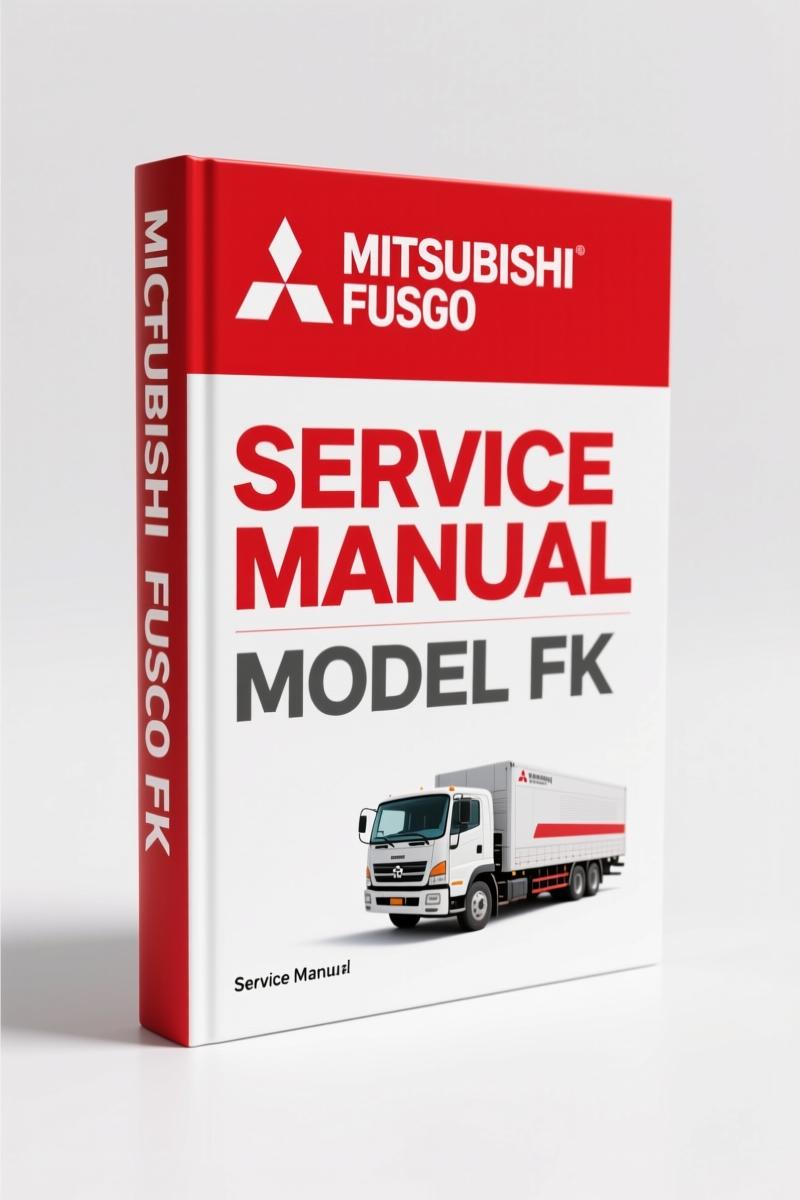
Mitsubishi Fuso FK, FM 1991 Service Manual – Factory Specs for FK & FM Trucks
Original price was: $100.10.$65.00Current price is: $65.00.
OEM service manual for 1991 Mitsubishi Fuso FK & FM trucks. 1252 pages of manufacturer-approved procedures, torque tables, and brake system data.
Description
Mitsubishi Fuso FK, FM 1991 Service Manual – Factory Documentation for Real Work
You ever pull a job off a truck and find the spec you need is missing from some aftermarket PDF that was scanned upside down? That’s not what this is. This is the Mitsubishi Fuso FK, FM 1991 Service Manual, printed off the factory floor in March 1991, all 1252 pages of it. Every torque value, every troubleshooting tree, every bleed procedure for the Brake systems – air over hydraulic and full air – came straight from the engineers who built these trucks. I’ve been turning wrenches since the late 80s, and I’ve seen enough third-party manuals that skip the critical steps. This one doesn’t.
Why does a 1991 manual still matter? Because the Mitsubishi Fuso FK and FM series trucks from that era are still on the road in North America, hauling loads, and the dealerships either want your firstborn for a shop manual or they’ve moved on to newer models. You need the real data, not a reprint that lost half the detail in scanning. This manual covers groups 00 through 55B – general, maintenance, engine, transmission, brake, steering, frame, cab, electrical, and air conditioning. Let’s break down what matters on the workbench.
Engine Overhaul Coverage
Group 11 runs 30‑odd pages of engine service standards, tightening torque tables, and step‑by‑step removal of the cylinder head, valve mechanism, and crankcase. Page 73 lists the compression pressure spec and the service limits for the piston rings. You want to rebuild a 6D14 or 6D15? You’ll find the main bearing clearance and the exact sequence for torquing the head bolts. I’ve seen guys guess on those head bolts and blow a head gasket 500 miles later. This manual gives you the numbers in ft‑lb, not Newton‑meters you have to convert. It also includes a troubleshooting section that goes through hard starting, low power, and oil pressure drops – each symptom cross‑referenced to the corrective procedure. No guesswork.
Brake Systems: Air Over Hydraulic vs Full Air
The Brake section splits into Group 35A (Air Over Hydraulic for FK series) and Group 35B (Full Air Brake for FM series). Each one has its own bleeding procedure, adjuster specs, and component inspection intervals. On page 26 of the PDF (the physical page number inside the group), the wheel brake shoe clearance adjustment is laid out with a feeler gauge and a tool part number. If you’ve ever tried to bleed an air‑over‑hydraulic system using a generic guide, you know it’s a mess. This manual tells you exactly which valve to crack and in what order. It also covers the air drier servicing, parking brake shoe clearance for the center parking brake (Group 36A), and the wheel parking brake (Group 36B). Safety on a truck brake job is non‑negotiable – the manual even includes a warning about not using compressed air on the full air brake chamber diaphragm. Follow the factory procedure or you’re risking a lock‑up on a downhill.
Maintenance Schedule: 30,000‑Mile Intervals
Group 01 starts with the maintenance schedule table. Oil filter element replacement, fuel filter, V‑belt tension, clutch pedal play – it’s all there with mile intervals. The clutch pedal play inspection (section 2.7.1) tells you the pedal free play should be 1.0 to 1.4 inches. Too many shops ignore that spec and then wonder why the clutch drags. The manual also covers tire inflation pressures (front and rear) in psi, and the correct wheel nut retorquing sequence. Section 2.9 on the air drier is something most DIY guys skip – but on an FM with full air brakes, a dried‑out desiccant cartridge can cost you an entire brake system rebuild. The factory schedule tells you to inspect it every 30,000 miles. I’ve attached that to every job I do on these trucks.
7 Systems Covered in the Group Index
The group index at the front lists 31 groups. A few that get heavy use: Group 11 (engine), Group 22A (M5S5/M6S5 manual transmission), Group 35A/35B (brake), Group 37 (steering), Group 42 (cab), Group 54 (chassis electrical), and Group 55A (air conditioner). Each group includes a table of contents, troubleshooting, specifications, service standards, a tightening torque table, and a list of special tools with their part numbers. The Manual Transmission section (Group 22A) covers disassembly, synchronizer ring clearance, and shift fork wear limits. The Manual Transmission section for the M8S5 (Group 22B) has its own torque table for the output shaft nut. If you need to swap an Allison automatic, Group 23 covers that too, including the lock‑up clutch test.
Source Validity – Why OEM Beats Aftermarket
This manual came from Mitsubishi Fuso. It’s the same one that dealers and training centers used. The page scans are clear, the diagrams are sharp, and the notes about running changes (’93 minor change, ’94 minor change, ’95 model changes) are included as supplements. There’s a “Compilation of This Manual” section that explains the group classification. You get the vehicle identification number decoding chart, chassis and engine number locations, and the standard bolt and nut torque table for all metric fasteners. No aftermarket publisher reorganized the content or removed pages. This is the binder that MACH Service originally printed. If you need a spec for the rear axle gear oil viscosity or the valve clearance adjustment, you find it in the exact group the factory assigned. No searching through a rewritten table of contents.
Who Needs This Manual?
If you own an FK or FM truck from 1991 through 1995, you need this. If you’re a home garage guy trying to keep a bakery delivery truck running, or a small fleet shop that works on Mitsubishi Fuso chassis, this is your reference. The step‑by‑step removal and installation of the engine and transmission (section 6.1 of Group 11) includes the lift points and the sequence for disconnecting wiring, hoses, and driveshaft. No vague instructions like “remove the bolts.” It lists every bolt size and torque. Beginners can follow it because the manual assumes you have basic tools but doesn’t assume you know the truck. It also includes safety warnings – like draining the high‑pressure fuel system before removing injectors. I’ve seen guys get a face full of diesel because they skipped that.
Frequently Asked Questions
- Does this manual cover the FK457 with M6S6 transmission?
- Yes. The supplement section includes a 1993 minor change that lists FK457 major specifications, power train table, and operation performance curves. The M6S6 is covered in Group 22A with a separate torque table.
- Are the wiring diagrams complete?
- Group 54 – Chassis Electrical has full wiring schematics for headlights, tail lights, turn signals, charge circuit, starter circuit, and warning lamps. The diagrams show wire colors and connector pin numbers.
- What torque specs are listed for the cylinder head on the 6D14 engine?
- The tightening torque table in Group 11, section 3.2, lists the head bolt torque at 87–94 ft‑lb for the 6D14. The sequence diagram is on the same page. Always use new bolts – the manual warns about bolt stretching.
- Is this a photocopy of poor quality?
- It’s a digital scan of the original binder. The text is sharp, the diagrams are legible, and the page numbers match the factory count. You can search the PDF for keywords like “brake shoe clearance” or “air drier” and find the exact section. No cut-off edges or blurred torque tables.
The bottom line: you’re paying for the factory procedure, not a rewrite. When you Access the Factory Manual from AutoRepairManuals, you get the same 1252 pages that the Mitsubishi Fuso techs used. No missing pages. No guesses. If you want the OEM documentation for the FK and FM, this is it. I’ve used it on brake jobs, engine swaps, and transmission rebuilds. It’s the only manual I trust for these trucks.
Related Manuals:
Additional information
| Brand | Mitsubishi Fuso |
|---|---|
| Language | English |
2 reviews for Mitsubishi Fuso FK, FM 1991 Service Manual – Factory Specs for FK & FM Trucks
You may also like…
-
Sale!
Mitsubishi Fuso FE, FG 1990 Service Manual – 1734 Pages of Factory Specs
Original price was: $94.25.$65.00Current price is: $65.00. -
Sale!
Mitsubishi Fuso FK, FM Service Manual – 751 Pages, OEM Factory Specs
Original price was: $55.35.$45.00Current price is: $45.00. -
Sale!
Mitsubishi Fuso FH Series 1991 Service Manual – 1536 Pages
Original price was: $48.80.$40.00Current price is: $40.00. -
Sale!
Mitsubishi Fuso FE, FG 1991 Service Manual – 1801 Pages of Factory Specs
Original price was: $71.55.$45.00Current price is: $45.00.
Related products
-
Sale!

Technical Manual – International DT 530 & HT 530 (118 Pages)
Original price was: $37.00.$25.00Current price is: $25.00. -
Sale!

Technical Manual – International 6.0L Power Stroke FICM Diagnostics
Original price was: $29.80.$20.00Current price is: $20.00. -
Sale!

1989 Service Manual – International 2000-8000 Electrical Systems
Original price was: $72.00.$50.00Current price is: $50.00. -
Sale!

1992 Electrical Schematic – International 1000/3000/4000/2554 OEM Wiring Diagrams (132 Pages)
Original price was: $26.40.$20.00Current price is: $20.00.
Robert M. –
Perfect factory service manual. Instant access after payment. Contains clear bolt torque specs for Mitsubishi Fuso. Worth every penny.
Richard G. –
Excellent workshop guide. Quick access after checkout. A must-have for any Mitsubishi Fuso Fuso mechanic doing repairs. Saves me a lot of dollars.