
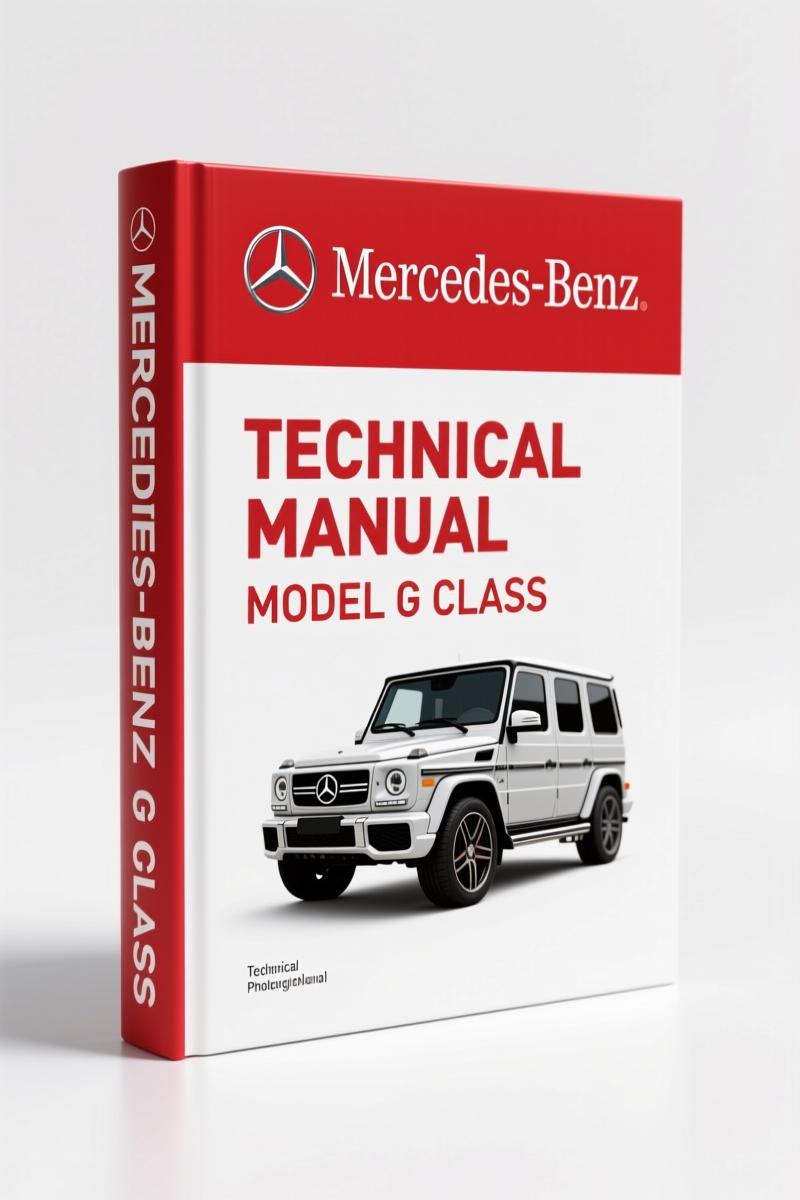
Mercedes-benz G-Class 2004 Technical Manual – Differential Locks
Original price was: $15.71.$11.99Current price is: $11.99.
OEM differential locks technical manual for 2004 G-Class. 20 pages of vacuum, hydraulic, and mechanical specs.
Description
Mercedes-Benz G-Class 2004 Technical Manual – Differential Locks
Trying to fix a Mercedes-benz G-Class 2004 Technical Manual (the actual truck) that won’t lock its diffs without the factory vacuum layout? You’ll end up chasing leaks and swapping parts. I’ve seen guys replace the entire pressure intensifier because they didn’t understand the hydraulic circuit. That’s a $700 mistake. This 20-page OEM training manual from Mercedes-Benz USA gives you the exact system walk‑through they used to teach dealer techs back in 2004. It’s not a service manual with torque specs—it’s a deep dive into how every valve, diaphragm, and shift cylinder works. If you’re a serious DIYer or a pro who wants to actually understand the W463 differential lock system before you touch it, this is your blueprint.
Page 9 lays out the vacuum components and operation in a way that makes sense. The vacuum line routing, the check valves, the diaphragm positions—it’s all there. No guesswork.
Purpose of Differential Locks – Off-Road Traction
An open differential sends torque to the wheel with least traction. That’s fine on pavement but useless off‑road. The manual starts on page 4 explaining why a differential lock forces both axle shafts to turn together. For a G‑Class owner who actually wheels, this is the difference between getting unstuck and calling a winch. The training materials emphasize that engaging locks on paved roads can destroy drivetrain components—a warning you don’t want to ignore.
Vacuum Components: Where Most Problems Start
Vacuum leaks kill differential lock function. Period. The manual dedicates several pages to the vacuum circuit—from the vacuum reservoir to the switchover valves and the diaphragms inside the pressure intensifier. Page 9 covers the entire vacuum component layout. If you have a G that locks intermittently or not at all, start here. The factory diagram shows exactly which hose goes where, saving you from the aftermarket diagrams that often have the wrong color codes.
7 Systems Explained in 20 Pages
Twenty pages sounds thin until you realize this is a technical training document, not a textbook. It covers: purpose of differential locks, when to use them, engaging procedure, vacuum components, pressure intensifier units, hydraulic circuit, axle shift cylinder, mechanical locking elements, and maintenance. Each section is dense with OEM information. For a home garage mechanic, that’s enough to diagnose 90% of lock‑related issues without ever touching a scan tool.
Does This Manual Include the Hydraulic Circuit?
Yes. Page 16 is the hydraulic circuit. The pressure intensifier (page 14) turns vacuum into hydraulic pressure to move the shift cylinder. Without understanding that conversion, you’ll misdiagnose lack of lock as a bad shift cylinder when the problem is actually a failed diaphragm in the intensifier. The manual walks you through the flow—vacuum side, hydraulic side, and the mechanical lock engagement inside the axle.
Axle Shift Cylinder: What the Manual Reveals
The shift cylinder (page 17) is what physically moves the locking collar into the differential. The manual shows its internal construction, the seals, and how hydraulic pressure from the intensifier pushes the piston. I’ve seen techs replace the entire axle housing because they didn’t know the shift cylinder could be serviced separately. That kind of mistake is avoidable when you have the factory training docs in front of you.
Why OEM Documentation Beats Aftermarket
Aftermarket repair databases often skip the vacuum and hydraulics section because it’s vehicle‑specific. This manual is original Mercedes‑Benz proprietary material from 2004. The illustrations match the actual G‑Class W463 components. If you rely on a generic wiring book, you’ll miss the pressure intensifier check valve location and the correct order of lock engagement (center, rear, front). The factory manual gets it right because it was written by the engineers who designed the system.
- Does this manual include torque specs for the axle bolts?
- No. This is a system overview, not a service manual.
- What does the manual cover about the pressure intensifier?
- Page 14 describes the pressure intensifier unit in detail: how vacuum from the engine draws a diaphragm, which then pushes hydraulic fluid into the shift cylinder. It includes a cross‑section diagram showing the internal piston, return spring, and the hydraulic port. If your G‑Class lock engages slowly or not at all, the intensifier diaphragm is a common failure point—this section tells you exactly what to test and how the pressure builds. Without this knowledge, you might replace the entire hydraulic pump unnecessarily.
Related manuals you might need:
- Mercedes-Benz G-Class Axles & Propeller Shafts Technical Manual
- Mercedes-Benz W220 2012 Technical Manual – ACC Hidden Menus
- 2007 Unimog Technical Manual – BlueTec Diesel System
For comparison, a Manual Transmission on a different vehicle uses a synchronizer, but the G‑Class shift cylinder is a different animal—purely hydraulic. Another perspective: the Manual Transmission design on older trucks helps you appreciate the complexity of the differential lock.
Stop troubleshooting in the dark. Access the Factory Manual and get the same information Mercedes-Benz used to train their own technicians. No aftermarket shortcuts, no missing pages.
Additional information
| Brand | Mercedes-benz |
|---|---|
| Language | English |
4 reviews for Mercedes-benz G-Class 2004 Technical Manual – Differential Locks
You may also like…
-
Sale!
Mercedes-benz 201 Wiring Diagram – 290-Page Factory Electrical Data
Original price was: $63.00.$45.00Current price is: $45.00. -
Sale!
Mercedes-Benz Actros Training Manual – Factory FR Module & Vehicle Control
Original price was: $84.70.$55.00Current price is: $55.00. -
Sale!
Mercedes-benz Actros 2011 Service Manual – 165 Pages
Original price was: $70.65.$45.00Current price is: $45.00. -
Sale!
Mercedes-benz 380 SL Service Manual – 327 Pages OEM Specs
Original price was: $69.30.$45.00Current price is: $45.00.
Related products
-
Sale!

2011 Parts Catalog – International Truck OE Parts Documentation (1786 Pages)
Original price was: $34.50.$25.00Current price is: $25.00. -
Sale!

2011 Parts Catalog – International 7400 SFA 6X6 – 1886 Pages of OEM Part Numbers
Original price was: $32.00.$25.00Current price is: $25.00. -
Sale!

1993 Operators Manual – International Bus 1000-3000 OEM Specs
Original price was: $12.30.$7.99Current price is: $7.99. -
Sale!
1993 Electrical Schematic – International 1000/3000/4000 Bus Chassis OEM Wiring Diagrams
Original price was: $29.26.$22.00Current price is: $22.00.
workshop_guy –
Perfect workshop guide. The PDF looks clean. Every wiring layout is included for Mercedes-benz GClass. Saves me hundreds of money.
diy_master –
Excellent OEM spec sheet. It is very easy to read on my tablet without losing quality. Every wiring layout is included for Mercedes-benz GClass. Saved my repair job! Thank you.
Robert M. –
Perfect OEM spec sheet. The text is searchable and easy to navigate. Contains clear bolt torque specs for Mercedes-benz. Saved my repair job! Thanks.
gearhead88 –
Perfect workshop guide. The scan is high-quality and easy to navigate. Contains precise schematics for Mercedes-benz. Worth every penny.